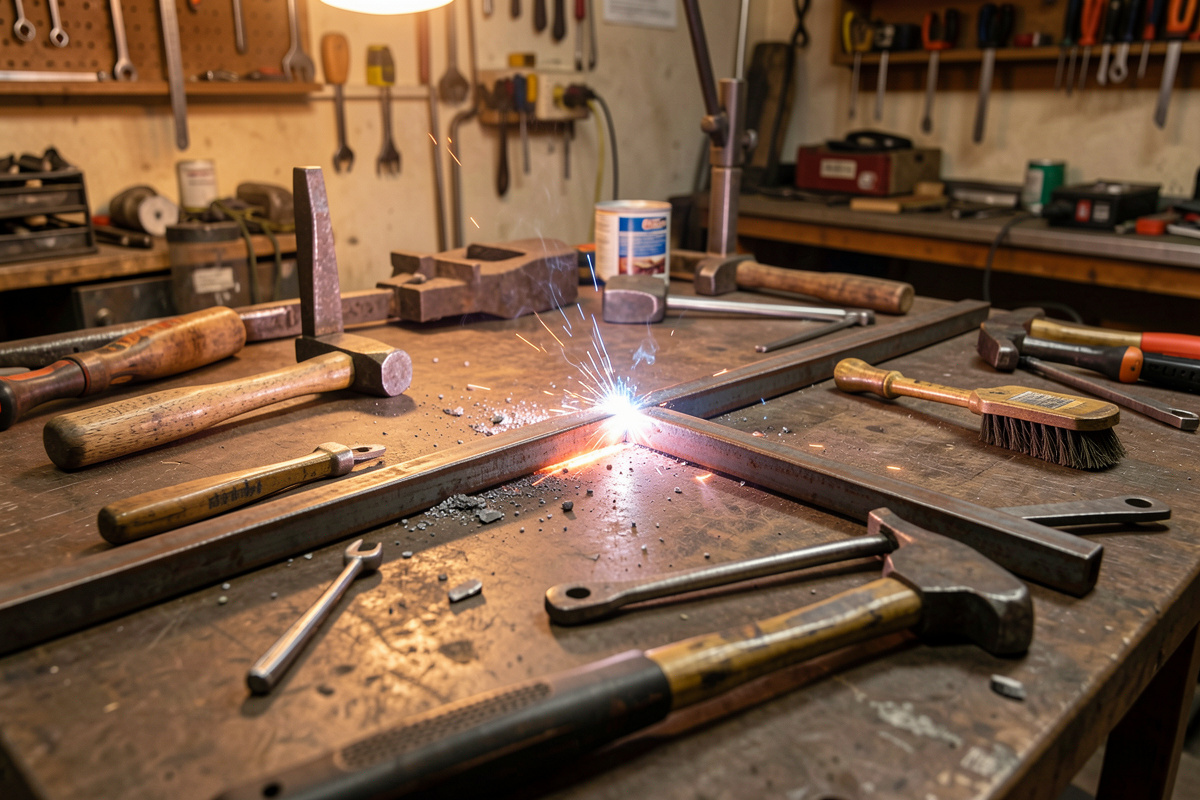

Slag inclusions are bits of that glassy flux crust trapped inside the weld instead of floating to the surface — and in flux-core they’re the number-one hidden defect. They form when you push the gun, weld over un-chipped slag between passes, or run a joint too cold to let the slag rise. Each one is a hard, brittle void that weakens the weld. I’ve chased every version of this on my own bench, and the fix is more about discipline than dials.
Here’s why they’re dangerous: you often can’t see them. The bead looks fine on top while a seam of trapped slag hides at the root or between passes, waiting to crack under load. I once welded over a speck of slag tucked in the toe of a corner joint on a shop bracket, told myself it was fine, and watched that exact spot split when I stress-tested it. Lesson learned in one loud crack. That bracket taught me the inter-pass routine I’ll lay out here.
This article covers what causes inclusions, how to clean between passes properly, and the technique that keeps slag where it belongs — on top, not inside. For the whole process, see the flux-core welding guide.
What Causes Slag Inclusions in Flux-Core Welding?
Slag inclusions form when molten slag gets trapped under or inside the weld metal instead of floating out to the surface. In flux-core the main causes are pushing the gun so slag runs ahead of the puddle, failing to clean slag off between passes, welding too cold, and awkward joint shapes that trap slag in corners.
The root issue is timing: slag and molten steel are both liquid at the arc, and the steel has to solidify while the lighter slag rises clear. Anything that puts slag in front of the advancing puddle, or leaves old slag in the path of a new pass, gives that slag no chance to escape — it gets frozen into the joint. That’s why technique and cleanliness matter more than any voltage setting here. You can have perfect numbers off the settings chart and still bury slag if your angle or your cleanup is wrong.
Cold welds are a quieter cause. When the puddle is too cold — under-volted, moving too fast, or chilled by cold thick steel — it freezes before the slag can float out. So “run it hot enough to let the slag rise” is part of the fix, balanced against not running so hot you undercut. It’s the same read-the-puddle skill the whole process rewards.
How Do You Clean Slag Between Passes?
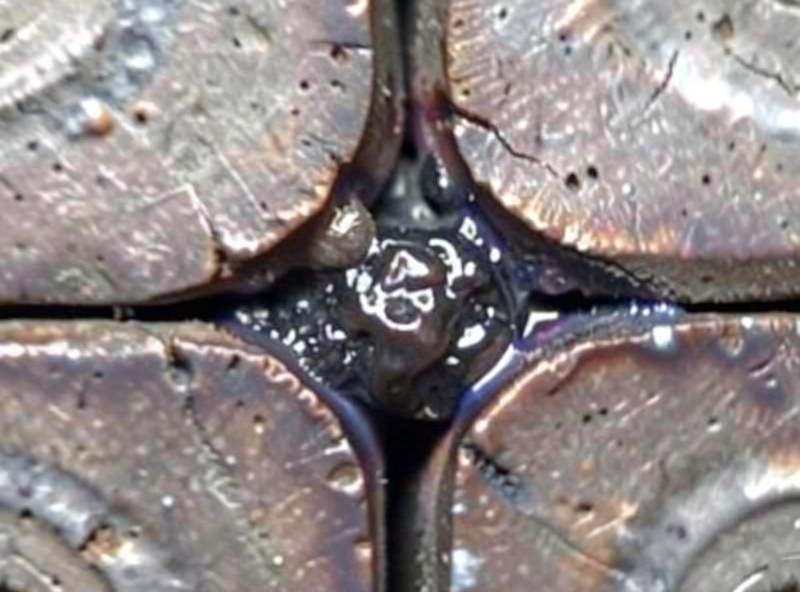
Between every pass on a multi-pass weld, chip and brush all slag off completely before laying the next bead — no exceptions. Use a chipping hammer to crack the crust off while it’s still warm, then a wire brush or wire wheel to scrub the bead and both toes back to clean, bright weld metal. Any slag you leave gets welded in as an inclusion.
My routine is fixed because shortcuts here cost re-dos. I chip the length of the pass with a spring-loaded chipping hammer, paying special attention to the toes and any corner where slag likes to hide, then hit it with a wire wheel on my DeWalt DWE402 angle grinder to get the film off. Then I look — actually look — before restriking. On a genuinely critical multi-pass joint I’ll go further and lightly grind the bead profile so the next pass has clean, well-shaped metal to tie into.
There’s a sound that tells you when you’ve missed a spot: strike the next pass over trapped slag and the arc crackles and pops erratically, sometimes spitting the slag back at you. That crackle is the weld telling you to stop and clean. Learn to hear it and you’ll catch inclusions before they’re buried. The same cleanup discipline crosses straight over into managing flux-core spatter.
Why Does Pushing the Gun Cause Slag Traps?
Push flux-core and the slag runs ahead of the puddle, so the molten steel flows over the top of slag that’s already sitting on the joint — instant inclusion. Dragging the gun at a 10–15 degree angle keeps the slag flowing behind the solidifying weld where it can rise clear. Travel direction alone is the difference between a sound bead and a slag-riddled one.
This trips up everyone coming from solid-wire MIG, where pushing is fine. I did it myself for weeks when I first switched to gasless, and no amount of settings adjustment cleaned up the inclusions because the cause wasn’t the settings — it was my direction of travel. The day I turned the gun around and started dragging, the trapped-slag problem simply vanished. The polarity and technique fundamentals and this drag rule are the two things I check before ever touching a dial.
Travel speed rides alongside angle. Go too slow and the puddle grows so large the slag can roll forward even on a drag; go too fast and the bead humps up cold and traps slag by freezing early. Aim for a steady pace where the puddle trails a few millimetres behind the wire and the slag visibly flows out the back. Angle and speed together keep the slag on top where it belongs.
Which Joint Shapes Trap the Most Slag?
Deep, narrow joints and tight inside corners trap the most slag because the crust can’t float out of a confined space. V-grooves that are too steep, deep fillet welds, and the acute corners of a T-joint all give slag places to hide. Opening up the joint geometry and welding in controlled passes is how you beat them.
On thick material I bevel the edges to open the groove so each pass is shallow enough for the slag to rise, rather than trying to fill a deep narrow gap in one hot pass that buries slag at the root. Multi-pass with thorough cleaning between each beats one big pass every time on flux-core. In tight corners I angle the gun to direct the puddle and give the slag a path out, and I clean those corners obsessively because they’re exactly where my cracked bracket failed.
Fit-up matters too. A sloppy joint with inconsistent gaps creates pockets where slag collects, so I clamp tight with my Bessey GSCC clamps and aim for consistent, snug fit-up before the first tack. Good fabrication discipline — clean prep, tight fit, sensible joint geometry — prevents inclusions before they can form. That’s cheaper than gouging them out later.
How Do You Tell an Inclusion From Normal Slag Coverage?
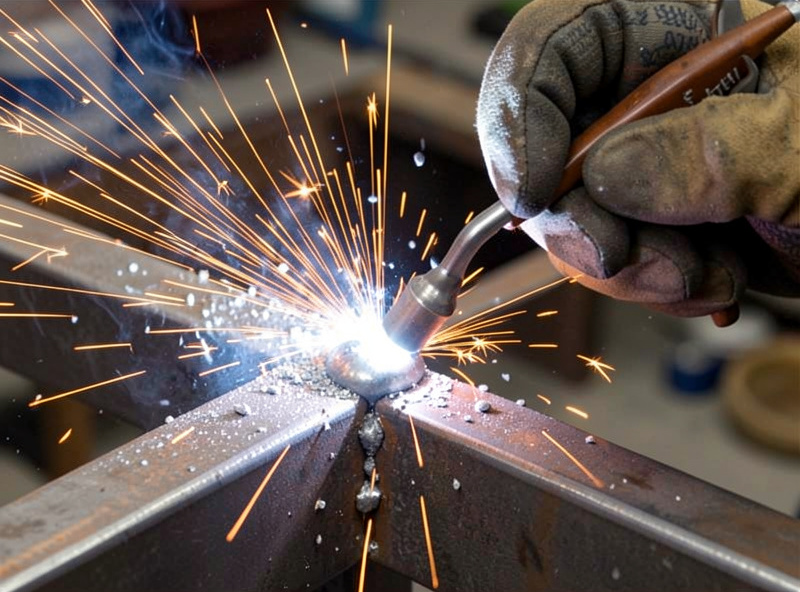
Normal flux-core slag is a surface crust that covers the finished bead and chips off cleanly to reveal sound weld metal underneath. An inclusion is slag trapped inside or under the weld — you’ll spot it as a dark, glassy pocket in a cross-section, a visible void at a bead toe, or a spot the chipping hammer exposes below the surface. Surface slag is expected; buried slag is a defect.
The reassuring part is that the crust on top is doing its job — it protected the puddle and it’s supposed to be there. Chip it off and a good weld shows bright, evenly rippled metal with full tie-in at both toes. If instead you uncover a pit, a dark inclusion, or slag lodged in the fusion line, that’s the defect. On anything structural I’ll sometimes cut a test coupon in half and inspect the cross-section, which is the honest way to know what’s really inside — the AWS defines these inclusion defects in its welding inspection standards, and the American Welding Society resources are worth reading if you weld anything that bears load.
Learning to read the difference stops two opposite mistakes: panicking over normal surface slag, and ignoring real inclusions. Once you know a clean-chipping crust from a buried pocket, you inspect fast and trust your welds. That confidence is worth building deliberately.
Can You Weld Over Slag to Save Time?
No — never weld over slag. It’s the single fastest way to build inclusions into a joint, and the time you “save” by skipping the chip-and-brush you pay back tenfold gouging out a failed weld and re-doing it. Every pass starts on clean, bright metal, full stop.
I understand the temptation on a long multi-pass job when your arm’s tired and the slag looks thin — I’ve felt it. But that’s exactly the moment my cracked bracket flashes back. That failure came from one speck of slag I told myself didn’t matter, and it split under load precisely there. My friend Mike, decades in the trade, has zero patience for it: clean between passes or don’t call it a weld. On anything that holds weight, that’s not fussiness, it’s the job.
If you’re welding something non-structural and cosmetic and genuinely in a hurry, the honest answer is still to clean between passes — because inclusions also make a bead ugly, pitted, and weak-looking. There’s no version of welding over slag that ends well. Build the cleanup into your rhythm and it stops feeling like a chore.
As an Amazon Associate I earn from qualifying purchases.
The two tools that make inter-pass cleaning fast are cheap and worth owning: a proper welding chipping hammer and wire brush, and a wire cup brush for your angle grinder for scrubbing the film off between passes.
What I’d Fix First to Beat Slag Inclusions
If your flux-core welds are trapping slag right now, fix these three in order: drag the gun instead of pushing, clean every trace of slag off between passes, and run hot enough to let the slag float out. That trio eliminates the vast majority of inclusions before you ever touch joint geometry. Technique and cleanliness beat settings here.
Everything after that is refinement — beveling thick joints, tightening fit-up, inspecting cross-sections on critical work. But the foundation is drag, clean, and adequate heat. Get those into muscle memory and slag becomes what it should be: a crust you flick off the top, not a defect buried inside. I learned it the hard way on a bracket that cracked; you can learn it here instead. From here, dial in with the settings chart and keep the whole process straight with the main guide.
Related Articles
- Flux-Core Welding Guide: Settings, Polarity, and Technique
- Taming Flux-Core Spatter: Settings, Anti-Spatter, and Cleanup
- Flux-Core Settings Chart: Voltage and Wire Speed by Thickness
- Flux-Core Polarity: Why Gasless Wire Runs Electrode-Negative
- Flux-Core on Thin Metal: How to Stop Burning Through
What causes slag inclusions in flux-core welding?
Slag inclusions form when molten slag gets trapped in the weld instead of floating out. The main flux-core causes are pushing the gun so slag runs ahead of the puddle, failing to clean slag between passes, welding too cold, and deep or tight joints that trap slag.
Do I have to clean slag between every flux-core pass?
Yes. Chip and wire-brush all slag off completely before laying the next pass, every time. Any slag left behind gets welded in as an inclusion, which is a hard brittle void that weakens the joint.
Why does pushing the gun cause slag problems in flux-core?
Pushing makes the slag run ahead of the puddle, so molten steel flows over slag already sitting on the joint and traps it. Dragging the gun at a 10 to 15 degree angle keeps slag flowing behind the weld where it can rise to the surface.
How can I tell surface slag from a slag inclusion?
Normal surface slag is a crust that covers the finished bead and chips off cleanly to reveal bright weld metal. An inclusion is slag trapped inside or under the weld, seen as a dark glassy pocket in a cross-section or a void at a bead toe.
Can I weld over slag to save time?
No. Welding over slag is the fastest way to build inclusions into a joint and it produces weak, ugly welds. Always start each pass on clean, bright, chipped-and-brushed metal.

Discussion (0)