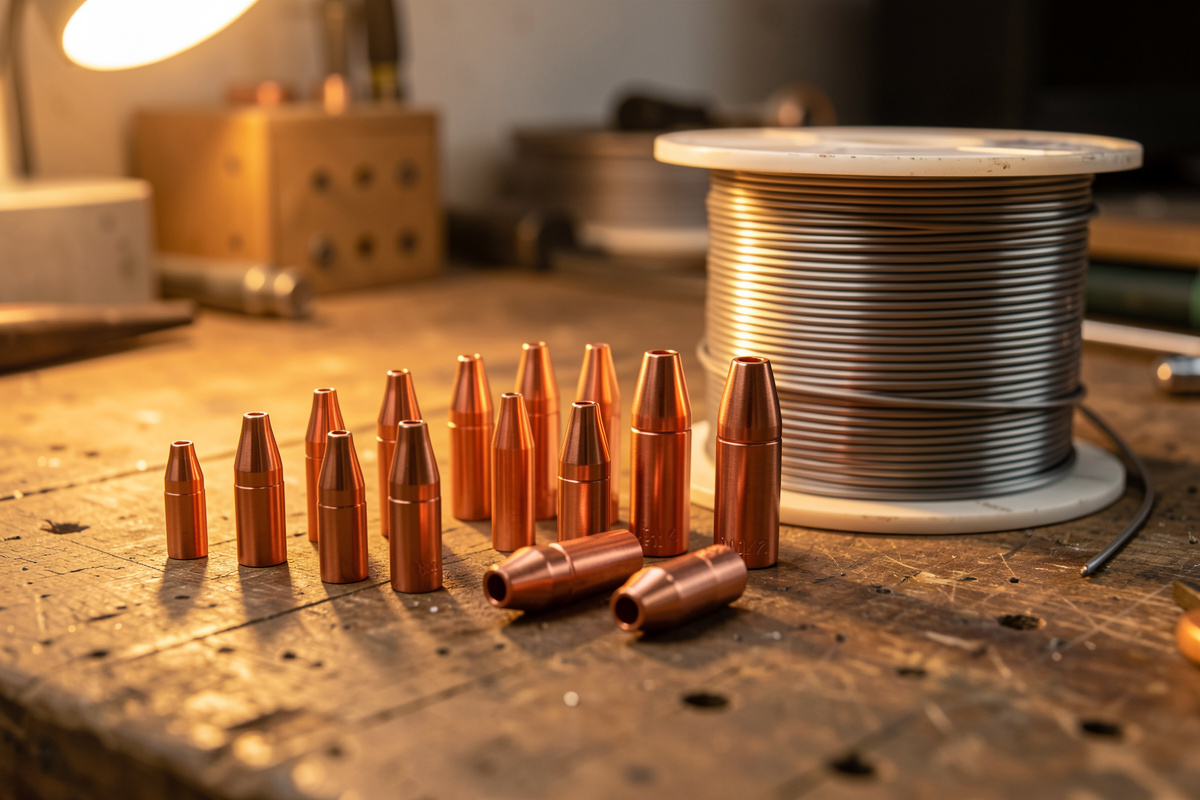

Match the contact tip to your wire diameter exactly — a 0.030 tip for 0.030 wire, a 0.035 tip for 0.035 wire. The tip is the last point of electrical contact before the arc, and a bore that’s too loose makes the arc wander while a worn, oval bore causes erratic feed and burnbacks. There’s exactly one common exception, and it’s aluminum. That single rule solves most feed complaints I hear.
A contact tip costs a couple of dollars, and it’s the single cheapest, most-overlooked part in the whole gun. I’ve watched welders tear a machine apart chasing a problem a $3 tip would have fixed — I’ve done it myself. On my YesWelder MIG-PRO205DS the tip is the first thing I check when the arc goes ratty. Here’s how to size it, when to break the matching rule, and how to read a worn tip before it ruins a weld.
Why Does the Contact Tip Size Have to Match the Wire?
The tip transfers welding current to the wire through the wall of its bore, and it does that best when the wire rides in light, consistent contact with that wall. A bore sized to the wire keeps the electrical contact point steady, so the arc length stays steady. Too large a bore and the wire rattles around inside, contact jumps, and the arc surges and wanders with it. Too small and the wire binds, overheats, and burns back to the tip.
Contact tips are stamped with the wire size they’re bored for — you’ll see 0.030, 0.035, or the metric equivalent right on the tip or its packaging. For solid steel wire you match that number to your wire and you’re done. This is also why a fresh tip so often cures a “bad machine”: as the bore wears oval, contact gets erratic and every symptom of a tired tip looks like a machine fault. If your feed is fighting you across the board, the tip is step one and the rest of the path — drive rolls, liner — comes after, all of which I map in the welding wire and consumable selection guide.
When Do You Size the Contact Tip Up?
Aluminum is the exception. Soft aluminum wire expands as it heats going through the tip and it tends to grab, so you deliberately run a tip one size larger than the wire — a 0.035 tip for 0.030 aluminum wire — to give it room and keep it from seizing mid-bead. Some welders size up for stainless too, but aluminum is the one where a same-size tip will genuinely weld itself shut.
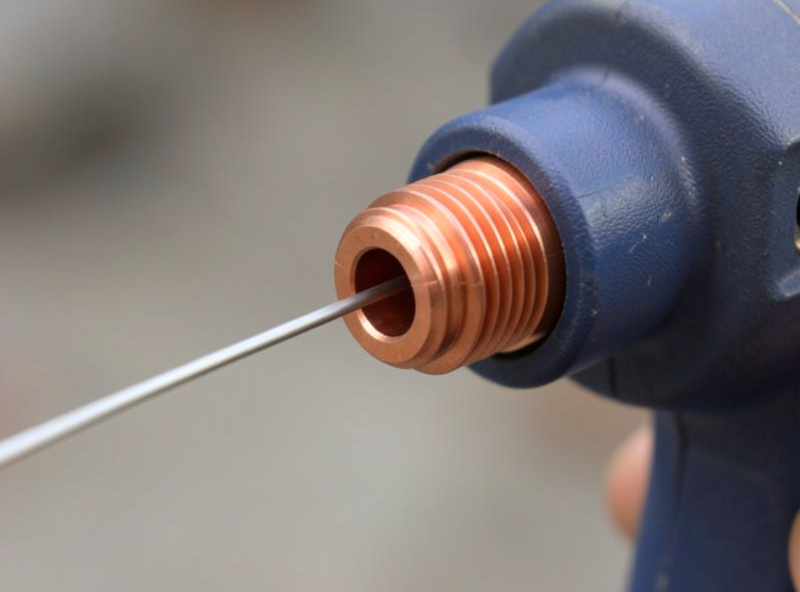
I learned this the hard way on an early aluminum spool-gun setup. I’d matched a 0.030 tip to 0.030 aluminum wire the way I would for steel, and two inches into a bead the wire expanded, grabbed the bore, and stopped dead while the drive kept pushing — instant birdnest and a fused tip I had to throw away. Sized up to a 0.035, same wire, and it fed clean. That’s the whole trick, and it’s why aluminum tips are often sold marked for the wire size they’re intended to run rather than their actual bore.
What’s the Right Contact Tip for Each Wire Size?
Here’s the quick reference I work from. For steel, tip equals wire; for aluminum, tip is one size up. Diameters are shown in both inch and the common metric callout so you can match whatever your tips are stamped in.
| Wire Diameter | Steel Tip | Aluminum Tip |
|---|---|---|
| 0.023 in (0.6 mm) | 0.023 | Not typical |
| 0.030 in (0.8 mm) | 0.030 | 0.035 (size up) |
| 0.035 in (0.9 mm) | 0.035 | 0.045 (size up) |
| 0.045 in (1.2 mm) | 0.045 | 0.052 (size up) |
One caution: the tip also has to fit your gun’s thread and length, which varies by brand — a Tweco-style tip won’t thread a Miller-style diffuser. Buy tips in your wire size that match your gun’s consumable family, and buy a strip of them, not one. For diameter selection itself, the wire size chart covers which wire your amperage wants in the first place.
How Do You Know a Contact Tip Is Worn Out?
A worn tip announces itself. The bore wears from round to oval — a process welders call keyholing — and once it does, the arc turns erratic, the wire wanders, spatter climbs, and you start getting burnbacks where the arc melts the wire back into the tip. If your beads were fine this morning and ragged this afternoon on the same settings, pull the tip and look at the exit hole.
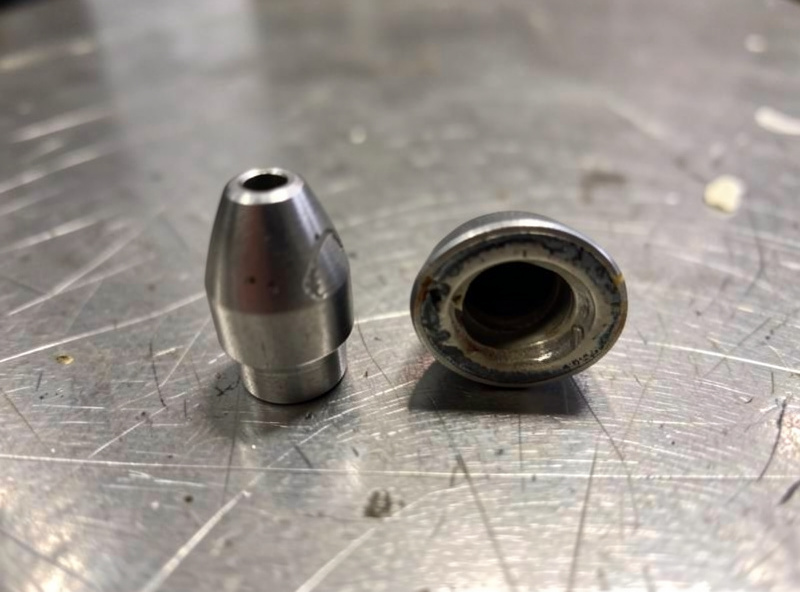
Tip life depends on wire, current, and how much spatter you sling, but a tip is a consumable — it’s supposed to wear out. I replace mine on feel: the moment the arc sound loses that steady hiss and starts to sputter, and a new tip brings it back, the old one was done. Don’t try to squeeze a tip past its life; the pennies you save aren’t worth the porosity you weld in. If burnback and feed hesitation are your symptoms, cross-check the wire feed troubleshooting guide because a shot liner can mimic a worn tip.
Copper or Chrome-Zirconium: Does Tip Material Matter?
For home welding, standard copper (E-Cu) tips are fine and cheap, and they’re what I run for short bursts of bracket and repair work. Chrome-zirconium (CuCrZr) tips cost more but hold their bore longer under sustained heat, so they earn their price if you weld long, hot passes or run production-length beads. Silver-bearing tips exist at the top end for high-heat spray work.
The honest home-shop answer: unless you’re welding for hours at spray-transfer amperage, the material upgrade buys you less than good tip discipline does. A cheap copper tip changed on time beats a premium tip run until it’s oval. I keep a strip of plain copper 0.030 tips on the bench and swap them without a second thought — the manufacturers like Bernard and Miller publish tip-life and material data if you want to weigh the upgrade for your duty cycle.
Where Should the Tip Sit — Flush, Recessed, or Extended?
Tip position relative to the nozzle sets your contact-tip-to-work distance, and that changes with transfer mode. For short-circuit MIG on thin steel, I run the tip flush with the nozzle or slightly extended — it lets me get close and keep a short, controllable stickout. For hotter spray transfer on thicker plate, recessing the tip a bit inside the nozzle improves gas coverage and protects the tip from the heat.
Stickout — the length of wire past the tip — is the lever you actually feel: too long and the arc goes soft and cold with poor penetration, too short and you’re dragging the tip in the spatter. On my bench I aim for a stickout roughly 3/8 inch for general short-circuit work and adjust by how the arc sounds and where the puddle sits. Get the tip position and stickout dialed and half of what people call “settings problems” disappear.
How I Keep Contact Tips From Failing Early
Tighten the tip properly. A loose tip means intermittent electrical contact, which overheats the tip and the diffuser and kills them both fast — snug it with a wrench, not just finger-tight. Keep the nozzle clear of spatter buildup because bridged spatter can short the tip to the nozzle. A quick spray of anti-spatter on the nozzle and tip, and a cleaning between jobs, stretches tip life noticeably.
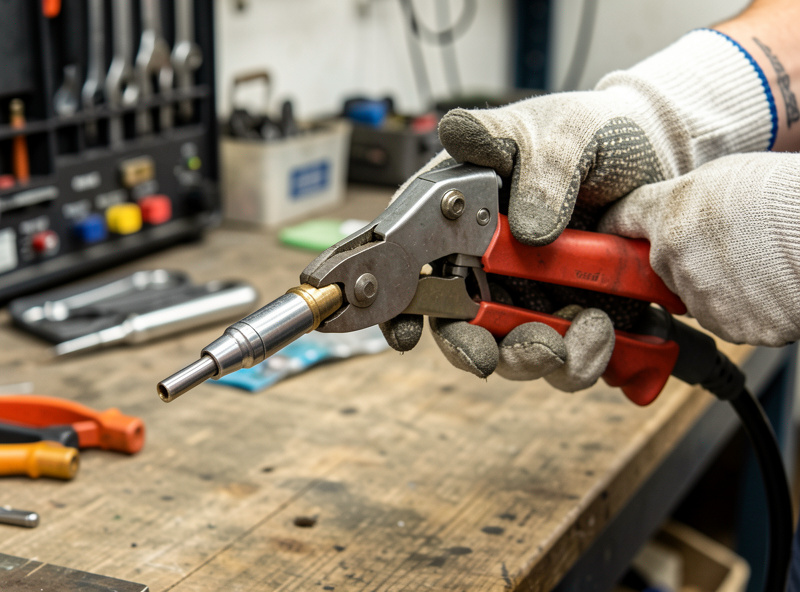
And run clean, dry wire. Rusty or contaminated wire drags abrasive junk through the bore and wears it oval faster than clean wire ever will — the tip and the wire fail together. The whole front end of the gun is a system: tip, nozzle, diffuser, and liner all wear as a set, and keeping them clean is the cheapest reliability you can buy. My MIG gun cleaning walkthrough covers the full teardown, and the wire side ties back to the solid-wire selection that feeds it all.
What size contact tip do I use for 0.030 wire?
For solid steel wire, use a 0.030 contact tip with 0.030 wire, matching exactly. For 0.030 aluminum wire, size the tip up to 0.035 because soft aluminum expands and grabs as it heats. The tip is stamped with the wire size it is bored for.
Why does my contact tip keep burning back to the wire?
Burnback usually means the tip bore is worn oval, the tip is too small for the wire, stickout is too short, or wire feed speed is too low for the voltage. Start with a fresh tip in the correct size, then check that your stickout is around 3/8 inch and that feed speed matches voltage.
How long does a MIG contact tip last?
It varies with wire, current, and spatter, but a contact tip is a consumable meant to wear out. Replace it when the arc loses its steady hiss and starts to sputter, when spatter climbs, or when you see the bore has worn from round to oval. A fresh tip that restores the arc confirms the old one was done.
Do I need chrome-zirconium contact tips?
For home welding, standard copper tips are fine and cheap. Chrome-zirconium tips hold their bore longer under sustained heat, so they pay off for long, hot spray-transfer passes. For short bracket and repair work, a copper tip changed on time beats a premium tip run until it is oval.
Can I use a bigger contact tip if I do not have the right size?
For steel, no. An oversized tip lets the wire rattle in the bore, making the arc wander and surge. The only intended size-up is for aluminum, where you run one size larger on purpose. Keep a strip of tips in your actual wire size on the bench so you never have to improvise.
Why does a new contact tip fix my welding problems?
As a tip bore wears oval, electrical contact with the wire becomes erratic, which mimics machine faults, bad settings, and feed problems all at once. Because the tip is the last contact point before the arc, a fresh, correctly sized tip restores steady contact and clears symptoms that looked like a broken machine.

Discussion (0)