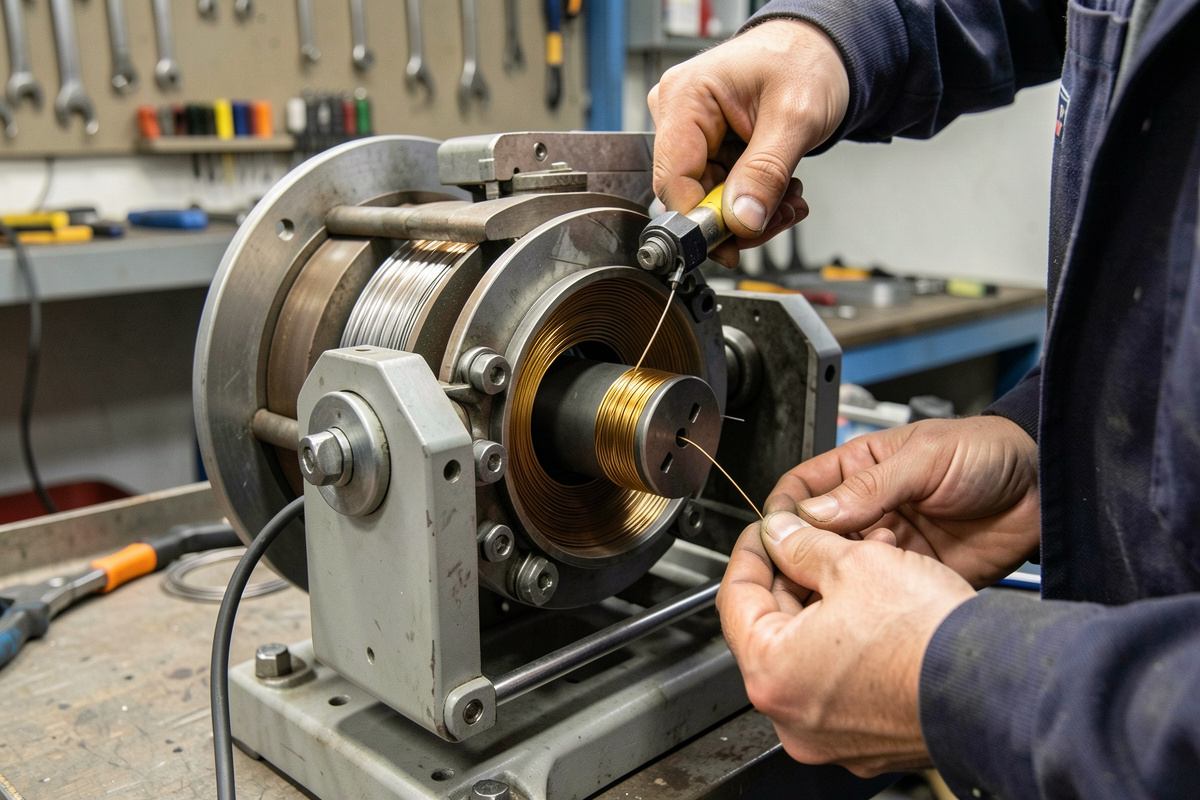

Nothing kills a weld faster than wire that won’t feed smoothly. You pull the trigger and the arc stutters, the wire surges and stalls, or worse, it backs up and birdnests into a tangled mess at the drive rolls. Inconsistent wire feed is behind a huge share of “my MIG welds like garbage” complaints — an erratic feed gives you an erratic arc, and no amount of voltage tweaking fixes a mechanical problem. The encouraging part is that the MIG wire-delivery system is simple, and once you understand the path the wire travels, the problems are quick to diagnose.
This is specifically about mechanical feed problems — birdnesting, surging, the wire not feeding at all, liner and drive-roll issues. If your problem is the wire fusing to the contact tip or burning back into it, that’s a heat-and-stickout issue covered separately in why your MIG keeps burning through wire. Here we follow the wire from spool to gun and fix what stops it moving smoothly.
The Wire’s Journey (Why This Helps You Diagnose)
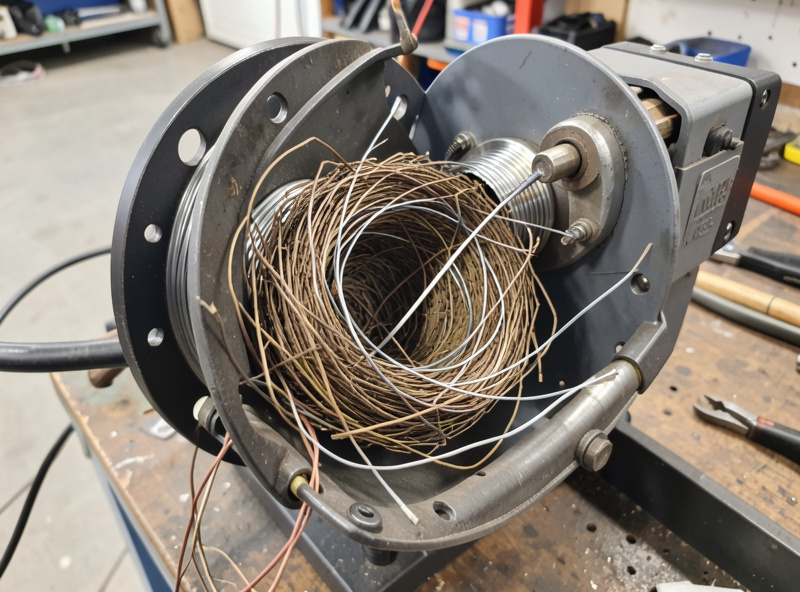
The wire comes off the spool, passes through the drive rolls that grip and push it, travels down the liner inside the gun cable, and exits through the contact tip. A feed problem is always something resisting or failing along that path. When the wire can’t get out the tip end fast enough, it keeps being pushed at the drive-roll end with nowhere to go — and it piles up into a birdnest. So a birdnest is almost never a drive-roll problem; it’s a downstream blockage showing up upstream. That single insight solves most feed problems: when it birdnests, look at the tip and liner first, not the drive rolls.
Birdnesting (Wire Tangling at the Drive Rolls)
The wire jams downstream, the drive rolls keep shoving, and you get the tangle. Causes, in the order I check them:
- Worn or wrong-size contact tip. A tip that’s worn oval or too small for the wire creates drag or a partial jam — the wire can’t exit cleanly. The contact tip is a consumable; replace it freely. This is the most common birdnest cause.
- Dirty, kinked, or wrong liner. Spatter, swarf, and wire shavings build up inside the liner and choke it. A kink from coiling the gun too tight does the same. And a steel liner with aluminum wire is a guaranteed jam (aluminum needs a Teflon/nylon liner).
- Drive-roll tension too high. Counterintuitively, cranking the tension causes birdnests — if the wire snags downstream, too much tension keeps forcing it instead of letting the rolls slip.
- Gun cable coiled or kinked. A tight loop in the whip adds huge drag. Straighten it out before you weld off a coiled cable.
Wire Won’t Feed At All
Trigger pulled, motor running (or not), no wire. Work through it: is the spool actually turning, or is the spool brake too tight? Are the drive rolls gripping — correct tension, and are they the right groove size for your wire? Is the wire snagged on the spool itself (a loose wrap that crossed under another and locked)? Is the liner fully blocked? And on the simplest level, is the contact tip completely plugged. I unthread, snip a clean end on the wire, and re-feed by hand to find where it stops.
Surging and Inconsistent Feed
The wire feeds, but it pulses — fast, slow, fast — and the arc surges with it. This is partial, intermittent resistance: a liner that’s getting clogged but not fully blocked, a contact tip starting to wear, drive-roll tension too low so the rolls slip on the wire intermittently, or a spool brake that’s grabbing and releasing. Dirty wire (rusty or contaminated from a spool left open in a humid shop) drags inconsistently too. The fix is to find the partial restriction and clear it; surging is usually a liner or tip that’s on its way out.
Setting Drive-Roll Tension Right
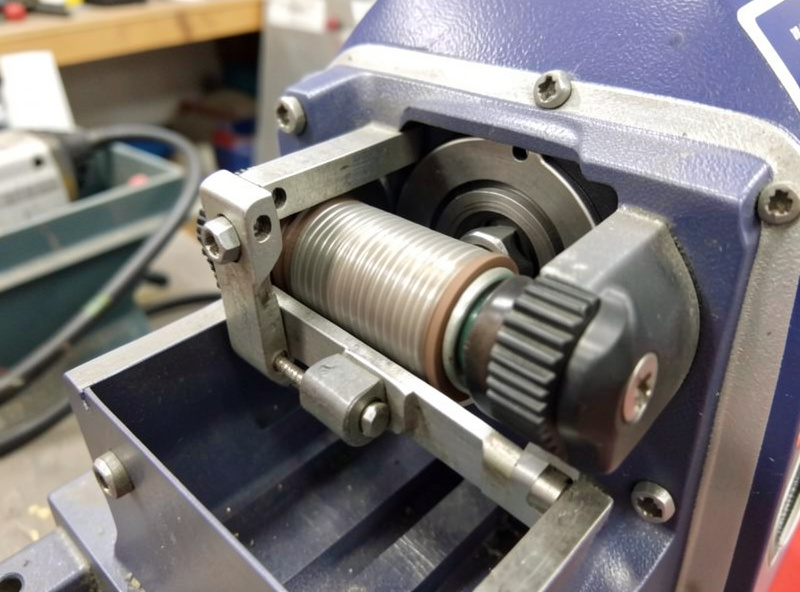
This is the adjustment people get wrong most often. The classic test: feed the wire against a piece of wood or a gloved hand with light pressure so the wire is stopped at the tip end. Set the drive-roll tension just high enough that the wire keeps feeding and the rolls don’t slip when there’s no real blockage — then back off slightly. Set correctly, if the wire genuinely jams downstream the rolls will slip rather than birdnest. On the MIG-PRO205DS I run, I keep the tension at that “just gripping” point and it’s saved me a lot of tangles. Too tight is the enemy: it flattens the wire, sheds shavings into the liner, and turns every snag into a nest.
Drive Rolls: Groove Size and Type
Drive rolls are sized for specific wire diameters and come in different groove shapes. A V-groove is standard for solid steel wire. Knurled (U-groove) rolls grip soft flux-core wire without crushing it. Smooth U-grooves are for soft aluminum so the surface isn’t chewed up. Running the wrong roll — a knurled roll on solid wire, or a steel V on aluminum — gives you poor grip, shavings, or crushed wire and feed problems. Match the roll to the wire, and make sure you’re using the groove sized for your diameter (many rolls are double-sided with two sizes; the wrong side is set up).
Quick Feed Troubleshooting
| Symptom | Most Likely Cause | Fix |
|---|---|---|
| Birdnesting at drive rolls | Downstream blockage (worn tip / clogged liner) | Replace tip, clean/replace liner, reduce tension |
| No feed at all | Spool brake tight; rolls slipping; full blockage | Loosen brake; set tension; clear liner/tip |
| Surging / pulsing feed | Partial liner clog; worn tip; low tension | Clean liner; new tip; raise tension slightly |
| Aluminum won’t feed | Steel liner; wrong drive roll | Teflon/nylon liner; smooth U-groove roll |
| Crushed / shaved wire | Tension too high; wrong roll | Back off tension; correct roll groove |
Keeping the Feed Healthy
Most feed problems are maintenance problems that built up over time. The contact tip is cheap and consumable — I change mine well before it’s badly worn. The liner gets blown out with compressed air periodically and replaced when it’s contaminated or kinked. Wire stays on the machine covered, or comes off and goes in a bag, because rusty wire feeds badly and porosity-faults the weld. And I never coil the gun whip into a tight loop for storage. Treat the wire path as a system that needs to stay clean and smooth, and the arc stays smooth with it. The whole defect-and-arc picture lives in the welding troubleshooting guide, and if you’re chasing spatter alongside feed issues, the excessive MIG spatter guide covers the arc side. For dialing the machine in from scratch, start with the complete MIG welding guide.
Why does my MIG wire keep birdnesting?
A birdnest is almost always a downstream blockage, not a drive-roll fault. The wire can’t exit the gun fast enough so it piles up where the rolls push it. Check the contact tip (worn or wrong size) and liner (clogged or kinked) first, and make sure drive-roll tension is not cranked too high, which forces a snag into a tangle instead of letting the rolls slip.
How tight should MIG drive roll tension be?
Just tight enough to feed reliably without slipping, then backed off slightly. Test by feeding the wire against wood or a gloved hand: it should keep feeding with light resistance, but if it genuinely jams downstream the rolls should slip rather than birdnest. Too tight flattens the wire, sheds shavings into the liner, and turns every snag into a nest.
Why is my MIG wire feed surging?
Surging is partial, intermittent resistance: a liner that is clogging but not fully blocked, a contact tip starting to wear, drive-roll tension too low so the rolls slip, or rusty/contaminated wire dragging unevenly. Find and clear the partial restriction; surging usually means a liner or tip on its way out.
Why won’t my MIG feed aluminum wire?
Aluminum is soft and needs the right hardware: a Teflon or nylon liner instead of a steel one, and a smooth U-groove drive roll so the surface is not chewed up. A steel liner or a knurled roll will jam, shave, or crush aluminum wire. Many welders also run a shorter gun or spool gun to reduce the feed distance for aluminum.
What drive roll do I use for flux-core wire?
Soft flux-core (tubular) wire needs a knurled, U-shaped drive roll that grips the wire without crushing the soft tube. A smooth V-groove meant for solid steel wire will slip on flux-core, and over-tightening to compensate crushes it. Match the roll to the wire type and to the correct diameter groove.
How often should I replace the contact tip and liner?
The contact tip is cheap and consumable; replace it as soon as feeding gets rough or the bore wears oval, often well before it looks worn out. Blow out the liner with compressed air periodically and replace it when it is contaminated, kinked, or causing drag. Most feed problems are maintenance that built up over time.

Discussion (0)