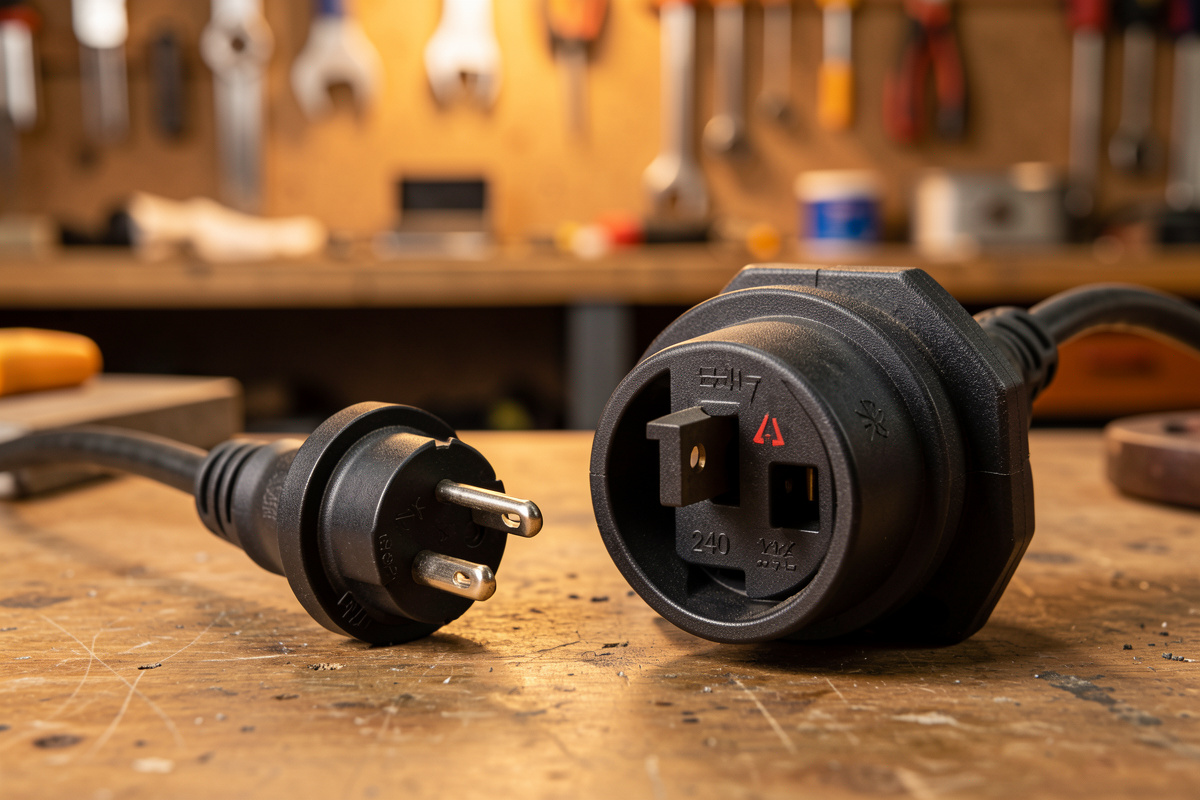

A 110V welder is a fine starter for sheet metal and light brackets up to about 3–4 mm, but a 220V welder gives you more output, longer duty cycle, and the muscle to burn into 6 mm and thicker steel. Same machine on 220V draws roughly half the input amps of the 110V side for the same output, because it makes the same power from double the voltage. If you’re wiring anything new, wire 220V.
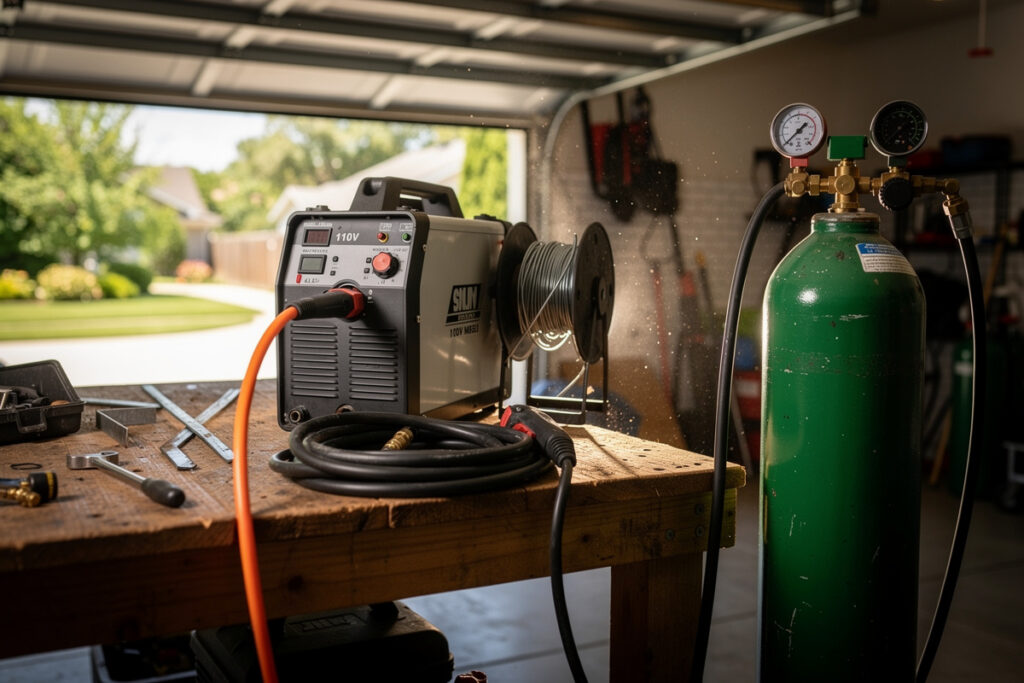
I say that as someone who runs a genuinely dual-voltage machine and plugs it into both. My YesWelder MIG-PRO205DS takes a 120V pigtail or a 240V one, and I’ve laid the same joint on both feeds back to back. The difference isn’t subtle — it’s the difference between a machine that’s trying and a machine that’s working. Let me show you exactly what changes, and where 110V is still the right call.
What’s the Real Difference Between a 110V and 220V Welder?
The core difference is available power. Welding output is a product of voltage and current, and a 240V circuit hands the machine roughly twice the voltage of a 120V one, so it can deliver more welding power while pulling fewer amps from the wall. That extra headroom shows up as higher maximum output, thicker metal capability, and a duty cycle that doesn’t fold on you mid-bead.
People say “110V” and “220V,” but the nominal North American figures are really 120V and 240V — the older numbers stuck around from decades ago. Your machine’s plate might say 115V/230V or 120V/240V; they all refer to the same two standard circuits. What matters is the practical gap between them, and on my bench that gap is dramatic. The welder power requirements guide lays out the whole circuit picture if you’re starting from scratch.
How Much Thicker Can a 220V Welder Weld?
A 120V machine tops out around 3–4 mm of steel in a single confident pass; push past that and you’re grinding bevels and running multiple passes to fake penetration you don’t really have. A 240V machine of the same class will bite cleanly into 6 mm and, on a decent 200-amp unit, get you honest work up to about 10 mm. That’s the jump from “hobby brackets” to “shop fixtures and trailer repairs.”
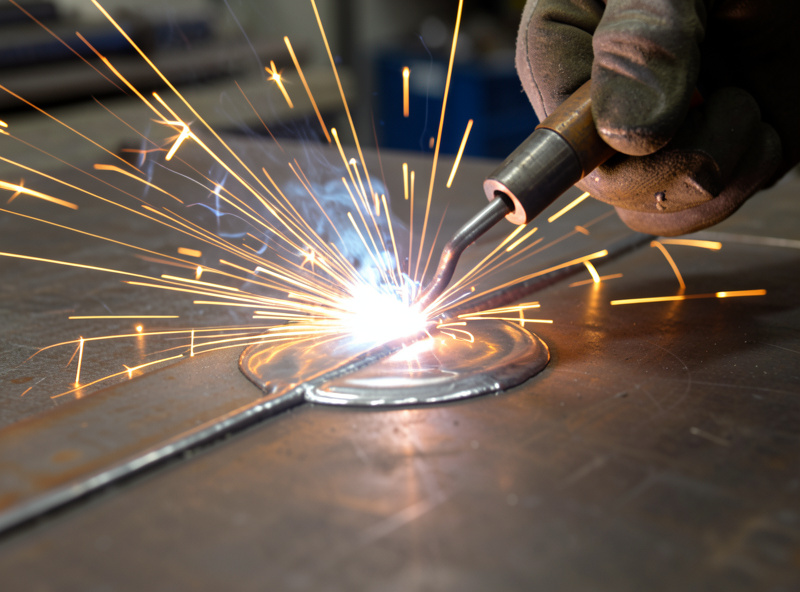
I’ve felt this firsthand on the MIG-PRO. On the 120V pigtail it does thin stuff beautifully — car panels, sheet brackets, the little jigs that feed my other bench tools. But the moment I clamp up 6 mm plate and pull the trigger on 120V, the machine’s own overload logic reins the output back so it doesn’t exceed what a 20-amp feed can supply. The puddle goes lazy, penetration turns shallow, and I’m fighting cold lap. Flip the same machine to 240V and it walks a hot, well-fused bead into that same plate without complaint. Same welder, same wire, same gas — different wall.
Does Voltage Change How Many Amps My Welder Pulls?
Yes, and in the direction that surprises beginners: the 120V side pulls more input amps, not fewer. Because the machine makes the same welding power from half the voltage, it has to draw roughly double the current to get there. That’s why a dual-voltage machine’s nameplate shows a hungry input figure for 120V and a much gentler one for 240V.
That single fact drives everything about the circuit. On 120V my machine wants a full dedicated 20-amp circuit and still runs out of headroom on thick steel; on 240V it draws into the mid-20s and has power to spare. It’s also why 120V machines are so prone to nuisance-tripping — they’re pulling near the ceiling of a small circuit. If you want to size either side properly, I broke down the breaker and wire pairings in the breaker and wire size chart.
110V vs 220V Welder: Side-by-Side
Here’s the honest comparison as I’ve lived it. Numbers are typical for home MIG and multiprocess machines, not absolutes — your specific unit’s nameplate rules.
| Factor | 110V (120V) | 220V (240V) |
|---|---|---|
| Max steel thickness (one pass) | ~3–4 mm | ~6–10 mm |
| Typical output ceiling | ~90–140A | ~180–250A |
| Input current drawn | Higher (~18–20A) | Lower (~24–30A for 2× the power) |
| Duty cycle at full output | Shorter, cuts out sooner | Longer, steadier |
| Circuit needed | Dedicated 20A / 12 AWG | 30–50A / 10–6 AWG |
| Portability | Plugs into most outlets | Needs a 240V outlet |
| Best for | Sheet, panels, light brackets | Plate, frames, structural fab |
When Is a 110V Welder Actually the Right Choice?
A 110V welder earns its place when portability or plug access matters more than raw power. If you weld light-gauge steel, do bodywork, tack small assemblies, or need to carry the machine to jobs where the only outlet is a standard receptacle, 120V is genuinely the smarter tool — not a compromise. Plenty of excellent home welding never touches metal thick enough to need 240V.
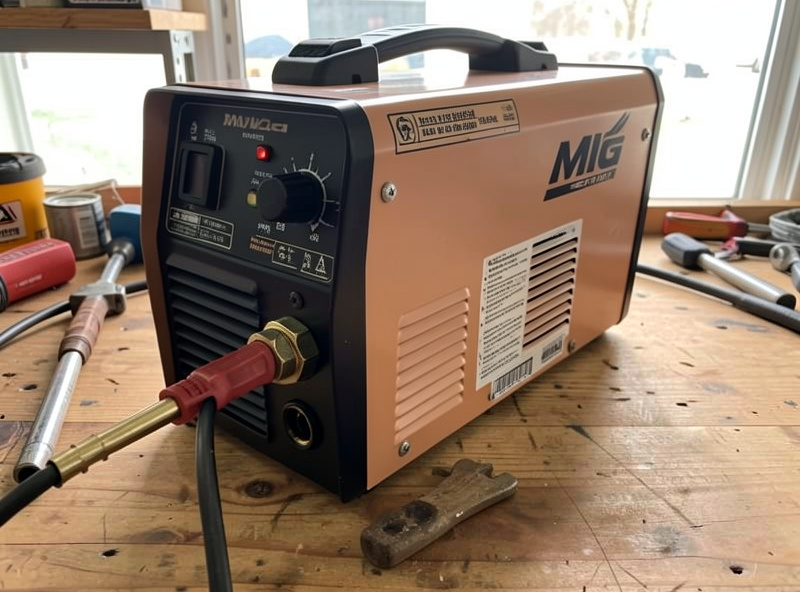
The trap is buying a 120V-only machine and then discovering your projects grew. That’s why, if I’m advising a beginner with any doubt about where they’ll end up, I steer them to a dual-voltage MIG welder — you start on the 120V pigtail while you’re learning, then move it to a 240V outlet the day your work gets serious, without buying a second machine. It’s the flexibility that saved me from ever owning two welders. My broader gear logic is in the first-year equipment checklist.
As an Amazon Associate I earn from qualifying purchases.
Can I Convert My 110V Welder to Run on 220V?
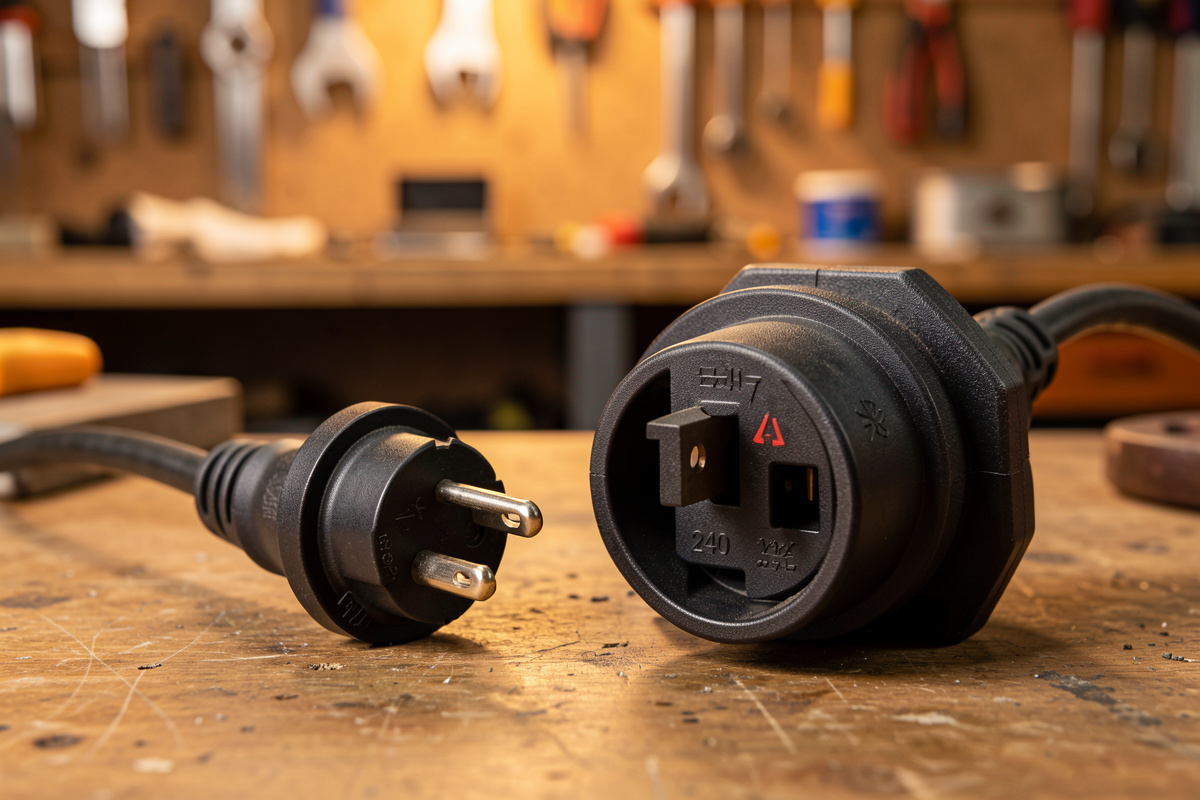
Only if the machine is designed for it. A truly dual-voltage welder switches between feeds with a pigtail adapter or a selector, exactly as intended by the maker. A 120V-only machine cannot be safely “converted” by swapping the plug or using an adapter — feeding 240V into a 120V-only input is a fast way to destroy the machine and start a fire. The nameplate tells you which you own.
Here’s my one hard warning, and it’s a mistake I’ve seen cost people a welder: never rig a plug to force the wrong voltage into a machine. An adapter that lets a 120V-only unit reach a 240V outlet doesn’t make it dual-voltage; it makes it a smoke generator. If your plate lists only one voltage, that’s the voltage it runs on, full stop. This is exactly the kind of shortcut Mike, my welder friend of many trade decades, refuses to even discuss — and he’s right. When in doubt about your machine or your outlet, the electrical safety guide and a licensed electrician are the correct next stop.
Why Does 240V Give a Longer Duty Cycle?
Duty cycle is the percentage of a ten-minute span you can weld at a given output before the machine has to rest and cool. A 240V feed almost always buys you a longer one, because at the same welding power the machine draws less input current, and less current means less waste heat building up inside the transformer or inverter. Lower internal heat, later thermal cutout.
This is the part that doesn’t show up in a spec headline but bites you in the middle of a real weld. On the 120V side, running my MIG-PRO hard on the thickest steel it’ll manage, I can feel it edging toward its thermal limit — the fan roars, and if I lean on it the overload light comes on and drops me out mid-bead. On 240V, the same output sits comfortably inside the duty cycle and I can lay a long root pass without the machine tapping out. On a real fabrication job, where you’re welding for minutes at a stretch rather than tacking, that steadiness is worth more than the peak-amp number on the box. It’s the difference between finishing a frame in one session and standing around waiting for a light to go off.
There’s a second-order benefit, too: a machine that isn’t fighting its own heat holds its arc characteristics more consistently. A welder cooking near its thermal limit can get twitchy — output sagging as internal components heat up. Give it the 240V headroom and the arc I set at the start of a bead is the arc I still have at the end. Consistency, not just capability.
Is 220V Worth It for Thin Metal and Aluminum?
Even on thin steel, where a 120V machine is perfectly capable, 240V still helps — not because thin metal needs more power, but because the extra headroom gives you finer control at the low end and unlocks features like double-pulse that eat input current. On aluminum, that headroom stops being a luxury and becomes close to a requirement.
Aluminum pulls heat away fast, so it wants a machine that can deliver strong, controllable power without gasping — and it’s where I lean on the double-pulse mode of the MIG-PRO, which is far happier on the 240V feed than trying to run it near the ceiling of a 20-amp 120V circuit. When I run 3 mm aluminum with ER4043 wire on double-pulse, that stacked-dime bead only comes out clean when the machine has power to spare. Try the same on the choked 120V side and the puddle turns sluggish and gray. For a beginner sorting out which process even fits their projects, I laid out the trade-offs in MIG vs TIG vs stick — but the power lesson holds across all of them: aluminum and fine control both reward the bigger wall.
What I’d Do Starting Today
If I were setting up a home shop tomorrow, I’d buy one good dual-voltage machine and wire one dedicated 240V outlet, and I’d never look back. Learn on the 120V side where a wandering arc is cheap; graduate to 240V when the metal gets thick. The polymath bench I run — the welder sharing space with a CNC, a laser, and a 3D printer — all points toward an aluminum boat that will demand every bit of 240V power I can feed it. Build the power in early and your machine will always have room to grow into your ambition. For the standards behind all of this, the code is published by the NFPA as NFPA 70.
Is a 220V welder better than a 110V welder?
For thicker metal and longer duty cycle, yes. A 220V welder delivers more output power and can weld 6 mm and thicker steel that a 110V machine cannot handle in a single pass. For thin sheet, bodywork, and portability, a 110V welder is often the better and more convenient choice.
How thick can a 110V welder weld?
A 110V welder generally handles steel up to about 3 to 4 mm in a confident single pass. Beyond that, penetration falls off and you are forced into beveling and multiple passes. For reliable work on 6 mm and thicker steel, step up to a 220V machine.
Does a 220V welder use more electricity than a 110V one?
Not for the same job. At the same output, a 220V machine draws roughly half the input amps of the 110V side because it makes the same power from double the voltage. It only draws more total power when you use the extra capability to weld thicker metal at higher output.
Can I convert a 110V welder to 220V?
Only if the machine is designed as dual-voltage, in which case you switch feeds with a pigtail or selector. A 110V-only machine cannot be safely converted by swapping the plug, and forcing 240V into a 120V-only input will destroy the welder and risk a fire. Check the nameplate.
Should a beginner buy a 110V or a dual-voltage welder?
A dual-voltage welder is the most flexible first machine. You learn on the 120V pigtail using an ordinary outlet, then move the same welder to a dedicated 240V circuit when your projects need more power, without buying a second machine.

Discussion (0)