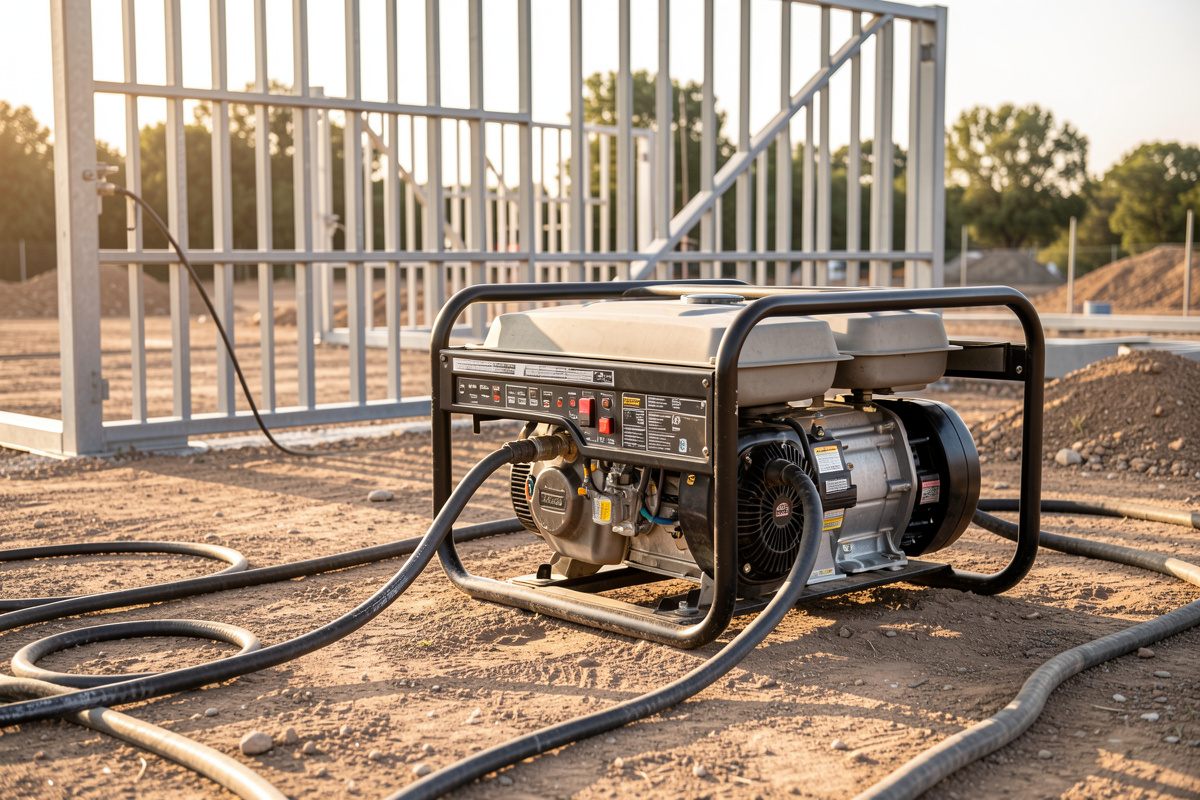

You can run a welder on a generator if the generator supplies more watts than the welder draws, handles the startup surge, and puts out clean, stable power. A small 120V flux-core machine wants a real 4,000–5,000 watt generator as a floor; a 200-amp 240V welder needs a 240V-capable unit in the 8,000–10,000 watt range. Undersize it and the arc dies mid-bead; feed it dirty power and you risk the machine’s electronics.
I weld off the grid more than most, because half my projects end up somewhere without a proper outlet — a gate at the end of a driveway, a trailer repair in a field, a fixture I’d rather build outside than fill the shop with smoke. So I’ve learned exactly where the line is between a generator that runs a welder and one that just makes noise while the arc stutters. Get the sizing right and portable welding is genuinely liberating. Get it wrong and it’s an expensive lesson.
How Many Watts Does a Welder Need From a Generator?
Start from the welder’s input, not its output. The running power a welder draws in watts is roughly its input voltage times its input amps — the figures on the nameplate, not the big output number on the box. A machine pulling 20 amps on a 120V feed draws about 2,400 watts while welding; one pulling 30 amps on 240V draws around 7,200 watts. That’s your baseline, and you size the generator well above it.
Why above it? Because the welding draw isn’t the whole story. There’s startup surge when the machine powers on, there’s the peak the inverter hits at maximum output, and there’s the simple fact that a generator running flat-out at 100% of its rating all day is a generator you’re cooking. I want real headroom — enough that the welder’s demand sits comfortably in the middle of the generator’s capability, not clawing at its ceiling. As a rule I size a generator to at least 1.5 times the welder’s running watts, and more if I can. Manufacturers like Miller publish minimum generator recommendations for their machines, and they lean conservative for good reason.
Running vs Surge Watts: Which Number Matters?
Generators are rated two ways: running (continuous) watts and surge (peak) watts. Running watts is what the generator can supply steadily; surge watts is a brief burst it can deliver for a few seconds to start motors and absorb inrush. For a welder, the number that matters most is running watts, because welding is a sustained load, not a one-second motor start.
This trips people up because generator marketing leads with the bigger surge number. A generator badged “5,500 watts” might only offer 4,500 running watts, and it’s the running figure you must beat. I made this mistake early — bought to the headline number, got a machine that surged fine on startup but sagged the instant I settled into a real bead. Read the spec sheet, find the running watts, and size to that. The surge headroom is a bonus for the initial inrush, not your welding budget.
What Size Generator for Each Welder?
Here’s the map I use, sized to the running-watts rule with headroom baked in. These are practical minimums for comfortable welding, not the absolute floor where the arc barely survives.
| Welder | Approx. running watts | Generator (running watts) | 240V needed? |
|---|---|---|---|
| Small 120V flux-core / MIG | ~2,000–2,500W | 4,000–5,000W | No |
| Dual-voltage MIG on 120V | ~2,400W | 5,000W | No |
| 200A class MIG/inverter on 240V | ~6,000–7,200W | 8,000–10,000W | Yes |
| 200–250A stick / multiprocess | ~7,000–9,000W | 10,000–12,000W | Yes |
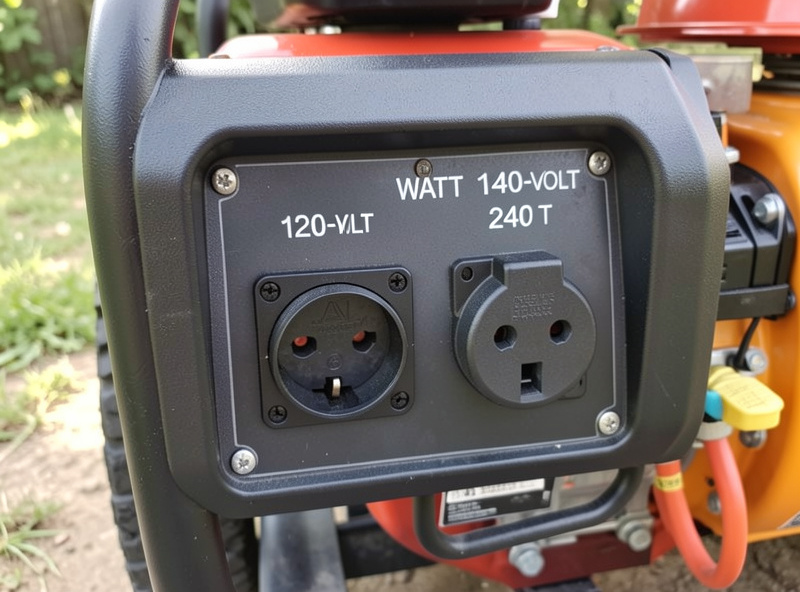
The 240V column is the one people forget. Many portable generators only offer 120V receptacles, and no adapter turns a 120V generator into a 240V source — the machine has to actually produce split 240V from a proper outlet. If you run a 240V welder, you need a generator with a genuine 240V receptacle, full stop. To pin your own machine’s real draw, read its nameplate the way I described in the breaker and wire size chart, then size up from there.
Does Duty Cycle Let Me Use a Smaller Generator?
A little, but don’t lean on it. Because a welder is an intermittent load — trigger down for seconds, up while you reposition — the generator gets rest between beads, so it doesn’t have to be sized as if you’re welding continuously for ten minutes straight. That intermittent nature is real and it helps.
But I don’t use it as an excuse to undersize, and here’s why: the generator still has to deliver full welding watts during each bead, and that’s exactly when an undersized unit sags and kills the arc. Duty cycle spares the generator’s average heat load; it does nothing for the peak demand of the actual weld. So I size for the peak and let the duty cycle be a bonus for engine longevity, not a license to buy small. The power requirements guide explains how duty cycle shapes circuit sizing too — the same logic, wall or generator.
Will a Cheap Generator Damage My Welder?
It can. Beyond raw watts, power quality matters, and this is where cheap generators bite. Inverter welders rectify incoming AC and expect a clean, stable waveform; a bargain open-frame generator can put out ragged power with voltage spikes and high harmonic distortion that stress the machine’s electronics over time. “It powered on and welded” is not the same as “it’s safe to run long-term.”
The safer choice for any modern inverter welder is an inverter generator, which produces a clean sine wave with low distortion, or at minimum a conventional generator with good automatic voltage regulation. This matters enough that it’s a whole topic on its own — the harmonic distortion numbers, what actually fails, and how to check a generator before you trust your machine to it. My advice: never plug a good inverter welder into an unknown generator on faith. Size it right, and confirm the power is clean. Mike, my welder friend of many trade decades, has seen more than one nice machine cooked by a construction-site generator nobody bothered to check — the welder survived the job and died a month later.
How Do I Connect the Welder to the Generator Safely?
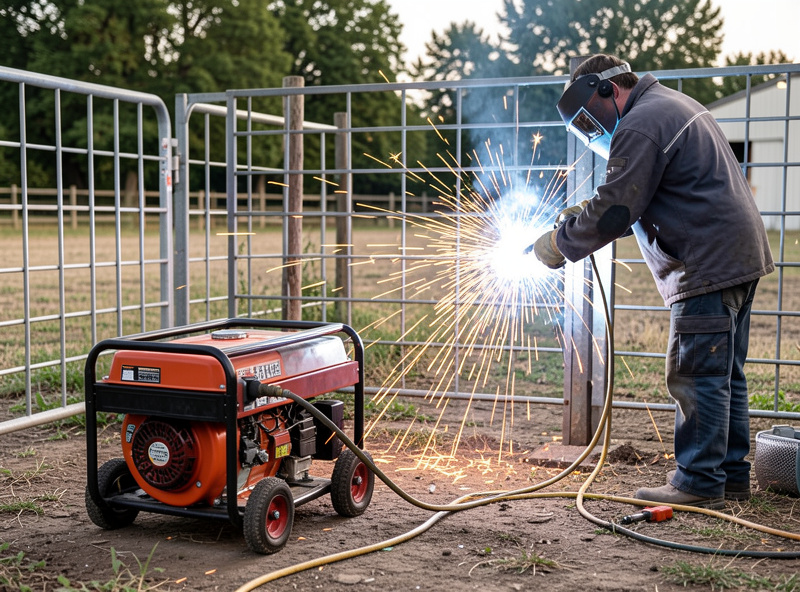
Plug the welder straight into the generator’s receptacle with a short, heavy cord, ground the generator per its manual, and never backfeed. Those are the non-negotiables. The cord matters more than people expect: a generator is already working near its limit, so any voltage drop in a long, thin cord comes directly out of the welder’s arc. Keep the run short and the gauge heavy — the same sizing I lay out for long runs and voltage drop applies double when the source is a generator with no headroom to spare.
The grounding step is the one hobbyists skip and shouldn’t. A portable generator has specific grounding requirements in its manual, and following them is what keeps a fault from finding you through a grounded steel workpiece and a damp glove. This is real shock-hazard territory, not a formality — I treat every generator-fed welding setup with the same respect as a wall circuit, and the welding electrical safety guide covers why. And never, ever try to backfeed a generator into your home’s wiring to reach a welding outlet; that’s a lethal hazard to you and to anyone working on the utility line, and it’s a job for a proper transfer switch installed by an electrician.
One field habit worth stealing: let the generator warm up and stabilize for a minute or two before you strike an arc, and shut the welder off before you kill the generator. Loading and unloading a cold or dying engine with a welder’s demand is how you get voltage swings the machine hates. Smooth on, smooth off.
Engine-Drive Welder or Generator Plus Welder?
If you weld off-grid constantly, an engine-driven welder — a combined engine, generator, and welding machine in one unit — is purpose-built for it and delivers rock-steady power because the welding output is designed around the engine. For occasional portable work, a separate generator feeding your existing inverter welder is far cheaper and does double duty running your other tools. Which one fits comes down to how often you’re actually away from a wall.
For my home-shop reality, the answer is easy: I keep one good generator and feed my MIG-PRO205DS with it when a job leaves the shop, because I’m not welding in a field five days a week — I’m a home welder who occasionally works outside. An engine-drive is a tradesman’s tool for a tradesman’s schedule, and I’d be paying for capability I’d use a handful of times a year. If your welding lives on job sites, though, the math flips hard toward the dedicated machine. Be honest about how you actually work before you spend, the same way I frame every gear call in the first-year equipment checklist.
My Off-Grid Welding Rules
What I’d do starting today: size the generator to at least 1.5 times the welder’s running watts, read the running figure and ignore the surge headline, insist on a real 240V receptacle for a 240V machine, and use an inverter generator or one with solid voltage regulation for any inverter welder. Warm up the generator before you strike an arc, and keep your cord runs short and heavy so voltage drop doesn’t stack on top of a generator already working hard — the same lesson from my piece on voltage drop on long runs. Do all that, and a generator turns a field into a shop. Skimp on any of it, and it turns a good afternoon into a stuttering, arc-chasing mess.
As an Amazon Associate I earn from qualifying purchases. When I need portable power for a machine like mine, I size up rather than down — a properly rated inverter generator with a 240V outlet is worth the extra cost for the machine it protects.
What size generator do I need to run a welder?
Size the generator to at least 1.5 times the welder’s running watts. A small 120V flux-core welder wants a 4,000 to 5,000 watt generator, while a 200-amp 240V machine needs an 8,000 to 10,000 watt unit with a genuine 240V receptacle. Read the running-watts rating, not the surge headline.
Can any generator run a 240V welder?
No. A 240V welder needs a generator that actually provides a 240V receptacle. Many portable generators offer only 120V outlets, and no adapter converts 120V into true split 240V. Confirm the generator produces 240V before matching it to a 240V machine.
Do running watts or surge watts matter more for welding?
Running watts. Welding is a sustained load, so the generator must supply full welding power continuously during each bead. Surge watts only cover the brief startup inrush. Size to the running-watts figure and treat surge headroom as a bonus, not your welding budget.
Will a cheap generator damage my inverter welder?
It can over time. Inverter welders expect clean, stable power, and a cheap open-frame generator may output voltage spikes and high harmonic distortion that stress the machine’s electronics. Use an inverter generator with a clean sine wave, or a conventional unit with good automatic voltage regulation.
Does a welder’s duty cycle let me use a smaller generator?
Only slightly. The generator rests between beads because welding is intermittent, which eases its average heat load. But it must still deliver full welding watts during each bead, which is exactly when an undersized generator sags and kills the arc. Size for the peak, not the average.

Discussion (0)