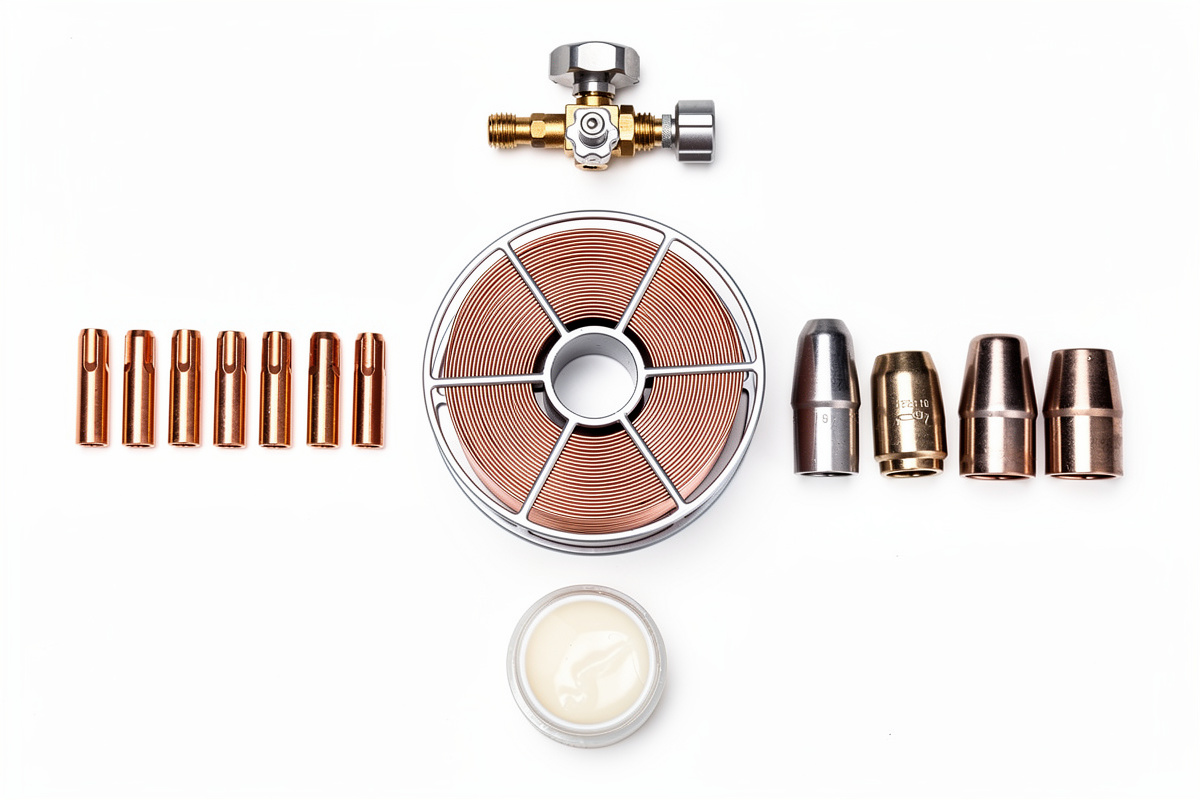

Welding consumables are the materials used up during welding: MIG wire, contact tips, nozzles, shielding gas, and flux-core wire. A MIG welder running 4-8 hours per week uses $30-$60 in consumables per month.
I tracked my consumables for the first 18 months and the breakdown surprised me: 35% wire, 30% gas refills, 20% contact tips, 10% flap discs and grinding wheels, 5% nozzles. The category I underbought during year one — flap discs — was the one I ran out of mid-project most often. Stocking 6 flap discs at all times has saved more late-night supply-store trips than any other inventory choice. The full equipment landscape is in the essential welding equipment guide; for cost context, see cost to start welding at home.
Most beginner welding problems blamed on technique are actually consumable problems: a worn contact tip causing erratic wire feed, a clogged nozzle reducing gas flow, or moisture-contaminated flux-core wire (governed by the AWS A5.20 flux-cored electrode spec) producing porosity. Learning to inspect and replace consumables on schedule eliminates an entire category of preventable defects.
MIG Wire: Solid vs Flux-Core
Solid MIG wire (ER70S-6) is the standard filler metal for mild steel welding with shielding gas. A 10-pound spool costs $25-$40 and produces approximately 40-60 hours of welding at typical beginner usage rates. The wire diameter must match your contact tip size — 0.030-inch wire uses 0.030 tips, 0.035-inch wire uses 0.035 tips.
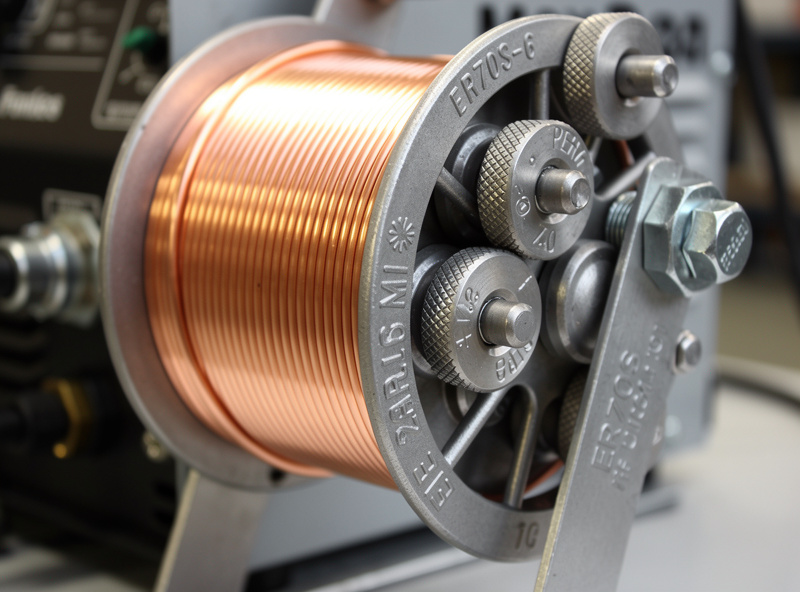
ER70S-6 contains deoxidizers (manganese and silicon) that clean the weld pool and produce a smooth bead on mill-scale-covered steel. ER70S-2 is an alternative with additional titanium and zirconium for even better cleaning action on dirty steel, but costs 20-30% more. For home welding on new steel from a metal supplier, ER70S-6 is the correct choice.
Flux-core wire (E71T-GS for single-pass, E71T-11 for multi-pass) is self-shielding — no gas cylinder required. Flux-core costs $15-$25 per 2-pound spool and works outdoors where wind would disperse shielding gas. The tradeoff is more spatter, a slag layer that requires chipping, and a rougher bead appearance compared to gas-shielded MIG.
Store wire spools in a dry location. Moisture on solid wire causes surface rust that jams the wire feed mechanism and introduces hydrogen into the weld pool, causing porosity. Flux-core wire is more moisture-sensitive — store opened spools in a sealed plastic bag with a desiccant packet. If your flux-core wire has been open for more than 6 months in a humid garage, replace it rather than risk porosity problems.
Contact Tips: The Cheapest Fix for Most Problems
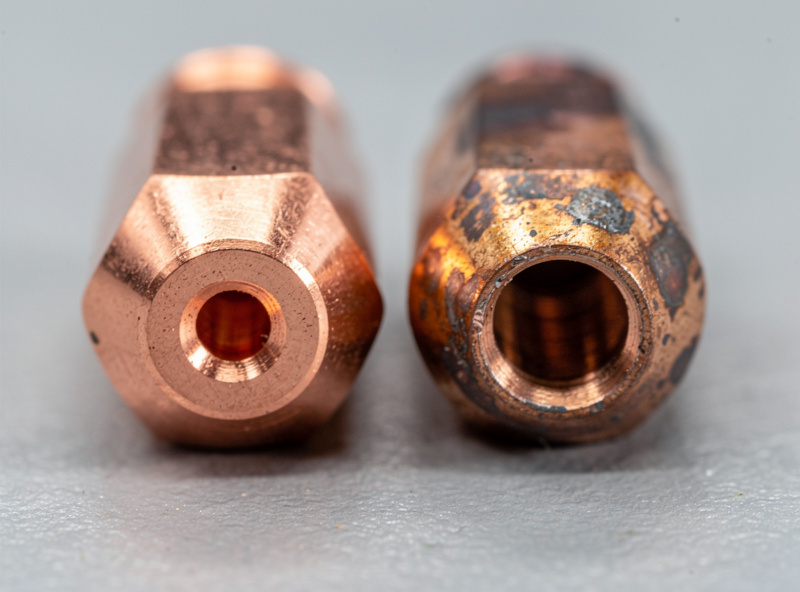
Contact tips transfer electrical current from the welding cable to the MIG wire as it feeds through the gun. A worn contact tip has an enlarged bore that allows the wire to wobble, creating an erratic arc and inconsistent bead width. Replacing a tip costs $0.50-$1.00 and fixes wire feed problems instantly.
A contact tip is rated for roughly 100 pounds of wire fed before bore erosion affects weld quality, but pure wear rarely determines when a home tip actually gets retired — a bent tip from a bump, spatter clogging the bore, or a wire-diameter change usually ends its life first (source). At beginner usage rates (1-2 pounds per month), wear alone would stretch a tip well past a year; budget for replacing tips more like every few months once you count in the practical damage that cuts a tip’s life short. Replace the tip whenever you notice the arc becoming erratic, the wire burning back to the tip, or the bead width varying without changes to your settings.
Contact tips are specific to wire diameter. A 0.030 tip has a bore sized for 0.030 wire — using 0.035 wire in a 0.030 tip causes jamming, while using 0.030 wire in a 0.035 tip causes wire wobble. Always match tip size to wire size.
Buy tips in packs of 10 or 25. At $0.50-$1.00 each in bulk, a 10-pack costs $5-$10 and lasts 10-20 months. Keeping a spare pack in your welding cart eliminates the frustration of discovering a worn tip mid-project with no replacement on hand.
Nozzles and Gas Diffusers
The nozzle directs shielding gas around the weld pool. A clean, undamaged nozzle ensures even gas coverage that prevents porosity. A nozzle clogged with spatter restricts gas flow and creates turbulence that pulls atmospheric air into the weld zone.
Clean the nozzle after each welding session by dipping it in anti-spatter gel (nozzle gel) while it is still warm. The gel prevents spatter from adhering to the nozzle bore. If spatter has already accumulated, use pliers to pull the chunks off, then scrape the bore clean with a screwdriver or dedicated nozzle cleaning tool.
Replace the nozzle when it is visibly eroded, the bore is out-of-round, or spatter buildup cannot be removed. Nozzles cost $3-$8 each and last 20-40 hours of welding — far longer than contact tips. Keep 2-3 spare nozzles in your welding cart.
The gas diffuser (also called the gas cup or gas nozzle adapter) sits inside the nozzle and distributes gas evenly around the wire. It is a small $2-$4 part that is easy to overlook but critical for porosity-free welds. A damaged diffuser creates uneven gas flow that causes porosity on one side of the bead. Inspect the diffuser when replacing nozzles — if the holes are clogged or the diffuser is cracked, replace it immediately.
Shielding Gas: Types, Costs, and Cylinder Management
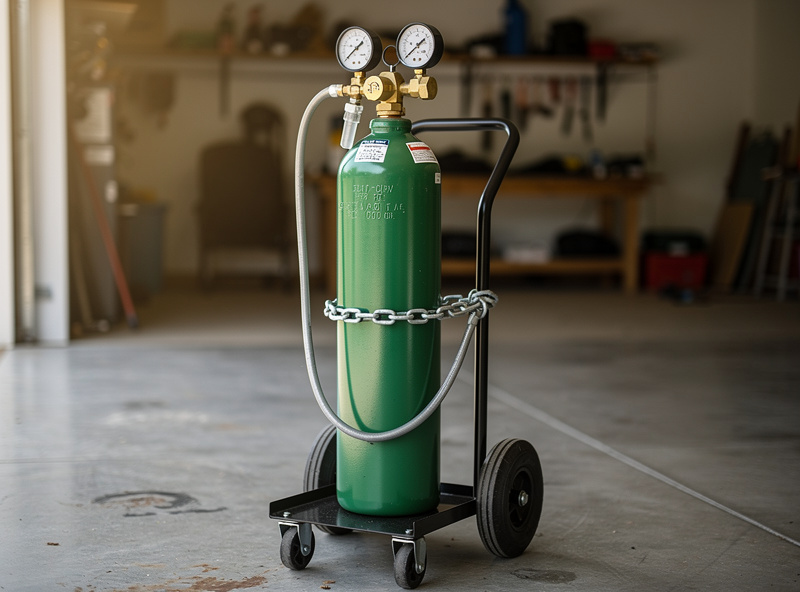
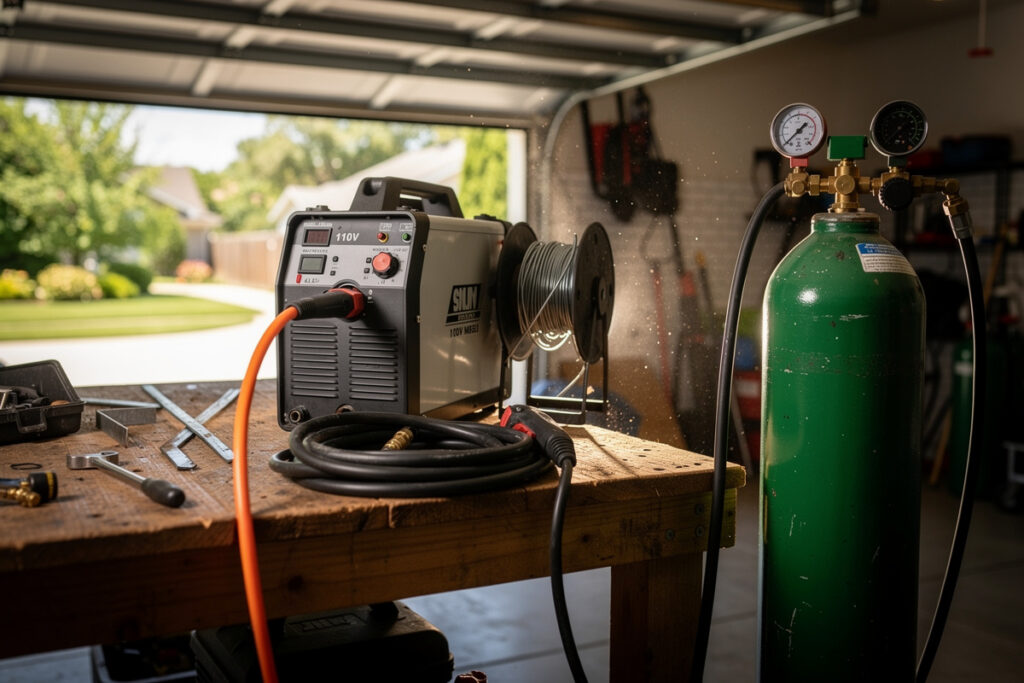
75% argon / 25% CO2 (C25) is the standard shielding gas for mild steel MIG welding. An 80-cubic-foot cylinder costs $120-$180 for the first fill (including cylinder deposit) and $25-$40 for each refill. At 20 CFH flow rate and 4-8 hours of weekly welding, a full cylinder lasts 3-5 months.
100% CO2 produces deeper penetration than C25 but creates more spatter and a less stable arc. Some welders prefer 100% CO2 for thick material (1/4 inch and above) where maximum penetration matters more than bead appearance. CO2 is also cheaper per refill ($15-$25) than C25.
Pure argon is used for TIG welding only — never use pure argon for MIG welding on steel. Pure argon produces a tall, narrow bead with poor fusion on steel because it does not provide the oxidizing action needed for a stable MIG arc on ferrous metals.
Always chain or strap the gas cylinder to a wall or cart. A falling cylinder that shears its valve turns the escaping high-pressure gas into propulsion — a well-documented hazard capable of punching through a masonry wall, not an exaggeration for effect (source). This is the single most dangerous item in a home welding shop — secure it properly.
Frequently Asked Questions
How much do welding consumables cost per month?
A MIG welder running 4-8 hours per week uses $30-$60 in consumables monthly: wire ($8-$15), contact tips ($1-$4), nozzle replacement ($3-$5 occasional), and gas refills ($25-$40 every 3-5 months).
How long does a MIG contact tip last?
A contact tip is rated for roughly 100 pounds of wire fed before bore erosion affects weld quality, but most home tips get retired earlier from physical damage (a bump, spatter clogging the bore, a wire-diameter change) rather than pure wear. Budget on replacing tips every few months at beginner practice volumes. Replace immediately when the arc becomes erratic.
What is the difference between ER70S-6 and flux-core wire?
ER70S-6 is solid wire that requires shielding gas and produces clean beads with minimal spatter. Flux-core wire is self-shielding (no gas needed) but produces more spatter and requires slag removal. Flux-core works outdoors where wind disperses gas.
What shielding gas do I need for MIG welding?
75% argon / 25% CO2 (C25) is the standard for mild steel MIG welding. An 80-cubic-foot cylinder costs $120-$180 for the first fill and lasts 3-5 months at weekend welding rates. Never use pure argon for MIG on steel.
How do I store MIG wire and flux-core wire?
Store solid wire spools in a dry location to prevent surface rust. Store opened flux-core spools in sealed plastic bags with desiccant packets. Replace flux-core wire that has been open for more than 6 months in humid conditions.
Related Articles
- Essential Welding Equipment Guide
- MIG Welder Burning Through Wire: 8 Causes
- MIG Welding Settings Chart
- Best Budget Welder Under $300
- Welding for Beginners
- Cost to Start Welding at Home
- Best MIG Welder for Home Garage
- Welding Table Buying Guide
- Welding Safety Guide
- MIG Welding Complete Guide
- Welding Troubleshooting Guide

Discussion (0)