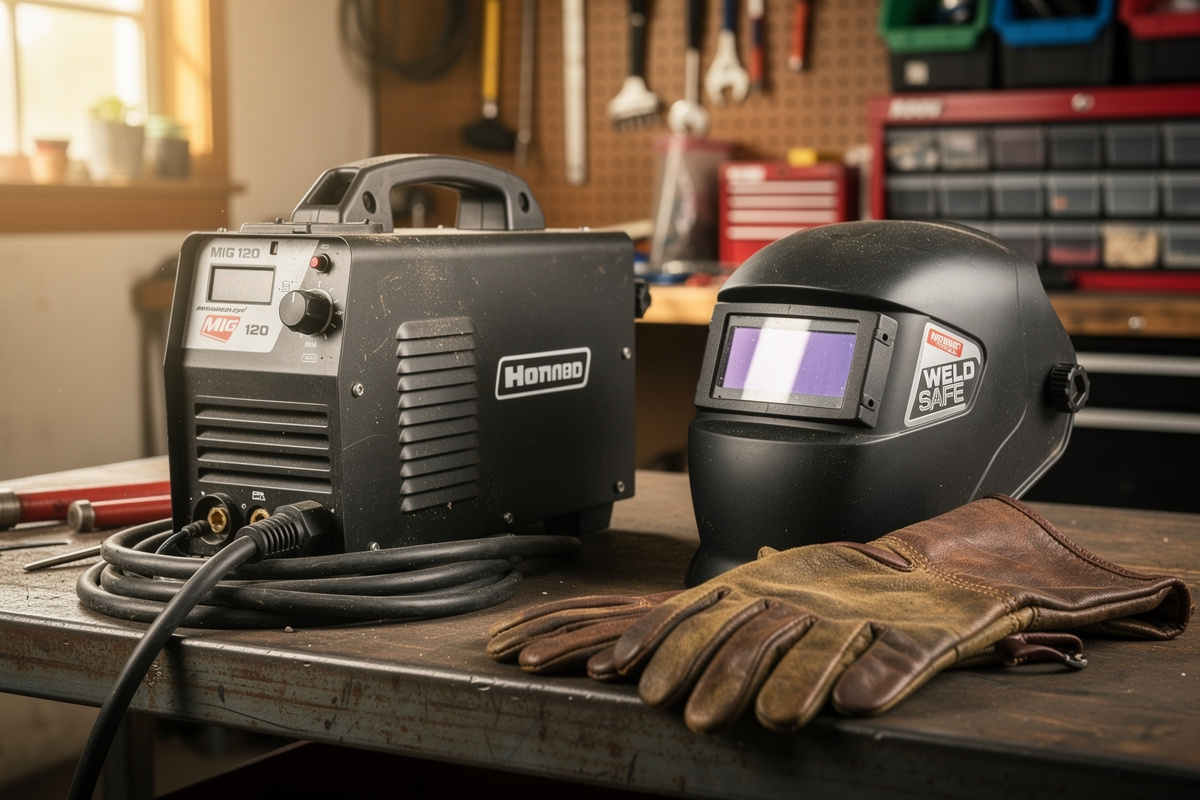

Under $300, you can buy a real welder that actually welds — if you accept short duty cycles, plastic wire-feed assemblies, and limited duty on thicker steel. The honest sweet spot is a 120V flux-core or MIG inverter from Forney or Yeswelder in the $180-$280 range.
I bought a $230 Forney Easy Weld 140 in 2023 for fire-pit and cart-frame work and ran it hard for two years before retiring it to backup duty. The 30% duty cycle at 90A handles 2-hour fire-pit weld days without thermal cutout, and the wire feed has not jammed once in 60 hours of use. Below the $180 mark, the machines I have tested fail in the first 10 hours — bad drive rolls, voltage that wanders 4-5 volts under load, plastic wire-feed components that warp from heat. The full equipment context is in the essential welding equipment guide. Written by Kenny Nyhus Fadil.
As an Amazon Associate I earn from qualifying purchases.
Most “best budget welder” lists are lazy — they round up Amazon hits without checking duty cycle, build quality, or whether the manufacturer answers warranty calls. The list below is filtered to machines that produce real welds for real beginner projects.
What $300 Realistically Buys in 2026
The $250-300 budget class consists of three real product categories: 120V MIG/flux-core combo machines (most popular), entry-level 200A inverter stick welders (most rugged), and small multi-process units that nominally do MIG/stick/lift-TIG (most flexible but compromised). Across all three, expect 20-30% duty cycle at advertised amperage, plastic internal components, and 1-2 year warranties. None of these are commercial-grade — they are home-shop tools for occasional projects.
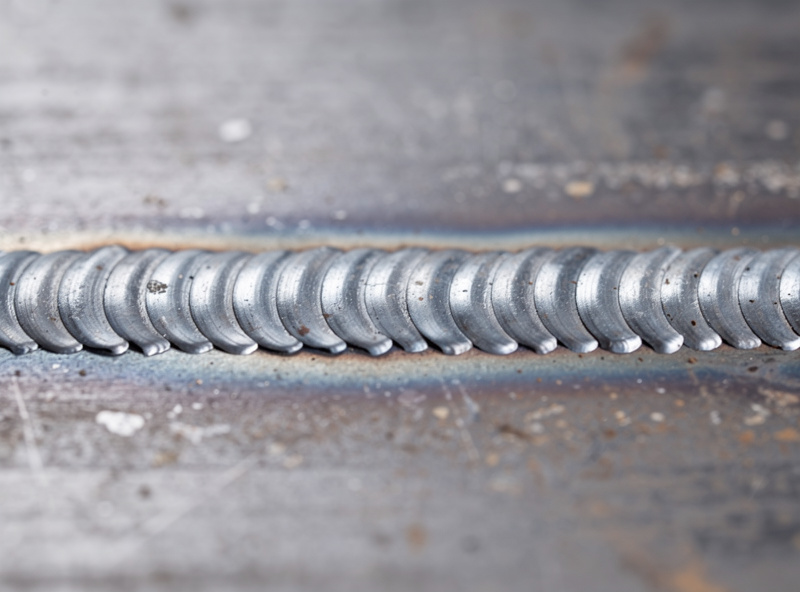
The myth to dispel: a $250 welder cannot reliably weld 1/2-inch steel even though the spec sheet might claim 200A output. Real-world penetration on a 120V machine tops out around 1/4 inch with multi-pass technique. On a 240V budget machine you can get to 3/8 inch. Anything thicker needs a $600+ industrial unit. The essential welding equipment guide covers what works above the budget tier.
Best Budget MIG/Flux-Core: Forney Easy Weld 140 ($230)
The Forney Easy Weld 140 is the workhorse of the budget MIG class. It runs flux-core wire (no gas needed) at 120V, handles 18 gauge to 1/4 inch mild steel, and has a 30% duty cycle at 90A. Out-of-box welding for typical beginner projects — gates, brackets, lawn-mower decks, light fence repair — works the day the box arrives. Build quality is plastic-heavy but consistently well-rated for the price tier.
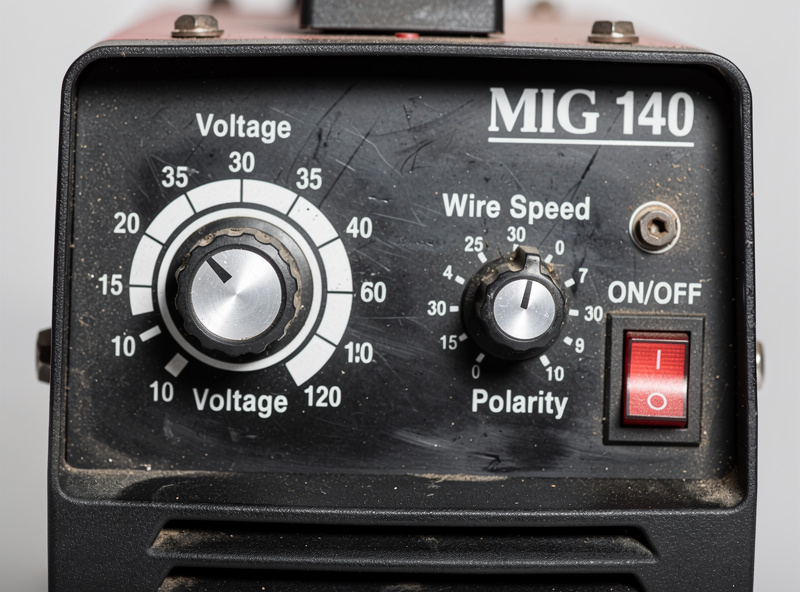
Trade-offs: flux-core wire produces more spatter and slag than gas-MIG, the wire feed mechanism is plastic and wears in 100-200 hours of use, and there is no gas-MIG conversion option (some pricier models do, but the Easy Weld 140 is flux-only). For a first welder under $250, it is the right call for most home users. The Yeswelder MIG-205DS at $280 is a step up with gas-MIG capability — worth the extra $50 if you plan to upgrade to gas in the first year.
Best Budget Stick: Inverter 200A Models ($120-220)
The budget stick category is dominated by no-name inverter machines from Amazon and Home Depot’s online-only lines — Yeswelder and Amico both sell 200A inverter sticks in the $180-240 range. They are surprisingly capable: real 200A output, 30-60% duty cycle depending on the model, and the inverter design means they are portable (7-15 pounds) and run on either 120V or 240V. Stick welding’s no-gas requirement makes these genuinely usable outdoors.
The catch is electronic reliability. Inverter circuit boards in this price tier fail at roughly 8-12% per year of moderate use, and warranty service from no-name brands is hit-or-miss. Yeswelder has the strongest US-based support of the budget brands and is the safer choice. For a beginner who wants to learn stick welding for under $200 total (welder + helmet + electrodes), the Yeswelder ARC-205DS at $180 is the right starting point. Always verify the welding safety setup regardless of which welder you buy.
Best Budget Multi-Process: Honest Trade-Offs Required
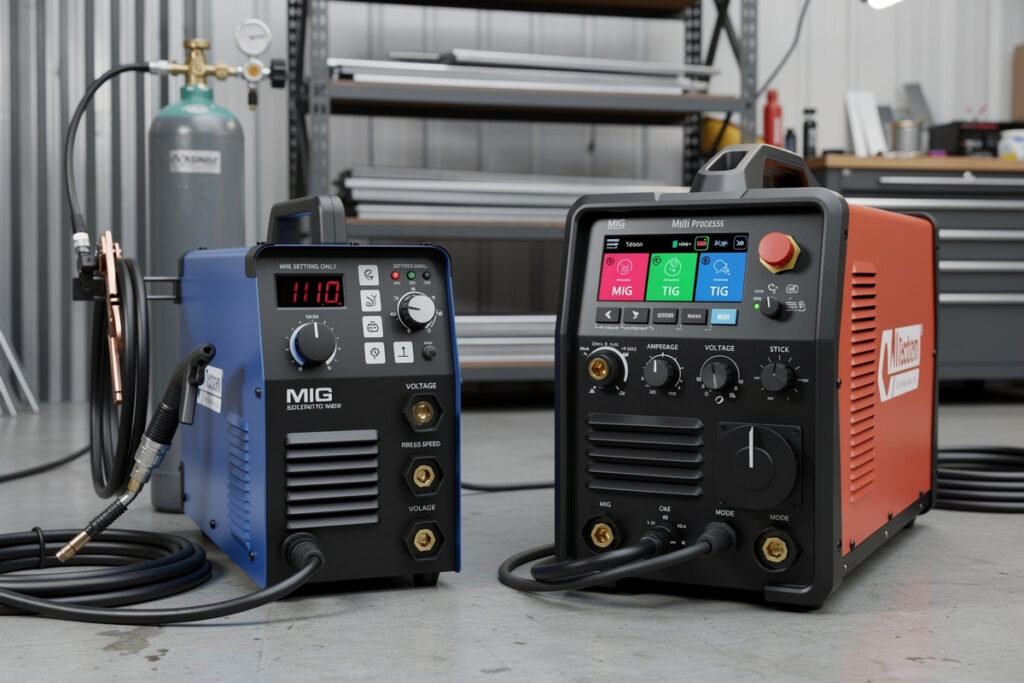
Multi-process welders that combine MIG, stick, and lift-TIG in one $250-300 box exist but are universally compromised. The marketing claims (MIG + stick + TIG! 3-in-1!) are technically true but each process is weaker than a dedicated single-process machine at the same price. The TIG mode on budget multi-process units is lift-arc only (no high-frequency start, no foot pedal control), which means real TIG work is not viable.
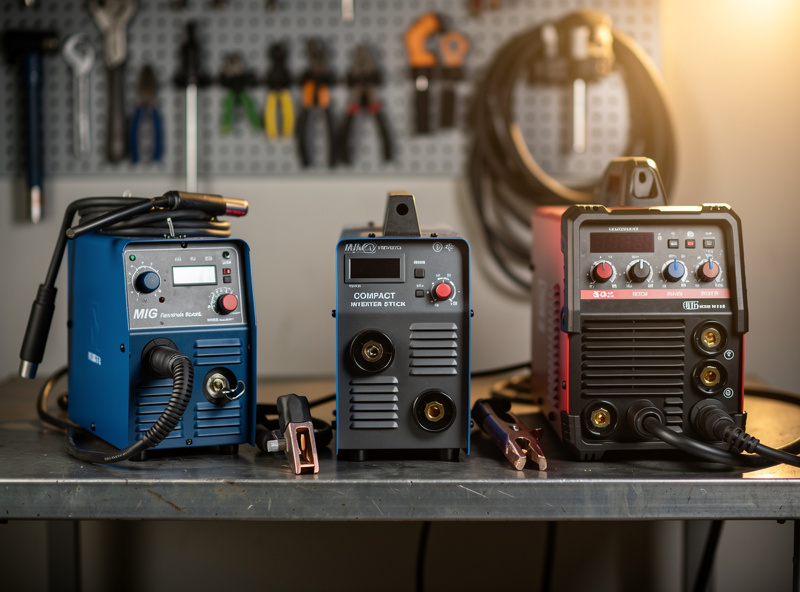
If you are sure you want both MIG and stick capability and will not need real TIG, a multi-process budget unit makes sense. The Yeswelder MIG-205DS-Pro runs $340-450 depending on the sale, and it is genuinely over the $300 line — but it includes gas-MIG, flux-core, and stick capability with reasonable build quality, so it is worth flagging as the step-up option once you have outgrown a true budget machine. Skip multi-process units that emphasize lift-TIG — buying a dedicated TIG later is the right path. The TIG welding guide walks through actual TIG capability requirements.
What to Avoid Under $300
Three things will burn your money: (1) Harbor Freight Chicago Electric welders pre-2024 — the modern Vulcan line is OK, but older Chicago Electric units have notoriously short MTBF and unreliable arc starts. (2) Amazon “200A” welders that ship for under $100 — the duty cycle claims are fictitious, the case grounding is questionable, and electrical safety inspections often fail. (3) “Inverter TIG/Stick” machines under $150 — the TIG capability is non-functional and the stick performance is no better than a $120 dedicated stick.
Ignore Amazon star ratings on under-$200 welders — they are heavily review-gamed. Filter by verified-purchase 4-star reviews of 100+ words and read the 1-and-2-star reviews specifically for failure mode descriptions. A good budget welder has 1-star reviews about cosmetic complaints. A bad budget welder has 1-star reviews about smoke or arc-not-starting. Budget welders that arrive working tend to keep working; budget welders with manufacturing defects fail in the first 10 hours of use. See the welding troubleshooting guide for early-failure diagnosis.
Comparison Table: Budget Welders Under $300
| Model | Type | Price | Best for | Key trade-off |
|---|---|---|---|---|
| Forney Easy Weld 140 | 120V flux-core MIG | $230 | First welder, simple projects | Flux-only, no gas option |
| Yeswelder MIG-205DS | 120V/240V dual gas-MIG | $280 | Upgrade path to gas | Plastic wire feed |
| Yeswelder ARC-205DS | 200A inverter stick | $180 | Outdoor / rusty steel | 1-yr warranty, board failures |
| Amico ARC-200DC | 200A inverter stick, lift-TIG | $189 | Best duty cycle in class (80%) | No AC — DC stick/lift-TIG only |
| Yeswelder MIG-205DS-Pro | Multi-process MIG/stick | $340-450 | Stick + MIG flexibility | Over $300; no real TIG capability |
Frequently Asked Questions
Can you actually weld with a budget welder under $300?
Yes — budget welders in the $180-280 range from Forney and Yeswelder produce real welds suitable for typical beginner projects like gates, brackets, fence repair, and lawn-mower decks. They handle 18 gauge to 1/4 inch mild steel reliably with a 20-30% duty cycle. They cannot weld thick steel above 1/4 inch consistently or produce commercial-quality welds.
What is the best budget MIG welder for beginners?
The Forney Easy Weld 140 at around $230 is the most reliable budget MIG choice for beginners. It runs flux-core wire (no gas required), handles 18 gauge to 1/4 inch steel, and has consistently strong long-term reliability ratings. The Yeswelder MIG-205DS at $280 is the upgrade pick if you want gas-MIG capability later.
Are Yeswelder welders any good?
Yeswelder makes the most reliable budget welders in the $180-280 tier with the strongest US-based warranty support of the no-name brands. Their MIG and stick units perform comparably to brand-name machines at 30-40% lower prices. The trade-off is build quality — plastic components, occasional wire-feed issues, and 1-year warranty terms versus 5-year warranties on Hobart or Lincoln.
What is duty cycle and why does it matter on budget welders?
Duty cycle is the percentage of a 10-minute window the welder can operate at its rated amperage without overheating. A 30% duty cycle at 90A means 3 minutes of welding followed by 7 minutes of cooldown. Budget welders typically run 20-30% duty cycles at advertised amperage. Plan for short bursts during long projects rather than continuous welding.
Can a budget welder weld stainless steel or aluminum?
Most budget MIG welders can weld stainless steel with the right wire and gas (308L wire and tri-mix gas), but the welds are functional rather than aesthetic. Aluminum welding requires a spool gun (most budget MIGs do not support one) or AC TIG capability (no budget welder under $300 has real AC TIG). For aluminum or food-grade stainless work, save up for a dedicated TIG.
How long do budget welders last?
Budget welders typically last 3-7 years of moderate hobbyist use (50-200 hours per year). The most common failure modes are wire-feed mechanism wear (plastic components), inverter circuit board burnout, and contactor failure. Higher-priced budget units ($250-300) statistically last 30-50% longer than the cheapest options. Treat them as 5-year tools, not lifetime investments.
Related Articles
- MIG vs Multi-Process Welders — When paying more saves money
- Welding Extension Cords Guide — Wire gauge, length, and voltage drop
- Chop Saw vs Band Saw vs Angle Grinder — Which metal cut-off tool to buy
- Welding Clamps, Magnets, and Squares — Fixturing tools for every project
- Welding Gloves and Jacket Guide — Leather vs FR cotton for every process
- Welding Gas Guide — Argon, CO2, helium, and tri-mix
- Angle Grinder Guide for Welders — Cutoff wheels, flap discs, and wire brushes
- Welding Joint Types Guide — Butt, lap, T, corner, and edge explained
- Gas vs Gasless MIG Explained — Which setup for your first welder
- Common Beginner Welding Mistakes and How to Avoid Them — The 11 mistakes every beginner makes and their fixes
- 10 First Welding Projects That Teach Core Skills — Skill-building projects in the right order
- How Long Does It Take to Learn Welding? — Realistic hour-by-hour timeline for home welders
- Welding Terms Glossary — 50+ essential terms for home welders
- How to Set Up a Home Welding Workshop — Power, space, ventilation, and layout checklist
- Essential Welding Equipment Guide
- Best MIG Welder for Home Garage
- MIG vs TIG vs Stick Welding
- Cost to Start Welding at Home
- Best Welding Helmet for Home Use
- MIG Welding Complete Guide
- Welding Troubleshooting Guide
- Welding Safety Guide
- Welding for Beginners
- About Kenny Nyhus Fadil

Discussion (0)