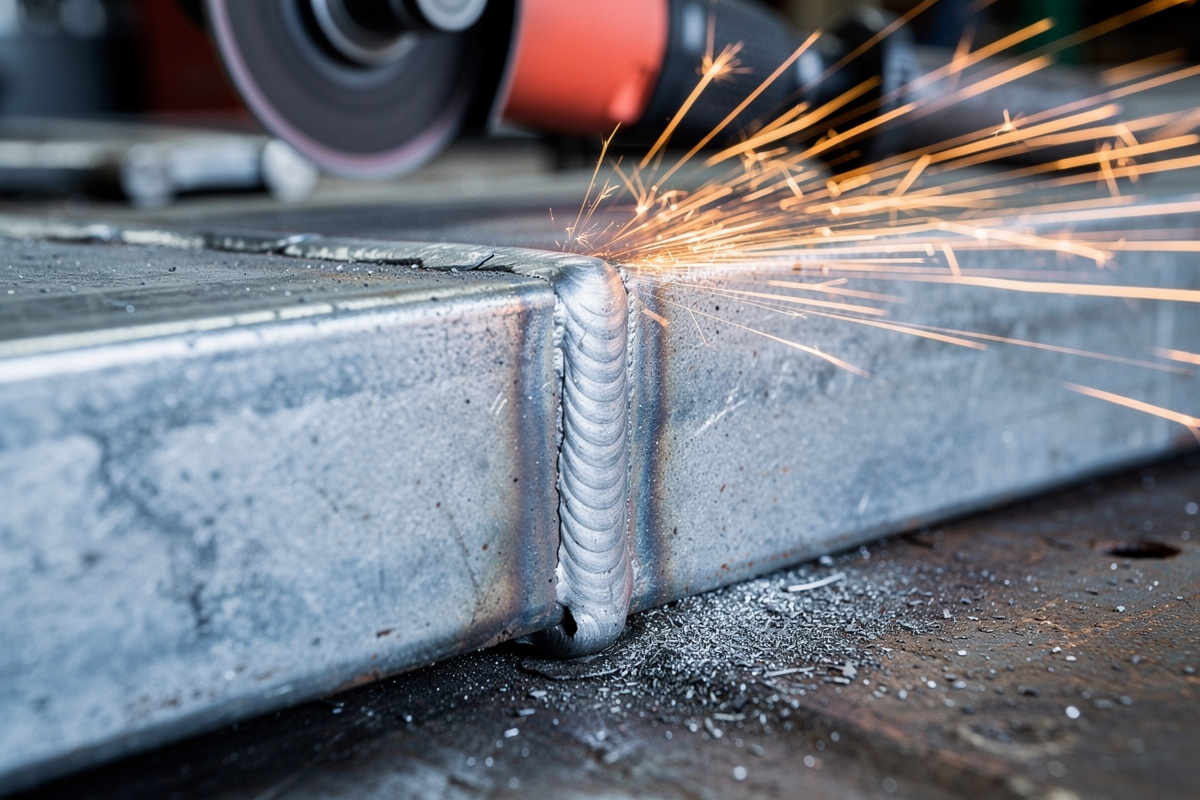

You can weld galvanized steel safely, but only if you do one thing first: grind the zinc coating off the weld zone before you strike an arc. Skip that, breathe the white fume that comes off, and you get metal fume fever — a flu-like night of chills, fever, aches, and a metallic taste that arrives a few hours after the job. I have done plenty of galvanized work building outdoor fixtures, and the grind-back habit is the difference between a clean weld and a miserable night.
Galvanized steel is everywhere a home welder works — fence posts, gate frames, trailer parts, anything that has to live outside without rusting. The zinc coating that protects it from rust is exactly what makes it a fume problem in the arc. This article is about how to handle that coating, recognize the fume fever it causes, and keep the white plume out of your lungs. The metal welds fine; the coating is the whole issue.
Why Galvanized Steel Is a Fume Problem
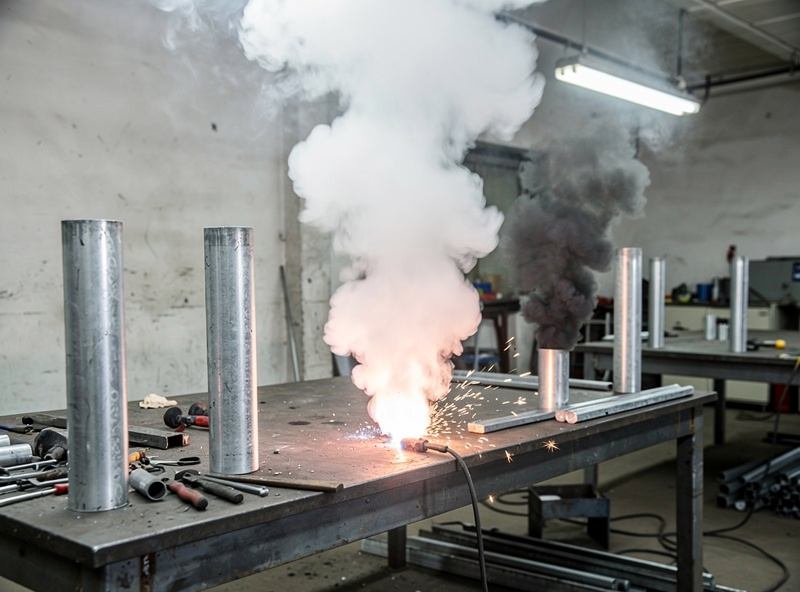
Galvanizing is a zinc coating bonded to steel to stop it rusting. Zinc has a far lower boiling point than steel, so when the arc’s heat hits it, the zinc vaporizes well before the steel even melts. That vapor condenses in the air into a fine white zinc-oxide fume — the pale plume that is the visual signature of welding galvanized. The whiter and thicker the smoke, the more zinc you are burning off and breathing.
This is the key mental model: the danger is not the steel, it is the coating sitting on top of it. The same bare mild steel you weld every day with mild fume becomes a same-day health problem the instant it is galvanized. Knowing what is on the surface before you strike is the entire safety decision here — galvanized looks like ordinary steel under a bit of dirt, and the dull, slightly crystalline silver finish is the giveaway.
It catches people because galvanized stock is so common in exactly the projects a home welder takes on. Chain-link and fence posts, gate and railing tube, trailer frames and brackets, electrical conduit, strut channel, stock-tank and gutter hardware — most of it is galvanized precisely because it lives outdoors. Buy a length of “steel tube” from a hardware store and there is a good chance it has a zinc coating you will not notice until the white plume tells you. When I am not sure, I assume galvanized and grind a test spot: bright bare steel under a dull silver skin confirms it. Treating unknown outdoor-grade stock as galvanized until proven otherwise has saved me more than one bad night.
Metal Fume Fever: What the Zinc Does
Breathe enough zinc-oxide fume and you get metal fume fever — sometimes called “the zinc shakes” or “galvanize flu.” It is your body reacting to the inhaled metal oxide, and the symptoms are unmistakable once you know them:
| Stage | What happens |
|---|---|
| During the weld | Often nothing — you may feel fine, sometimes a sweet metallic taste |
| A few hours later | Onset of chills, fever, headache, body aches, metallic taste |
| That night | Flu-like misery: sweating, shivering, fatigue |
| Within about a day | Symptoms typically pass on their own; you feel washed out but recovering |
The acute zinc reaction is usually self-limiting — it commonly passes within a day. But “usually passes” is not a green light. If symptoms are severe, do not pass, or include trouble breathing, that is a doctor’s call, not something to tough out — this is hazard information, not medical advice. And the bigger point: a night of fume fever means you also breathed everything else in that plume, and repeatedly doing it to yourself is not something to normalize. The reaction is a warning, not a rite of passage.
The Real Fix: Grind the Zinc Back First
The single most effective control is removing the zinc from the weld zone before you weld, so there is far less of it to vaporize. I run my DeWalt DWE402 angle grinder with a flap disc and take the coating back an inch or so on either side of where the weld will go, down to bright bare steel.
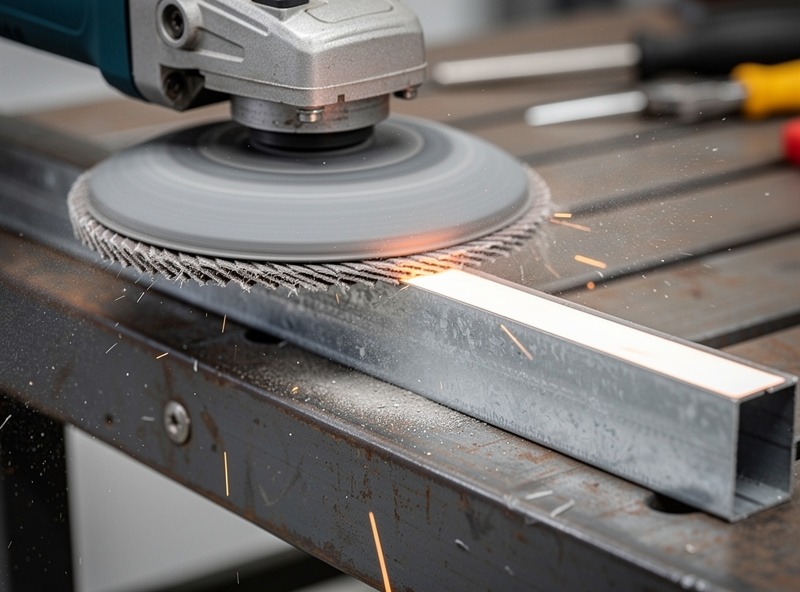
A few notes from doing this a lot. Grind in a ventilated spot and wear eye protection and a particulate mask — grinding zinc still throws zinc dust, just without the arc. A flap disc set makes quick work of the coating without gouging the steel. And remember that the weld will then leave that ground area unprotected from rust — for outdoor work you re-coat the finished weld with a cold-galvanizing or zinc-rich paint so the joint does not become the first place it rusts. Grind back, weld clean, re-coat: that is the whole sequence.
Ventilate and Mask for What’s Left
Grinding back the bulk of the zinc does not make the job zero-fume — some coating always creeps into the weld zone, and the heat reaches zinc just past where you ground. So galvanized work is also a ventilation-and-respirator job, every time.
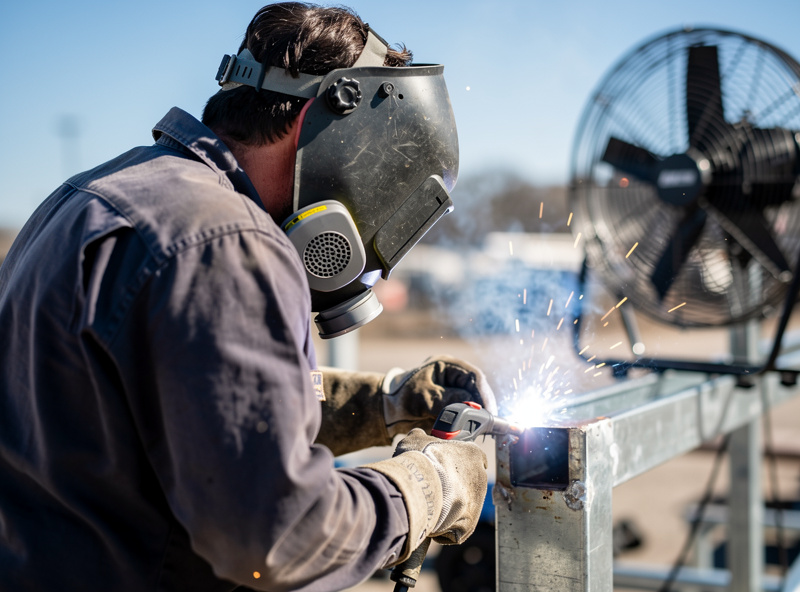
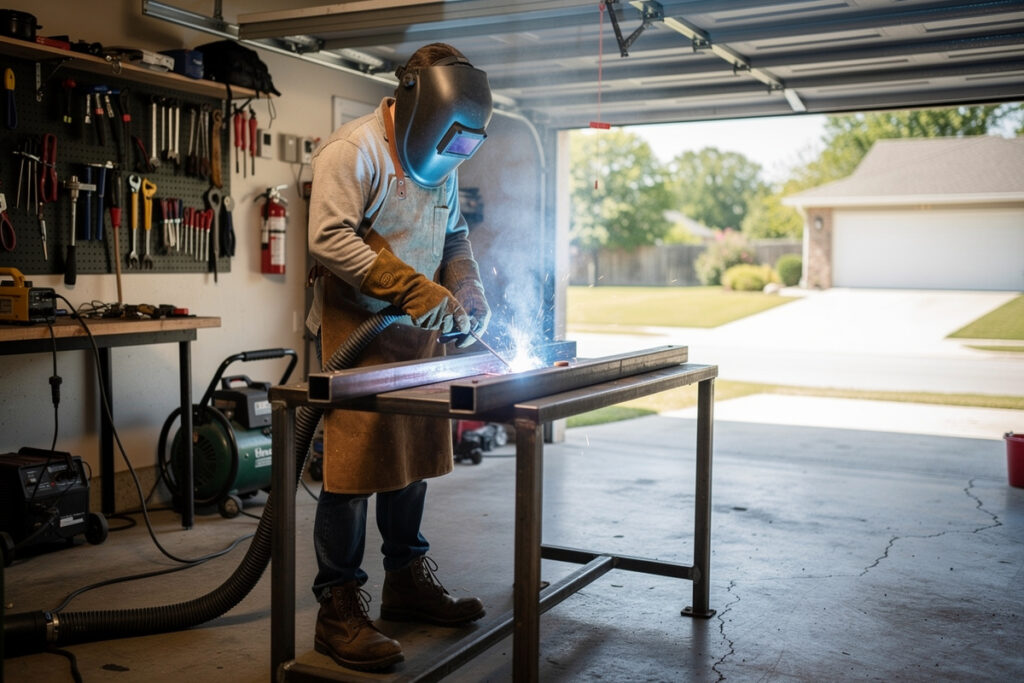
- Weld it outdoors or with strong ventilation. Galvanized is the job I take outside or set up hard airflow for. Position yourself so the breeze or fan carries the white plume away from your face, not across it.
- Pull the fume at the source. A portable fume extractor on the joint captures the zinc plume before it rises into your breathing zone.
- Wear a respirator. A P100 half-mask respirator is the last line for the zinc that gets past everything else. Galvanized is a mask-on job, no debate.
- Keep your head out of the plume. Free and instant: lean so the rising white fume does not pass your nose.
One process note worth knowing: the more aggressive and the hotter you run, the more zinc you boil off at once. If I can, I will use settings that get a sound weld without dumping extra heat into the surrounding coating, and I keep travel moving rather than dwelling on a spot and cooking the zinc on either side. It is a small thing, but on a long galvanized seam it noticeably cuts how much white plume comes up. None of this replaces grinding back and ventilating — it just stacks on top of them. The order of priority never changes: grind the coating off first, then ventilate and capture, then dial in heat, then mask for the remainder.
Galvanized fume is the most common same-day fume hazard a home welder meets, which is why it earns its own article. For the full breakdown of what is in welding fume generally — including the carcinogen and neurological concerns that, unlike zinc, give no same-day warning — see what is in welding fume. The respirator side is in how to choose a welding respirator, and the whole hazard picture is in the welding safety guide.
Can you weld galvanized steel safely?
Yes, if you grind the zinc coating off the weld zone first so there is far less of it to vaporize, then ventilate hard and wear a respirator for what is left. The metal itself welds fine — the zinc coating is the entire hazard. Grind back to bright steel an inch or so each side of the weld, weld clean, and re-coat the finished joint for rust protection.
What is metal fume fever from welding galvanized steel?
It is your body reacting to inhaled zinc-oxide fume, with flu-like chills, fever, aches, and a metallic taste that usually come on a few hours after the job and pass within about a day. It is also called the zinc shakes or galvanize flu. It is a warning, not a rite of passage, and severe or persistent symptoms or any trouble breathing are a reason to see a doctor.
Why is the smoke white when I weld galvanized steel?
Zinc boils at a much lower temperature than steel, so the arc vaporizes the zinc coating before the steel even melts. That zinc vapor condenses into a fine white zinc-oxide fume, which is why galvanized welding produces a distinctly pale, thick plume compared to the grey fume of ordinary mild steel.
How much galvanizing do I need to grind off before welding?
Take the coating back to bright bare steel about an inch or so on either side of where the weld will run, since the heat reaches zinc just past the joint itself. Use a flap disc on an angle grinder, grind in a ventilated area with eye protection and a particulate mask, and re-coat the finished weld with a zinc-rich paint afterward.
Do I still need a respirator if I grind the zinc off first?
Yes. Grinding back the bulk of the coating dramatically reduces the fume but does not eliminate it, because some zinc always creeps into the weld zone and the heat reaches coating just past where you ground. Galvanized stays a ventilation-and-respirator job — weld outdoors or with strong airflow, capture at the source, and wear a P100 half-mask.

Discussion (0)