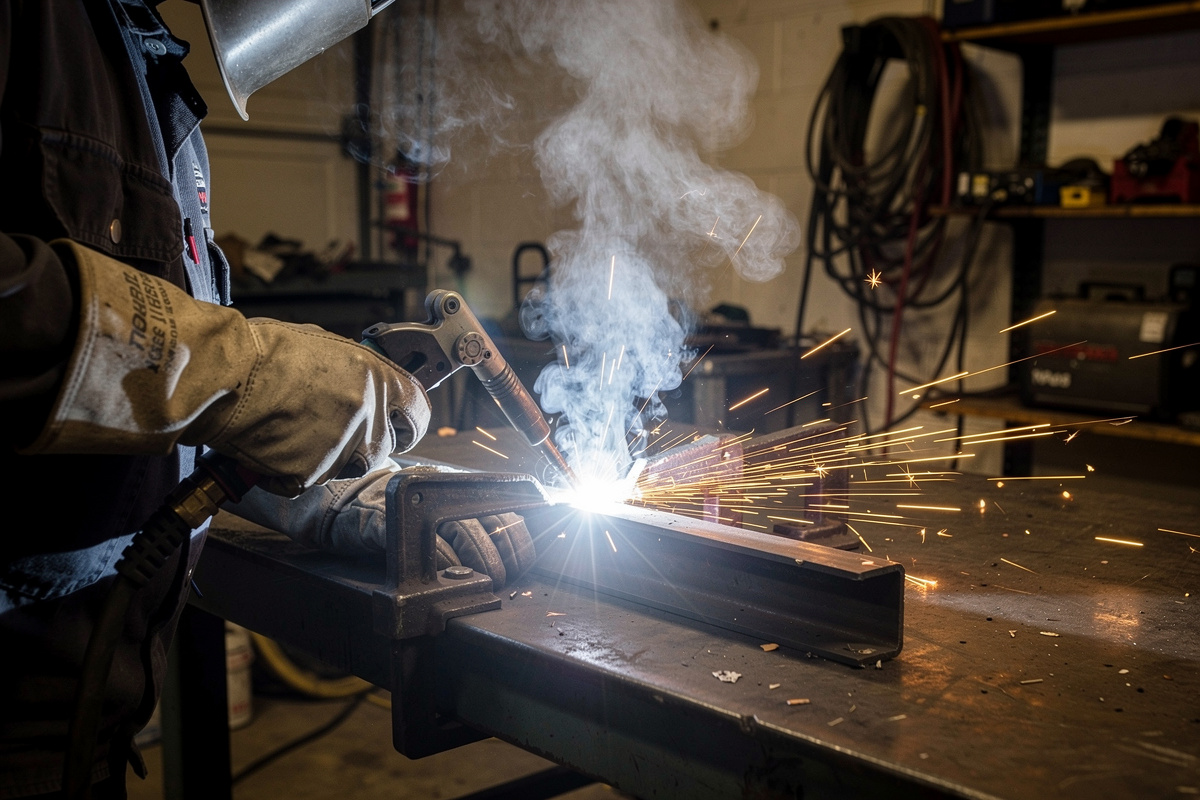

Welding fume is not smoke — it is a cloud of metal oxide particles small enough to pass deep into your lungs, and what is in that cloud depends entirely on what you are welding, what coating is on it, and what wire or rod you are running. The three names that matter most for a home welder are hexavalent chromium, manganese, and zinc oxide, and each one behaves differently in your shop and in your body.
I have run my YesWelder MIG-PRO205DS in the same Sweden garage for years, and the single change that improved my welding the most was not a setting — it was getting my head out of the plume. The fume you can see is the obvious part. The fraction that does the long-term damage is the part you cannot see, the ultrafine particles that hang in the air long after the arc stops. This article breaks down what is actually in the cloud, which metals raise the real flags, and how I keep that cloud out of my lungs without turning the shop into a clean room.
This is hazard education, not a medical guide. If you have symptoms after welding, that is a conversation for a doctor, not a forum. My job here is to keep the bad air away from your face in the first place.
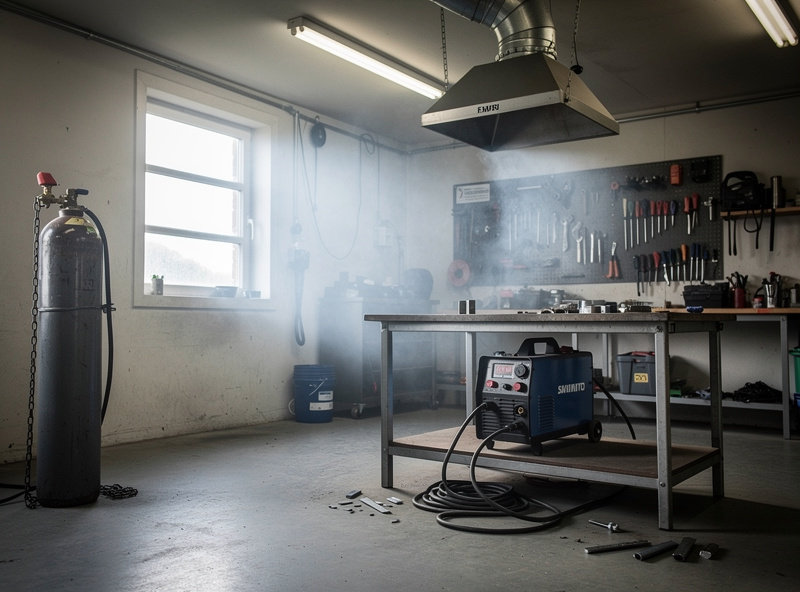
What Welding Fume Actually Is
When the arc melts metal, it does not just splatter — it vaporizes a thin layer of the base metal, the filler wire, and any coating on the surface. That vapor instantly condenses in the air into solid particles, most of them well under a micron across. That is the fume. The smoke you sometimes see on top of it is from burning oil, paint, galvanizing, or flux — separate problem, often a worse one.
The reason fume is a lung issue and not just an eye-watering nuisance is particle size. Anything that visibly drifts and settles is large. The dangerous fraction is the part that stays airborne, gets pulled past your nose hair and into the deep lung where it does not clear easily. That is why “I can’t really see much fume on this weld” is a bad way to judge your exposure — the worst particles are invisible.
Three things drive how nasty your fume is: the base metal (mild steel is the mildest, stainless and galvanized are not), the process (flux-core and stick make far more fume than gas-shielded MIG or TIG), and the coatings (paint, oil, zinc, and primer all add their own toxic load on top of the metal). Change any of those and the cloud changes.
Hexavalent Chromium: The One to Respect Most
Hexavalent chromium — written Cr(VI) — is the fume hazard with the heaviest reputation, and it earns it. It forms whenever you weld stainless steel or anything with a chromium content, because the arc oxidizes the chromium in the alloy into its hexavalent form. It also shows up welding over certain chromate primers and on hardfacing alloys.
Cr(VI) is classed as a known human carcinogen by major health agencies, which is exactly why it sits at the top of this list. It is regulated with one of the lowest exposure limits of any welding contaminant, far stricter than the limit for ordinary mild-steel fume. You will not feel it the way you feel zinc — there is no dramatic same-day reaction that warns you. That silence is the danger: the harm from Cr(VI) is a long-game, repeated-exposure problem, not a one-bad-day problem.
My rule on my own bench: stainless gets welded with the fume extractor arm right on the joint and a respirator on my face, every time, no exceptions. Mike, my welder friend with decades in the trade, treats stainless fume with more respect than almost anything else he runs, and he has watched the industry’s attitude toward it harden over his career. When the hazard is a carcinogen with no same-day warning, you do not wait for a reason to take it seriously.
Manganese: In Almost Every Weld You Make
Here is the one most beginners miss: manganese is in nearly all welding fume, including plain mild-steel MIG. It is an alloying element in steel and in most filler wires — the common ER70S-6 I run on the MIG-PRO is named partly for its deoxidizers, and manganese is a key one. So the fume from your most ordinary, everyday weld carries it.
Manganese is essential in trace amounts as a nutrient, but inhaled metal-oxide manganese from welding is a different exposure entirely, and the concern with it is neurological with long, repeated exposure. Health agencies have tightened the recommended exposure limits for manganese over the years as the research has developed, which tells you the direction the science is pointing.
What makes manganese matter for a hobby welder specifically: because it is in the ordinary fume, it is the contaminant your everyday mild-steel welding exposes you to most. You will never get a galvanized-style warning from it. The protection is the same boring, effective stuff — keep your head out of the plume, pull the fume away at the source, and wear a respirator when you cannot. The mundane fume deserves the same discipline as the scary-sounding one.
Zinc Oxide: The One That Bites Same-Day
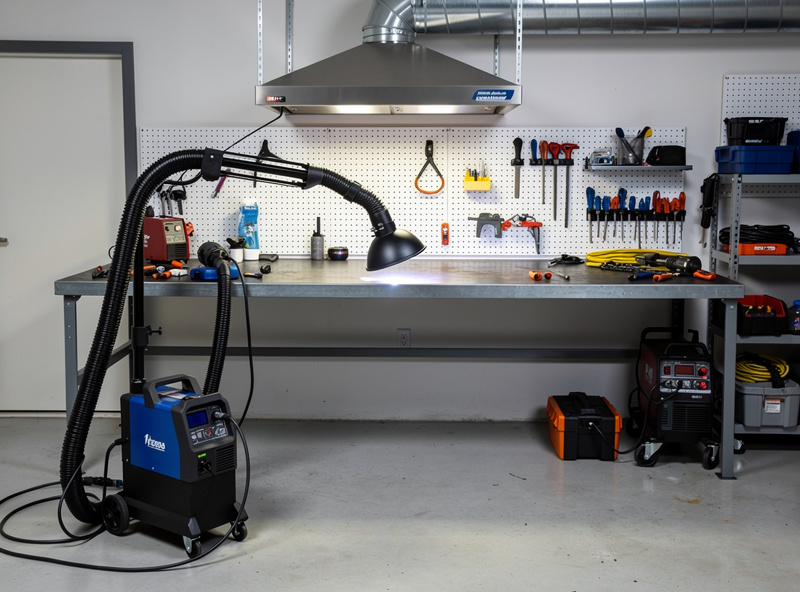
Zinc oxide is the odd one out on this list because it gives you immediate, unmistakable feedback. It comes from welding galvanized steel — the zinc coating vaporizes in the arc and condenses into a fine white fume. Breathe enough of it and you get metal fume fever: flu-like chills, fever, aches, and a metallic taste that typically come on a few hours after the job and pass within a day or so.
Metal fume fever feels alarming the first time, and it is your body telling you in plain language that you breathed something you should not have. Unlike Cr(VI) and manganese, the acute zinc reaction is usually self-limiting — but “usually passes” is not a license to repeat it, and the reaction does not mean the rest of the fume was harmless. The real fix is grinding the zinc coating back from the weld zone before you strike an arc — not toughing out the fever afterward.
The practical lesson zinc teaches every welder: the coating matters as much as the metal. The same bare mild steel that gives you mild fume becomes a same-day problem the moment it is galvanized. Always know what is on the surface before you strike an arc.
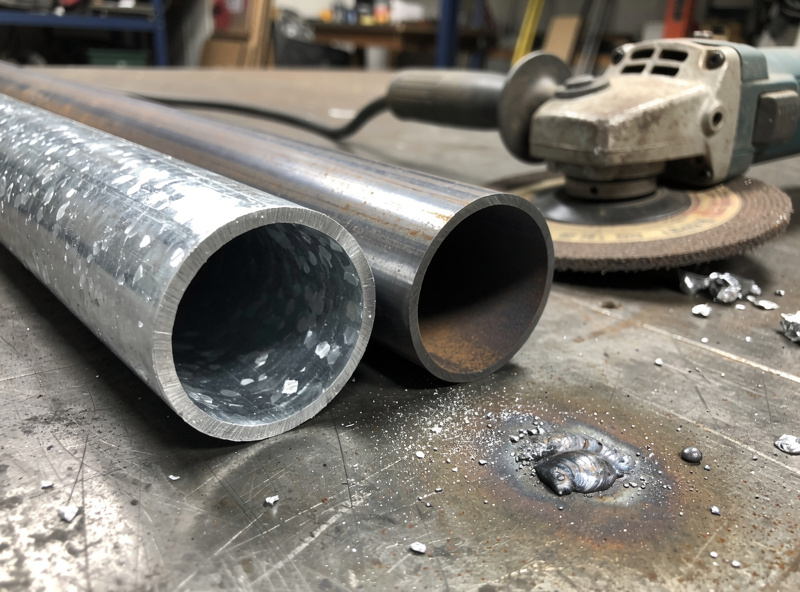
How Process and Metal Change the Fume Load
Not all welding makes the same amount of fume. Here is the rough hierarchy I have lived on my own bench, from cleanest to dirtiest air:
| Process / situation | Relative fume load | Main contaminants of concern |
|---|---|---|
| TIG on clean steel | Lowest | Manganese (low), ozone from the UV |
| Gas-shielded MIG on clean mild steel | Low–moderate | Manganese, iron oxide |
| Stick (SMAW) on mild steel | Moderate–high | Manganese, flux byproducts |
| Flux-core (self-shielded) | High | Manganese, flux byproducts — runs dirty by design |
| Any process on stainless | Variable | Hexavalent chromium, nickel |
| Any process on galvanized | High visible | Zinc oxide — same-day fume fever risk |
Two takeaways from running all of these. First, flux-core’s convenience — no gas bottle, works in wind — comes with the dirtiest air of the common home processes, which is why I treat outdoor flux-core jobs as ventilation jobs. Second, gas-shielded MIG and TIG on clean steel are the cleanest-burning options, but “cleanest” is relative — they still carry manganese, so they are not a free pass on extraction.
How I Keep the Fume Out of My Lungs
The hierarchy that actually works, in order of effectiveness:
- Don’t make the fume worse. Grind coatings, paint, oil, and galvanizing back from the weld zone before you strike. Less junk burning means less to breathe.
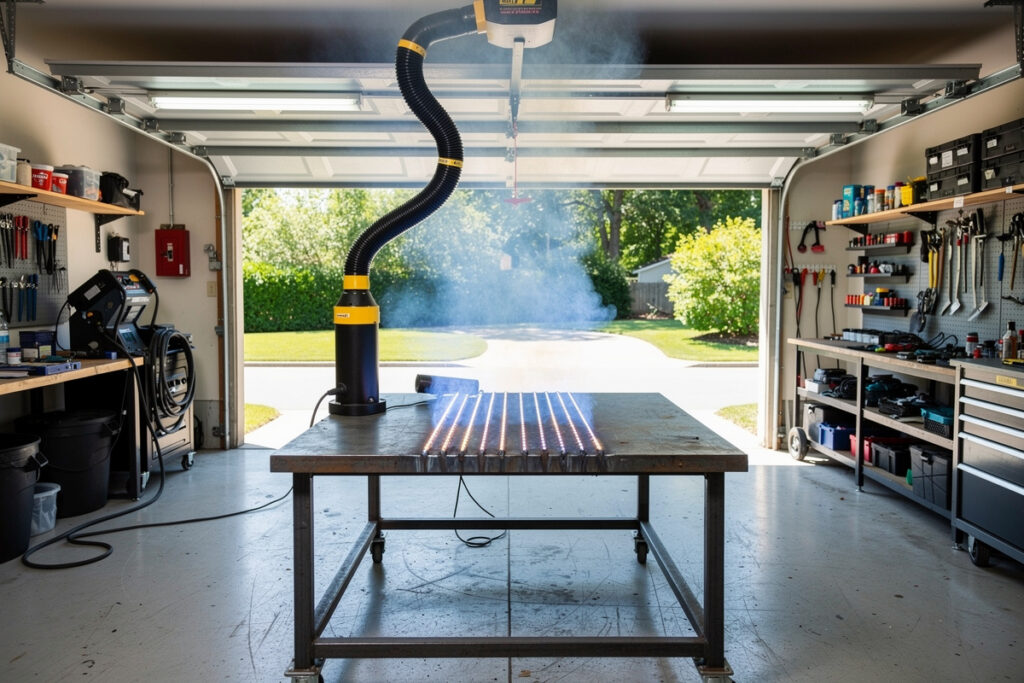
- Capture it at the source. A fume extractor arm or a fume gun pulls the plume away at the arc, before it reaches your face. This is the single biggest improvement I made.
- Ventilate the room. General airflow dilutes what the extractor misses. The airflow math for a home garage is in welding ventilation requirements for a home garage.
- Wear a respirator for stainless, galvanized, flux-core, or any job where capture is not enough — a particulate-rated mask matched to the metal you are burning.
- Position your head. Free and instant: keep your face out of the rising plume. Heat makes fume rise straight up, so a small lean to the side keeps most of it out of your breathing zone.
None of this is exotic. It is the same discipline I apply to fire watch and arc-eye — boring, repeatable habits that keep the long game in your favor. The full picture across helmet, fire, and gas hazards lives in the welding safety guide.
Is mild steel welding fume safe?
Safe is the wrong word. Mild-steel fume is the mildest common welding fume, but it still carries manganese and iron oxide, so it is not nothing. It is the fume you breathe most often because mild steel is what most of us weld daily, which is exactly why the everyday habits — head out of the plume, source capture, ventilation — matter even on ordinary work.
Which welding fume is the most dangerous?
For long-term risk, hexavalent chromium from welding stainless steel — it is classed as a known human carcinogen and gives no same-day warning. For an immediate reaction, zinc oxide from galvanized steel, which causes metal fume fever. Manganese matters because it is present in almost all fume, including plain mild steel.
Why do I feel flu-like after welding galvanized steel?
That is metal fume fever from inhaling zinc oxide — flu-like chills, fever, aches, and a metallic taste that usually appear a few hours after the job and pass within about a day. It is your body warning you. If symptoms are severe or do not pass, that is a doctor’s call, not a forum’s. The prevention is grinding the zinc back from the weld zone and ventilating hard.
Does a welding helmet protect me from fume?
No. A welding helmet protects your eyes and face from the arc’s light and heat, but the fume rises up behind and around the lens and into your breathing zone. Fume protection is a separate job handled by source capture, ventilation, and a respirator rated for welding particulate.
Does TIG welding make less fume than MIG?
Generally yes — TIG on clean steel is among the cleanest-burning processes, with low particulate. But it produces ozone from the UV light, and it still carries manganese on alloyed metals, so it is lower fume, not no fume. Flux-core is the dirtiest common home process; gas-shielded MIG and TIG on clean steel are the cleanest.

Discussion (0)