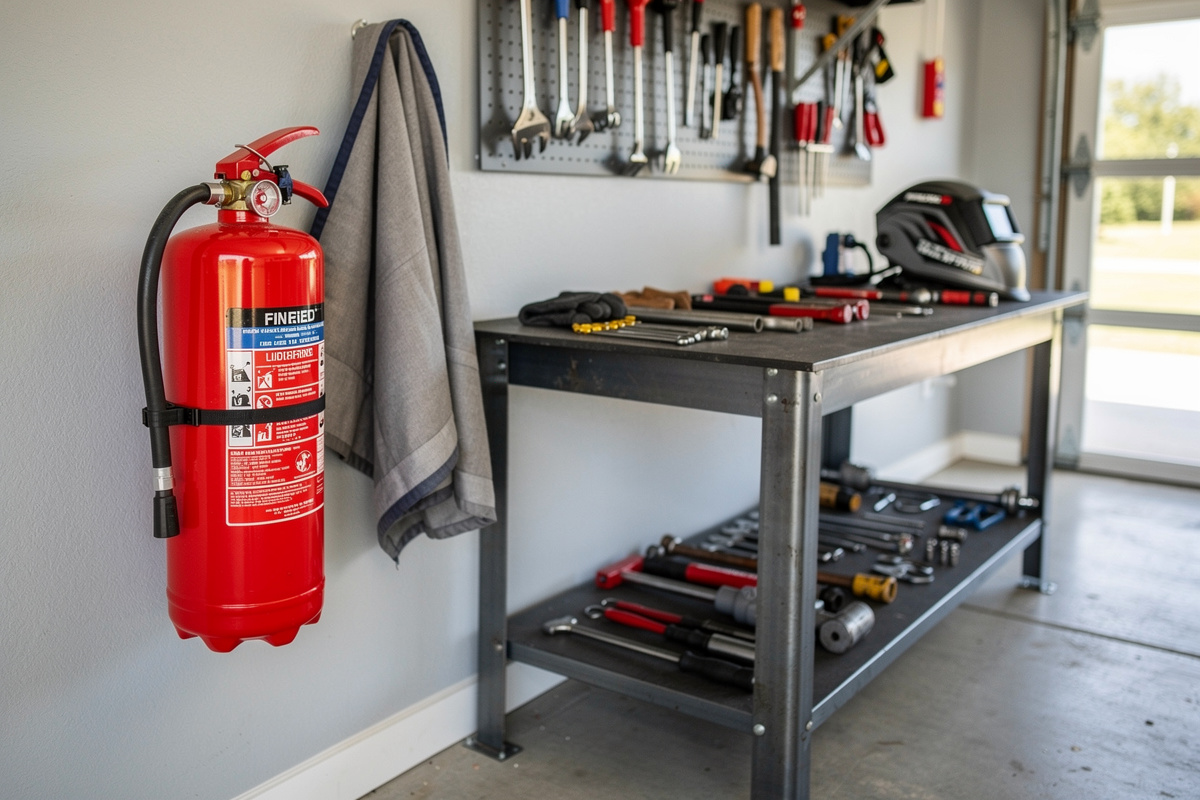

Most welding fires do not start at the arc. They start thirty feet away, twenty minutes later — a spark that rolled under a shelf, smoldered in a pile of rags or sawdust, and caught fire long after you racked the helmet and walked off. That delay is the single most dangerous thing about welding fire, and it is exactly why fire watch and clearance matter more than the extinguisher on the wall.
I weld in a shared workshop in Sweden — same bench area as the CNC, the laser, and the 3D printer — which means flammable junk is never far from the arc, and I have had to be disciplined about clearing it. This is the part of welding safety beginners skip because nothing went wrong the first hundred times. Then the hundred-and-first spark finds the one thing you forgot to move. Here is how I keep that from happening.
Sparks Travel Further Than You Think
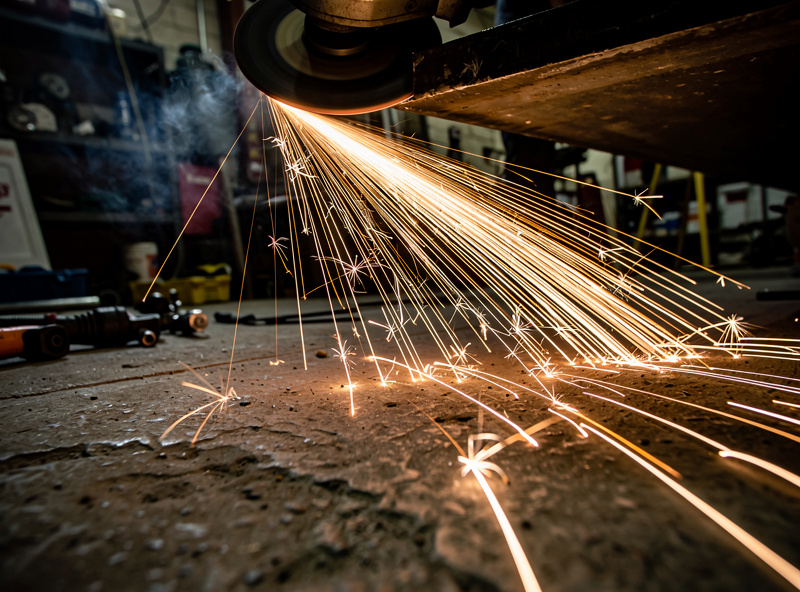
The mistake is imagining sparks fall straight down. They do not. Grinding sparks and weld spatter arc outward, bounce off the floor, and roll. A spark that lands ten feet away with enough heat left to ignite paper is routine, and on a hard floor it keeps going. That is why the safety standard for clearing combustibles around hot work is generous — it is built around how far a live spark actually carries, not how far it looks like it should.
Treat the floor around your bench as a launch zone. Anything within that radius that can catch — cardboard, rags, sawdust, a plastic tote, a fuel can, the spray-paint shelf — is fuel waiting for a spark to find it. The fix is boring and it works: clear it or shield it before you strike, every time.
Clearance: The Zone You Clear Before You Strike
Before the helmet goes down, I clear or cover everything combustible in a wide radius around the work. Here is how I think about the common offenders in a home shop:
| Hazard near the bench | Why it’s a problem | What I do |
|---|---|---|
| Rags, paper, sawdust, cardboard | Catch from a single rolling spark; smolder unseen | Remove from the area entirely |
| Fuel cans, propane, aerosols | Vapor ignites; cans can rupture | Out of the room, never just “to the side” |
| Plastic totes, foam, tarps | Melt and burn; drip burning plastic | Move out or shield with a fire blanket |
| Floor cracks and gaps | Sparks lodge in them and smolder | Sweep clean; wet down a concrete floor if dusty |
| Walls and benches behind the work | Wood backing chars and can ignite | Hang a welding blanket behind the joint |
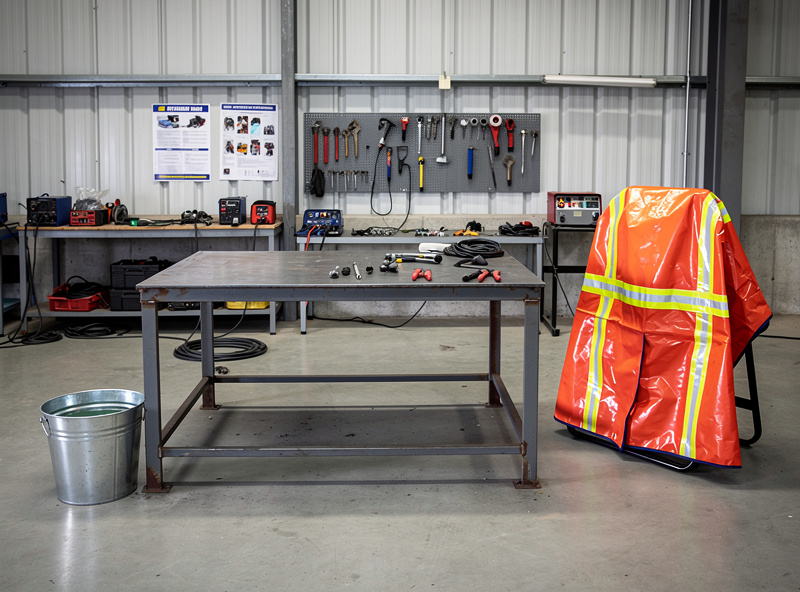
For the things that cannot move — a wood wall, a workbench, a finished floor — a fiberglass welding fire blanket draped over or behind them catches spatter that would otherwise char or ignite. It is the cheapest piece of fire safety gear I own and it lives within reach of the bench.
Fire Watch: The Habit That Catches the Delayed Fire
Fire watch is the rule that addresses the delayed-ignition problem directly: do not walk away the moment you stop welding. A smoldering spark needs time to build into flame, and that window is usually after you have finished and your guard is down. The industry standard for hot work is to keep watching the area for a stretch of time after the last spark — and to make a final sweep before you leave.
- Stay in the area after the last weld. Do not leave immediately. Give a hidden spark time to reveal itself while you are still there to catch it.
- Use your nose. Smoldering smells before it flames. If something smells like it is cooking after you stop, find it.
- Do a final walk before locking up. Check under benches, behind shelves, and anywhere a spark could have rolled out of sight. This last sweep is the one that catches the fire that would have started overnight.
- Keep the door to escape clear. Never weld yourself into a corner with the only exit behind the hot work.
The Right Extinguisher, Within Reach
An extinguisher does you no good across the shop behind a stack of steel. Mine is mounted at hand height near the exit, on the path I would take if I needed to back away from a fire and grab it on the way. For a welding shop, an ABC dry-chemical fire extinguisher is the sensible all-rounder — it handles ordinary combustibles, flammable liquids, and energized electrical equipment, which covers the realistic ways a weld bench catches fire.
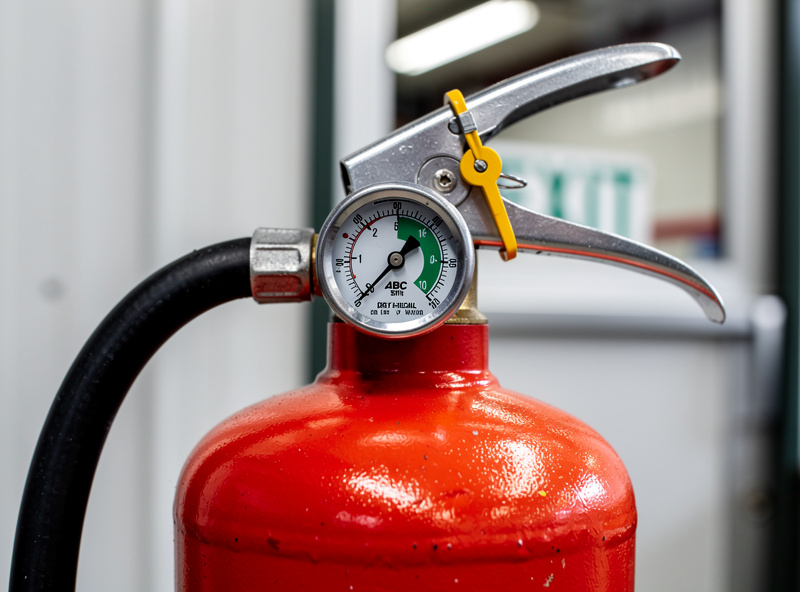
Two honest notes. First, an extinguisher is for a small fire you catch early — if it is past that, you leave and call the fire service, full stop. Second, know the PASS basics before you need them: pull the pin, aim at the base of the flames, squeeze the handle, sweep side to side. Reading the label for the first time while something burns is not a plan. And a bucket of sand or water by the bench handles the small smolders that do not warrant emptying an extinguisher.
The Hidden-Combustible Trap
The fire that surprises experienced welders is the one on the other side of what they are welding. Heat conducts straight through steel. Weld a bracket onto a frame and the wood, insulation, or wiring touching the back of that frame can char and ignite from conducted heat alone — no spark required. Before you weld anything attached to a wall, a vehicle, or a structure, find out what is on the far side and behind it. This is the trap that turns a routine repair into a structure fire, and it is invisible from the welder’s side of the joint.
The same trap applies to anything hollow or previously full of something flammable. A container that once held fuel, oil, or solvent can hold enough vapor to flash even when it looks empty and dry — welding a “clean” drum or tank is one of the classic ways hobbyists get hurt, and it is genuinely dangerous, not a folk tale. If you do not know with certainty what was in a sealed vessel and that it has been properly purged, do not put an arc to it. That is one of the few welding jobs where the honest answer for a home welder is simply: not this one.
One more home-shop specific: a cluttered garage is a fire risk in a way a bare shop is not, because the combustibles are already in the spark radius and you stop noticing them. I do a deliberate clear-out before any session longer than a few tacks — it takes two minutes and it is the cheapest insurance in the building. The discipline is not heroics; it is just refusing to weld next to fuel.
Fire is one of the three things in welding that genuinely hurt you — alongside the fume and the arc. The complete picture across all of them is in the welding safety guide, and the fume side specifically is in what is in welding fume. If you do get burned despite all this, welding burns first aid covers the immediate steps.
How far do welding sparks travel?
Far further than most beginners expect. Grinding sparks and weld spatter arc outward, bounce off the floor, and roll, so a live spark landing ten feet away with enough heat to ignite paper is routine. That is why the standard clearance for hot work is generous — it is based on how far a spark actually carries, not how far it looks like it should.
How long should I stay on fire watch after welding?
Do not walk away the instant you stop. A smoldering spark needs time to build into flame, and that window is usually after you finish and your guard is down. Stay in the area for a stretch after the last weld, use your nose for the smell of smoldering, and do a final walk under benches and behind shelves before you lock up.
What kind of fire extinguisher do I need for welding?
An ABC dry-chemical extinguisher is the sensible all-rounder for a welding shop. It handles ordinary combustibles, flammable liquids, and energized electrical equipment, which covers the realistic ways a weld bench catches fire. Mount it at hand height near the exit, not buried behind the steel rack.
Can welding start a fire on the other side of the metal?
Yes, and it is the trap that catches experienced welders. Heat conducts straight through steel, so wood, insulation, or wiring touching the back of what you weld can char and ignite from conducted heat alone, with no spark needed. Always find out what is on the far side before welding anything attached to a wall, vehicle, or structure.
Do I need a fire blanket for home welding?
It is the cheapest high-value fire gear you can own. A fiberglass welding fire blanket draped over or behind the things that cannot move — a wood wall, a bench, a finished floor — catches spatter that would otherwise char or ignite. Keep one within reach of the bench and hang it behind the joint before you strike.

Discussion (0)