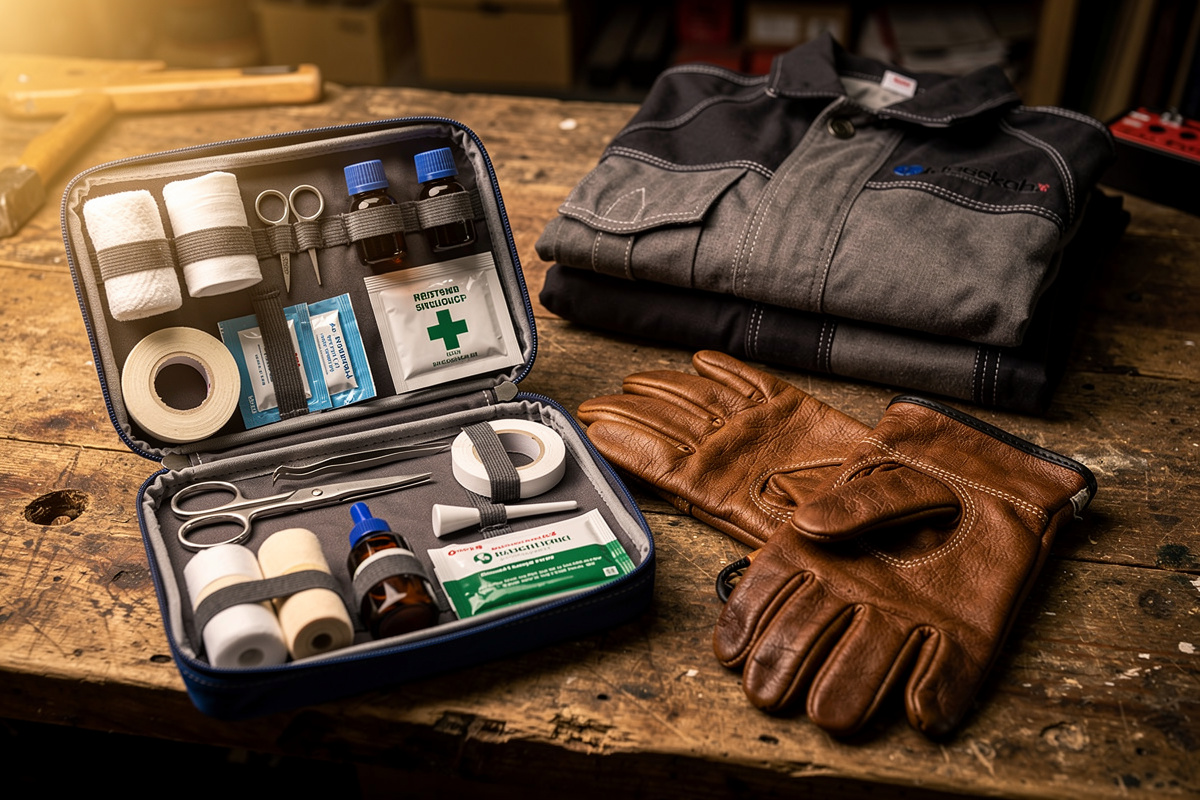

For weld spatter or arc burns to skin: stop welding, cool the burn under running water at 60-65°F for 20 minutes, do not apply ice or ointment, cover with sterile non-stick dressing, and seek medical care for any burn larger than 3 inches or deeper than outer skin.
I have caught weld spatter inside my glove cuff twice — once on a sleeve cuff that had ridden up during a vertical bead, once on the back of my hand from spatter ricocheting off a fixture. Both times the 20-minute cool-water rinse made the difference between a healed-in-three-days red mark and what would have been a blistered scar. The international burn-association protocol (20 minutes of cool running water, the U.S. American Burn Association baseline is at least 5) is the same one a hospital ER will follow: cool, cover, seek care for anything past first-degree. The full safety context is in the welding safety guide. Written by Kenny Nyhus Fadil; this guide is general first-aid information — review the welding safety disclaimer and seek professional medical help for any serious injury.
As an Amazon Associate I earn from qualifying purchases.
Step 1: Immediate Action — Cool Water for 20 Minutes
The single most effective first-aid step for any thermal burn is 20 minutes of cool running water (60-65°F, never ice-cold) directly on the burn site — the duration international burn-association guidelines recommend. Sooner is better, but there is more window than most people assume: cooling remains genuinely beneficial for up to three hours after the burn, not just the first few minutes, so don’t skip it because you did not reach a tap immediately. Drop everything and get the burn under water as soon as you can.
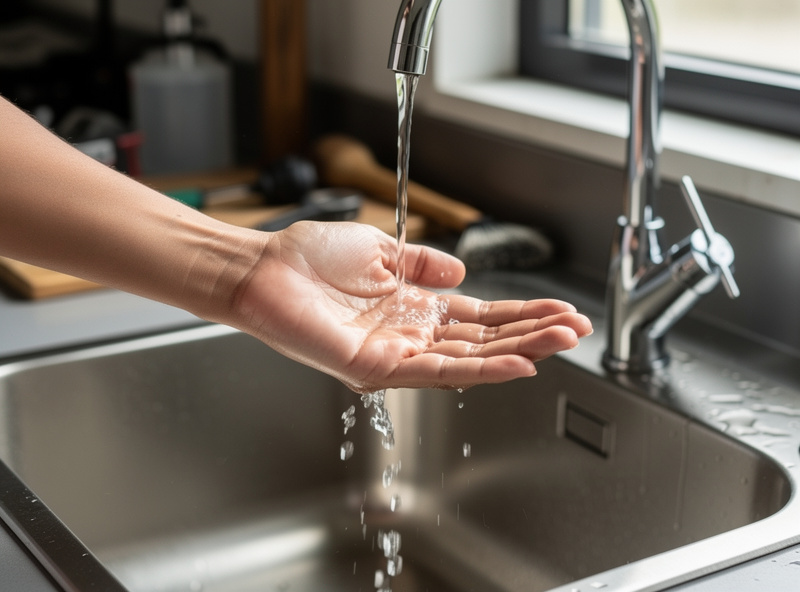
Tap water from a workshop sink is appropriate. Do not use ice, ice water, or freezer packs directly on burned skin — they cause vasoconstriction and tissue damage from cold injury. Submerge the area or run water over it for the full 20 minutes; setting a timer prevents stopping early because the pain seems better. Pain reduction during cooling does not mean the burn has stopped progressing — the cooling is still working at minute 18 even when minute 5 already feels survivable.
Step 2: Assess the Burn Depth
Burns are categorized by depth, which dictates next steps. First-degree (superficial) burns redden the skin and are painful but unbroken — like a sunburn. Most weld spatter contact and brief arc-flash skin exposure is first-degree. Second-degree burns blister or ooze fluid; the skin surface breaks. Third-degree burns char the skin or appear waxy white/leathery and may be painless because nerve endings are destroyed.
First-degree burns under 3 inches across heal in 3-7 days with home care. Second-degree burns require medical evaluation if they are larger than a quarter, on the face/hands/feet/genitals, or show signs of infection. Third-degree burns of any size are emergencies — call 911 or get to an ER. Arc flash to the eyes (which feels like sand 6-12 hours after exposure) also requires same-day medical care; corneal burns heal but only with proper treatment.
Step 3: Cover the Burn — What to Use and What to Skip
After cooling, cover the burn with a sterile non-stick dressing or clean cling film (kitchen plastic wrap is genuinely good for this). Avoid cotton balls, fluffy gauze, or fabric that can shed fibers into the wound. Do not apply butter, toothpaste, oil, ice, or “burn ointments” with anesthetics — these all worsen outcomes per modern first-aid protocols.
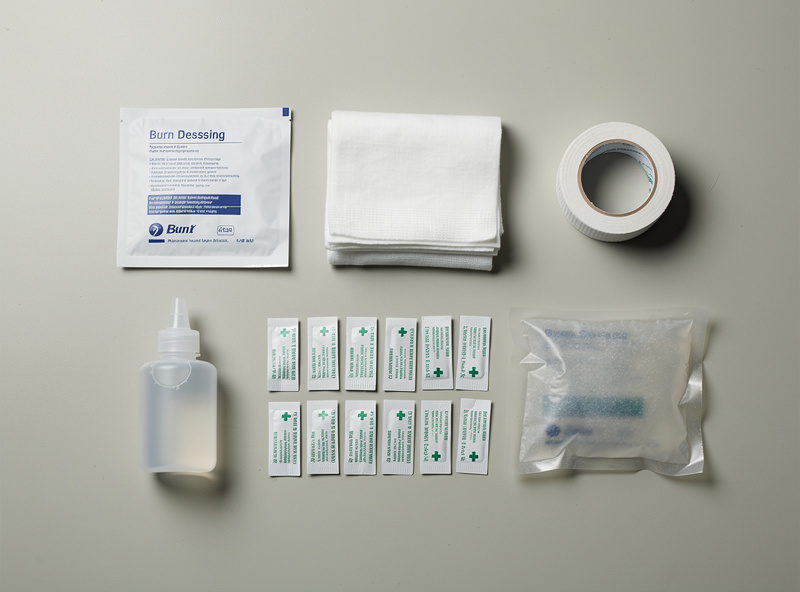
The right products for a workshop first-aid kit: sterile non-stick dressings (Telfa or similar), sterile gauze pads, medical tape, plastic cling film for emergency cover, a sterile eye wash bottle for ocular splashes, and a digital thermometer for fever monitoring (infection sign). Aloe vera gel is acceptable AFTER the burn has cooled and only on first-degree (intact skin) burns. Petroleum-jelly gauze is OK for the same context. The welding safety guide covers full PPE checklists.
Step 4: When to Go to the Emergency Room
Six conditions trigger an ER visit, no judgment-call required. (1) Any burn larger than 3 inches across. (2) Any burn that breaks the skin or blisters on the face, hands, feet, or genitals. (3) Any third-degree burn (charred, leathery, painless). (4) Burns from molten metal that solidified to the skin (do not pull off — let the ER handle removal). (5) Inhaled hot fumes or smoke. (6) Eye burns from arc flash, weld spatter, or grinding sparks.
Two more situations need same-day urgent care: any burn that develops red streaking from the wound (lymphangitis — bacterial infection traveling), and any fever above 100.4°F within 48 hours of a burn. Burns that initially seem minor can become infected within 24-72 hours; monitor for warmth, swelling, and pus regardless of how small the original injury was.
Prevention — What Should Have Stopped This
Most weld burns happen because of one of three failures: leather gloves with worn cuff seams letting spatter inside, a shirt collar exposing skin to overhead arc, or short pants/sneakers exposing legs and feet. The fix is not “be more careful” — it is wearing the right PPE every time, no exceptions.
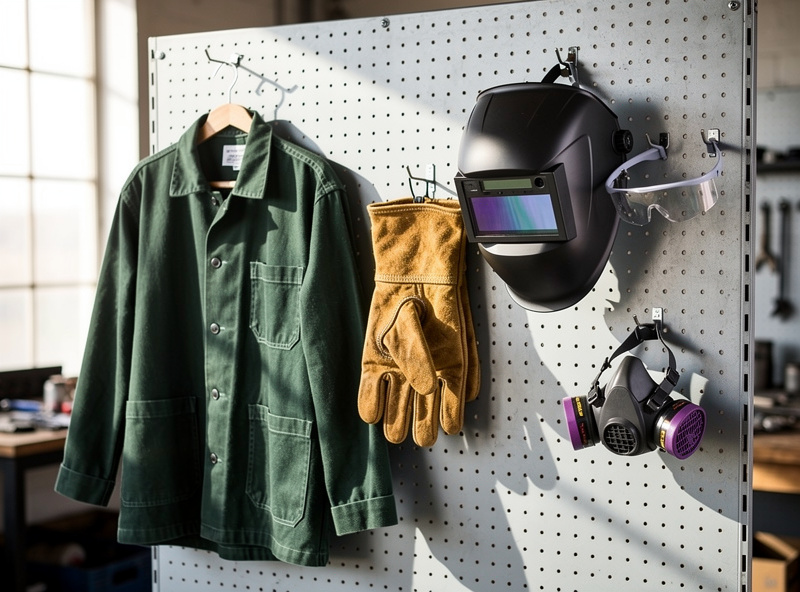
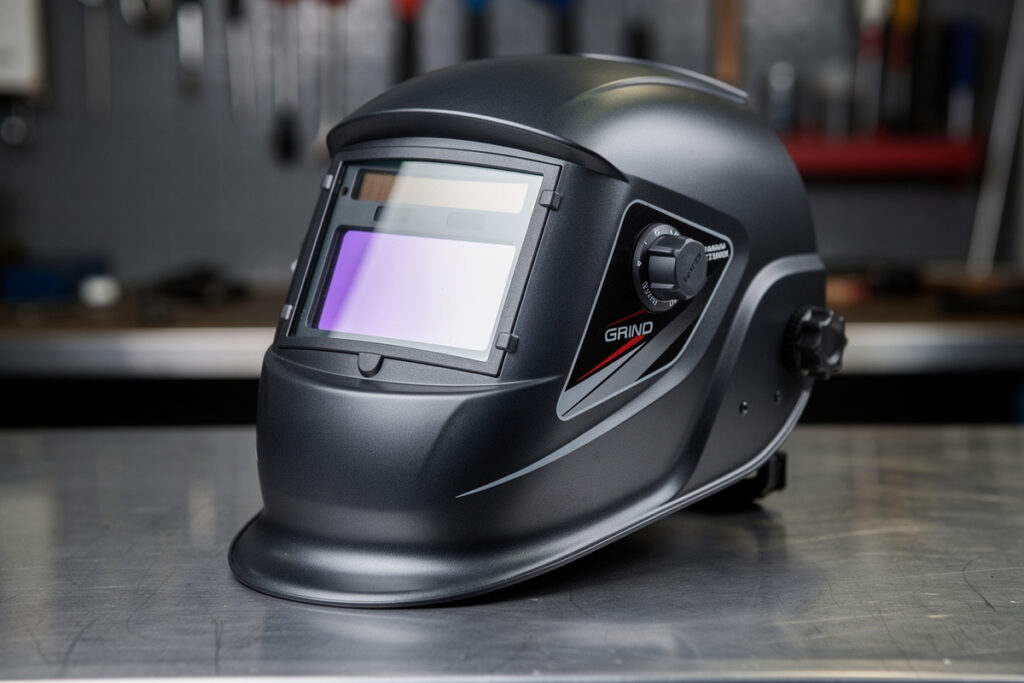
The minimum welding PPE setup is: long natural-fiber pants (cotton, NOT synthetic), closed leather boots, leather welding gloves with intact cuffs, a flame-resistant cotton long-sleeve shirt or welding jacket, and an auto-darkening welding helmet. Skip any one of these and you are accepting a burn risk that the next burst of spatter will exploit. The minimum PPE list applies even for “just one quick weld” — most workshop burns happen during quick jobs, not long ones.
Arc Eye (Welder’s Flash) — A Special Case
Arc flash to the eyes — sometimes called welder’s flash, photokeratitis, or arc eye — is unique because symptoms appear 6-12 hours after exposure, long after you assumed you got away with it. It feels like sand under the eyelid, with light sensitivity and tearing. The damage is to the cornea (a UV burn), and it heals on its own in 24-48 hours, but the recovery period is genuinely awful.
Treatment: dark room, cool damp cloth over closed eyes, OTC pain relief, and call your eye doctor in the morning. Antibiotic eye drops are sometimes prescribed to prevent secondary infection. Severe cases or any vision loss requires same-day ophthalmology. Prevention is the auto-darkening helmet — never weld even briefly without it, and never let bystanders into the work area without eye protection. The best welding helmet for home use covers shade selection and the essential welding equipment guide covers bystander shielding.
First-Aid Action Table by Burn Type
| Injury | Severity | Immediate action | Next step |
|---|---|---|---|
| Spatter contact, red unbroken skin | 1st degree | 20 min cool water | Aloe gel + monitor 48h |
| Spatter contact, blistering | 2nd degree | 20 min cool water | Sterile dressing + medical eval |
| Molten metal stuck to skin | 2nd-3rd degree | 20 min cool water around it | ER — do not pull off metal |
| Charred/leathery skin | 3rd degree | Cover with cling film, call 911 | ER immediately |
| Arc flash to eyes | Photokeratitis | Dark room, cool cloth | Eye doctor next day |
| Hot fume inhalation | Variable | Fresh air, breathing assessment | ER for any wheezing/pain |
| Burn with red streaking | Infected | Cover loosely | Urgent care same day |
Frequently Asked Questions
How long should you run cold water on a welding burn?
Run cool tap water (60-65°F, not ice cold) on the burn for a full 20 minutes, the duration international burn-association guidelines recommend. Sooner is better, but cooling remains genuinely beneficial for up to three hours after the burn, not just the first few minutes. Set a timer rather than stopping when pain subsides — cooling is still actively reducing damage at minute 18.
Should you put ice on a welding burn?
No — ice or freezer packs directly on burned skin cause vasoconstriction and additional tissue damage from cold injury. Use cool tap water at 60-65°F instead. The goal is to reduce tissue temperature gradually, not freeze the area. Wrapped cold packs are acceptable as comfort aids during transport to medical care, but never as primary cooling.
When should you go to the ER for a welding burn?
Go to the ER for any burn larger than 3 inches across, any burn on the face, hands, feet, or genitals that breaks skin, any third-degree burn (charred or leathery), molten metal stuck to skin, hot fume inhalation, or arc flash to the eyes. Also seek urgent care if a burn develops red streaking or fever within 48 hours — both are infection signs.
What is welder’s flash and how is it treated?
Welder’s flash (arc eye, photokeratitis) is a UV burn to the cornea that produces sand-in-eye pain, light sensitivity, and tearing 6-12 hours after exposure. Treatment is rest in a dark room, cool damp cloth over closed eyes, and OTC pain relief. Symptoms resolve in 24-48 hours. Severe pain or vision changes require same-day ophthalmology evaluation.
Can you put butter or toothpaste on a welding burn?
No — butter, toothpaste, oils, and many home remedies trap heat in the tissue and increase infection risk. Modern first-aid protocol calls for cool running water for 20 minutes followed by sterile non-stick dressing. Aloe vera gel and petroleum-jelly gauze are acceptable AFTER cooling and only on first-degree (unbroken skin) burns.
What welding PPE prevents most burns?
The minimum welding PPE setup is long natural-fiber pants, closed leather boots, leather welding gloves with intact cuffs, a flame-resistant cotton long-sleeve shirt or welding jacket, and an auto-darkening welding helmet. Most workshop burns trace back to one missing element from this list — usually short sleeves, exposed neck collar, or worn-cuff gloves. Wear all five every time, no exceptions.

Discussion (0)