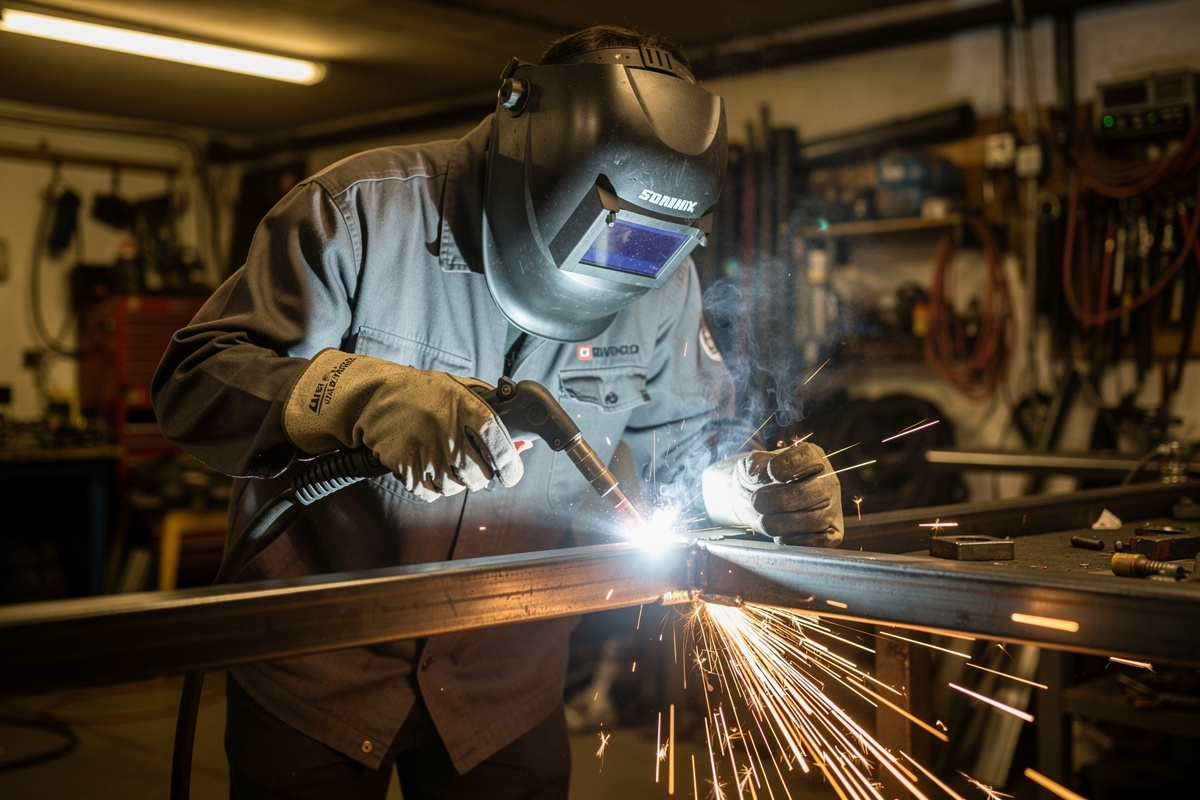

Push and pull describe which way you angle and move the MIG gun. Push (gun tilted forward, traveling away from the finished weld) gives a wider, flatter, shallower bead with less spatter and a cleaner look. Pull or drag (gun tilted back, traveling toward the finished weld) digs deeper and runs hotter. Solid-wire MIG is usually pushed; flux-core is always dragged.
This is one of those topics where YouTube comment sections argue past each other because nobody defines the trade-off. There is no universally “right” direction — there is the right direction for your material, position, and process. After years of laying both on the same bench, I can tell you the choice genuinely changes penetration and appearance, and getting it wrong is a quiet cause of weak or ugly welds beginners blame on their machine. Start from the MIG welding complete guide for the fundamentals, then use this to decide which way to point the gun.
What Push and Pull Actually Mean
The direction is defined by where the wire points relative to travel. In a push (forehand) technique, the gun tilts so the wire points in the direction you are moving, leading the puddle. In a pull or drag (backhand) technique, the wire points back at the bead you just laid, and you travel away from the gun’s lean. The puddle either chases the arc (push) or the arc digs into the trailing edge (drag).
That single difference in where the arc force lands is what changes everything downstream. When you push, the arc pressure pushes the molten puddle backward and the heat spreads ahead over cooler metal, so penetration is shallower and the bead spreads wide. When you drag, the arc digs into the already-hot trailing puddle and drives heat down into the joint, so penetration deepens and the bead piles up narrower and taller. Travel angle is usually 5 to 15 degrees off vertical either way; it is the lean direction, not the amount, that flips push to drag.
Push MIG: Wider, Flatter, Cleaner
Push gives a wider, flatter bead with less penetration, less spatter, and a better-looking weld. Because the arc rides ahead over cool metal and the gas shield blankets the joint before you weld it, push is the go-to for thin material, aluminum, and any weld that needs to look good. The cost is reduced penetration, so it is not ideal where you need deep fusion into thick steel.
On thin sheet, push is almost mandatory — the shallow, spread-out heat is exactly what keeps you from blowing through, which is why my thin sheet metal guide leans on it. On aluminum with a spool gun, push also keeps the argon shield ahead of the puddle and stops you dragging oxide into the bead. And on visible work — a railing, a piece of furniture — the flatter, lower-spatter push bead simply finishes nicer with less grinding. The gas coverage advantage is real too: pushing lays the shielding gas down over clean metal a fraction of a second before the arc reaches it, which can mean fewer porosity problems on solid wire.
Pull (Drag) MIG: Deeper and Hotter
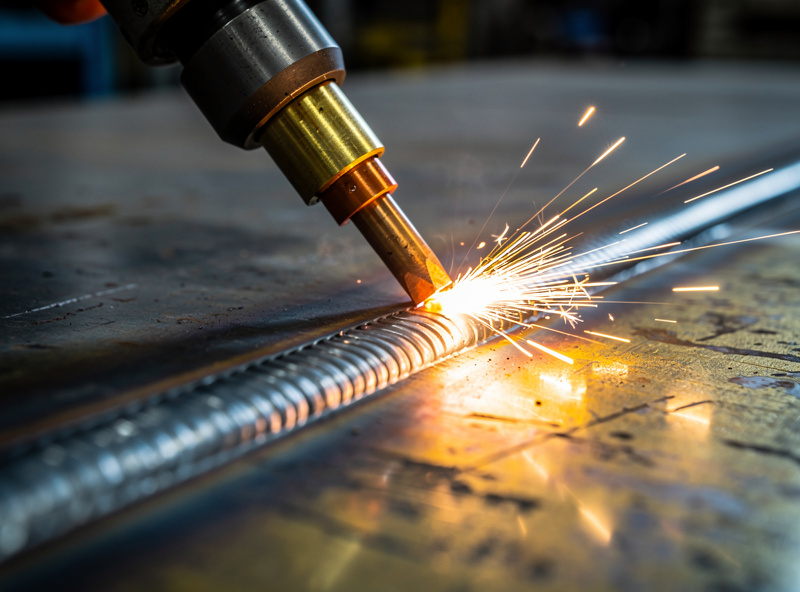
Dragging the gun gives deeper penetration and a narrower, taller bead, at the cost of more visible spatter. Because the arc digs into the trailing puddle, drag concentrates heat into the joint, making it the better choice for thicker steel where you need real fusion depth. It also gives a clearer view of the puddle, since the gun is leading your line of sight.
I drag on thicker structural steel, on dirtier material, and any time penetration matters more than looks — the kind of work where a deep, sound weld beats a pretty one. The trade-off is spatter: drag throws more, so plan on cleanup or an anti-spatter coating, and if it gets excessive my guide on MIG spatter causes and fixes walks through it. The visibility point is underrated for beginners — with a drag angle you can see the joint and the leading edge of the puddle clearly, which makes it easier to track a line and judge fusion. On a thick fillet that has to hold, I will take the deeper drag bead every time, accepting the extra grinding.
| Factor | Push (forehand) | Pull / Drag (backhand) |
|---|---|---|
| Penetration | Shallower | Deeper |
| Bead profile | Wider, flatter | Narrower, taller |
| Spatter | Less | More |
| Appearance | Cleaner | Rougher |
| Puddle visibility | Lower | Higher |
| Best for | Thin steel, aluminum, looks | Thick steel, penetration |
| Flux-core | No (slag inclusions) | Yes, always |
Disclosure: HomeWelder is reader-supported. As an Amazon Associate I earn from qualifying purchases made through links in this article, at no extra cost to you. I only point to gear I actually use or would buy for my own shop.
The Flux-Core Exception: Always Drag
Self-shielded flux-core wire must always be dragged, never pushed. Flux-core generates a slag layer over the weld, and that slag must trail behind the arc. If you push flux-core, you drive the molten slag forward into the puddle ahead of the arc, trapping it as slag inclusions that weaken the weld. The shop mnemonic is simple: if there is slag, you drag.
This catches a lot of beginners who learn push on gas-shielded solid wire and then switch to a gasless flux-core spool for outdoor work without changing technique. The result is a bead full of trapped slag and porosity that looks fine on top and fails on a bend test. Gas-shielded solid MIG has no slag, so you are free to push or drag by preference; the instant you load self-shielded flux-core, drag becomes mandatory. The deeper differences between the two wires — metallurgy, polarity, where each belongs — are covered in my gas vs gasless MIG guide. For technique, just remember the slag rule and you will not trap inclusions.
Travel and Work Angles That Matter
Beyond push versus pull, hold a travel angle of about 10 to 15 degrees and a work angle suited to the joint — roughly 45 degrees on a flat fillet, splitting the two plates evenly. Too steep a travel angle exaggerates push or drag effects and can blow the shielding gas around; too flat and you lose directionality. The work angle controls where the bead ties into each plate.
On a T-joint fillet, aiming the wire slightly more at the bottom plate compensates for heat rising and gives even legs; on a lap joint, favor the thicker edge. These angle habits matter as much as the push-or-drag choice, and getting them wrong shows up as undercut on one side or a bead that sits on top without tying in. Consistent gun angle is one of the core skills I flag in common beginner welding mistakes, because a wandering angle undoes good machine settings. Lock your wrist, move from the shoulder and elbow, and keep the contact-tip-to-work distance steady at around 3/8 inch.
When to Push and When to Drag
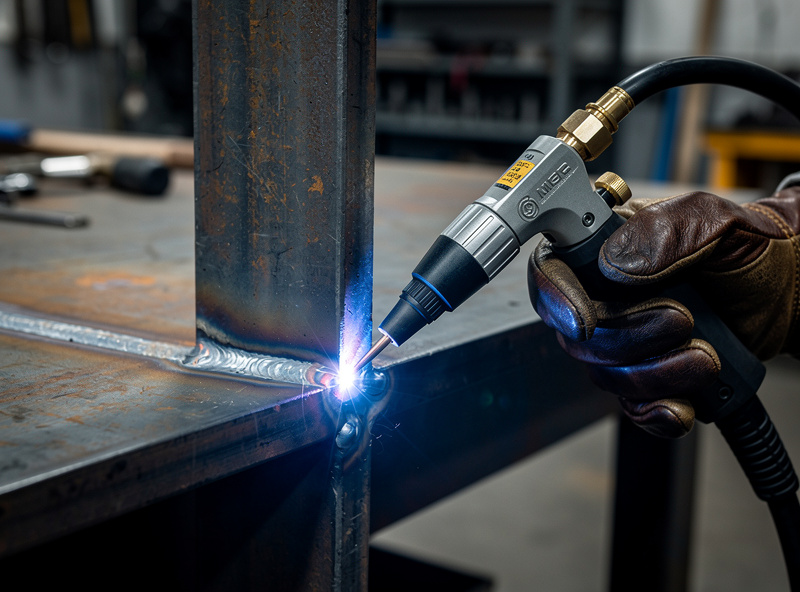
Default to push for solid-wire MIG on thin steel, aluminum, and cosmetic welds; default to drag for thick steel where penetration matters and always for flux-core. If you are unsure on solid wire, push gives a more forgiving, better-looking bead for a beginner, so it is the safer starting habit on most home-shop work.
My practical rule on the bench: thin or pretty, push; thick or structural, drag; slag, drag. For 90% of what a home fabricator builds — brackets, carts, frames out of 1/8 to 1/4 inch steel with solid wire and gas — push produces a clean, sound weld and is easier to keep consistent. I switch to drag when I am on heavier plate and want the penetration, or when I have loaded flux-core to weld outside where wind would strip a gas shield. There is no prize for dogma here; the best welders fluidly pick the direction the joint in front of them needs. Run test beads both ways on scrap of your actual material and cut them — seeing the penetration difference in cross-section teaches it faster than any chart, a habit I push in the MIG settings chart too.
The Gear That Makes Technique Easier
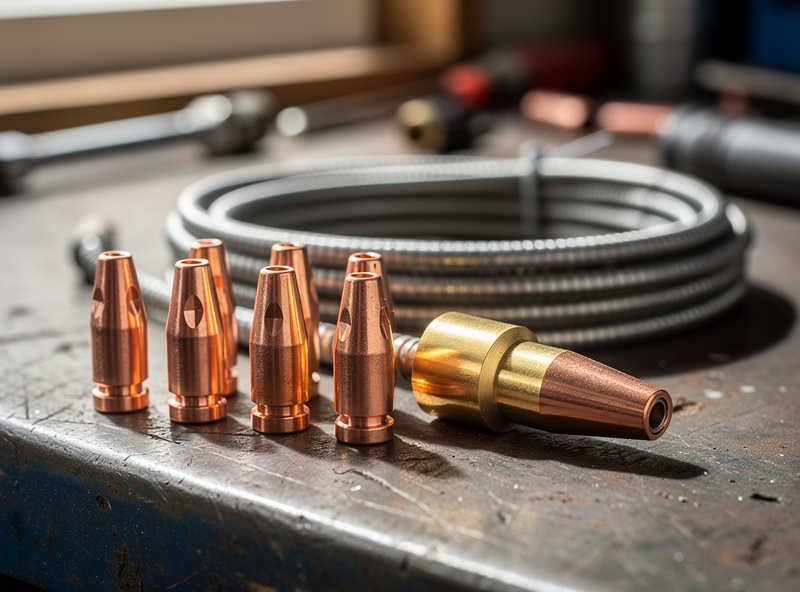
Good technique is easier with a gun that tracks smoothly and consumables that feed without drama. A worn liner, a clogged nozzle, or a mismatched contact tip introduces wander and stutter that you will mistake for bad hand control. Keep the consumable path clean and the angle work becomes the only variable you are managing.
A fresh set of MIG contact tips in your wire size keeps the arc starting where you point it instead of wandering, which matters most when you are trying to hold a precise push or drag angle. A can of anti-spatter nozzle gel earns its keep on drag welds where spatter is heavier, keeping the nozzle clear so gas coverage stays even. And if your liner is old, a replacement MIG gun liner removes the feed stutter that masquerades as a shaky hand. None of it is expensive, and all of it lets your technique — not your hardware — decide the bead.
Frequently Asked Questions
Should you push or pull when MIG welding?
For solid-wire MIG, push for thin steel, aluminum, and cosmetic welds because it gives a wider, flatter, lower-spatter bead. Drag for thick steel where you need deeper penetration. Flux-core must always be dragged so its slag trails the arc. Push is the safer default for most home-shop work.
Does push or pull give deeper penetration in MIG?
Pull (drag) gives deeper penetration. Dragging points the arc back into the trailing puddle and drives heat down into the joint, producing a narrower, deeper bead. Pushing spreads heat ahead over cooler metal for a wider, shallower weld, so drag wins when fusion depth matters on thicker steel.
Why must flux-core wire be dragged, not pushed?
Self-shielded flux-core creates a slag layer that must trail behind the arc. If you push it, the molten slag is driven ahead into the puddle and trapped as slag inclusions, weakening the weld. The rule is: if there is slag, you drag. Gas-shielded solid wire has no slag, so either direction works.
What is the correct MIG travel angle?
Hold about 10 to 15 degrees of travel angle off vertical, leaning forward for push or backward for drag. Steeper exaggerates the effect and can disturb the gas shield; flatter loses directionality. Pair it with a work angle around 45 degrees on a flat fillet so the bead ties evenly into both plates.
Is push or pull better for a beginner?
Push is the more forgiving habit for a beginner on solid-wire MIG. It produces a flatter, better-looking, lower-spatter bead and is easier to keep consistent on the thin-to-medium steel most home projects use. Learn drag once you move to thicker plate or load flux-core, where it becomes the right choice.
Does push vs pull change spatter?
Yes. Pushing generally throws less spatter because the arc rides ahead over cooler metal, while dragging concentrates heat in the trailing puddle and throws more. If spatter is heavy on drag welds, an anti-spatter nozzle gel and correct voltage and wire speed reduce cleanup significantly.

Discussion (0)