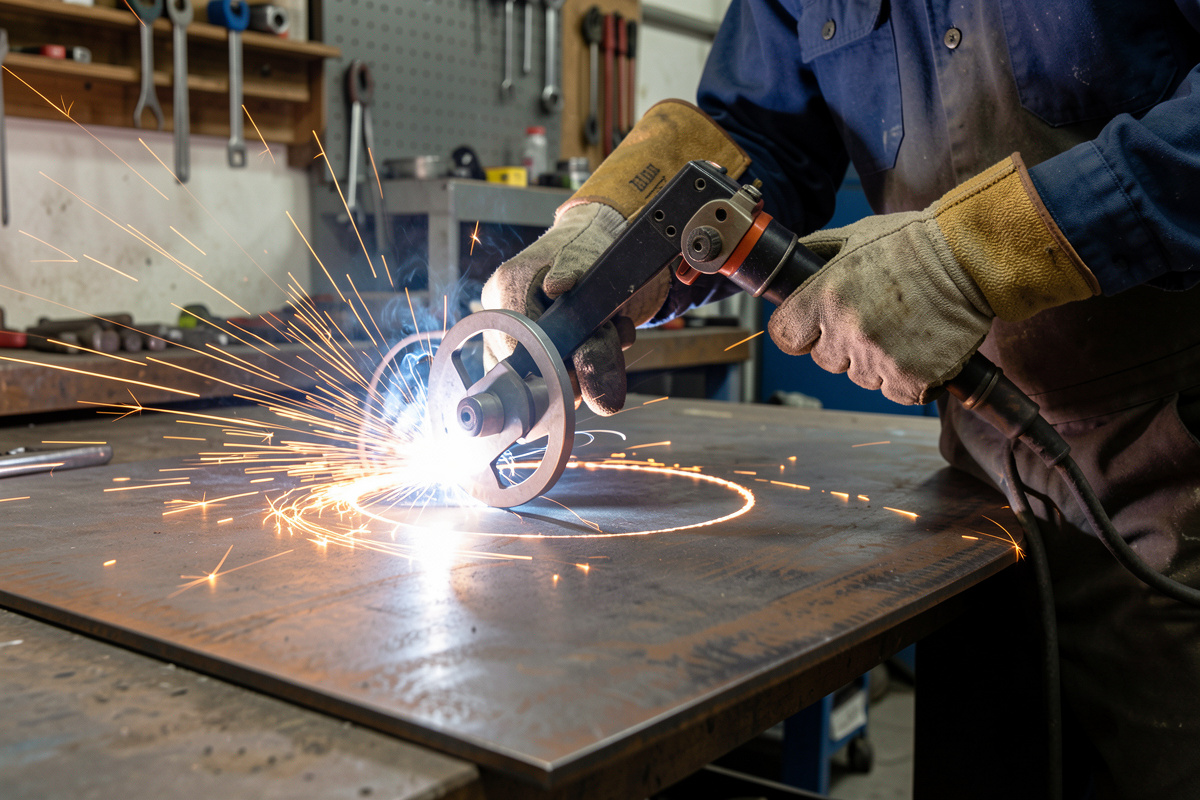

To cut circles with a plasma cutter, use a magnetic pivot guide: anchor the pivot at the circle’s center, set the radius on the arm, and swing the torch in one smooth pass. A steady pivot holds a circle within about 1 mm of round, far cleaner than any freehand attempt. Curves follow the same rule — let a guide or your body, not your wrist, steer the cut.
Freehand circles are where most home welders fight their plasma cutter and lose. I did too, until I stopped trusting my hand and started trusting a pivot. Everything below is how I cut round and curved on the same bench as my YesWelder MIG-PRO205DS, including the jig settings, the standoff trick, and the mistakes that cost me a few scrapped discs. For the broader cutting workflow, start at the plasma cutting and metal prep guide.
How Do You Cut a Perfect Circle with a Plasma Cutter?
Cut a perfect circle by pivoting the torch around a fixed center point. A magnetic circle-cutting guide pins to the plate, an adjustable arm sets the radius, and the torch rides the arm so every point stays the same distance from center. Done right, the cut holds within roughly 1 mm of true round on a 6-inch disc.
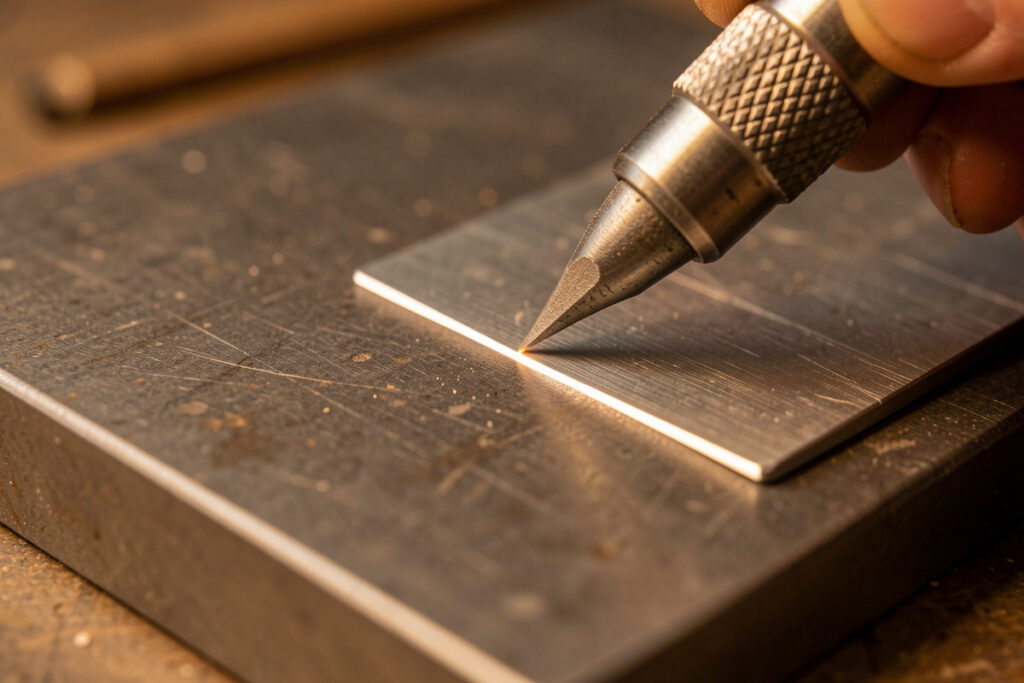
The mechanism matters because plasma reacts instantly to standoff and speed. If your hand drifts the torch closer or farther from the plate mid-cut, the kerf wanders and the edge bevels unevenly. A pivot removes both variables: the radius is locked, and a roller or wheel guide holds the standoff constant. I set my pivot center with a center punch so the magnetic base can’t creep, dial the arm to the radius I marked in soapstone, and make one continuous pass without stopping. Stopping mid-circle leaves a divot and a restart mark that you’ll spend longer grinding out than the cut took.

What Tools Cut the Cleanest Circles?
The cleanest circles come from a dedicated plasma circle-cutting guide — a magnetic or suction pivot with a roller standoff wheel. Most fit torches with a standard machine or hand barrel and cut circles from about 3 inches up to 24 inches. A roller wheel keeps the standoff at the 1/8-inch the consumables want.
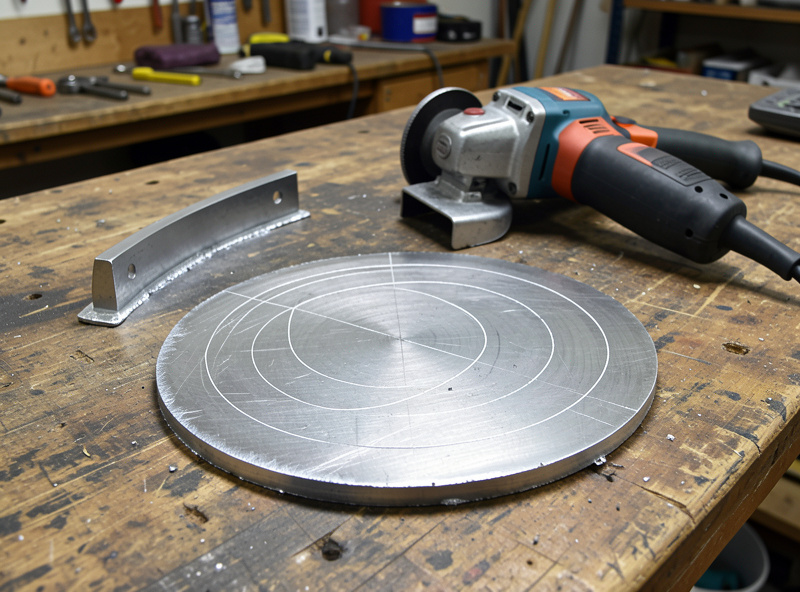
You have three realistic options. A factory circle guide from your torch’s maker is the most repeatable. A magnetic pivot with a clamp-on torch holder is the cheap, flexible choice I use most — it adapts to any torch and any radius within the arm length. For one-off large circles, I’ll drill a small pilot hole at the center, drop in a bolt as a pivot, and tie a rigid bar between the bolt and the torch handle. Whatever the jig, a standoff roller is the upgrade that separates a clean cut from a wavy one, because it does the job your wrist can’t: holding the tip a constant distance off the plate through the whole arc. Match the consumables to the job first — the right nozzle and electrode matter as much as the jig.
How you start the cut decides a lot too, and it splits by whether you want the disc or the hole. If you are keeping the disc, start outside the circle on the scrap side, lead the torch into the line, and run the full circle so the pierce mark lands in waste. If you are cutting an internal hole and keeping the surrounding plate, you have to pierce on the line itself, so I pierce slightly inside the scrap and walk out to the line rather than plunging dead on it, which keeps the messy pierce blow-back off the finished edge. On the pivot itself, I always sweep the same direction the swirl-flow nozzle favors, because the cleaner side of a plasma kerf is the side the gas vortex spins toward; cut so the good side faces your keeper piece and the slightly beveled side ends up on the scrap. Small choices, but they are the difference between a disc that drops out clean and one that needs ten minutes on the grinder.
How Do You Cut Smooth Curves and Arcs?
For freehand curves, steer with your whole arm and shoulder, not your wrist, and keep the torch moving at a steady travel speed. Drag-tip consumables let you rest the nozzle on the plate so standoff stays constant while you trace a curved line, which is the single biggest improvement for hand-cut curves on thin steel.
Curves that aren’t full circles — brackets, gussets, decorative profiles — are where layout earns its keep. I mark the line in soapstone, then for tight radii I’ll cut a cardboard or thin-steel template and trace it, riding the torch shield against the template edge like a router bit against a fence. The drag-tip trick is the key on freehand work: a drag-shield consumable is designed to touch the plate, so you physically can’t drift the standoff. Travel speed is the other half — too slow and the kerf widens and dross builds on the curve’s inside edge; too fast and the arc doesn’t sever. On a clean curve the sparks blow straight down through the bottom, which is your real-time signal the speed is right.
What Settings Cut Round Without Dross?
Dross-free circles come down to amperage matched to thickness, a constant 1/8-inch standoff, and travel speed tuned so sparks exit the bottom of the cut. On 1/4-inch steel I run my hand torch near 40 amps and move at a pace that keeps the spark plume blowing down and through, not back up at me.
Too much heat at too slow a pace is the usual cause of a dross beard on the underside, and it’s worse on a circle because the inside of the curve naturally slows. If I see hard dross clinging to the bottom edge, I speed up the travel before I touch the amperage. Clean, dry air is non-negotiable here — moisture in the line wrecks both cut quality and consumable life, which is the whole reason the air compressor and its drying matter as much as the cutter. After the cut, a quick pass with my DeWalt DWE402 grinder knocks off whatever light dross remains and trues the edge for welding. Mike, my welder friend, put it best: “A good circle is 80% setup. By the time you pull the trigger, the cut’s already decided.”
Safety When Pivot-Cutting Circles
Pivot-cutting keeps your hand near a live arc and a spinning shower of sparks, so the safety basics tighten up. Wear shade-rated eye protection — plasma arc brightness demands at least ANSI Z87.1+ rated lenses — leather gloves, and keep loose sleeves clear of the pivot arm. OSHA’s cutting rules under 29 CFR 1910.252 still apply: clear combustibles, set a fire watch, and ventilate the metal fume.
The circle-specific hazard is the offcut. When the cut closes, you’re left with a hot disc (or a hot ring, if you cut an internal hole) that can drop, tip, or slide off the bench — I’ve had a freshly cut disc slide right where my forearm had been a second earlier. Plan where the offcut falls before you start, support it if it’s heavy, and never reach across the cut line. And if you’re cutting galvanized or coated stock, grind the coating back at the cut line first or ventilate hard — zinc-oxide fume causes metal-fume fever, and a circle cut puts your face right over the plume.
Frequently Asked Questions
What is the smallest circle a plasma cutter can cut?
With a pivot guide, most hand plasma cutters cut circles down to about 3 inches in diameter. Smaller than that, the torch barrel and the tight radius fight each other. For tiny holes, drill or use a hole saw instead of plasma.
Do I need a special torch to cut circles?
No. A standard hand or machine plasma torch cuts circles fine with a magnetic pivot guide and a standoff roller. A drag-tip consumable helps most because it rests on the plate and keeps the standoff constant through the whole arc.
Why does my plasma circle have a beveled edge?
A beveled circle edge usually means inconsistent standoff or travel speed. A pivot arm with a standoff roller fixes the standoff, and one continuous pass at steady speed fixes the rest. Swirl-flow nozzles also reduce bevel by stabilizing the arc.
Can I cut circles freehand without a jig?
You can, but accuracy suffers. Freehand circles wander because your wrist can’t hold a constant radius and standoff at once. For anything that needs to be round, a pivot guide is worth the few minutes to set up and gives a far cleaner result.
How do I stop dross on the inside of a curve?
Dross on a curve’s inside edge means you slowed down through the turn. Keep travel speed constant so sparks blow straight down through the cut. If dross still builds, increase travel speed before changing amperage, and make sure your air is clean and dry.

Discussion (0)