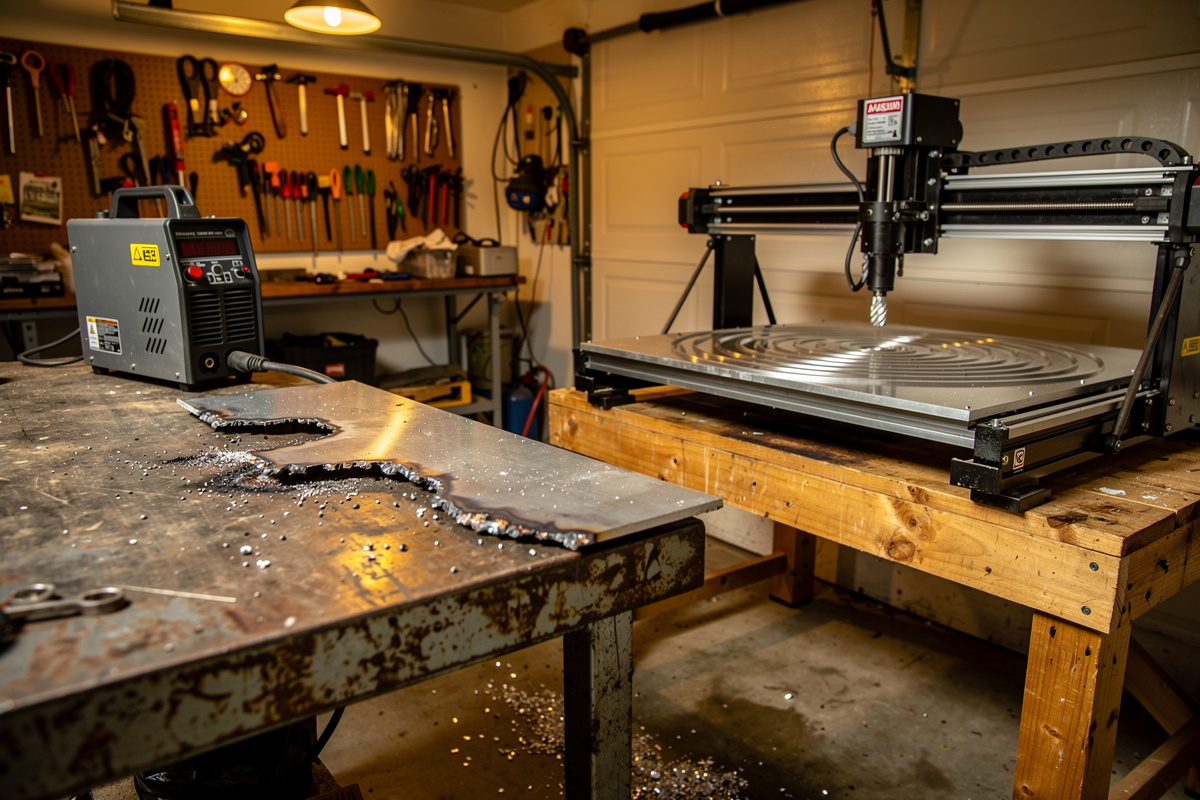

Plasma cutting aluminum at home works on 1-2mm sheet but produces dross-heavy, irregular kerfs above 3mm. After burning through three consumable sets on a fender repair, I now use a CNC router for any aluminum thicker than 18-gauge and keep plasma for steel.
Most plasma marketing claims aluminum capability up to 12mm. My 30-amp inverter will technically arc through 6mm aluminum, but the resulting parts need 30 minutes of grinding cleanup per square foot — time I would rather spend welding. This guide walks through why aluminum behaves badly under plasma, the situations where plasma still wins, and how I split aluminum work between two tools. For plasma-cutting fundamentals across all materials, the plasma cutting and metal prep guide covers the consumables, gas selection, and table setup that make every cut cleaner.
As an Amazon Associate I earn from qualifying purchases.
Why Aluminum Is the Hardest Material for Home Plasma Cutters
Plasma cutting works by ionizing compressed air or nitrogen into a 30,000°F arc that melts metal and blows the molten material out of the kerf. Steel and stainless cut cleanly because both alloys melt at predictable temperatures and the slag falls away. Aluminum is different on every count: its thermal conductivity is 3-5x higher than steel, so heat dissipates faster than it accumulates; the surface oxide layer (Al2O3, melting point 2072°C — far above the aluminum itself) interferes with arc stability; and the resulting molten aluminum sticks to the underside of the cut as dross instead of dropping away — Hypertherm’s own aluminum plasma-cutting guide confirms all three mechanisms and the faster travel speed/higher amperage needed to control them.
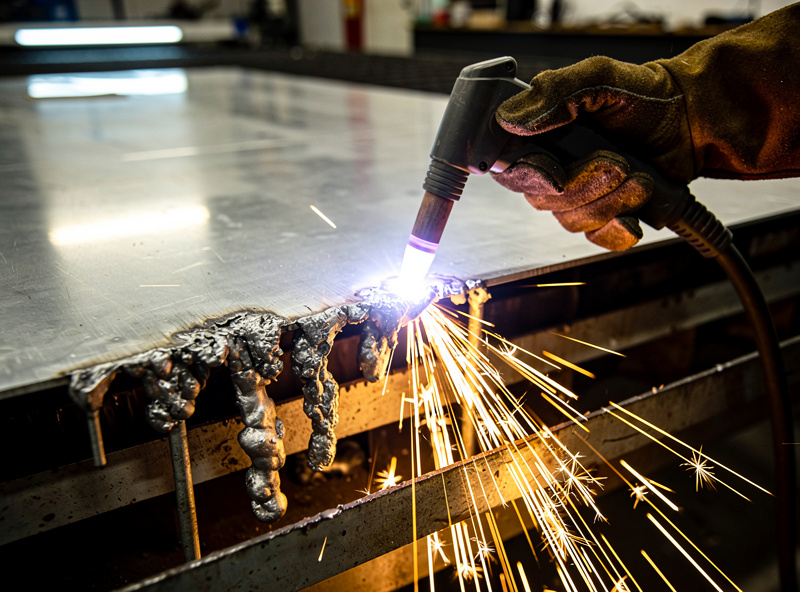
The first time I tried plasma on 6mm 6061 plate, I assumed my settings were wrong — I dropped amperage, slowed travel, sped up travel, swapped electrodes — and produced six failed test cuts before accepting that the tool itself was the limit. The arc sounded different too: instead of the steady frying-bacon hiss I get cutting 4mm steel, aluminum cuts produce a fluttering popping sound as the arc loses and re-establishes contact across the conductivity gradient. That sound is the audible signature of a kerf that will need cleanup.
The high-frequency arc-start system on most affordable plasma cutters also generates electromagnetic interference strong enough to disrupt computers, phones, and smart-home gear sharing the same circuit. Aluminum cutting requires longer arc duration than equivalent steel (because of heat dissipation), which extends the EMI window. OSHA 29 CFR 1910.252(c) addresses health protection and ventilation during welding and cutting, and the same standard’s fire-prevention section requires combustibles cleared 35 feet from the cutting area — both apply equally to plasma. The full shop-air playbook is on the welding ventilation home garage guide.
The Specific Failure Modes
Three problems recur across home aluminum-plasma attempts. First, kerf wandering: the arc cannot find a stable path through aluminum’s oxide layer, so the kerf widens irregularly along the cut. A straight 200mm cut on my bench wandered from 1.5mm to 4mm and back, producing a finished part that needed 25 minutes of belt-sander cleanup. Second, dross: the underside of every aluminum cut accumulates 1-3mm of solidified material requiring angle-grinder work. Third, electrode wear: aluminum oxidation eats consumable electrodes 2-3x faster than steel — my standard 50-shot electrode pack ran out after 15 aluminum cuts.
| Material | Plasma Cutter (50A) | CNC Router | Best Tool |
|---|---|---|---|
| 1-2mm aluminum sheet | OK with care | Excellent | Either, CNC cleaner |
| 3-6mm aluminum plate | Possible, dross-heavy | Excellent | CNC |
| 6-12mm aluminum plate | Wrong tool | Slow but clean | CNC |
| 1-12mm steel | Excellent | Possible (slow) | Plasma |
| Stainless steel | Good | Possible | Plasma |
| Brass / copper | Wrong tool | Excellent | CNC |
The pattern is consistent in my shop: plasma wins on steel and stainless at any thickness up to 12mm; the CNC wins on aluminum, brass, copper, and any non-ferrous metal. After two years running both tools, I settled into a clean division of labor — plasma for steel project cutting, CNC for aluminum components and brackets. Trying to force one tool to do both produces the kind of frustrating compromises I described above.
The CNC Router Alternative for Aluminum
A modest 600x400mm desktop CNC router (Sienci LongMill, Shapeoko 5 Pro, Onefinity Woodworker) cuts 6mm aluminum sheet cleanly with a single-flute carbide end mill and aggressive flood or air-blast coolant. The cut quality is dramatically better than plasma on aluminum: clean edges, predictable kerf, no dross, no EMI, and consumable cost runs about a third per cut. The complete feeds and speeds for aluminum CNC work are on the CNC aluminum feeds and speeds guide.
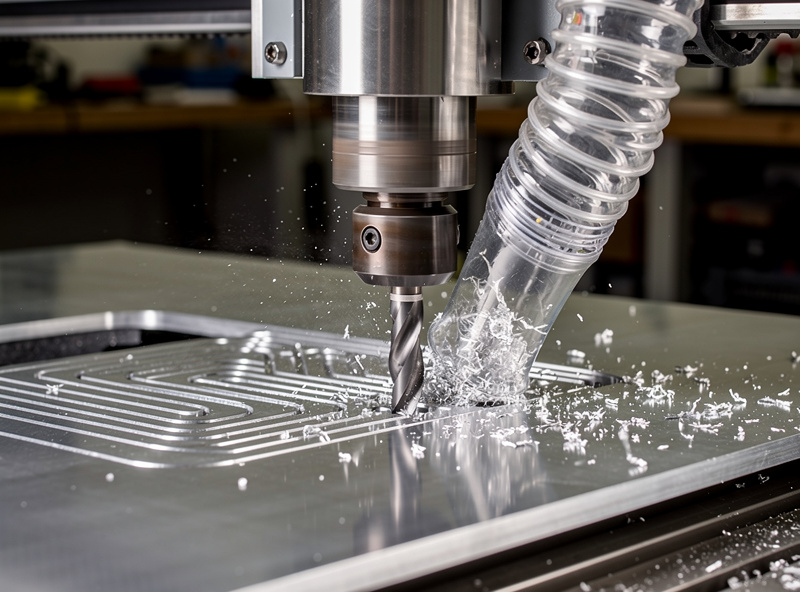
My settings for 6mm 6061 aluminum: 18,000 RPM spindle, 1mm depth-of-cut per pass, 1500mm/min feed, single-flute O-flute carbide end mill 4mm or 6mm diameter (Amana 51402 in my fixture), mist coolant from a Trico Micro-Drop unit. A 200mm x 200mm cut takes 8-12 minutes total cycle time including positioning moves and a finish pass. The same cut on my plasma takes 25-30 seconds — but produces a part needing 30 minutes of cleanup, which makes the CNC the faster overall workflow on anything except the most casual rough work.
For shops that already own a CNC router for woodwork, the marginal cost to add aluminum capability is the right end mills (25-50 USD per bit) plus a small mist coolant accessory (50-90 USD). For shops that own plasma but not CNC, buying a 600mm CNC (Sienci LongMill, Shapeoko 5 Pro, Onefinity Woodworker — current pricing runs roughly 1,500-2,650 USD) costs about the same as a quality Hypertherm-class plasma cutter, and the CNC handles wood, plastic, and aluminum equally well. The CNC selection guidance is on the best desktop CNC for aluminum guide.
When Plasma Still Wins on Aluminum
Three situations favor plasma on aluminum despite the issues. Quick rough cuts where dross does not matter — fence brackets that get welded over, cosmetic pieces that get sanded, anything destined for a finishing weld bead that masks edge quality. Cutting aluminum bigger than your CNC’s work envelope — a 1200mm aluminum sign cut with plasma in 2 minutes is faster than tiling the same cut across two CNC fixturings. Field repairs where moving the work to a CNC is impractical — a bent aluminum trailer panel I patched in a customer’s driveway last spring would have been hours of disassembly to bring home.
For these use cases, run lower amperage than steel cutting (40A on 6mm aluminum versus 50A on equivalent steel), use slightly slower travel speed, and plan to grind the dross afterward. The total time investment may equal CNC plus cleanup time, but the workflow fits the urgent or oversized scenarios where CNC just is not available. Always wear ANSI Z87.1+ shaded safety glasses under your shield — plasma UV at the cut nozzle is intense enough to give you arc eye in 30 seconds without proper filtering.
The Workshop Layout That Uses Both Tools
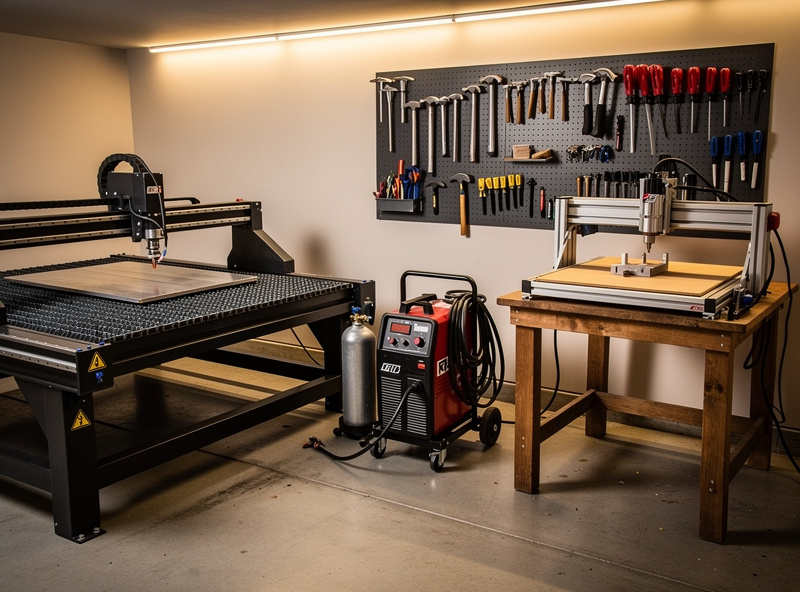
The optimal home metalworking shop has a plasma cutter for steel sheet and rough cut work, a CNC router for aluminum and precision parts, and a MIG welder for assembly. The workflow I run: plasma the steel framework rough cuts, CNC the aluminum brackets and mounting plates, MIG together the final assembly. Each tool does what it does best; nothing tries to multi-task badly. Fire prevention applies across all three — OSHA 1910.252(a) requires combustibles cleared 35 feet from cutting and a fire watch maintained at least half an hour after the last cut.
For the rare welder who absolutely needs aluminum cutting and cannot justify a second tool, a high-quality plasma cutter (Hypertherm Powermax 45 XP+) handles aluminum better than budget units because the inverter electronics maintain arc stability across the conductivity changes. The cost (3000+ USD) approaches a complete CNC router setup, so the math usually still favors adding the CNC. For the practical buyer’s logic on each tool, see the welding vs CNC routing workshop projects guide. For the comparison against an angle grinder for rough plate breakdown, the plasma cutter vs angle grinder piece walks through the exact cut-rate and finish trade-offs.
For aluminum welding (joining cut aluminum parts), plasma cutting is followed by TIG welding rather than MIG. TIG cleaner-cuts the oxidation problem and produces stronger joints on aluminum, but requires significantly more skill than MIG on steel. Most home shops use the CNC for aluminum cutting precisely because the precision parts CNC produces also weld more easily than rough plasma-cut edges.
The Single Most Important Decision
If you are setting up a home shop today and your work mix includes any aluminum at all, buy a CNC router before you buy a second plasma cutter. The CNC gives you aluminum, brass, copper, plastic, and wood capability for the same money as another inverter, and you keep your existing plasma for the steel work it actually excels at. The mistake I made on my first plasma was assuming it would handle everything — six wasted consumable packs and 40 hours of grinding later, the CNC arrived and the workflow finally clicked. Match the tool to the metal, not the metal to the tool.
Frequently Asked Questions
Can a home plasma cutter cut aluminum?
Yes for 1-3mm sheet, with heavy dross and irregular kerf. A 50-amp cutter handles up to 6mm aluminum but produces parts requiring aggressive cleanup. Above 6mm aluminum at home, plasma is the wrong tool – a CNC router cuts the same material cleaner and faster.
Why does plasma struggle with aluminum?
Aluminum has 3-5x the thermal conductivity of steel, so heat dissipates before melting the kerf cleanly. The high-temperature aluminum oxide layer (melting point 2072 Celsius) interferes with arc stability. The combination produces irregular kerfs, heavy dross, and consumable wear 2-3x faster than steel cutting.
What is the best tool for home aluminum cutting?
A desktop CNC router with a single-flute carbide end mill cuts aluminum cleaner, faster, and cheaper than home plasma at thicknesses above 3mm. Total cost runs 600-1500 USD for the CNC plus 30-90 USD for end mills and coolant. The CNC also handles wood and plastic.
Can plasma cut thick aluminum plate?
Above 6mm aluminum, home plasma cutters under 50 amps produce unusable cut quality. Industrial plasma at 80+ amps can cut 12mm aluminum cleanly but costs more than 5000 USD. For home use, a CNC router or band saw beats plasma on plate aluminum at any reasonable budget.
Does plasma cutting damage nearby electronics?
Yes. The high-frequency arc-start on most affordable plasma cutters generates EMI strong enough to disrupt computers, phones, and smart-home devices in the same circuit. Use a separate breaker, ground the work table to a known earth, and remove sensitive electronics from the same room during cutting.
How much does it cost to add aluminum cutting to a workshop?
For a shop with steel plasma already, adding a 600mm desktop CNC router runs 600-1500 USD for the machine plus 50-90 USD for aluminum-specific end mills and mist coolant. Total addition under 1600 USD for full aluminum capability that also handles wood and plastic.


Discussion (0)