

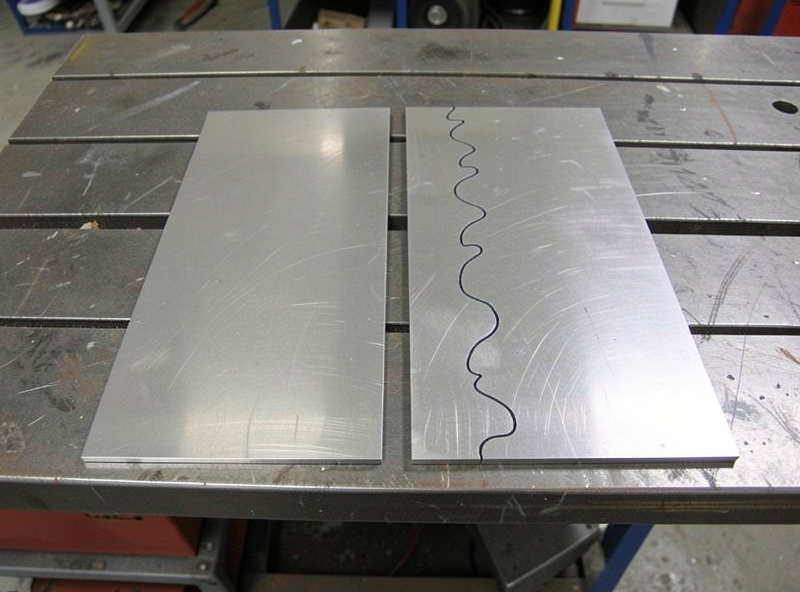
The reliable way to cut a straight line with a plasma cutter is to give the torch a physical guide instead of trusting your hand: clamp a straightedge, fit a roller standoff, and travel at a steady pace. Freehand, even an experienced cutter wanders by 1/8 inch or more over a 2-foot run; with a clamped guide I hold the cut to well under 1/16 inch.
Plasma freehand is a skill, but it is the wrong tool for a line you intend to weld back together. The arc reacts to every twitch, and the heat distorts your reference as you go. A guide turns a nervous freehand cut into a repeatable mechanical operation, and that is the whole trick.
As an Amazon Associate I earn from qualifying purchases.
Why Is It So Hard to Cut Straight Freehand?
Freehand plasma drifts because the torch must hold three things at once: a constant standoff height, a constant travel speed, and a straight path, all while the arc force pushes back on your hand. Miss any one and the kerf wanders. Most beginners fight the path and lose the height, which widens the cut and dumps dross.
The honest answer is that nobody cuts a long, weld-ready straight line freehand on the first try. When I started, my freehand cuts looked like a seismograph, and the reason was that I was concentrating so hard on staying on the line that my standoff crept up and down. The cut got wide where I drifted high and gouged where I dropped low. The fix is not more concentration; it is removing one of the three variables by giving the torch something to ride against. Once the guide owns the path, your hand only has to manage speed, and speed you can learn to feel in a session or two.
How Do You Use a Straightedge as a Plasma Guide?
Clamp a steel or aluminum straightedge parallel to your cut line, offset by the distance from the torch tip to the torch body, then run the torch body lightly against it. A length of angle iron makes the best straightedge because its vertical leg gives the torch a tall surface to track without the torch rocking.
The offset is the part people get wrong. Your cut does not happen at the straightedge; it happens at the orifice, which sits some fixed distance inboard of whatever part of the torch rides the guide. I measure that offset once for my torch, mark it, and clamp the straightedge that far back from the line. I use my welding clamps and magnets to lock the angle iron down hard at both ends, because a guide that shifts mid-cut is worse than no guide. Heavy F-clamps at the ends, and on a long run a magnet in the middle so the bar cannot bow away from the arc force. Keep your hands and the clamps clear of the cut path and the molten blow-out underneath; ANSI Z49.1, the welding and cutting safety standard, treats that hot spatter and the fume plume as real hazards, so I keep a clear zone under the work and never cut over anything flammable.
A quick way to nail the offset without a tape measure: lay the torch flat on a piece of scrap, mark where the orifice sits and where the body edge that will ride the guide sits, and that gap is your number. On the YesWelder torch I run it works out to a consistent figure I have committed to memory, so I clamp the angle iron that far back from my soapstone line every time and the cut lands dead on. Pick your straightedge stock by the job, too: 1.5-inch angle iron stays rigid over 3 feet, but for a 6-foot rip I step up to 2-inch box section because a flimsy bar bows under the side load of the torch and your dead-straight cut turns into a shallow curve you will not notice until you try to fit the parts.
What Is a Roller Standoff Guide and Do You Need One?
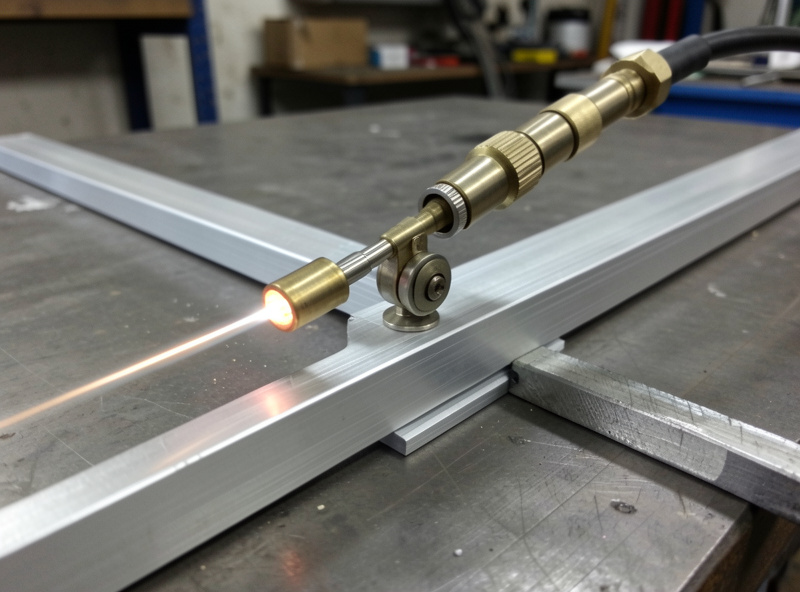
A roller standoff guide is a small two-wheel attachment that clamps to the torch and holds the tip at a fixed height off the work, usually around 1/8 inch, while you push. It solves the standoff-height problem on its own, and combined with a straightedge it gives you near-machine-quality lines by hand.
This is the single accessory I tell every plasma owner to buy first. The 1/8 inch standoff a roller guide enforces is not arbitrary; it is the pierce-and-cut height most torch manufacturers, including Hypertherm, specify in their operator manuals for handheld work, and the wheels just hold that number for you. Most torches accept a wheeled guide kit, and a basic plasma cutter roller guide kit costs a fraction of a single bad cut on expensive plate. With the wheels carrying the standoff, my hand is free to manage only travel speed and to keep the torch body kissing the straightedge. The combination is what turns a handheld plasma into something that competes with a track cutter for short, straight production work. For circles, the same guide kits usually include a pivot bar, which I cover separately in my notes on cutting curves and circles.
How Fast Should You Travel for a Clean Straight Cut?
Travel speed is correct when the sparks blow down and slightly back through the bottom of the cut at roughly a 15 to 20 degree trailing angle. Too fast and the sparks shower back up over the top because the arc never severs the metal; too slow and you pile dross on the bottom edge and widen the kerf.
This is the one variable the guide cannot manage for you, so it is worth learning to read. On 1/4 inch mild steel at my usual amperage I move at a steady walking-fingers pace and watch the spark stream under the plate. The sound matters too: a clean sever has a smooth, even hiss, while too-slow travel gives a sputtering, gargling note as the arc fights extra metal. My welder friend Mike taught me to listen as much as look, the same way you read a MIG puddle by sound. Mark your line first with soapstone, dry-run the torch along the guide with the trigger off to rehearse the motion, then cut in one continuous pass without stopping. Stops leave a divot you will have to grind out.
Can You Make Your Own Plasma Cutting Jigs?
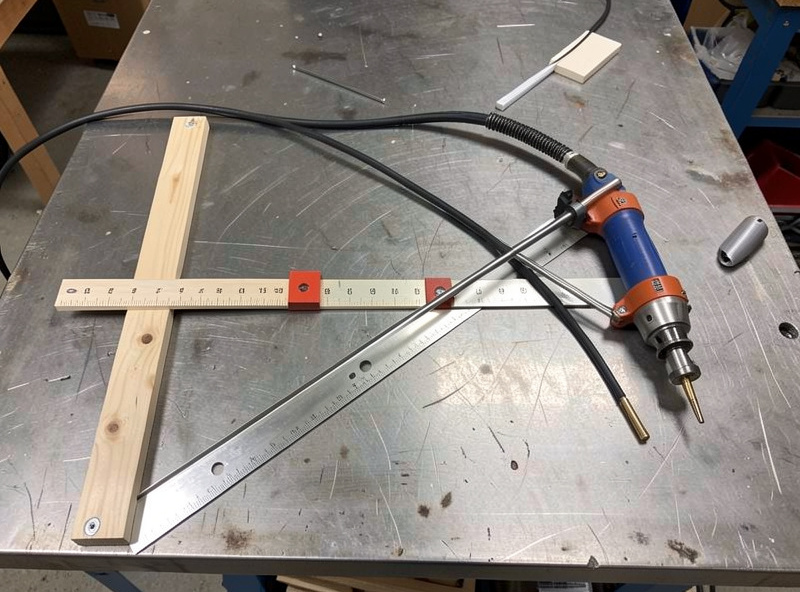
Yes, and shop-made jigs are often better than store-bought for repeat cuts. A length of clean angle iron is a straightedge; a steel bar drilled with a torch-clamp hole at one end and a pivot pin at the other is a circle cutter; a square of plate becomes a 90-degree corner guide. None of it needs to be fancy, only flat and clamped.
My most-used jig is dead simple: a 3-foot piece of 1.5-inch angle iron with two strong magnets epoxied to the base so it snaps onto steel plate and stays put without clamps for quick cuts. For anything I will cut more than once, like a batch of identical brackets, I make a dedicated template from scrap and let the torch trace it. The reason a guide matters so much on plasma specifically is that the cut quality and your consumable life both depend on consistent standoff and speed; a wandering freehand cut chews tips faster, which is part of why I keep a close eye on my consumables and have written up how plasma electrodes and nozzles wear. Clean cut, longer tip life, and a part you can actually weld, all from a clamped piece of angle iron.
Frequently Asked Questions
What is the easiest way to cut a straight line with a plasma cutter?
Clamp a straightedge such as angle iron parallel to your cut line, offset by the torch tip-to-body distance, and run the torch body against it while traveling at a steady speed. A guide removes the hardest variable, holding a straight path.
Do I need a roller guide to cut straight?
You do not need one, but it is the best single accessory for plasma. A roller standoff guide holds the tip at a fixed height around 1/8 inch, so combined with a straightedge your hand only manages travel speed and the cut comes out near machine quality.
How far should the torch tip be from the metal?
Most handheld plasma cutting is done at about 1/8 inch standoff, or in direct contact for drag tips. Holding that distance consistent is what keeps the kerf narrow and the cut square, which is exactly what a roller guide does for you automatically.
How do I know if my travel speed is right?
Watch the sparks under the plate. At correct speed they blow down and slightly back at roughly a 15 to 20 degree trailing angle. Sparks showering back over the top mean too fast; dross piling on the bottom edge means too slow.
Can I cut a straight line freehand with practice?
Short straight cuts, yes, but long weld-ready lines are very hard freehand because you must hold height, speed, and path at once. Even experienced cutters use a clamped guide for anything that has to be straight and welded back together.


Discussion (0)