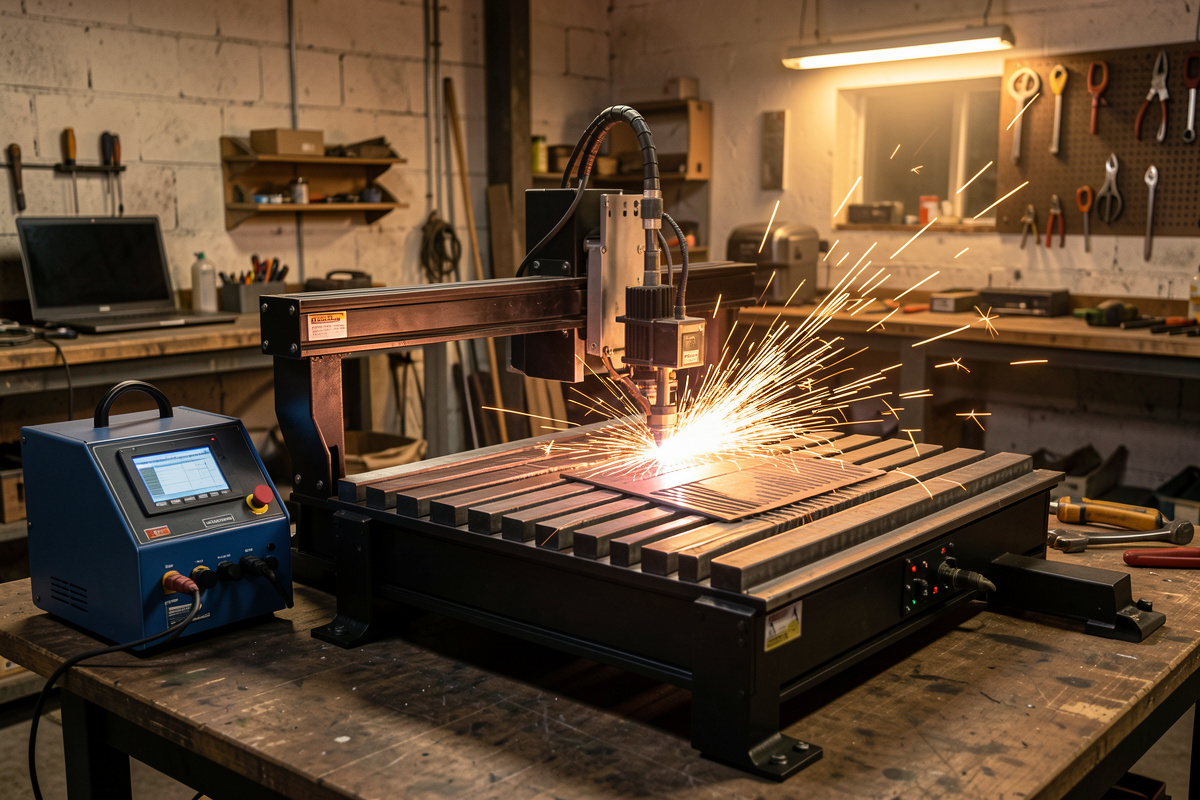

For a home shop, the three CNC plasma table routes are buying a turnkey table, building one from a kit, or building one fully from scratch, and they trade money against time and skill. A budget turnkey table starts around 2,000 dollars, a kit runs roughly 1,000 to 2,500 dollars plus your own plasma cutter, and a scratch build can be done for under 1,000 if you have the fabrication skills and patience.
I run a handheld plasma off my YesWelder for one-off cuts, and a CNC table is the upgrade I think hardest about, because the decision is really about how you value your own time. The same cut you sweat over freehand, a CNC table repeats perfectly all day. Here is how the three paths actually compare for a home welder, not a production shop.
What Is a CNC Plasma Table and Do You Need One?
A CNC plasma table is a motorized gantry that moves a plasma torch along a programmed path over a steel bed, cutting flat parts from a digital drawing. You need one if you cut the same shapes repeatedly, sell parts, or want clean intricate profiles; for occasional one-off cuts, a handheld plasma with guides is enough.
The honest test is repetition and complexity. If your cutting is occasional and freehand-able, a CNC table is a lot of money and floor space for a machine that sits idle; the straightedge and roller guides on a handheld torch will cover you. But the moment you find yourself cutting ten identical brackets, or wanting lettering, gussets, or curved profiles that are miserable by hand, the table earns its keep. It also changes what you can make: nested parts, repeatable weldment components, decorative panels. A well-tuned table can hold edge quality to the cut-quality ranges defined in ISO 9013, the standard for thermal cutting, which is something no freehand cut can promise repeatably. For a polymath bench like mine, where the welder shares space with a CNC router and a 3D printer, a plasma table fits the same digital-to-physical workflow the other tools already use; I sketched out where each tool wins in welding vs CNC routing for workshop projects. That overlap is part of the appeal and part of the reason it is worth thinking through before spending.
Should You Buy a Turnkey CNC Plasma Table?
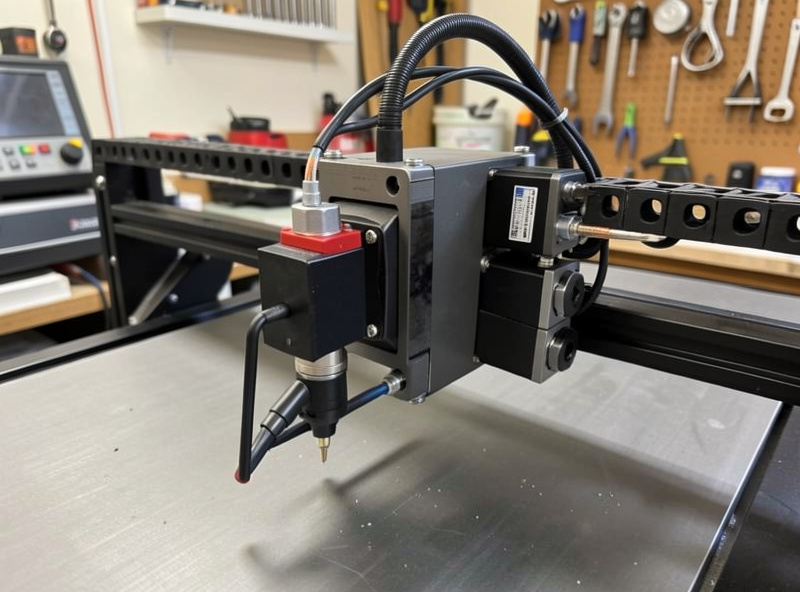
Buy a turnkey table if you value working time over build time and want to be cutting parts the week it arrives. Entry-level home tables start around 2,000 dollars and include the gantry, electronics, software, and often a matched plasma cutter, with a known cut area and manufacturer support behind it.
Turnkey is the right call for most people who are honest about their fabrication time. You get a machine engineered to work together: the torch height control, the motion system, and the software are matched and tested, which removes the integration headaches that eat weeks on a self-build. The cost is money and some loss of customizability. For a home welder who wants the capability without a side project, a budget commercial table is the lowest-risk path. The trade is that the cheapest tables cut corners on the gantry rigidity and the torch height control, so I would rather buy one good 2×2 or 2×4 table than a flimsy 4×4 at the same price; rigidity and a real torch height controller matter more than raw cut area on a budget.
Is a CNC Plasma Table Kit Worth It?
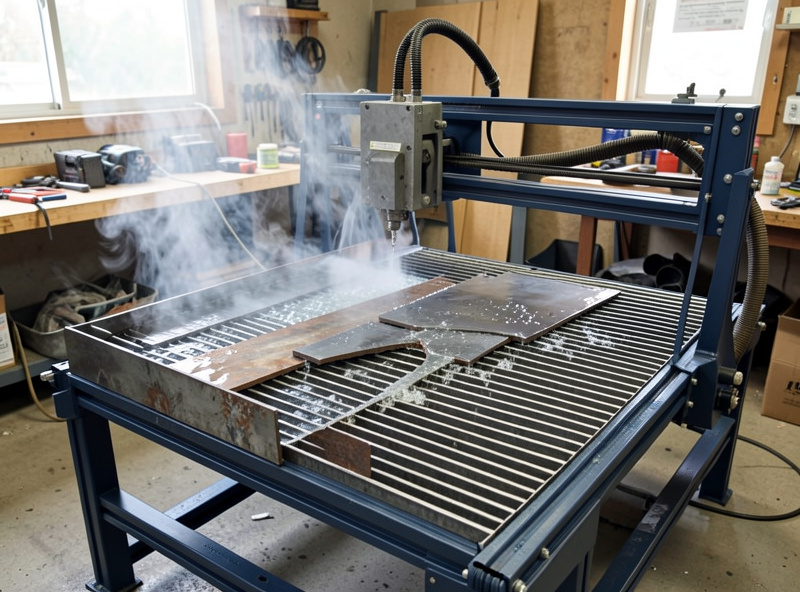
A kit is the middle path: you get the gantry, motion electronics, and often the software for roughly 1,000 to 2,500 dollars, then supply your own plasma cutter and usually build the table frame and water bed yourself. It saves money over turnkey while skipping the hardest engineering, the motion and control system.
Kits suit a welder who can fabricate a sturdy frame and water table but does not want to design a CNC motion system from nothing. You weld up the table base, which plays to our strengths, and bolt on the proven gantry and electronics. The savings are real, and you learn the machine intimately by assembling it, which pays off when something needs adjusting later. The catch is that “kit” covers a wide range: some are nearly complete, others are little more than a parts list with a wiring diagram. Read exactly what is and is not included, especially whether torch height control is part of the package, because adding that later is fiddly. This is the route I lean toward for my own shop, since welding the frame is the fun part and the electronics are the part I would rather buy proven. My guide to choosing the plasma cutter itself matters here, because a kit table needs a machine with a CNC interface and a “machine torch” option.
Can You Build a CNC Plasma Table from Scratch?
Yes, and a scratch build can come in under 1,000 dollars, but it demands real fabrication skill, time, and comfort with motion electronics and software. You design and weld the frame and water table, source linear motion components, wire stepper or servo motors and a controller, and tune the whole system yourself.
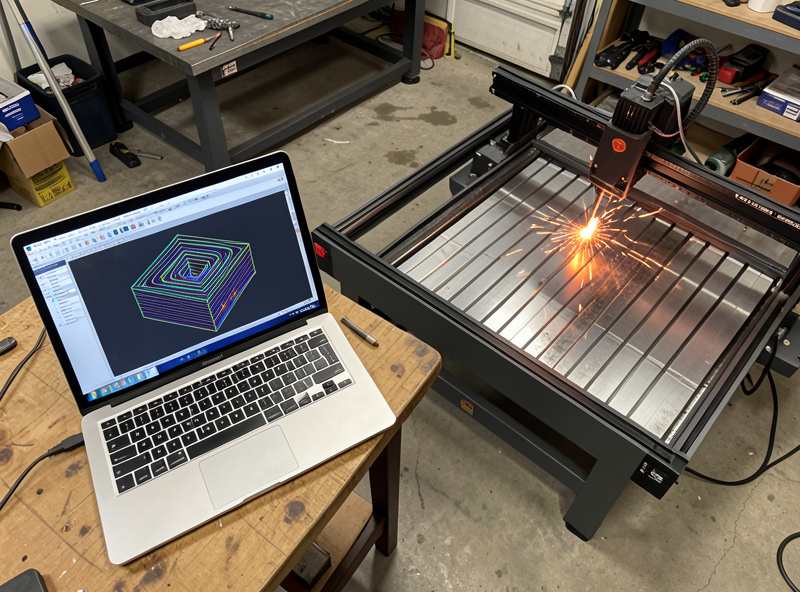
A full scratch build is a genuine project, not a weekend. The mechanical side is welding territory we are at home in: a stiff, flat, well-braced frame and a water table to manage smoke and slag. The hard part is the motion and control system, sourcing rails and rack-and-pinion drive, wiring the motors and limit switches, setting up the controller, and dialing in torch height control so the torch follows warped plate. Get the torch height control wrong and your cuts vary as the metal lifts from heat. This is not guesswork; torch makers like Hypertherm publish the CNC interface signals and arc-voltage data their machines provide for exactly this purpose in their Powermax CNC documentation, and a kit or table that cannot read those signals cannot do real height control. I have built motion systems on the bench before, so I would attempt it, but I am clear-eyed that the time cost is large and the first cuts will be rough while you tune. The reward is a machine built exactly to your shop and budget, and a deep understanding of every part of it. If your time is worth more than the savings, this is the wrong path; if the building is the point, it is the best one.
One decision people underestimate on any build or kit is smoke and slag management. A plasma table dumps a steady plume of metal fume and a shower of molten slag straight down, and you handle that one of two ways: a water table where the slats sit in a shallow water bath that quenches the slag and knocks down most of the smoke, or a downdraft table that pulls the plume through the bed into a fan and filter. I lean toward a water table for a home build because it is simpler to fabricate and far cheaper than a real downdraft system, and the water also reduces warping on thin sheet. Whatever you choose, it is not optional. The fume off a CNC plasma cut is exactly the fine particulate ANSI Z49.1 is written about, and a table running unattended in a closed garage with no smoke control is a genuine hazard, not a convenience question.
CNC Plasma Table: Retrofit, Build, or Buy Compared
| Route | Rough Cost | Time/Skill | Best For |
|---|---|---|---|
| Turnkey buy | From ~2,000 dollars | Low; cutting in days | Value working time over building |
| Kit + own plasma | ~1,000-2,500 dollars | Medium; weld the frame | Welders who can fabricate a base |
| Scratch build | Under 1,000 dollars | High; weeks of work | Skilled makers who enjoy the build |
Frequently Asked Questions
How much does a CNC plasma table cost for a home shop?
Entry-level turnkey home tables start around 2,000 dollars, kits run roughly 1,000 to 2,500 dollars plus your own plasma cutter, and a scratch build can come in under 1,000 dollars if you have the fabrication and electronics skills to do it yourself.
Do I need a special plasma cutter for a CNC table?
Yes, the plasma cutter needs a CNC interface and a machine-torch option so the table can trigger the arc and read arc voltage for torch height control. Many handheld-only budget machines lack this, so check before buying a table or kit.
Is it cheaper to build or buy a CNC plasma table?
Building from scratch is cheapest in dollars, often under 1,000, but most expensive in time and skill. A kit balances cost and effort, and turnkey costs the most money but saves the most time, getting you cutting within days.
What size CNC plasma table should I get for home use?
A 2×2 or 2×4 foot table covers most home projects and fits a one-car garage. Prioritize gantry rigidity and a real torch height controller over raw cut area; a stiff small table cuts better than a flimsy large one at the same price.
What is torch height control and why does it matter?
Torch height control automatically adjusts the torch standoff as it cuts, usually by reading arc voltage, so cuts stay consistent even when plate warps from heat. Without it, cut quality drifts as the metal moves, which is why it is the part not to skimp on.

Discussion (0)