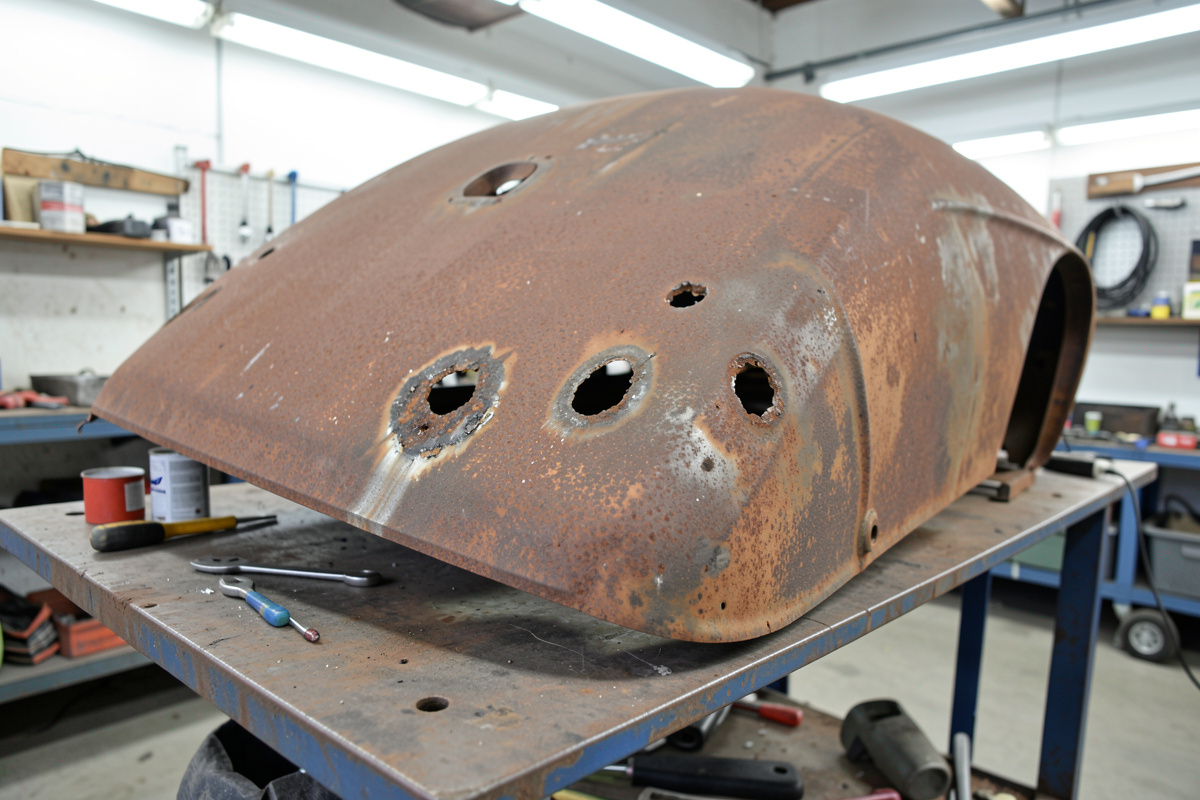

Welding rust holes in car body panels is really a cutting job with a weld at the end. You cut back to clean, bright steel, fit a patch into solid metal, and stitch-weld it without warping the panel. Welding straight over rust never holds—contaminated steel gives porosity and the rust just keeps eating under the weld. Cut first, weld second.
I’ve done a lot of this kind of repair on my bench, and the single thing that separates a lasting fix from a cosmetic one is how ruthless you are with the cutting. Every hour I’ve ever lost on rust repair came from leaving metal in that should have come out. Here’s the method I use, from probing the rust to sealing the finished patch.
Why You Can’t Weld Over Rust
Welding over rust fails for two reasons: contamination and continued corrosion. Rust, paint, and old body filler boil off in the arc and leave the weld full of porosity and lack of fusion, so it looks like a bead but has almost no strength. Beyond that, any rust left in or behind the joint keeps corroding, and within a season it lifts the repair from underneath no matter how good the weld looked on day one.
Thin, rusty steel also blows through at the slightest heat, so you end up chasing ever-larger holes. The professional rule is the only one that works at home: remove everything that isn’t solid steel, then weld clean metal to clean metal. That’s why this guide is mostly about cutting and prep—the welding is the easy part once the metal is right. The same principle drives the whole approach to automotive repair welding.
Finding Where the Rust Really Ends
Rust spreads further than it looks. The visible hole is the center of an area where the metal is already thinned, and that weak ring extends well past the bare patch. I probe the edges with a screwdriver or a pick: if it dents, flakes, or pushes through, that metal is gone. I keep probing outward until the tool skates off solid, full-thickness steel.
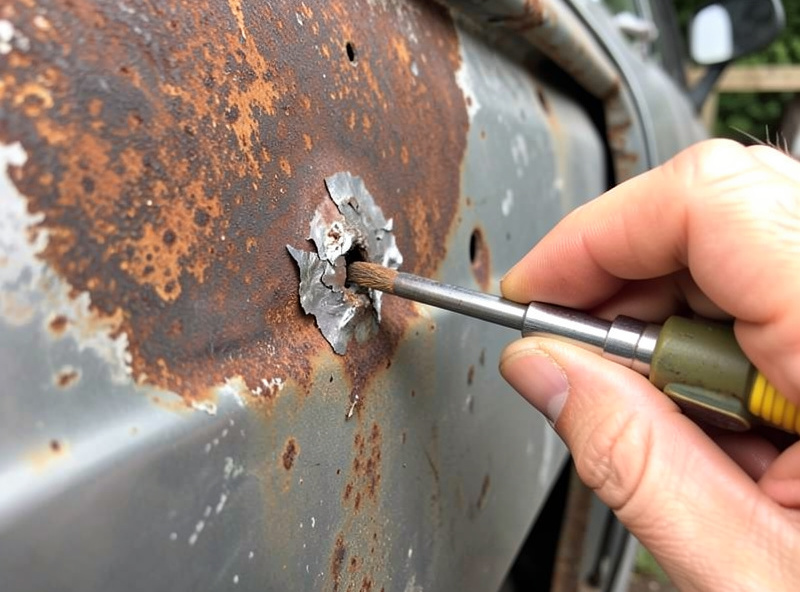
A wire wheel on the grinder or a drill strips the surface so you can see the true extent of the damage—perforations and pinholes that hid under scale and undercoat show up fast. Don’t trust paint; rust loves to work from the back of a panel where you can’t see it, so check the inside face too. Mark a cut line a clear margin into solid metal, never right at the edge of the visible rot. It always feels like you’re cutting away too much. You almost never are.
Cutting Out the Bad Metal
Cut on the line you marked, removing the whole rusted area in one clean piece if you can. A thin cut-off wheel on my DeWalt DWE402 angle grinder handles most of it, and for tight spots or straighter lines I switch to an air saw or a nibbler, both of which leave the surrounding metal flatter and cooler than a grinder does. Keep the cut square and the edges clean so the patch will fit tight.
Make the opening a simple shape—a rectangle or a gentle curve—rather than following the ragged outline of the rust. A simple hole is far easier to make a patch for than a complicated one, and a tight, simple joint welds at lower heat. Once the bad metal is out, grind the cut edges back to bright steel and clean a good 20 mm band all around the opening on both faces. This is the metal your weld will actually fuse to, so it has to be spotless.
Making and Fitting the Patch
For most rust holes I make my own patch from sheet steel of the same gauge as the panel—usually 0.8 mm or 1.0 mm cold-rolled. I cut it slightly oversize, hold it over the opening, scribe the exact shape, and trim until it drops into the hole with a tight, even gap all around. The goal is a butt joint with almost no gap, because gaps are where blow-through starts.
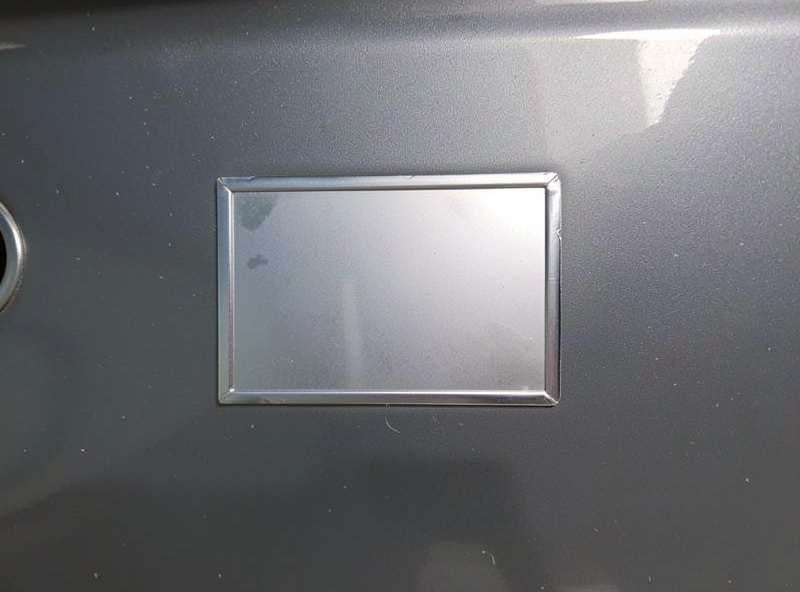
Curved panels need the patch shaped to match. A basic body hammer and a sandbag or a shaped dolly will roll a gentle curve into flat sheet; for a complex compound curve, a stamped replacement panel is worth buying. If the repair is structural or hidden, a lap joint with the patch behind the panel and a row of plug welds is stronger and far more forgiving—I cover that approach fully in plug welds and rosette welds and in the broader patch panel guide. For a visible outer skin, the flush butt joint is what you want so filler can finish it invisibly.
Welding the Patch Without Warping
Now the easy part. Tack the patch in place at the corners and midpoints first, jumping around to keep it aligned and cool, then fill between the tacks with the same skip rhythm: a one-second tack, then move 75–100 mm to the next, never welding two adjacent spots back to back. Continuous beads dump heat into thin steel and pull the panel into a wave.
I run 0.6 mm wire and 75/25 gas on the lowest stable setting for body steel, and I keep a copper backing block behind the joint wherever I can reach—copper won’t fuse to steel and it sucks heat out, so it stops blow-through and backs up the gap. If the panel still warps, focused heat-and-quench shrinking pulls it back flat; I walk through that in stopping warp on auto panels. The general physics is the same as any thin sheet metal MIG job—low heat, constant movement, patience.
Sealing the Repair So It Doesn’t Come Back
A bare weld is fresh steel with no protection, and on a car that means it will rust again unless you seal it. After dressing the welds flush with a flap disc, I check for pinholes, tack any I find, then treat both faces. The back of the panel gets a rust-inhibiting primer or cavity wax because that’s where corrosion restarts; the front gets primer, filler if needed, and paint.
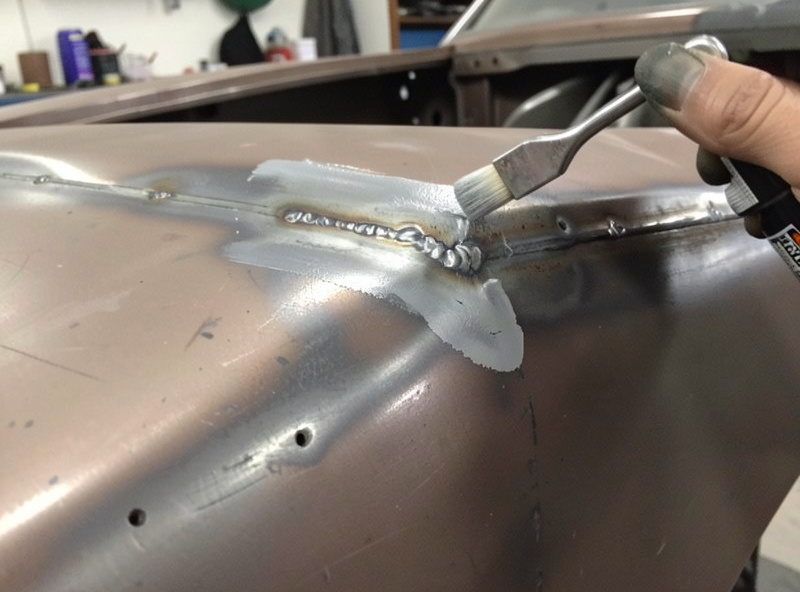
This back-side protection is the step beginners skip and then wonder why the repair bubbles a year later. If the joint is a lap that traps moisture, seam-seal it. Watch the coatings, too—if your panel was galvanized, the zinc you ground off needs the weld zone re-protected, and you never want to weld galvanizing without ventilating, as I explain in welding galvanized steel safely. Burning zinc gives off oxide fume that causes metal-fume fever, which is why NIOSH and OSHA both call for grinding the coating back and using local exhaust — NIOSH’s welding health page lays out the exposure data. Seal it properly and a rust repair done on clean steel will outlast the panels around it.
Common Rust Repair Mistakes
The mistakes that ruin rust repairs are nearly always about leaving metal that should have gone. Cutting only to the edge of the visible hole leaves a thinned ring that blows through and rusts again. Following the ragged rust outline instead of cutting a simple shape makes the patch a nightmare to fit. Welding before the bare steel is truly clean—skipping the back face, or leaving undercoat in the joint—guarantees porosity.
The other big one is heat. Beginners try to run a bead to “fill” a gappy joint, warp the panel, and then have a wavy repair to grind flat and re-shrink. Fit the patch tight, skip-weld it, and let it cool. And don’t forget the floor under your feet: cars carry fuel and undercoat that burn, so clear the area and keep an extinguisher close per my fire safety rules. Almost every failed rust repair traces back to rushing the cutting or fighting the heat—slow down on both and the welds hold.
Frequently Asked Questions
Can you weld over rust holes in a car?
No. Welding over rust gives porosity and weak, contaminated welds, and the trapped rust keeps corroding under the repair. You must cut back to clean, bright, full-thickness steel and weld a patch into solid metal.
How far back do you cut rust before welding?
Cut until a screwdriver or pick skates off solid, full-thickness steel rather than denting or pushing through. Rust thins the metal well past the visible hole, so mark your cut line a clear margin into sound steel, not at the edge of the visible rot.
What gauge steel should a body patch be?
Match the panel, usually 0.8mm or 1.0mm cold-rolled sheet for car body work. Using the same gauge keeps the weld heat and the finished surface consistent with the surrounding metal.
Butt joint or lap joint for a rust patch?
Use a flush butt joint on visible outer skins so filler finishes it invisibly. Use a lap joint with plug welds on hidden or structural areas where strength matters more than appearance and the trapped seam can be sealed.
Why did my rust repair come back after a year?
Almost always because rust was left in the joint or the bare weld and back of the panel were not sealed. Cut all rust out, weld clean steel, then prime and protect both faces, especially the hidden back side where corrosion restarts.

Discussion (0)