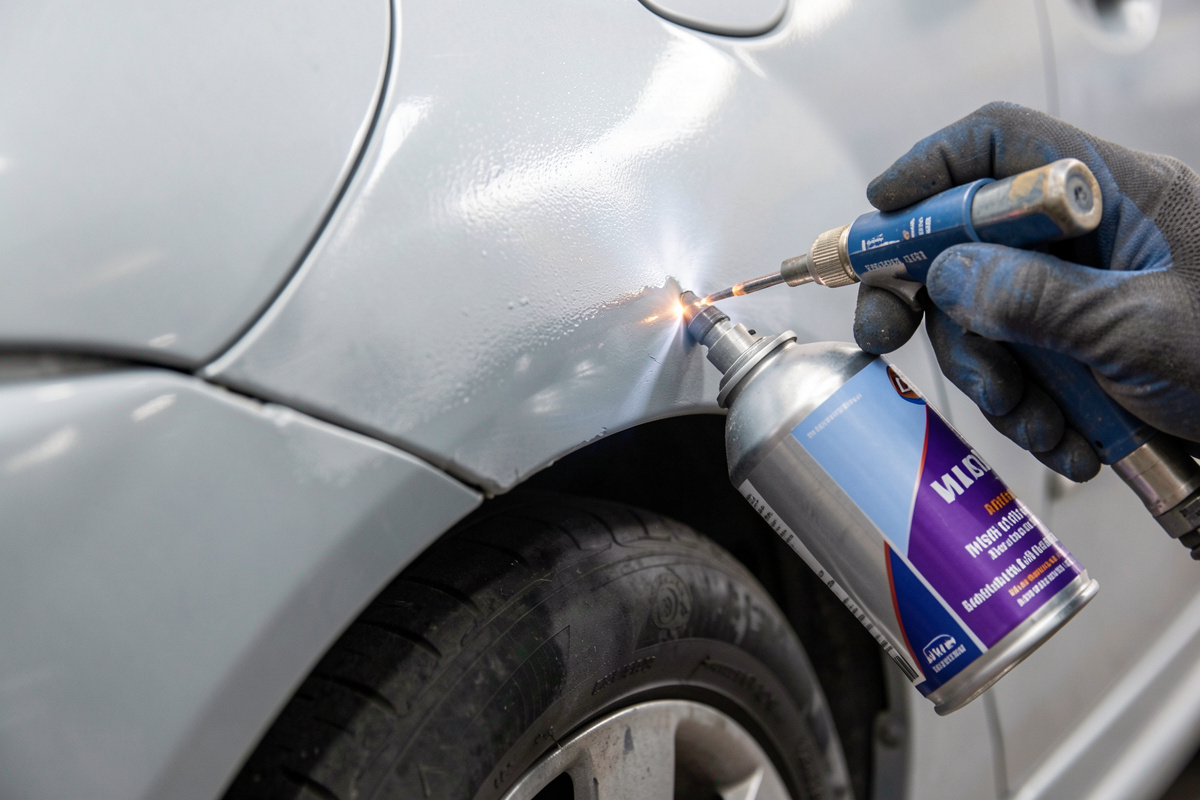

Weld-through primer is a zinc-rich coating you spray on the mating faces of a joint before welding, so the hidden, unreachable side of a lap joint or plug weld is protected from rust. Used in a thin, even coat on a tight joint it works well; laid on thick or on a gappy joint it gases off in the arc and causes porosity. The whole skill is knowing when it helps and when it hurts.
I reach for weld-through primer on exactly the joints I can’t get back to paint—the buried face of a plug-welded lap, the inside of a flange—and I leave it off the joints I can seal afterward. It’s a useful product that beginners either over-trust or misuse, so here’s how I actually use it on car work.
What Weld-Through Primer Does
Weld-through primer is a conductive, zinc-rich paint designed to survive being welded over. On a lap joint or a plug weld, two panels are clamped face to face and the back side of that contact area is sealed shut forever once welded—you can never paint it again. Bare steel there will rust from the inside out. The primer leaves a thin layer of zinc protection on those mating faces so corrosion can’t start in the trapped seam.
The “weld-through” part means it’s conductive enough to let the arc establish and the wire fuse without the coating acting as an insulator, unlike ordinary primer or paint, which kill the arc and contaminate the weld badly. It’s a specialty product for one specific problem: protecting metal you’re about to seal away. For joints you can reach and repaint after welding, you don’t need it at all.
When Weld-Through Primer Helps
It helps anywhere the joint will be hidden after welding. The classic cases are plug-welded lap joints on floor pans, rocker reinforcement, and inner structure—the overlapping faces are sealed together and you’ll never coat them again, so a zinc layer between them is the only rust protection that area will ever get. Spot-weld and plug-weld flanges are exactly what the product was made for.
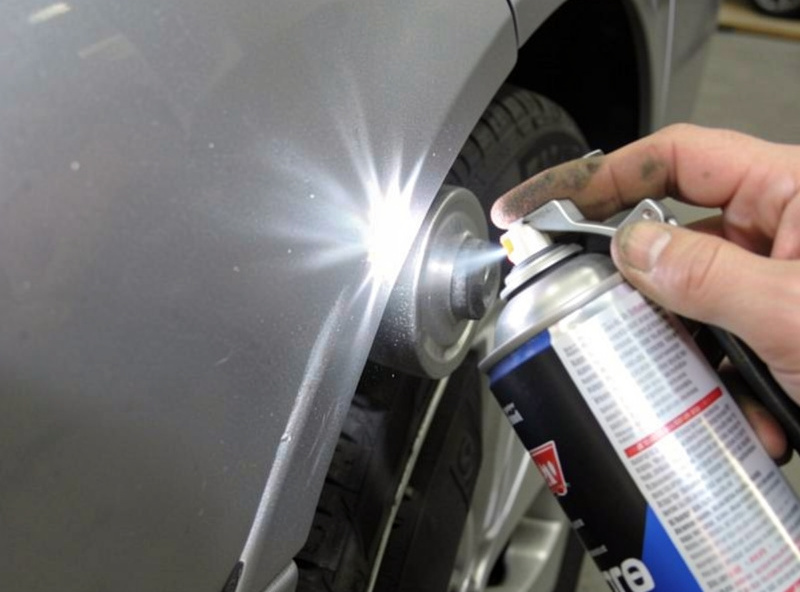
It’s most valuable on structural and lower-body repairs that live in road spray, where a trapped bare seam would rust out the repair within a couple of years. If you’re fitting panels with the plug-weld method from my plug welds and rosette welds guide, or doing the lap joints in the patch panel guide, weld-through primer on the mating faces is the right call. It’s the back-side protection that stops a rust repair coming back.
When It Causes Porosity
Weld-through primer causes porosity when there’s too much of it, when the joint is gappy, or when you weld over a wet or thick coat. Even a “weld-through” coating is still a coating, and the arc has to boil it off. A thin film burns off fast and the molten metal closes clean; a heavy coat releases enough gas and zinc vapor that the puddle traps it as pinholes and porosity, leaving a weak, leaky weld. That zinc vapor is a health hazard too, not just a weld defect — burning zinc-rich coatings is a classic cause of metal-fume fever, so run fume extraction over the joint or ventilate hard, exactly as OSHA’s welding, cutting and brazing guidance calls for.
The other failure is on butt joints and any joint with a gap. The primer needs two faces clamped tight to do its job and to burn off cleanly; in a gap it just sits in the joint and gasses into the weld. That’s why I keep weld-through primer for tight lap and plug-weld faces, and keep it out of butt seams. When porosity does show up, it behaves like any other contamination problem—see my porosity guide for tracking it down.
| Situation | Use Weld-Through Primer? | Why |
|---|---|---|
| Plug-welded lap joint (hidden face) | Yes, thin coat | Seals metal you can never repaint |
| Floor pan / rocker overlap | Yes | Road spray, trapped seam rusts fast |
| Visible butt joint (outer skin) | No | Causes porosity, you can paint it after |
| Any joint you can reach later | No | Just prime and paint after welding |
| Thick or wet coat anywhere | No | Gases off into the weld, porosity |
How to Apply It Properly
Application is where most porosity is created or avoided. Grind both mating faces to bright, clean steel first—weld-through primer protects clean metal, it doesn’t fix rust. Spray or brush a thin, even coat on both faces of the joint, let it flash off and dry fully (never weld it wet), then clamp the joint tight and weld. The coat should look like a light tint, not a wet, glossy layer.
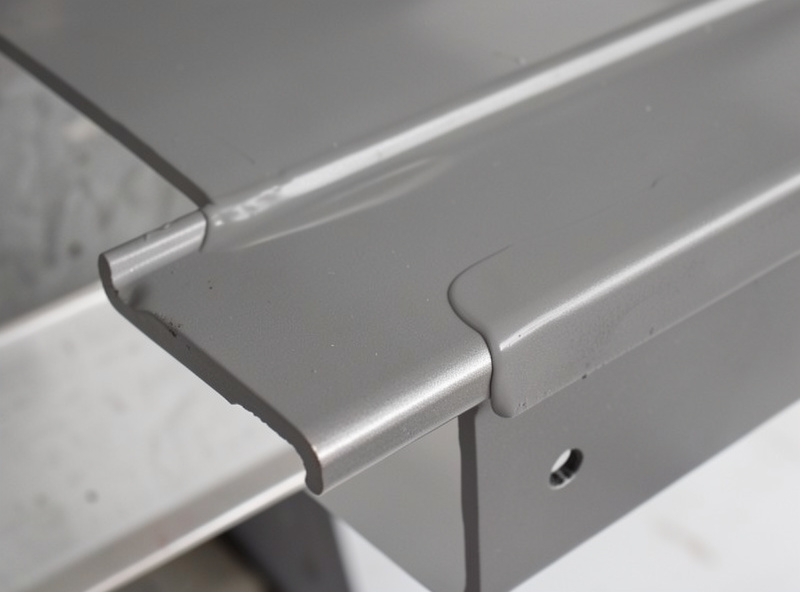
Keep the primer to the joint faces, not the actual weld puddle area if you can help it—some welders wipe a clean strip right where the plug weld lands and leave the primer on the surrounding overlap. If you get porosity despite a thin coat, you’re either laying it too heavy, welding it before it’s dry, or the joint isn’t tight. Drop the coat thickness and tighten the clamp before you blame the product. Like all the prep in car repair welding, the result is decided before the arc strikes.
Alternatives and the Bottom Line
Weld-through primer isn’t the only way to protect a hidden joint. Cavity wax sprayed into the seam after welding through a small access hole, or seam sealer on reachable overlaps, both protect trapped metal without any porosity risk during welding. Some pros skip weld-through primer entirely and rely on flooding the finished seam with cavity wax, which is a perfectly valid approach.
My bottom line: use a thin coat of weld-through primer on tight, hidden lap and plug-weld faces where you genuinely can’t reach the metal again; skip it on butt joints and anything you can paint afterward; and always grind to clean steel first. Treated as the specialty product it is, it stops trapped-seam rust without trouble. Treated as a magic rust cure slathered everywhere, it just gives you porosity to chase.
Weld-Through Primer vs Seam Sealer vs Cavity Wax
These three products solve related problems at different stages, and confusing them is a common beginner error. Weld-through primer goes on before welding, on the mating faces, to protect metal that’s about to be sealed shut. Seam sealer goes on after welding, over the visible seam and lap edges, to keep water out of the joint line. Cavity wax goes on last, sprayed into enclosed sections and box structures through access holes, to coat everything you can’t reach with a brush.
On a typical rocker or floor repair I use all three in sequence: weld-through primer on the plug-weld flanges, weld the panel, seam-seal the overlaps top and bottom, then flood the inner cavity with wax. Each one protects a different surface, and together they’re why a properly done structural repair doesn’t rust back. Skipping the weld-through step on the buried face is the gap most home repairs leave—the visible side gets painted and the hidden seam quietly rusts.
Common Weld-Through Primer Mistakes
The mistakes cluster around treating it like ordinary paint. Spraying it thick “to be safe” guarantees porosity. Welding it before it’s dry does the same. Using it in a gappy butt joint, where it can’t burn off clean, leaves a leaky weld. Skipping the grind-to-clean-steel step so you’re priming over rust gives you protected rust, which is still rust. And relying on it as the only protection while ignoring seam sealer and cavity wax leaves the rest of the joint exposed.
Treat it as one thin, deliberate layer on clean, tight, hidden faces and it does its single job well. The moment you find yourself laying it heavy or using it everywhere, step back—you’ve turned a rust-protection product into a porosity generator.
Frequently Asked Questions
What is weld-through primer used for?
It is a zinc-rich, conductive coating applied to the mating faces of a joint before welding, to protect the hidden side of a lap joint or plug weld that can never be repainted once the panels are sealed together. It is made for plug-welded flanges and overlaps.
Does weld-through primer cause porosity?
It can, if applied too thick, welded while wet, or used on a gappy joint. A thin coat on a tight, clamped joint burns off cleanly. A heavy coat releases too much gas and zinc vapor for the puddle to clear, leaving pinholes and porosity.
Should you use weld-through primer on butt joints?
No. Butt joints and any joint with a gap let the primer gas off into the weld instead of burning clean, causing porosity. Save weld-through primer for tight lap and plug-weld faces, and just prime and paint reachable butt joints after welding.
How do you apply weld-through primer?
Grind both faces to bright clean steel, spray a thin even coat on each, let it dry fully, then clamp tight and weld. The coat should be a light tint, not a wet glossy layer. Never weld it while wet.
Is weld-through primer necessary?
Only for hidden joints you cannot repaint, like plug-welded overlaps on floor pans and rockers. For joints you can reach afterward, ordinary primer and paint, seam sealer, or cavity wax protect the metal without any welding porosity risk.

Discussion (0)