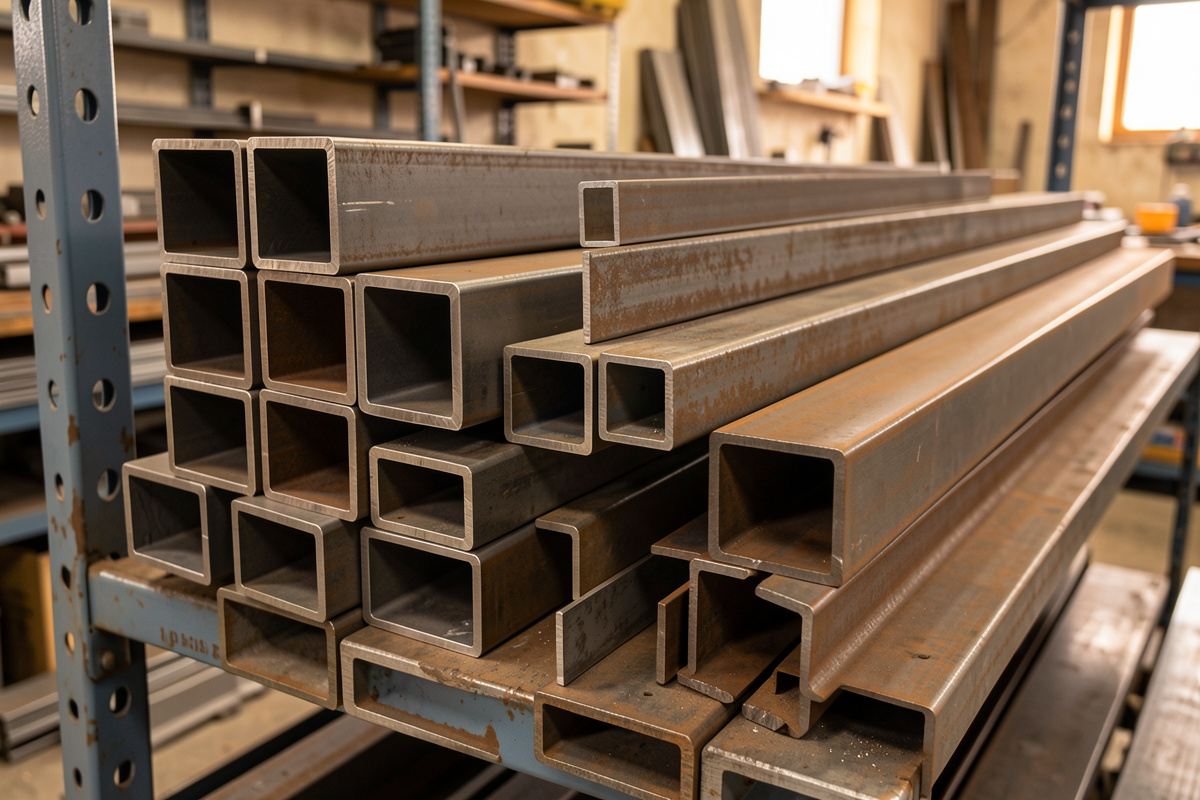

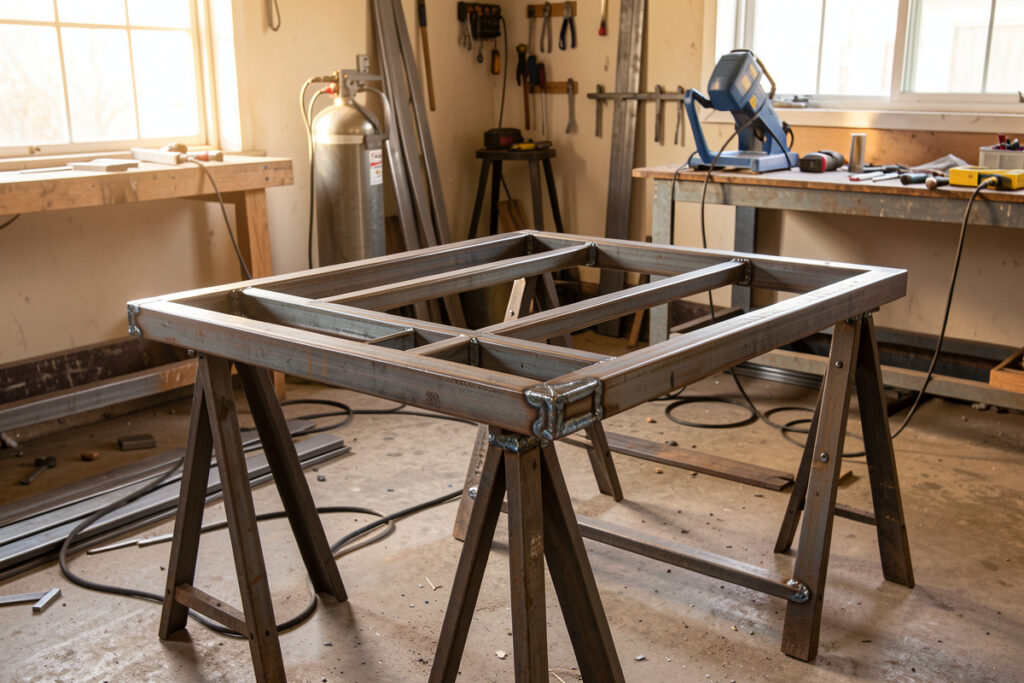
For a trailer frame you want mild steel — A36 or equivalent hot-rolled — and for a standard single-axle utility trailer the main rails are 2×3 inch rectangular tube at 3/16 inch (0.188″) wall. That one spec covers the overwhelming majority of home 3,500 lb GVWR builds. Go heavier for longer decks and higher loads, but never go thinner to save weight, because a frame that flexes is a frame that cracks its welds.
Steel choice is the decision that quietly sets whether your trailer is a boat anchor or a wet noodle, so it is worth getting right before you cut. I have run mild steel from thin sheet up to 10 mm plate on my bench, and for structural work the boring answer — known mild steel, correct section, correct wall — is always the right one. This guide sits under the full trailer build guide and feeds directly into the frame cut list.
Why Mild Steel, and Which Grade
Trailer frames are welded mild steel because it is strong enough, cheap, predictable, and forgiving to weld. A36 (the ASTM A36 structural steel spec) is the common grade you will get buying new hot-rolled tube and angle, and it welds with plain ER70S-6 wire — the AWS A5.18 filler classification — without preheat or special procedure. That predictability matters on a structure that carries a load down a public road — you want a base metal whose behavior you know cold.
What you do not want anywhere structural is mystery steel. Unknown scrap can be higher-carbon or alloy that hardens and cracks when you weld it, and a trailer is no place to find that out. If you are sourcing from a yard, run every structural piece through how to identify mystery steel first, and read up on the grades in steel types for welding and understanding steel grades for welding. Save the interesting scrap for brackets and jigs; buy known steel for the frame and tongue.
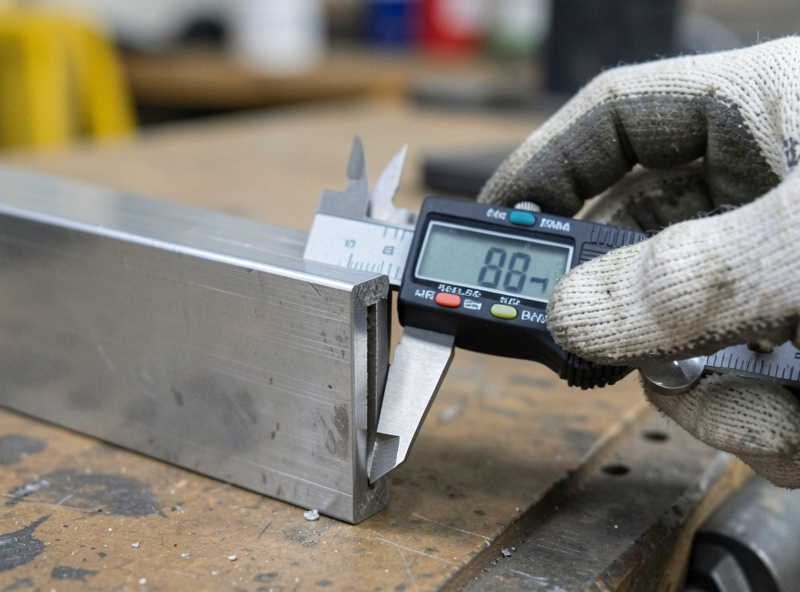
Tube Size and Wall Thickness by Trailer Type
Section size (the outside dimensions) sets stiffness; wall thickness sets strength and how much the weld has to bite. Both go up with load and span. Here is the sizing I would spec across common home builds. GVWR figures are typical targets, not a substitute for matching your actual axle and coupler ratings.
| Trailer type | Target GVWR | Main rail | Wall | Crossmembers |
|---|---|---|---|---|
| Light garden / ATV utility | ~2,000 lb | 2×2 sq tube | 1/8″ | 2×2 tube @ 16″ |
| Standard utility (5×8, 5×10) | ~3,500 lb | 2×3 rect tube | 3/16″ | 2×2 tube @ 16″ |
| Heavy utility / small equipment | ~5,000 lb | 2×4 rect tube | 3/16″ | 3″ channel @ 16″ |
| Car hauler / tandem | 7,000–10,000 lb | 3×5 tube or 5″ channel | 3/16–1/4″ | 3″ channel @ 16″ |
| Tongue (all of the above) | — | up one size from rail | 3/16–1/4″ | — |
Two things to notice. First, the tongue is always beefier than the rails, because all the pulling force funnels through it — more on that in the tongue and coupler guide. Second, once you get into car-hauler territory, channel starts replacing tube for the main rails because it is easy to bolt and weld to and cheap for the depth. For a first utility trailer, though, 2×3 rectangular tube at 3/16 is the sweet spot and what I would build.
Tube vs Angle vs Channel
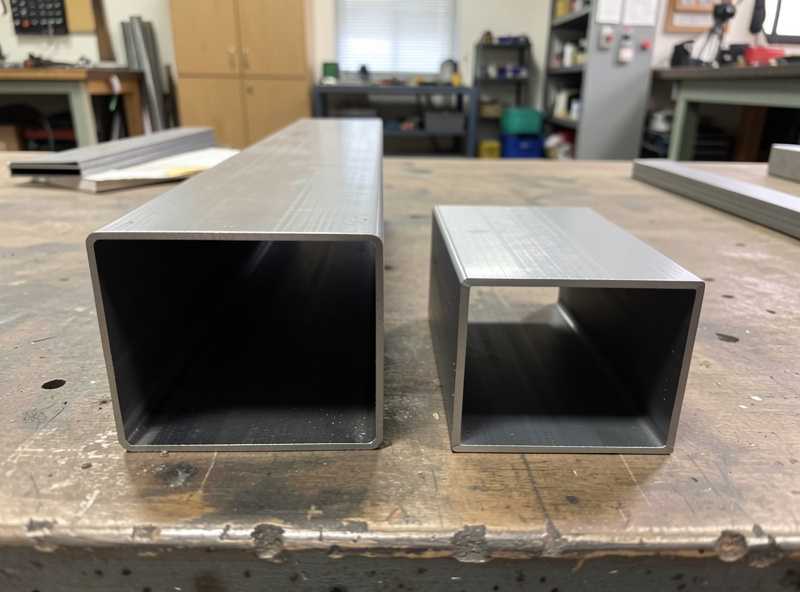
You will see all three on trailers, and each has a place. Rectangular and square tube is closed on all sides, so it resists twisting and looks clean — my default for rails and crossmembers. Angle iron is cheap and easy to weld deck framing and side rails from, but it is open and far weaker in torsion, so it belongs on the light stuff, not the main rails of a loaded trailer. Channel gives you a lot of vertical depth (bending strength) cheaply and a flat web to bolt springs and mounts to, which is why heavy trailers use it for rails.
The one trap: do not mix a stiff tube rail with a floppy angle crossmember and expect the deck to stay flat under load. Keep the structural members in the same family and let angle handle the light framing. Whatever you buy, know the weight and cost before you order — how to calculate steel weight and cost keeps a build from surprising you at the counter, and where to buy steel compares online versus local for the quantities a trailer needs.
New vs Used Steel for a Trailer
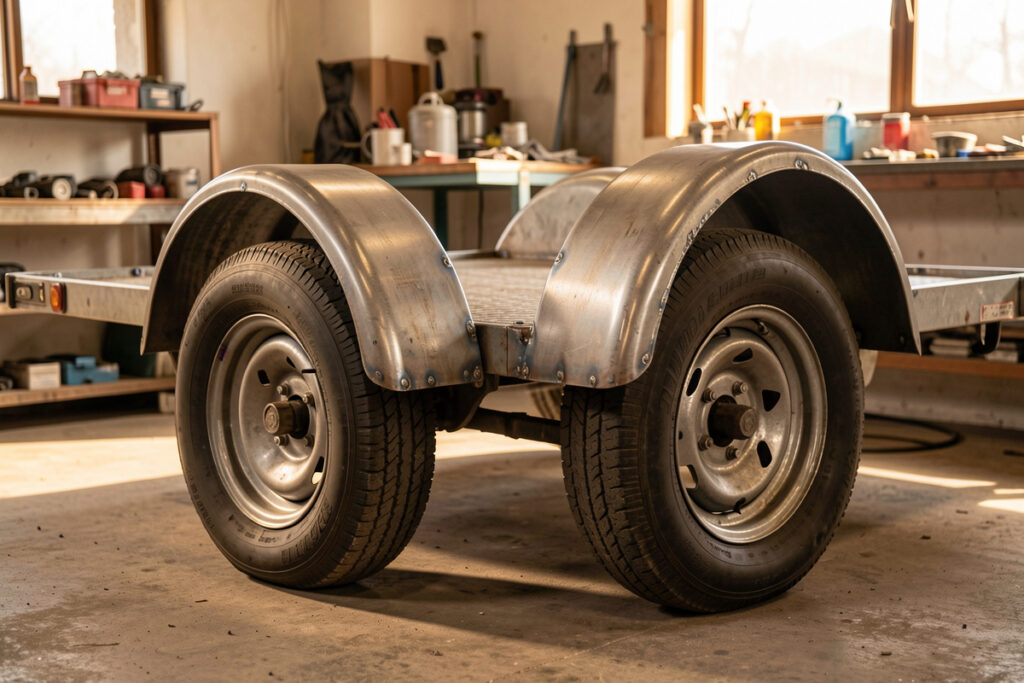
New steel for anything structural. I am all for reusing steel — when recycled metal is fine makes the case for it on plenty of projects — but a trailer frame and especially the tongue are exactly where I spend the money on new, known tube. Used steel can hide rust-thinned walls, prior cracks, or unknown grade, and none of that belongs under a load on the highway. Where used steel is genuinely fine on a trailer: fender brackets, a spare-tire mount, toolbox framing, anything non-structural. Buy new for the frame, scrounge for the accessories.
Match the Steel to the Weld
The nice thing about specifying plain mild steel is that it welds with the same setup you use for everything else. On the 2×3 at 3/16, I run the MIG-PRO205DS with solid ER70S-6 wire under 75/25 gas, hot enough to fully fuse that wall — verified on a scrap coupon first. Early on I built a light rack from 16-gauge box tube to shave weight and watched it flex and crack a weld under a load that 2×3 at 3/16 would have shrugged off; that is why I never go thin on anything structural now. Thicker tongue and channel joints get multi-pass or a light preheat so the root actually fuses instead of sitting cold on top. The steel spec and the weld spec are one decision: pick a section and wall your machine can genuinely penetrate, and you get a trailer that holds together instead of one that looks welded but is not.
Frequently Asked Questions
What steel is best for a trailer frame?
Mild steel, A36 or equivalent hot-rolled, in rectangular or square tube. For a standard 3,500 lb single-axle utility trailer, 2×3 inch rectangular tube at 3/16 inch wall makes the main rails. It is strong, cheap, predictable, and welds with plain ER70S-6 wire.
How thick should trailer frame steel be?
3/16 inch (0.188 inch) wall is the standard for the main rails of a typical utility trailer. Lighter garden trailers can use 1/8 inch, and heavy or car-hauler frames step up to 1/4 inch. Never go thinner than the load needs, because a flexing frame cracks its welds.
Can I use angle iron for a trailer frame?
Angle iron works for light deck framing and side rails but not for the main rails of a loaded trailer, because it is open and weak in torsion. Use closed rectangular or square tube for the rails and crossmembers, and reserve angle for non-structural framing.
Should I use tube or channel for trailer rails?
Tube for standard utility trailers because it resists twisting and looks clean. Channel for heavy and car-hauler frames because it gives cheap vertical depth for bending strength and a flat web to bolt springs and mounts to. Keep structural members in the same family.
Is it safe to build a trailer from used steel?
Use new, known steel for the frame and tongue. Used steel can hide rust-thinned walls, old cracks, or an unknown grade that cracks when welded, none of which belongs under a highway load. Save reclaimed steel for non-structural parts like fender brackets and toolbox mounts.
What wire do I weld A36 trailer steel with?
Solid ER70S-6 MIG wire under 75/25 argon/CO2 for shop work, set hot enough to fully fuse the wall thickness. A36 mild steel needs no preheat or special procedure at these sections; verify penetration on a scrap coupon before welding the real frame.

Discussion (0)