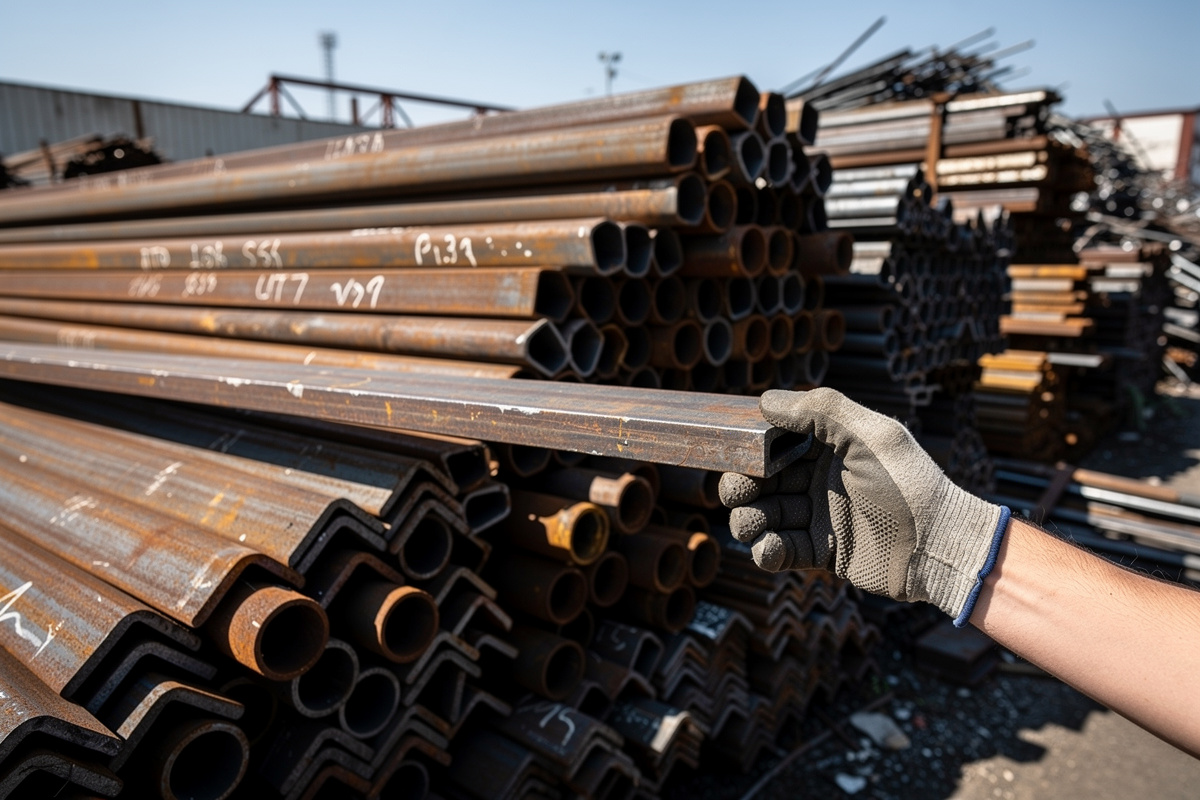

Identify mystery steel with four field tests: magnet, spark on bench grinder, file test, visual color. Magnet stick = ferrous; spark pattern reveals carbon content; file bite reveals hardness; color reveals alloy family. All four take 90 seconds and identify metal correctly 90% of the time.
I bought a $40 lot of “mild steel” angle from a scrap yard in 2023 that turned out to be 4140 chromoly — three of my welds cracked at the heat-affected zone within a week. The magnet test would have confirmed ferrous (it stuck), but the spark test would have shown the short red sparks with the bright white forks that signal high-carbon alloy. Now I run all four tests in the parking lot before loading anything onto my truck. The full sourcing context is in the where to buy steel for welding projects guide. Written by Kenny Nyhus Fadil.
Scrap yards are a goldmine for hobby welders — bar stock, plate drops, and structural offcuts at 30-50% of new steel prices. The catch is that most scrap is unmarked, and welding the wrong alloy produces brittle joints, cracking, or dangerous welds. The four tests below sort mild steel from stainless, aluminum, cast iron, and tool steel before you commit material to a project.
Why Mystery Steel ID Matters for Welding
Each metal has different welding requirements, filler rod compatibility, and post-weld behavior. Welding mild steel filler onto cast iron produces cracked joints because the cast iron’s high carbon content embrittles the weld. Welding stainless steel with mild steel wire produces a non-corrosion-resistant joint that rusts in months. Tool steel needs preheating and post-weld heat treatment most home welders do not have. Identifying the alloy first prevents wasted time and material.
The four tests below are the established field-identification protocol used by industrial buyers and metallurgy hobbyists. None requires laboratory equipment or expensive tools — a magnet, a bench grinder, and a fine file are sufficient for 90% of identifications. The remaining 10% (alloy variants, exotic stainless grades, etc.) requires lab analysis and is rarely relevant for home shops. The essential welding equipment guide covers files and grinders for this work.
Test 1: The Magnet Test
Hold a small neodymium magnet against the metal. Strong attraction (the magnet sticks firmly) means iron-based ferrous metal — mild steel, cast iron, low-carbon steel, or magnetic stainless. Weak attraction (the magnet sort of sticks but slides) means austenitic stainless steel (304/316), some galvanized coatings, or work-hardened iron. No attraction at all means non-ferrous — aluminum, copper, brass, lead, or some specialty stainless grades.
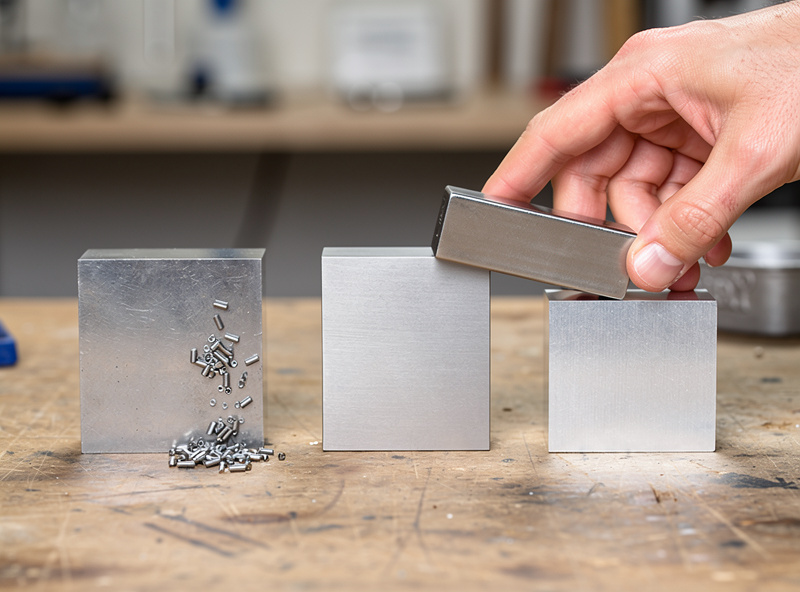
The magnet test instantly separates the three biggest categories: ferrous, marginally ferrous, and non-ferrous. Combined with the spark test (next), you can identify mild steel vs cast iron vs tool steel with high accuracy. A neodymium magnet from a hardware store costs $5; carry one in your shop apron pocket. The test takes 3 seconds per piece, which means scanning a scrap pile of 50 pieces takes 3-5 minutes.
Test 2: The Spark Test on a Bench Grinder
Hold the metal against a clean bench grinder wheel for 1 second and observe the sparks. Mild steel produces a long bushy yellow-orange spark stream with mild forking. Medium-carbon steel produces shorter sparks with more forking. High-carbon steel and tool steel produce short red sparks with bright white forks at the ends. Stainless steel produces shorter orange sparks with minimal forking. Cast iron produces dull red sparks with very short streams.
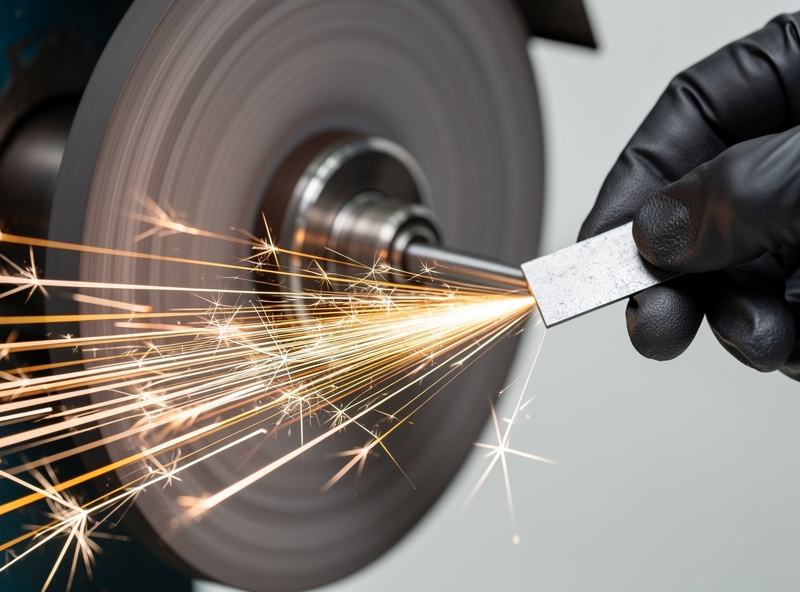
The spark test takes practice — keep a known mild steel sample beside the grinder for comparison. If your unknown sample sparks differently from the known mild steel, you have something else. The differences are subtle in print but obvious side-by-side. Always wear ANSI Z87.1+ safety glasses and a face shield for spark testing. The welding safety guide covers grinder PPE specifically.
Test 3: The File Test for Hardness
Run a sharp medium-coarse file across a clean spot on the metal. If the file bites visibly — leaving a gouge with each stroke — the metal is mild steel, stainless, or aluminum (all soft enough to file). If the file slips with little or no material removal, the metal is hardened tool steel, hardened spring steel, or some bearing steels. The file test specifically distinguishes hardened steels from non-hardened, which the magnet and spark tests do not reveal cleanly.
Use a fresh fine-cut mill file, not a worn one. A worn file slips on everything regardless of metal hardness. The file test is mostly a “should I worry about hardness?” check — if the file bites, the metal is welder-friendly with normal procedures. If the file slips, you are looking at tool steel or spring steel that needs preheat and slow cooling to weld successfully (rare in scrap yards but worth checking).
Test 4: Visual Color and Surface Inspection
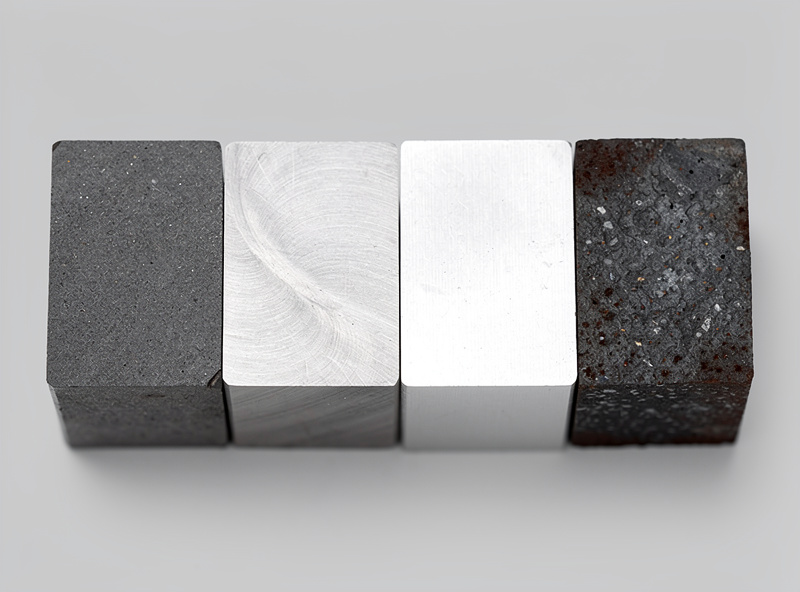
Cut or grind a small fresh face on the metal to expose unweathered material. Mild steel shows gray-blue with slight gray tint when freshly cut. Stainless steel shows bright silver-white with a slight blue tint. Aluminum shows pure silver with very fast oxidation in air. Cast iron shows medium-dark gray with visible graphite flakes (small black inclusions). Brass shows yellow-gold; copper shows bright orange-red.
Surface texture matters too. Hot-rolled mild steel has dark gray mill scale on the surface; cold-rolled mild steel has a smoother lighter gray. Stainless typically has a polished or brushed finish even on scrap. Galvanized steel shows a distinctive crystalline pattern (spangle) in the zinc coating. Cast iron has a rough textured surface and often visible parting lines from sand casting. Each visual cue narrows the identification when combined with the magnet and spark tests.
Combining the Tests for Confident ID
Run all four tests for any piece you are about to weld with significant filler. Magnet results combined with spark pattern identify the metal type with high accuracy in 90%+ of cases. Disagreements between tests indicate alloyed or unusual material — when tests disagree, treat the metal as unknown and either skip welding it or do a small test weld with mild steel filler before committing to the full job.
Document what each test indicates for the metals you commonly buy. Most home welders work with 5-6 metal types repeatedly: A36 mild steel plate, A500 structural tube, 1018 cold-rolled bar, 304 stainless plate, 6061 aluminum, and cast iron occasionally. Memorize the test signatures of those six and you will be confident on most scrap-yard purchases. The MIG welding complete guide covers filler-rod selection by metal type for welding identified scrap.
When to Skip Welding Mystery Metal
Some metals should never be welded by home welders regardless of identification: galvanized steel (releases toxic zinc oxide fumes), cadmium-plated parts (OSHA lists welding among the operations that generate highly toxic cadmium fumes, linked to cancer and cardiovascular, renal, and respiratory damage), painted or coated metals (paint chemistry varies; some produces phosgene gas), beryllium copper bushings (OSHA specifically names welding and grinding beryllium alloys among the exposure operations covered by its beryllium standard — highly toxic dust), and any metal showing oily contamination. Skip these even if you have the right filler.
Also skip metals you cannot identify confidently. The cost of confirmed-correct mild steel from a steel supplier is $1-3 per pound. The cost of welded scrap that cracks 6 months later in a structural application is enormous. Scrap-yard sourcing is for non-critical work only — yard furniture, art, fire pits, decorative pieces. Never use unidentified scrap for trailer hitches, lifting equipment, or anything where joint failure causes injury. Read the welding safety disclaimer for liability boundaries on hobby fabrication.
Field Test Quick-Reference Table
| Metal | Magnet | Sparks | File | Color |
|---|---|---|---|---|
| Mild steel (A36, 1018) | Strong stick | Long yellow bushy | Bites easily | Gray-blue |
| Medium-carbon (1045) | Strong stick | Shorter, more forked | Bites with effort | Gray-blue |
| High-carbon / tool steel | Strong stick | Short red, white forks | Slips | Gray, may have temper colors |
| Stainless 304/316 | Weak stick or none | Short orange, minimal fork | Bites | Bright silver-white |
| Cast iron | Strong stick | Dull red, very short | Bites unevenly | Dark gray, graphite flakes |
| Aluminum | None | None | Bites very easily | Pure silver, fast oxidation |
| Galvanized steel | Strong stick | Yellow with white flash | Bites | Spangle pattern |
| Brass | None | None or very short | Bites | Yellow-gold |
| Copper | None | None | Bites | Orange-red |
Frequently Asked Questions
How can you tell mild steel from stainless steel?
Use a magnet — mild steel sticks firmly, austenitic stainless (304/316) sticks weakly or not at all. Confirm with a spark test on a bench grinder: mild steel produces long yellow-orange bushy sparks while stainless produces shorter orange sparks with minimal forking. Visual color also helps — mild steel shows gray-blue when fresh-cut, stainless shows bright silver-white.
What is the spark test for identifying steel?
Hold the metal against a clean bench grinder wheel for one second and observe the spark stream. Mild steel produces long bushy yellow-orange sparks with mild forking. Medium-carbon steel produces shorter sparks with more forking. High-carbon and tool steel produce short red sparks with bright white forks. Stainless produces shorter orange sparks with minimal forking. Cast iron produces dull red short sparks.
Is it safe to weld unknown scrap metal?
Welding unknown scrap metal carries safety and quality risks — galvanized coatings produce toxic zinc oxide fumes, cadmium plating is highly toxic, and unidentified alloys can crack at the weld. Use scrap only for non-critical hobby work (furniture, art, fire pits) where joint failure cannot cause injury. Never use mystery scrap for trailer hitches, lifting equipment, or structural applications.
How do you identify cast iron versus mild steel?
Cast iron and mild steel both stick strongly to a magnet, but spark tests differ clearly. Cast iron produces dull red short spark streams with little branching; mild steel produces long bright yellow-orange bushy sparks. Visual inspection also helps — cast iron shows a rough textured surface with visible graphite flake inclusions when freshly cut, while mild steel shows a smoother gray-blue surface.
What metals should never be welded by home welders?
Skip galvanized steel (toxic zinc oxide fumes), cadmium-plated parts (extremely toxic), painted or coated steel (paint chemistry produces unpredictable fumes including phosgene), beryllium copper (highly toxic dust during grinding), and unidentified alloys for any structural application. The fume safety risks outweigh hobby benefits. For galvanized work specifically, grind the coating off the weld zone before welding and ensure full ventilation.
Where can I buy steel cheaper than full retail?
Local steel service centers sell drops and remnants at 30-50% of full bar prices — call for their drop bin policy. Demolition contractors sometimes sell structural beams and angle iron from teardowns. Metal scrap yards sell by the pound at the lowest prices but with no identification. Online marketplaces (Craigslist, Facebook) often have free or cheap steel from hobby welders downsizing. Always identify before welding.

Discussion (0)