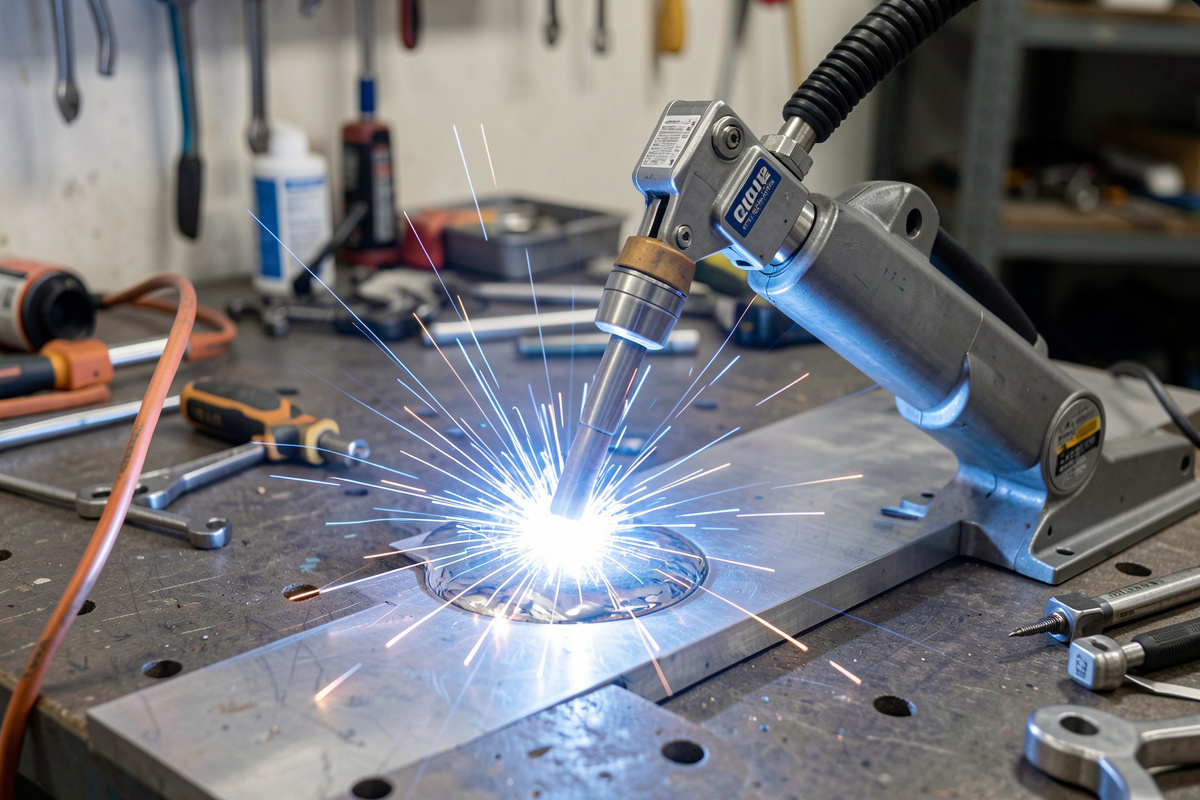

Aluminum welds nothing like steel because almost every physical property is different: it conducts heat about five times faster, melts at a low 660°C while its surface oxide melts near 2,050°C, and it gives no color warning before it collapses into a puddle. Understand those properties and aluminum stops being intimidating; ignore them and you get porosity, burn-through, and cracked beads.
I weld aluminum on the same argon rig I run for steel — straight argon, the MIG-PRO205DS for thicker stock and my TIG setup for the precise work — and the boat I am building toward is aluminum, so this metal is the long game on my bench. This guide is the metallurgy and physics of why aluminum behaves the way it does. For picking the actual alloy, see the existing aluminum grades for welding guide, and for the TIG technique that breaks the oxide, the TIG aluminum AC balance walkthrough. It all sits under the welding metallurgy guide.
The Oxide Layer: Aluminum’s Built-In Problem
Every piece of aluminum wears an invisible skin of aluminum oxide, and that oxide melts at roughly 2,050°C — more than three times the 660°C melting point of the metal underneath. That mismatch is the central problem of aluminum welding: you cannot fuse the base metal cleanly until the oxide is broken, because it sits on the puddle like a stubborn crust.
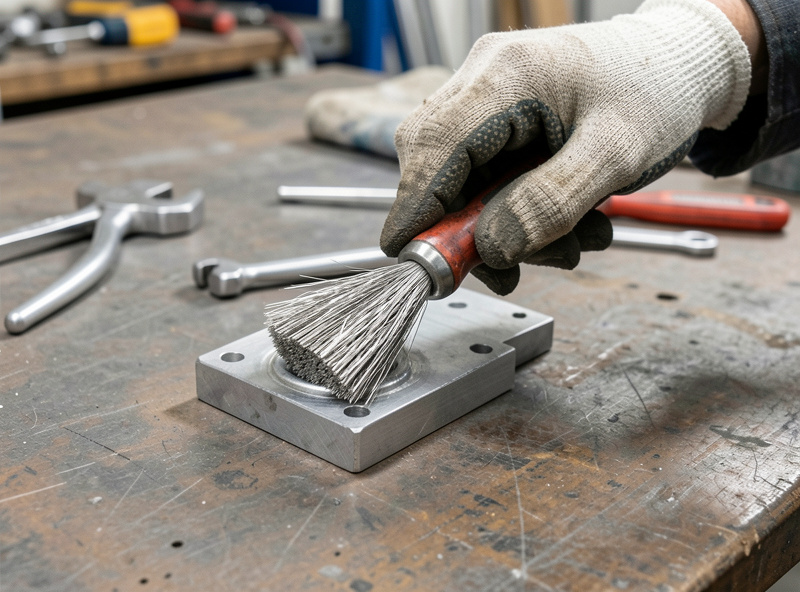
There are two ways to deal with it. Mechanically, I scrub the joint with a stainless wire brush kept only for aluminum — never the same brush used on steel, which would embed contaminants. Electrically, AC TIG does it for you: the positive half of the AC cycle blasts the oxide off the surface (cathodic cleaning) while the negative half puts heat into the metal, which is exactly why aluminum is welded on AC rather than the DC used for steel. Skip the cleaning and the oxide traps dirt and moisture, and you get the gray, sooty, porous bead that screams “first aluminum weld.” The why-AC-and-not-DC reasoning is laid out in the existing AC vs DC TIG guide.
Heat Conductivity: Why Aluminum Eats Your Amps
Aluminum pulls heat away from the weld about five times faster than steel, so the cold metal around the joint acts like a giant heat sink. On thick aluminum you often need more amperage than the equivalent steel — the opposite of what beginners expect from a metal that melts at a lower temperature.
This conductivity drives two habits. First, thicker aluminum frequently needs preheat, not because of cracking like alloy steel, but simply to get the joint up to a temperature where the arc can establish a puddle before the heat runs away into the part. A gentle preheat to around 120–150°C is common on heavier sections — but no higher, because aluminum has a narrow window before it weakens. Second, once the part finally saturates with heat, it stays hot and the puddle can run away from you, so I move faster as a long weld progresses. The flip side of fast conduction is fast cooling, which limits some of the metallurgical drama you get in steel — but it trades that for distortion, because aluminum also expands about twice as much as steel for a given temperature rise.
No Color Change: The Trap That Burns Beginners
Steel glows red, orange, and yellow as it heats, giving you a visual countdown to melting. Aluminum gives you nothing — it stays silver right up until it suddenly slumps into a puddle, often dropping straight through thin sheet before you realize it was close. This is the single most disorienting thing about the metal for someone coming from steel.
Because there is no color cue, you weld aluminum by reading the puddle’s wetness and shine, not its color, and you commit to heat-control technique instead of eyeballing temperature. On TIG that means the foot pedal becomes everything — feeding amps in and backing them off as the puddle forms. On MIG with a spool gun it means dialing settings precisely and keeping travel speed up. The lack of a color warning is also why a temperature crayon rated for aluminum’s lower range earns its place when I preheat: I cannot trust my eyes to tell me the metal is at 150°C versus halfway to molten. The spool-gun setup side is in the existing MIG aluminum spool gun guide.
Heat-Affected Zone Softening: The Strength You Cannot Get Back
Heat-treatable aluminum alloys like 6061-T6 get their strength from a controlled aging process, and welding heat undoes it. The heat-affected zone of a 6061-T6 weld can lose roughly half its strength as the weld over-ages the metal, and unlike steel you cannot grind or reweld that softening away — it is baked into the chemistry.
This is a metallurgy fact with real design consequences. When I plan an aluminum structure, I assume the weld and its HAZ are the weak link and size the joint accordingly, rather than expecting the welded 6061 to carry the same load as the parent T6 material — structural codes such as AWS D1.2, the aluminum welding code, build that strength reduction into their allowable values. Non-heat-treatable alloys behave differently: 5052, 5083, and 3003 get their strength from work hardening rather than heat treatment, so they soften in the HAZ too but more gently and predictably, which is part of why 5xxx alloys are favored for welded marine structures — and why I am steering toward 5083 and 5052 for the boat. The grade-by-grade strength story is in the existing aluminum grades guide, and the heat-band concept generally is in the heat affected zone welding guide.
Hot Cracking and Why Filler Choice Is Metallurgy
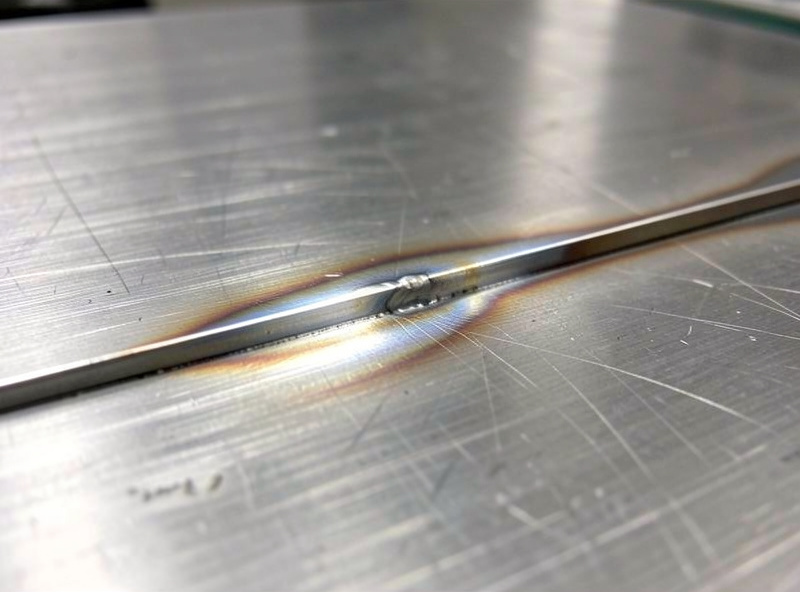
Many structural aluminum alloys, 6061 chief among them, will crack as the weld solidifies if you weld them with the wrong filler — or with no filler at all. The base alloy’s chemistry sits in a crack-sensitive range, and the fix is to dilute the puddle with a filler that shifts it out of that range. Choosing between 4043 and 5356 is a metallurgical decision, not a convenience. Both are classified under AWS A5.10, the filler spec that pins down their exact alloy chemistry.
4043 is a silicon-bearing filler that moves 6061’s chemistry away from the hot-crack zone, runs smoother, and is more forgiving — it is my default for 6061 brackets and frames. 5356 is a magnesium filler that is stronger, takes anodizing with a better color match, and is the right call for the 5xxx marine alloys, but it is slightly more crack-prone on 6061. The one thing you must not do is weld 6061 autogenously — fusing it with no filler — because the undiluted base chemistry cracks almost every time. A couple of high-strength aerospace alloys, 7075 and 2024, are effectively unweldable by fusion for exactly this reason; they crack no matter what, and that is genuinely an area where I defer to people who weld production aluminum for a living. The rod-by-rod rundown lives in the existing TIG filler rod guide.
Hydrogen Porosity: The Gray, Bubbly Bead
Molten aluminum dissolves hydrogen greedily and then rejects it as the weld freezes, trapping gas bubbles as porosity — the number-one cosmetic and structural defect in aluminum welds. The hydrogen comes from moisture, oil, hydrated oxide, and dirty filler, which is why aluminum welding is obsessive about cleanliness and dryness.
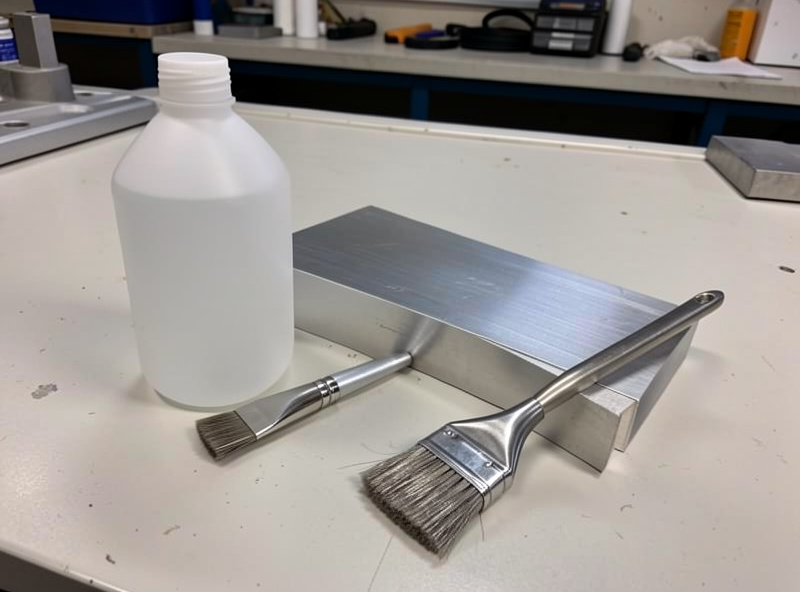
My routine before any aluminum weld is mechanical: degrease with acetone, then scrub with the dedicated stainless brush right before welding so the fresh oxide has no time to absorb moisture. I keep aluminum filler sealed and dry — porosity, like spatter on steel, starts in the moisture. Good gas coverage with clean straight argon and adequate post-flow matters too, because aluminum stays reactive while it cools. When porosity still shows up, it is almost always a cleanliness failure rather than a settings failure, and the diagnostic process mirrors the one in the existing welding porosity guide.
Aluminum vs Steel: The Property Comparison
The differences between aluminum and steel are not cosmetic — they change technique, filler, and joint design. The table below lines up the properties that actually matter at the bench so you can see why steel intuition leads you astray on aluminum.
| Property | Mild Steel | Aluminum (6061) | Why It Matters |
|---|---|---|---|
| Melting point | ~1,510°C | ~660°C | Aluminum slumps fast, no warning |
| Oxide melting point | ~1,370°C | ~2,050°C | Oxide must be cleaned or broken with AC |
| Thermal conductivity | Baseline | ~5x steel | Aluminum needs more amps / preheat |
| Thermal expansion | Baseline | ~2x steel | More distortion to control |
| Color before melting | Glows red to yellow | None | Weld by puddle, not by color |
| HAZ strength loss | Manageable | Up to ~50% on T6 | Design around the softened weld |
The Takeaway for the Home Bench
Aluminum is not harder than steel, it is just different — and once you stop fighting it like steel, it clicks. Clean obsessively, feed more heat than your gut says, read the puddle instead of waiting for a color that never comes, and pick filler as a metallurgical choice rather than whatever is on the rack. That is the exact discipline I am drilling now on brackets and frames so that when I cut the first 5083 panels for the boat, the metallurgy is already muscle memory. The full chemistry picture is in the welding metallurgy guide.
Frequently Asked Questions
Why is aluminum so much harder to weld than steel?
Aluminum conducts heat about five times faster than steel, gives no color change before it melts, and carries a surface oxide that melts far hotter than the metal itself. Those three properties demand different heat control, cleaning, and current than steel.
Why do you weld aluminum on AC instead of DC?
AC TIG cleans the high-melting oxide layer off aluminum on the positive half of each cycle while the negative half delivers heat. DC cannot break that oxide, so the puddle stays crusty and porous. AC balance lets you tune cleaning versus penetration.
Should I use 4043 or 5356 filler for 6061?
For most 6061 brackets and frames, 4043 is the better default: its silicon content shifts the chemistry out of the hot-crack range and it runs smoother. Choose 5356 when you need higher strength or a good anodizing color match, accepting slightly more crack sensitivity.
Why does my welded 6061 feel weaker than the original?
Welding over-ages the heat-affected zone of heat-treatable 6061-T6, and it can lose roughly half its strength there. That softening is baked into the metallurgy and cannot be ground or rewelded away, so structures should be designed around the weaker weld zone.
What causes porosity in aluminum welds?
Aluminum dissolves hydrogen when molten and traps it as bubbles when it freezes. The hydrogen comes from moisture, oil, and hydrated oxide, so porosity is almost always a cleanliness failure. Degrease, brush with a dedicated stainless brush, and keep filler dry.

Discussion (0)