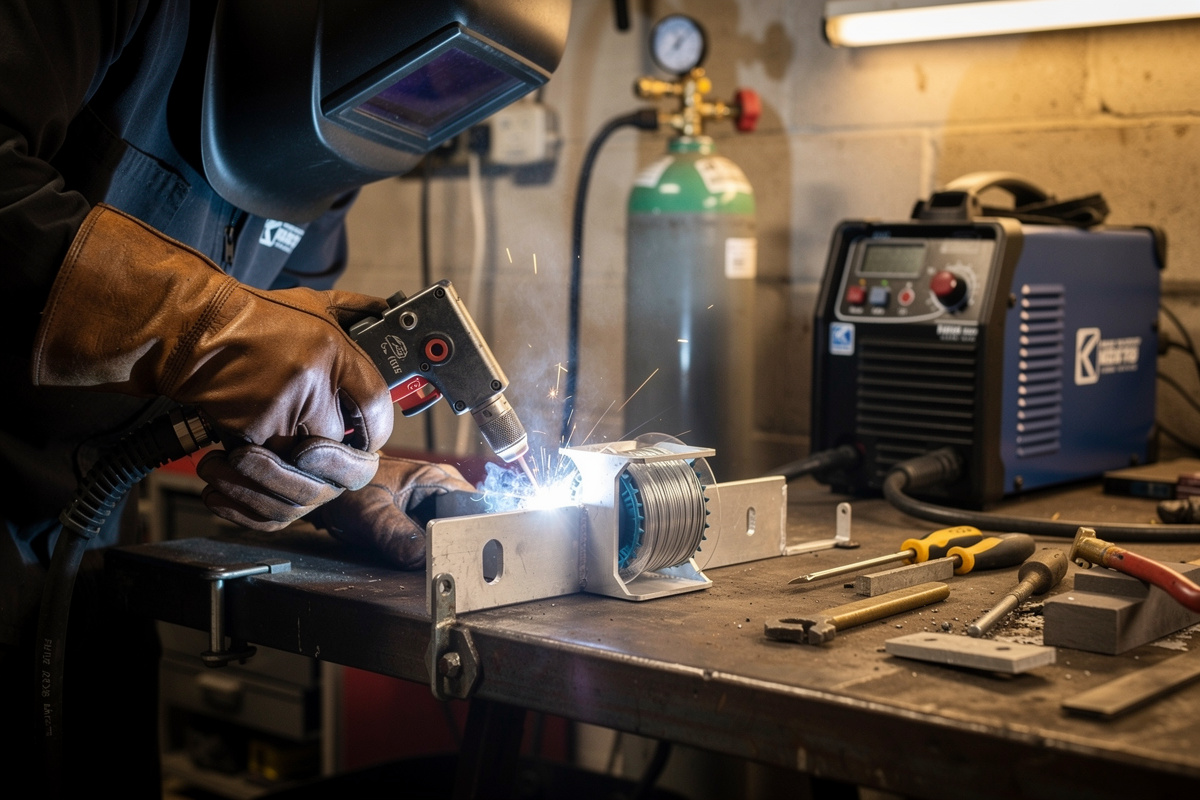

A spool gun exists to solve one problem: aluminum MIG wire is too soft to push through a long gun liner without tangling. By mounting a small 1-pound spool right at the gun, the wire only travels a few inches, so it feeds smoothly. Run it on straight argon with ER4043 wire, push the gun, and weld hot and fast.
Aluminum is the metal pointing my whole bench forward — the long-game project here is an aluminum boat, and the spool gun is how I practice the hull-type welds while I keep climbing the TIG curve. It is the most beginner-accessible way to lay aluminum with a MIG machine, and it sidesteps the single biggest frustration of trying to run soft aluminum wire through a standard steel setup. This guide sits under the MIG welding complete guide; if your real goal is show-quality aluminum, also read my TIG aluminum guide, because the two processes answer different questions.
Why Aluminum Needs a Spool Gun
Aluminum wire has roughly a third the column strength of steel wire, so when a standard MIG gun tries to push it through a 10-foot liner, it buckles and tangles into a “birdnest” at the drive rolls. A spool gun puts a 4-inch spool in the gun body, shortening the push to a few inches and eliminating the jam. That is the entire reason it exists.
If you have ever watched soft aluminum wire snarl up inside a feeder, you understand the problem instantly — it is the same feedability failure behind a lot of MIG wire feed and burnback problems, just made worse by a metal that will not push. There are three ways around it: a spool gun (spool at the gun), a push-pull gun (a motor at the gun assists a motor at the machine), or running a very short, slick liner on a standard gun and accepting marginal results. For a home shop, the spool gun is by far the cheapest and most reliable entry. Push-pull rigs are smoother for long production runs but cost several times more, which is firmly in the territory my welder friend Mike, who runs aluminum in a shop, calls “buy it when the work pays for it.”
| Feed Method | How It Works | Aluminum Feed | Cost | Best For |
|---|---|---|---|---|
| Spool gun | 1 lb spool mounted in the gun | Excellent (short path) | Low–medium | Home shops, occasional aluminum |
| Push-pull gun | Synchronized motors at gun and machine | Excellent (long runs) | High | Production, long aluminum welds |
| Standard gun + liner | Single drive push through liner | Poor (birdnesting) | Lowest | Short, rare aluminum welds only |
| Double-pulse aluminum MIG | Pulsed current, usually with spool/push-pull | Excellent + heat control | Medium–high | Thin aluminum, cleaner beads |
Gas, Wire, and Polarity for Aluminum
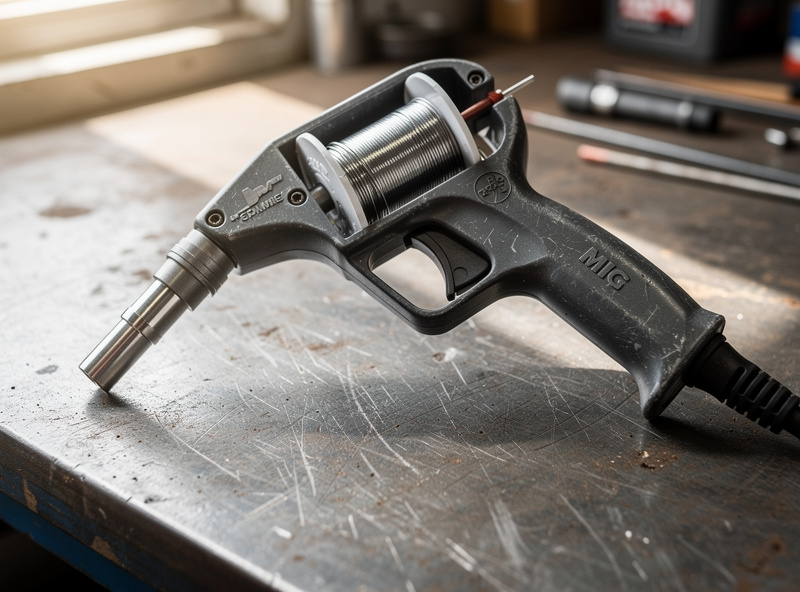
Aluminum MIG runs on 100% argon, DCEP (electrode positive), with either ER4043 or ER5356 wire. Never use a CO2-bearing mix like C25 — the CO2 oxidizes the aluminum and ruins the weld. Straight argon and the right filler are non-negotiable; this is the opposite gas choice from steel MIG.
The two common fillers behave differently. ER4043 is the forgiving general-purpose choice: it flows more fluidly, resists cracking on 6000-series alloys, and is what I default to for brackets and practice plate. ER5356 is stronger and stiffer, feeds with a bit more attitude, color-matches better if a part gets anodized, and is the right call for 5000-series and marine work — which is exactly why it matters for the boat. Run 0.030 or 0.035 diameter; the slightly larger wire actually feeds better than ultra-thin aluminum. Polarity is the same DCEP that steel MIG uses, so no machine change there — but the gas line absolutely has to come off a dedicated argon bottle, not your steel mix. My aluminum grades guide covers which alloy to buy in the first place, and the broader welding gas guide explains why argon and only argon shields aluminum.
Machine Settings: Hot and Fast
Aluminum conducts heat about four times faster than steel, so it needs more amperage and faster travel than the same thickness of steel. Set wire speed (amperage) high, push the gun, and move quickly — you are racing to fuse the joint before the whole part heat-soaks. Aluminum MIG runs mostly in spray-type transfer, not the short-circuit you use on thin steel.
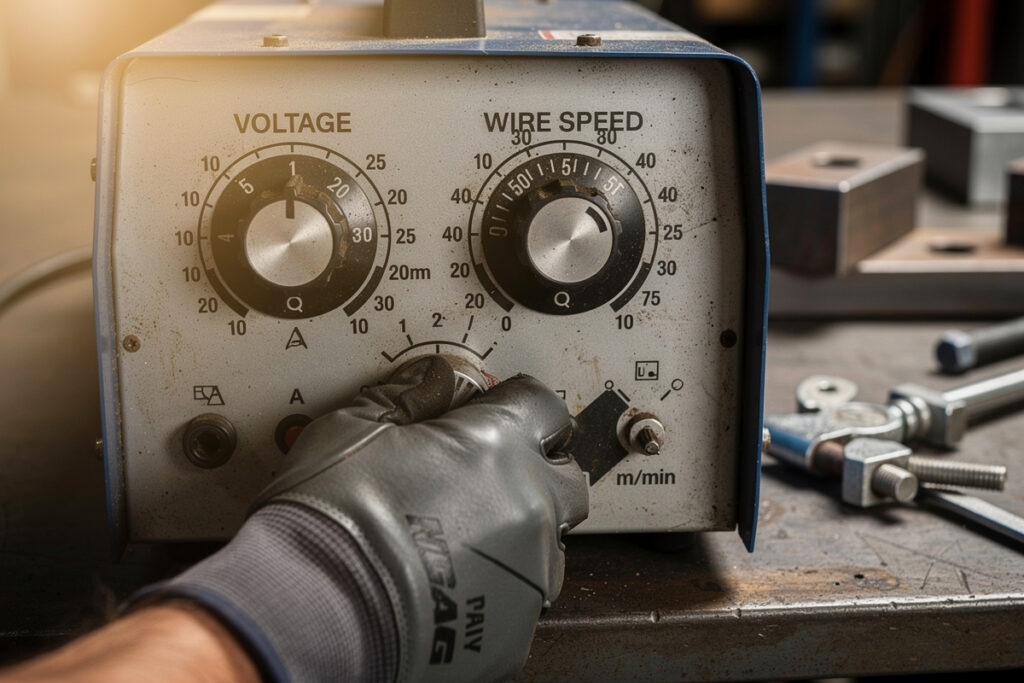
On a typical 200-amp class machine, 1/8-inch aluminum wants somewhere around 18-20 volts with high wire speed; thinner gets dicey because aluminum gives almost no warning before it goes from solid to a hole. Set your gas around 20-25 CFH of argon. Because aluminum drinks heat, a long joint needs more power at the end than the start, or you get a cold, poorly-fused beginning — the “cold start” problem. A machine with adjustable run-in or a double-pulse aluminum mode helps a lot here; the cheaper fix is to start your bead on a sacrificial tab so the part is already warming when the real weld begins. Use my MIG settings chart as a baseline and expect to run hotter and faster than the steel numbers for the same thickness.
Disclosure: HomeWelder is reader-supported. As an Amazon Associate I earn from qualifying purchases made through links in this article, at no extra cost to you. I only point to gear I actually use or would buy for my own shop.
Technique: Prep, Push, and Reading the Puddle
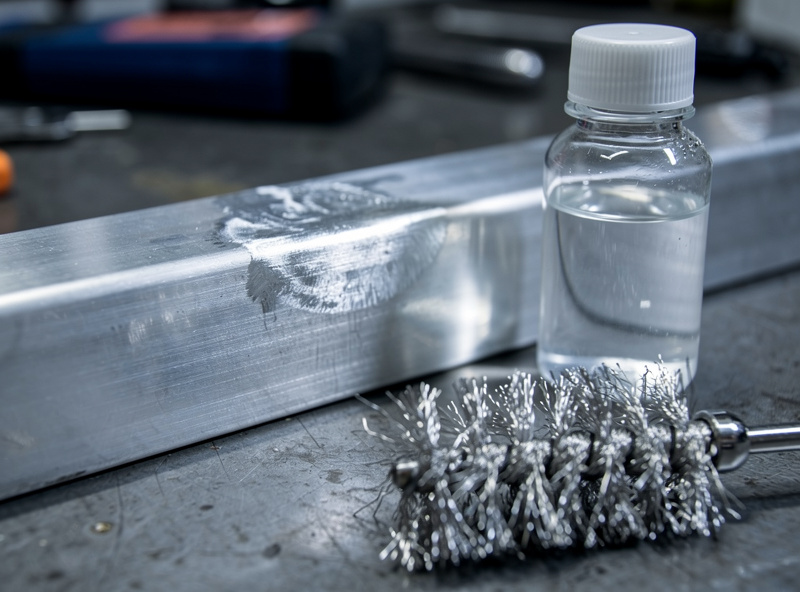
Prep is half the job: scrub the joint with a stainless brush used only on aluminum, then wipe with acetone right before welding. Aluminum grows an oxide skin that melts at about 3,700°F while the metal underneath melts near 1,220°F, so any oxide left on the surface caps the puddle and seeds porosity. Always push the spool gun, never drag it.
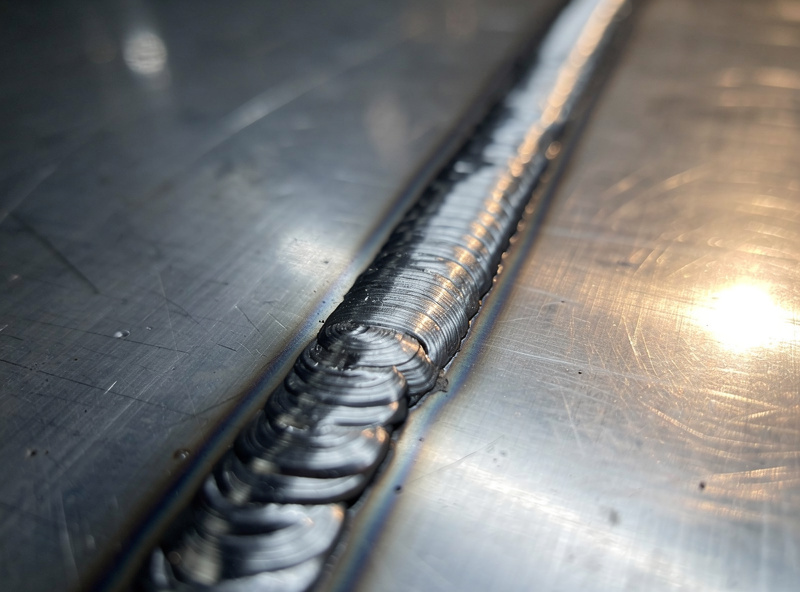
The push angle of about 10-15 degrees keeps the argon shield over the weld and rides the arc ahead of the puddle so you see the joint. Drag aluminum and you pull soot and oxide into the bead. The puddle on aluminum does not glow red the way steel does — it stays silver and suddenly goes shiny and wet, then collapses if you linger, so you learn to read the shine, not the color. Keep a dedicated aluminum-only brush (a steel-contaminated brush drags carbon into the weld) and weld within a few minutes of cleaning, because the oxide rebuilds fast. Get the prep and the push angle right and a spool gun lays a respectable bracket weld; skip the prep and no setting will save it.
When the Spool Gun Wins, and When TIG Does
The spool gun is the right tool for thicker aluminum (about 1/8 inch and up), structural brackets, and getting a lot of aluminum joined fast. It is not the tool for thin sheet, cosmetic beads, or anything under roughly 14 gauge — that is where TIG or a double-pulse machine takes over because they give the fine heat control aluminum sheet demands.
I am honest about the ceiling here: a single-feed spool gun on thin aluminum is a fight, and the production alloy and thin-wall edge cases are where I defer to welders who run aluminum daily. For the boat-scale work — hull plate, frames, thicker stock — the spool gun is genuinely capable and far faster than TIG. For a thin enclosure or a part that has to look perfect, I reach for the TIG torch instead, and the trade-offs are laid out in my TIG aluminum guide. A double-pulse aluminum MIG splits the difference, adding heat control that makes thinner aluminum far more forgiving than a plain spool gun — it is the upgrade path I am budgeting toward as the aluminum work ramps up.
The Aluminum Spool-Gun Kit
You need three things to start: a spool gun compatible with your machine, a roll of aluminum filler in the right alloy, and the consumables that match aluminum’s quirks — a U-groove drive roll, a slick liner, and an oversized contact tip. Aluminum expands as it heats and grabs a standard tip, so the tip is sized larger than the wire on purpose.
Check that your welder supports a spool gun before buying — many home units have a dedicated connector, and a MIG spool gun for aluminum only helps if the machine can drive it. For filler, keep a roll of ER4043 aluminum MIG wire for general work and add ER5356 when strength or anodizing matters. And do not forget the small part that bites beginners — a set of aluminum MIG contact tips sized for thermal expansion keeps the wire feeding when the gun heats up. Add a dedicated stainless brush and a bottle of straight argon, and you can start practicing real aluminum welds.
Frequently Asked Questions
Do I need a spool gun to MIG weld aluminum?
Practically, yes. Aluminum wire is too soft to push through a standard 10-foot gun liner without birdnesting. A spool gun mounts the spool in the gun so the wire only feeds a few inches. The alternatives are a pricier push-pull gun or a very short liner with marginal results.
What gas do I use to MIG weld aluminum with a spool gun?
Use 100% argon at about 20 to 25 CFH. Never use a CO2-bearing mix like C25, because the carbon dioxide oxidizes the aluminum and causes a dirty, porous weld. Straight argon is the opposite of the C25 you would run on steel, so use a dedicated argon bottle.
ER4043 or ER5356 aluminum wire — which should I use?
ER4043 is the forgiving general-purpose filler: it flows smoothly and resists cracking on 6000-series alloys. ER5356 is stronger and stiffer to feed, color-matches anodizing, and suits 5000-series and marine work. Use 4043 for most brackets and 5356 where strength or appearance matters.
How thin can you MIG weld aluminum with a spool gun?
A plain spool gun is practical down to about 1/8 inch, and gets difficult around 14 gauge. Thinner aluminum gives almost no warning before burning through, so for sheet you want a double-pulse aluminum MIG or TIG, which provide the fine heat control thin aluminum demands.
Why is my aluminum MIG weld dirty or full of holes?
Almost always contamination or the wrong gas. Oxide and oil left on the joint cause porosity, and any CO2 in the gas oxidizes the puddle. Scrub with an aluminum-only stainless brush, wipe with acetone, weld within minutes, and run 100% argon to fix a dirty, holey bead.
Should I push or pull a spool gun on aluminum?
Always push the spool gun, angled about 10 to 15 degrees forward. Pushing keeps the argon shield over the weld and rides the arc ahead of the puddle so the joint stays clean. Dragging pulls oxide and soot into the bead and gives a dirty, gray weld on aluminum.

Discussion (0)