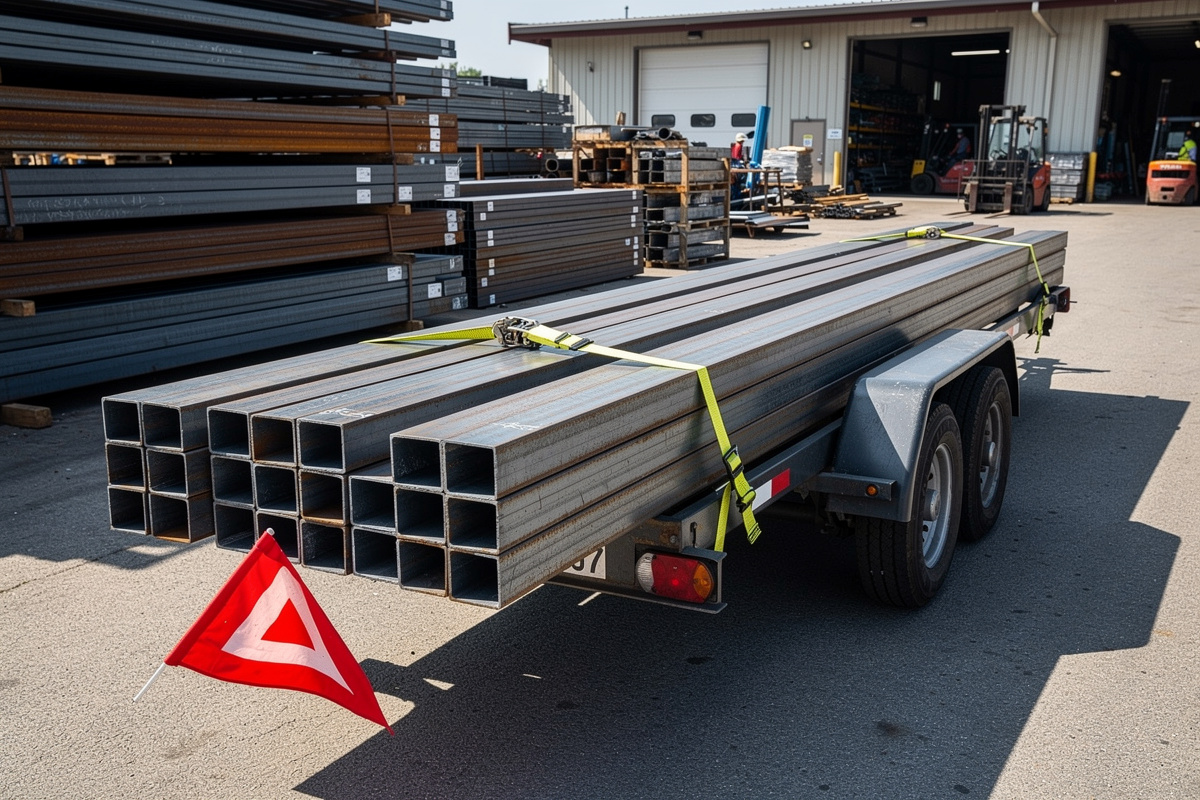

Haul long steel on a trailer or in a pickup bed with the load strapped to anchor points and a red flag on any overhang past 4 feet. Short, light pieces ride on a car roof rack. The simplest fix is having the supplier cut stock to fit your vehicle.
The first time you buy real steel, the cheerful question from the counter is “how are you getting this home?” — and twenty-foot sticks have a way of making a hatchback look very small. Unsecured steel is a genuine projectile in a crash and a dropped load is a road hazard, so this is one place the laid-back hobbyist in me goes by the book. This guide covers every realistic way to move steel home — truck, trailer, roof rack, and delivery — and how to tie it down so it stays put. It pairs with my where to buy steel guide, where the haul-it-home problem first comes up.
What Is the Best Way to Transport Steel?
A utility or flatbed trailer is the best way to move long steel safely, supporting full 20-foot sticks with room to strap them flat. A pickup bed handles most hobby loads up to about 14 feet with a flagged overhang. Car roof racks suit only short, light pieces.
Match the method to the length and weight, not to what is parked in your driveway. The single most overlooked option is the easiest: have the supplier cut your stock to length before you leave, so a project’s worth of steel becomes a bundle of 4-to-6-foot pieces that fit a normal vehicle. Most steel comes in 20-foot sticks, and almost no hobby project needs a piece that long uncut. Cutting at the supplier turns a transport headache into a non-issue, and it costs a dollar or two per cut. When you do need to move long stock whole, a trailer is worth borrowing or renting.
Pickup Truck: The Hobbyist Standard
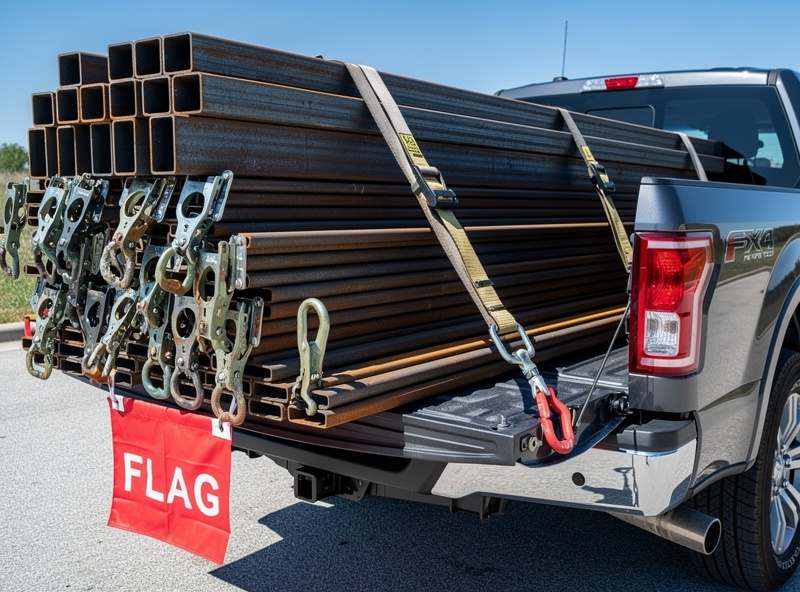
A pickup bed handles most home-welding steel loads. Lay the stock flat, slide it forward against the cab, and strap it down to the bed’s anchor points — never just the tailgate. Anything overhanging the rear by more than 4 feet needs a red flag by day and a red light at night.
The truck bed is where most of my steel rides home. The rules I follow are simple and non-negotiable: weight forward against the cab so the load cannot slide back under braking, at least two ratchet straps cinching the bundle to the bed anchor points, and a closed tailgate only if the load clears it. For overhang, the federal rule of thumb is a red flag on anything sticking out past 4 feet, switching to a red light after dark — keep a red safety flag in the truck so a spur-of-the-moment steel run is never illegal. Mind the payload rating too; steel is dense, and a few hundred pounds of plate adds up faster than it looks. Run the numbers first with my steel weight calculator so you know the load before you load it.
Trailer: For Full-Length Stock
A utility or flatbed trailer is the right tool for full 20-foot sticks or heavy plate. It supports long stock along its length so the steel cannot bow or whip, sits low for easy loading, and carries far more weight than a truck bed. Strap at multiple points and flag the overhang.
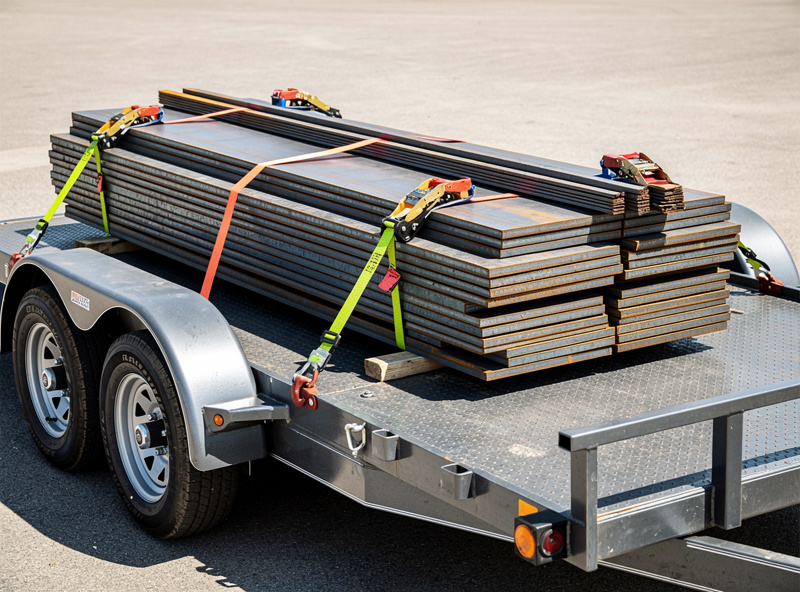
When I am moving a real quantity — a stack of plate, several 20-foot lengths, or a heavy beam — the trailer is the only sane choice. Long stock on a trailer gets supported along most of its length, which stops the dangerous whip and bounce that unsupported overhang develops at highway speed. I strap at three or four points down the load rather than one big strap in the middle, so nothing can pivot or walk loose, and I keep the heaviest pieces low and centered over the axle for stable towing. Rental trailers from the big-box stores are cheap by the hour and turn an impossible load into a routine one. If you are buying enough steel to need a trailer regularly, factor that into your shop budget the same way you would any tool, as in my cost to start welding guide.
Disclosure: HomeWelder is reader-supported. As an Amazon Associate I earn from qualifying purchases made through links in this article, at no extra cost to you. I only point to gear I actually use or would buy for my own shop.
Roof Rack and Delivery: The Other Options
A car roof rack moves only short, light steel — think 4-to-8-foot bars under the rack’s weight limit, padded and strapped front and back so nothing slides. For anything heavy, long, or awkward, supplier delivery at 50-150 dollars is cheaper than the risk and often the smarter call.
The roof rack is a last resort, not a plan. It works for a few light bars cut to a manageable length, padded with moving blankets to protect the roof and tied at both the front and rear so the load cannot shoot forward in a panic stop. Never put long, heavy, or whippy steel on a roof — the leverage and the wind load are genuinely dangerous, and a roof rack’s rating is low. When the load outgrows your vehicle, supplier delivery is the grown-up answer: most local yards deliver for a flat 50-150 dollar fee, and many waive it above a few-hundred-dollar order. For one-off long pieces, the delivery fee beats renting a trailer and beats the risk of an unsafe load every time. Ordering cut-to-length from the online suppliers sidesteps the whole problem by shipping pieces to your door.
Steel Transport Methods Compared
| Method | Max Practical Length | Capacity | Best For | Key Caution |
|---|---|---|---|---|
| Pickup bed | ~14 ft with overhang | Medium-high | Most hobby loads | Flag overhang past 4 ft |
| Utility trailer | 20 ft full sticks | High | Long or heavy stock | Strap at multiple points |
| Flatbed trailer | 20 ft plus | Very high | Plate and beams | Keep load low and centered |
| Car roof rack | ~8 ft light bars | Low | Short, light pieces | Tie front and rear, pad roof |
| Supplier delivery | Any | Any | Heavy or awkward loads | 50-150 dollar fee |
The honest hierarchy for a home welder: cut it short at the supplier and use the truck, borrow a trailer for the rare long haul, and pay for delivery when the load is genuinely big. The roof rack is for emergencies only.
How to Strap Steel So It Stays Put
Secure steel with ratchet straps to dedicated anchor points, not the tailgate or trailer rail. Use at least two straps, position the load against a forward stop so it cannot slide under braking, and flag any rear overhang. A shifting steel load is a serious crash and road hazard.
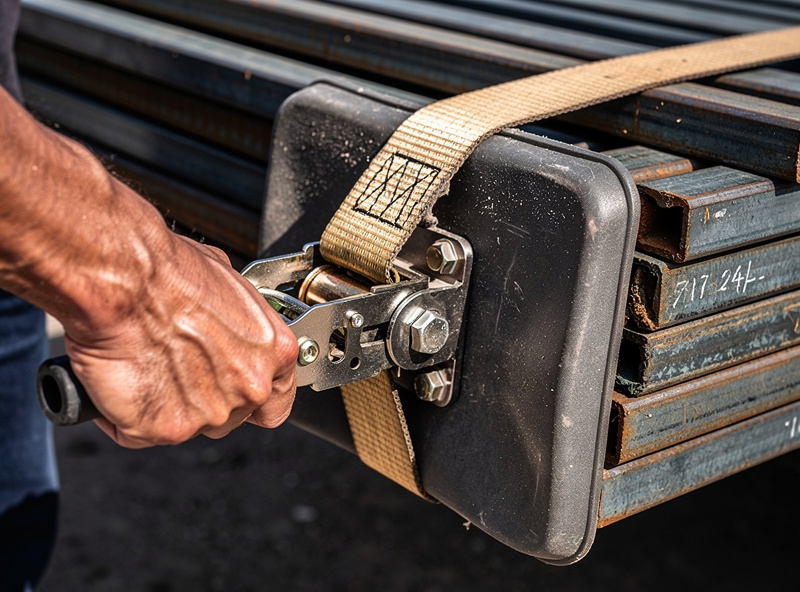
Tie-down discipline is the whole game. Ratchet straps beat bungee cords and rope every time — they do not stretch, and steel under load will saw through anything that gives. I run the straps to real anchor points rated for the load, never to a tailgate latch or a flimsy rail, and I always set the bundle against a solid forward stop so braking pushes it into the stop rather than the strap. Two straps minimum, more for a long or heavy load, and I re-check tension after the first few miles because bundled steel settles and straps loosen. Edge protectors or a folded rag keep sharp steel corners from cutting the strap webbing. The same care you put into inspecting reclaimed steel belongs on the drive home — the metal is no good to you if it never makes it to the bench safely.
Frequently Asked Questions
How do you transport long steel sheets and bars?
Use a trailer for full 20-foot stock, or a pickup bed for shorter loads with the overhang flagged. Lay the steel flat, strap it to dedicated anchor points against a forward stop, and flag any rear overhang past 4 feet. The easiest option is having the supplier cut it to fit your vehicle.
How far can steel overhang a truck?
The federal rule of thumb requires a red flag on any load overhanging the rear by more than 4 feet, switching to a red light at night. State rules vary, but keeping rear overhang under 4 feet or flagged keeps the load legal and visible. Excessive overhang also whips dangerously at speed.
Can you carry steel on a car roof rack?
Only short, light pieces within the rack’s weight limit, padded and tied at both front and rear so the load cannot slide. Never put long, heavy, or whippy steel on a roof rack. For anything bigger, use a trailer, a truck, or supplier delivery instead.
What straps do I use to secure steel?
Use ratchet straps rated for the load, attached to dedicated anchor points rather than a tailgate or flimsy rail. At least two straps, set against a forward stop, with edge protectors on sharp corners. Re-check tension after the first few miles because bundled steel settles and straps loosen.
Is it cheaper to get steel delivered or haul it yourself?
For one-off long or heavy loads, supplier delivery at 50-150 dollars often beats renting a trailer and is far safer than an unsafe load. For routine short loads that fit your truck cut-to-length, hauling yourself is cheaper. Many suppliers waive delivery above a few-hundred-dollar order.
How do I know if my vehicle can carry the steel weight?
Calculate the steel weight first and compare it to your vehicle’s payload rating. Steel is dense, so a few hundred pounds of plate adds up fast and can exceed a car’s capacity. Use a weight-per-foot calculation to total the load before you commit to hauling it.

Discussion (0)