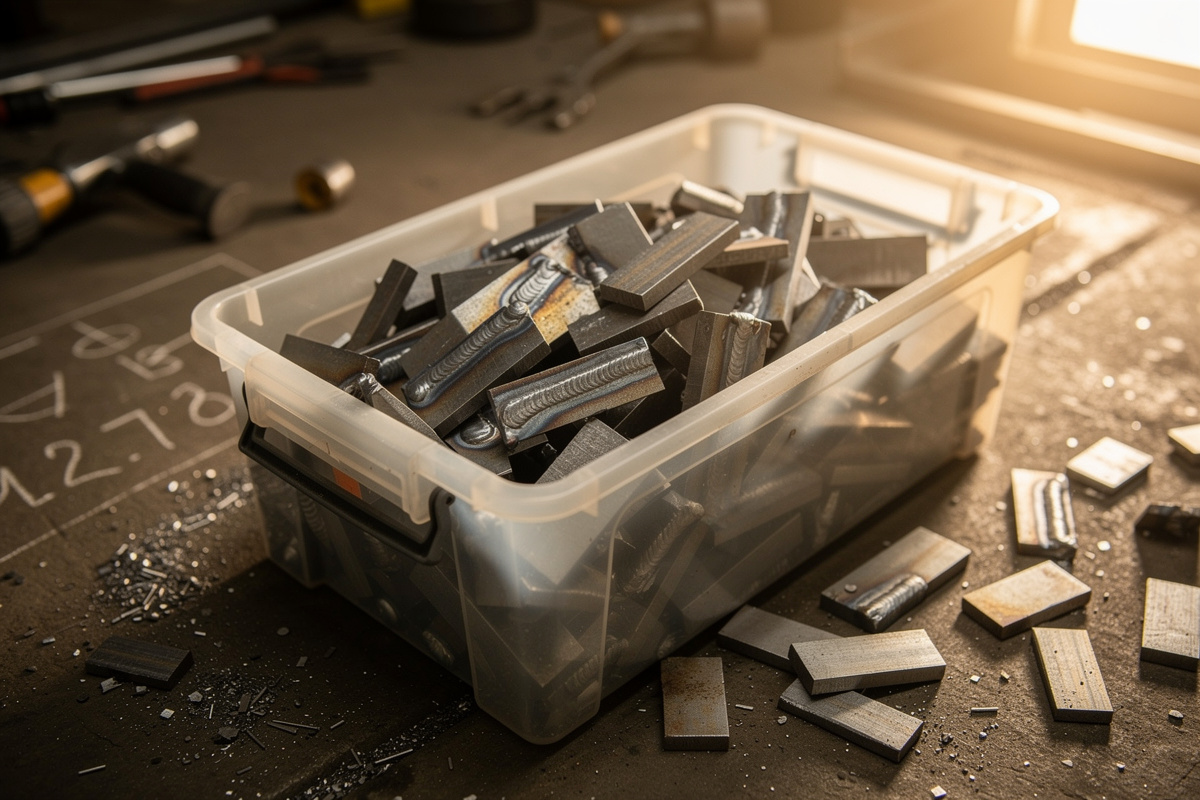

The cheapest steel for welding practice is the supplier drops bin (often 50-70% off), scrap-yard mild steel, fab-shop offcuts, and your own project remnants. Stick to clean uncoated mild steel coupons, cut them small, and you can log hundreds of practice arcs for almost nothing.
Practice is the only way the dial-in becomes muscle memory, and you do not want to be burning expensive certified stock while your travel speed is still ragged. I keep a dedicated bin of cheap practice coupons exactly so I can lay a dozen test beads without thinking about cost — it is the single best habit for getting better fast. This guide is the cheapskate’s map to free and near-free practice steel, plus the one safety rule you cannot skip when the metal is mystery scrap. It rounds out the sourcing picture in my where to buy steel hub.
Where Do You Get Cheap Steel for Welding Practice?
Get cheap practice steel from the supplier drops bin, scrap yards, fab-shop offcut piles, and your own project remnants. Drops bins sell short ends at 50-70% off list, scrap yards sell by the pound, and many fab shops give offcuts away to anyone who asks. For pure practice, the unknown alloy does not matter.
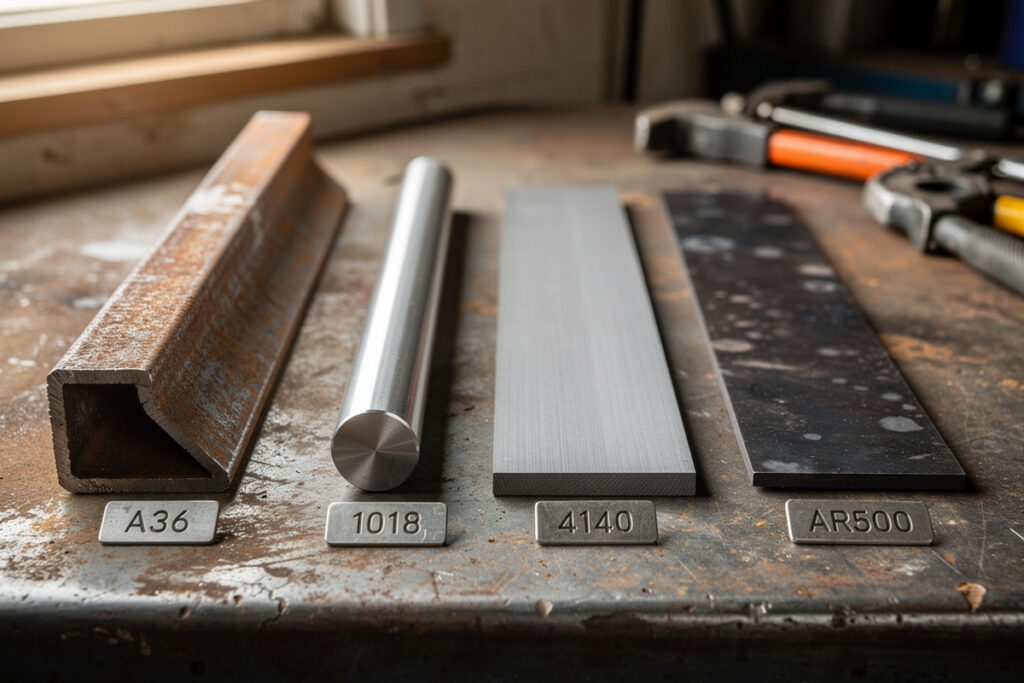
Practice welding has one liberating quality: the metal does not have to be anything in particular. A bead laid on a random chunk of mild steel teaches your hands exactly what a bead on certified A36 does, so the whole expensive-alloy question disappears. That frees you to chase the cheapest sources without worrying about grade — the same reclaimed and unknown stock I would never put in a trailer is perfect for burning practice beads. The skill you build transfers straight to real projects later, which is why cheap practice steel is the highest-leverage purchase a beginner can make. Pair it with the structured drills in my first welding projects guide.
The Drops Bin: The Best-Kept Secret
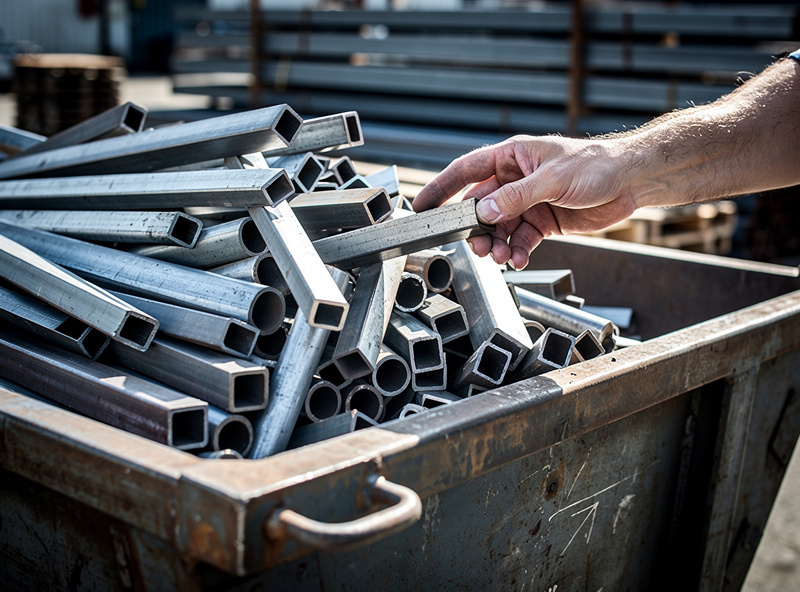
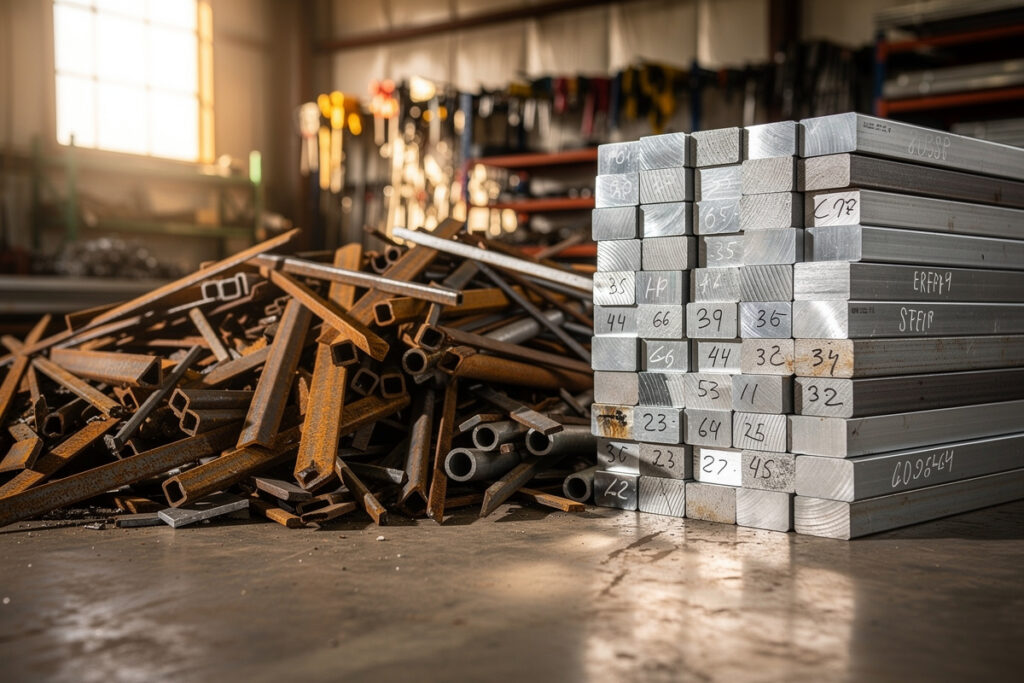
Every steel supplier keeps a drops bin — short offcuts left from cutting customer orders — that sells at roughly 50-70% off list price just to clear yard space. For small practice pieces, the drops bin often beats every other source on price, and the steel is clean, known mild stock rather than mystery scrap.
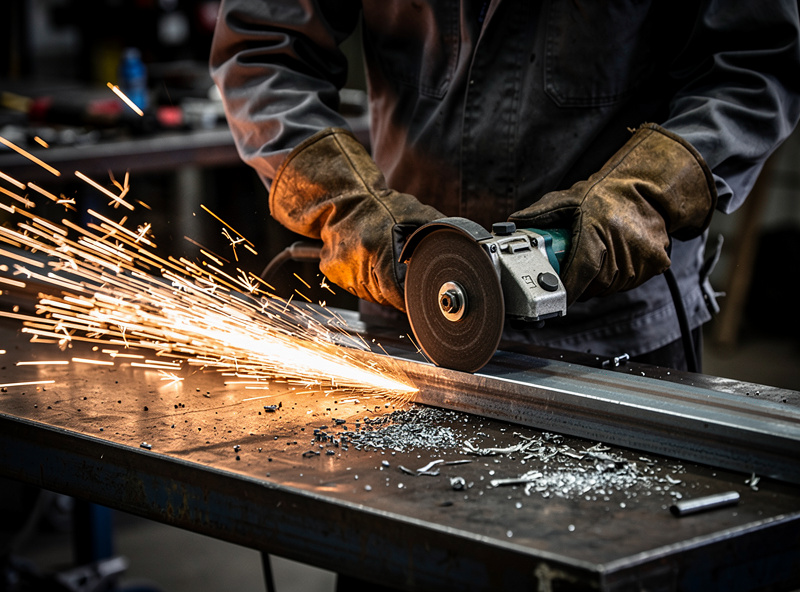
The drops bin is where I send every beginner first. These are the short ends — anything from a 6-inch stub to a 4-foot piece — that the supplier cannot sell as full stock, priced to move at half list or less. Because it comes from the same racks as new stock, it is usually clean A36 with no coatings to worry about, which makes it ideal practice metal: cheap and safe to burn. I stop in periodically just to paw through the bin, and a 20-dollar armful keeps the practice coupons stocked for weeks. Cut the longer drops into hand-sized coupons with a cutoff wheel and you have a stack of test pieces ready for any drill. The same drops bins are worth checking for cheap project stock too, as I cover in the sourcing hub.
Scrap Yards, Fab Shops, and Free Piles
Scrap yards sell practice steel by the pound at 30-60% below new, fabrication shops often give away offcut bins to anyone who asks, and marketplace free listings appear constantly. These mystery-alloy sources are perfect for practice, where grade is irrelevant — just avoid coated and galvanized pieces for fume safety.
Beyond the drops bin, the practice-steel hunt gets genuinely free. Local fabrication and welding shops generate offcuts constantly and many keep a giveaway pile or will fill a bucket for you if you ask politely — it saves them disposal cost. Scrap yards sell mild steel by the pound cheaply, and online marketplace “free metal” and “scrap pile” listings turn up regularly if you watch for them. Demolition and construction sites sometimes part with offcuts too. The one firm rule across all of these: skip anything coated, painted, or galvanized for practice, because grinding and welding coatings releases fume you do not want, and the whole point of practice is volume, not hazmat. The full alloy-and-coating reasoning is in my new vs used steel guide. For pure bead practice, clean mystery mild steel is ideal.
Disclosure: HomeWelder is reader-supported. As an Amazon Associate I earn from qualifying purchases made through links in this article, at no extra cost to you. I only point to gear I actually use or would buy for my own shop.
Cheap Practice Steel Sources Compared
| Source | Typical Cost | What You Get | Caution |
|---|---|---|---|
| Supplier drops bin | 50-70% off list | Clean known mild steel | Limited sizes on hand |
| Scrap yard | By the pound, cheap | Mixed mild steel | Rust and coatings |
| Fab-shop offcuts | Often free | Assorted offcuts | Ask first, varies |
| Your own remnants | Free | Familiar stock | Accumulates slowly |
| Marketplace free piles | Free | Random metal | Unknown coatings |
Mix and match these and your practice-steel cost approaches zero. Keep a labeled bin for coupons and another for the keeper drops worth saving for small real projects — sorting as you go saves digging later.
What Makes Good Practice Steel
The best practice steel is clean, uncoated mild steel from 1/8 to 1/4 inch thick — thick enough to forgive heat without burning through, flat enough to run a clean bead. Cut it into hand-sized coupons, knock off rust and mill scale, and you have ideal metal for learning puddle control.
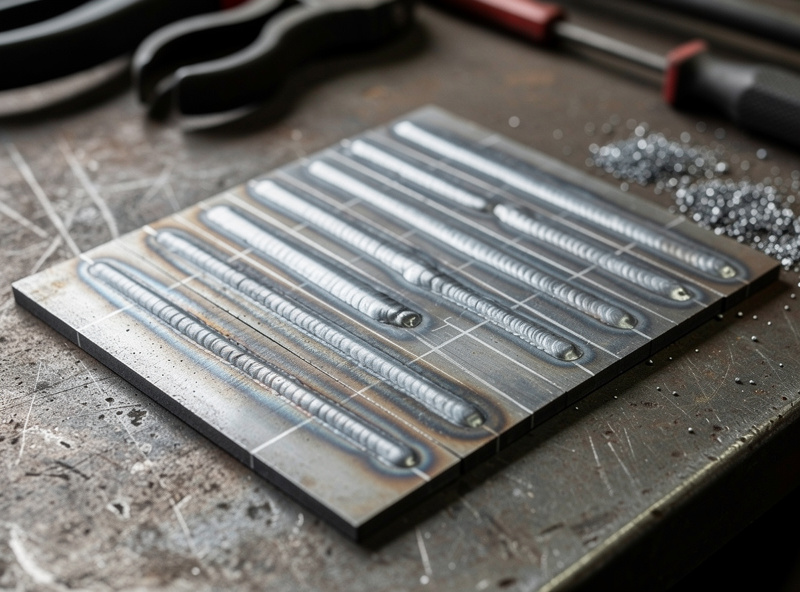
Not all cheap steel makes good practice steel. Paper-thin sheet teaches frustration because it warps and burns through before you learn anything, and heavily rusted or coated stock fights you on porosity and fume. I aim for flat bar and plate in the 1/8-to-1/4-inch range — it takes heat like most real projects, holds still, and lets you actually read the puddle. Knock the rust and scale off the weld area with a wire brush first, and mark your bead lines with a soapstone marker so you are practicing straight travel, not just melting metal. Dial the machine to the coupon thickness with my settings chart, and use the practice to drill out the common beginner mistakes before they become habits. Cheap steel plus deliberate reps is the whole recipe for getting good.
Frequently Asked Questions
Where can I get cheap steel for welding practice?
The supplier drops bin is the best first stop, selling short offcuts at 50-70 percent off list. Scrap yards sell mild steel cheaply by the pound, fabrication shops often give offcuts away, and your own project remnants are free. For practice, the unknown alloy does not matter.
Does practice steel grade matter?
No. A bead on random mild steel teaches your hands the same thing a bead on certified A36 does, so practice steel can be any clean uncoated mild steel regardless of exact grade. Save the certified, known-grade stock for real load-bearing projects where the alloy matters.
What is the best steel thickness for welding practice?
Clean mild steel from 1/8 to 1/4 inch thick is ideal. It takes heat like most real projects, holds flat, and lets you read the weld puddle without burning through. Avoid thin sheet, which warps and burns through before you learn puddle control.
Can I get free steel for practice?
Yes. Fabrication and welding shops often keep a giveaway offcut pile or will fill a bucket if you ask, marketplace free-metal listings appear regularly, and your own project remnants cost nothing. Just avoid coated or galvanized pieces, which release fume when ground or welded.
Is scrap yard steel okay for practice?
Yes, scrap-yard mild steel is perfect for practice, where the unknown alloy is irrelevant. Buy it cheap by the pound, clean off rust and scale before welding, and skip any galvanized or painted pieces. Practice is about logging volume, not certified material.
How do I prepare cheap practice steel?
Cut longer drops into hand-sized coupons with a cutoff wheel, knock off rust and mill scale in the weld area with a wire brush, and mark bead lines with soapstone. Clean bright metal welds predictably, so prep lets you practice technique instead of fighting contamination.

Discussion (0)