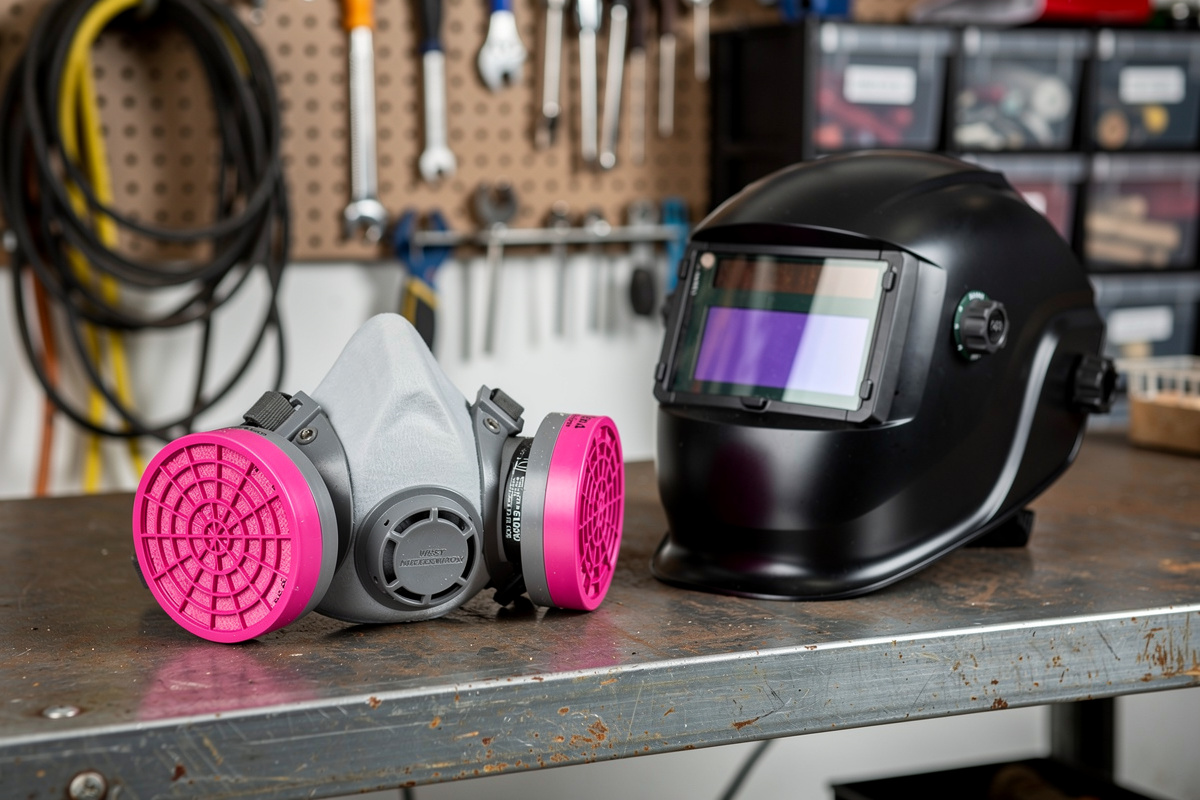

The right welding respirator for almost every home shop is a reusable half-mask with P100 filters — not an N95, and usually not a PAPR until your wallet or your stainless work pushes you there. That one sentence saves most beginners a lot of confused shopping, but the why behind it is what keeps your lungs clear, so let me walk you through how I landed on what hangs on the hook beside my MIG-PRO205DS.
Welding particulate is fine — the ultrafine fraction is the part that does the damage, and your filter has to actually stop particles that small. That single fact eliminates a lot of the masks people reach for. Here is how the three real options compare, what each is genuinely for, and the fit details that decide whether any of them works at all.
Disclosure: some links below are affiliate links. As an Amazon Associate I earn from qualifying purchases, at no extra cost to you — I only point to gear I actually run or would buy again.
Why the Filter Rating Decides Everything
Particulate respirators are rated by two things: how efficiently they filter, and whether they tolerate oil. The number is the efficiency — 95, 99, or 100 (which means 99.97%). The letter is oil resistance: N (not oil-resistant), R (somewhat), P (oil-proof). Welding fume is metal oxide, not oil, so the oil letter is not the welding concern — the efficiency number is.
P100 is the practical top tier you can buy off the shelf: 99.97% efficiency, and the cartridges are nearly always the pink-coded ones. For welding fume, that efficiency is what you want, because the dangerous particles are the small ones and you want as few of them getting through as possible. The reason I do not lean on N95 for the metals that matter is not that N95 is useless — it is that for stainless and galvanized I want the highest filtration I can strap to my face, and a reusable P100 cartridge gives me that for years of refills.
The Three Real Options
Here is the honest comparison across the three respirator types a home welder actually chooses between:
| Type | Filtration | Best for | The catch |
|---|---|---|---|
| N95 disposable | 95% non-oil particulate | Light, occasional mild-steel grinding dust | Lower efficiency; fit varies; disposable; not my pick for fume |
| Reusable half-mask + P100 | 99.97% (P100 cartridge) | Most home welding, stainless, galvanized, flux-core | Must fit under the helmet; requires a real face seal |
| PAPR (powered air) | HEPA-level, positive pressure | Heavy fume, beards, all-day stainless work, claustrophobia | Expensive; bulky; battery to charge |
My take after running both a half-mask and borrowing Mike’s PAPR for a weekend: the half-mask with P100 is the right answer for 90% of home welders, the PAPR is a genuine luxury that earns its keep if you weld stainless for hours or cannot get a seal because of a beard, and the disposable N95 is fine for sweeping up grinding dust but is not what I want between my lungs and a stainless plume.
The Half-Mask with P100: My Default
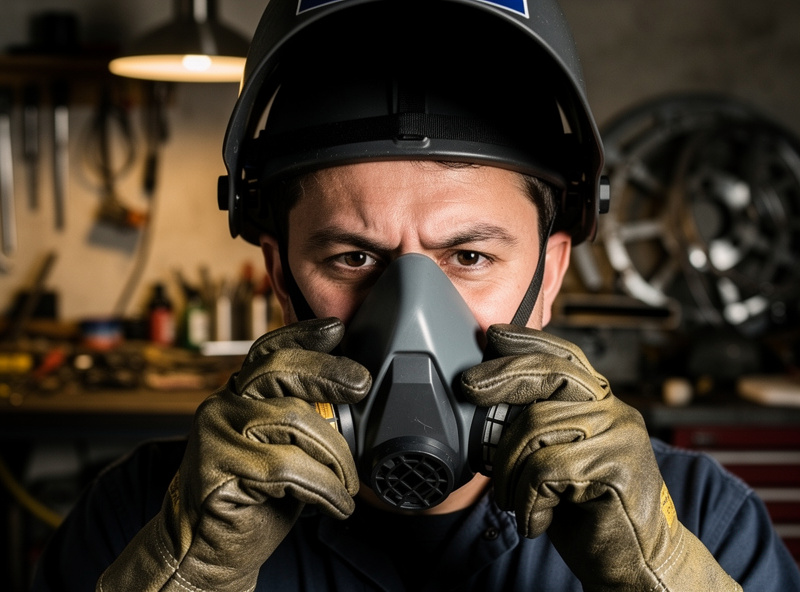
This is what I actually use. A reusable half-mask respirator with low-profile P100 filter cartridges tucks under an auto-darkening helmet and seals to the lower face. The body lasts years; you just replace the cartridges when breathing gets harder or they have been knocking around the shop too long.
The detail that makes or breaks it is profile. A bulky cartridge that fouls the helmet means you stop wearing the mask, and a mask in the drawer protects nobody. Look for a low-profile design specifically sold as welding-compatible, and test it with your helmet down before you trust it on a real job. I run mine for anything stainless, galvanized, flux-core, or any session long enough that the air in the shop starts to feel thick.
When a PAPR Actually Earns Its Price
A PAPR welding system blows filtered air into the helmet under positive pressure, so air flows out around the seal rather than fume leaking in. That solves two problems a half-mask cannot: it works for people who cannot get a tight seal — most commonly because of a beard — and the constant airflow is far more comfortable for long stainless sessions where a half-mask gets sweaty and claustrophobic.
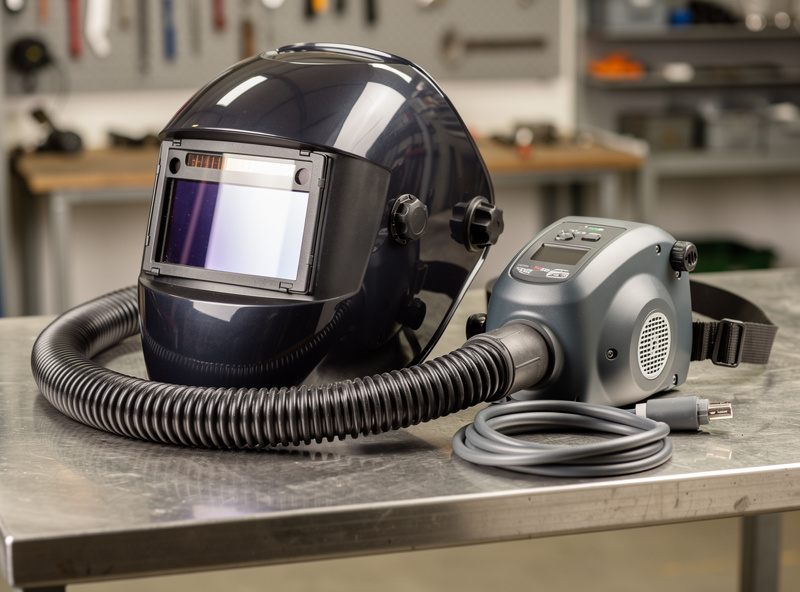
The honest catch is cost and bulk. A PAPR is a serious purchase, you carry a blower on your belt, and there is a battery to keep charged. For a hobby welder doing mostly mild steel, that is overkill. For someone welding stainless for hours, fighting a beard, or who simply hates the sealed-mask feeling, it is money well spent — Mike runs one for exactly those reasons.
Fit Is the Whole Game
A respirator only filters the air that goes through the filter. Air that sneaks around a bad seal is unfiltered, and a 99.97% cartridge on a leaking mask is a 99.97% cartridge protecting nobody. This is why fit beats the rating every time.
- Facial hair breaks the seal. A half-mask cannot seal over a beard or even heavy stubble along the seal line. If you keep the beard, a PAPR is your honest path — not a tighter half-mask.
- Do a seal check every time. Cover the cartridges and inhale; the mask should pull in and hold. Cover the exhale valve and exhale; it should push out and hold. Two seconds, every session.
- Check it under the helmet. A mask that seals beautifully bare-faced can be levered off its seal by the helmet’s headgear. Test the combination, not the mask alone.
- Store it clean. Cartridges absorb shop grime and humidity. Keep the mask in a bag or bin, not loose on the bench collecting the very dust it is meant to stop.
A Respirator Is the Last Line, Not the First
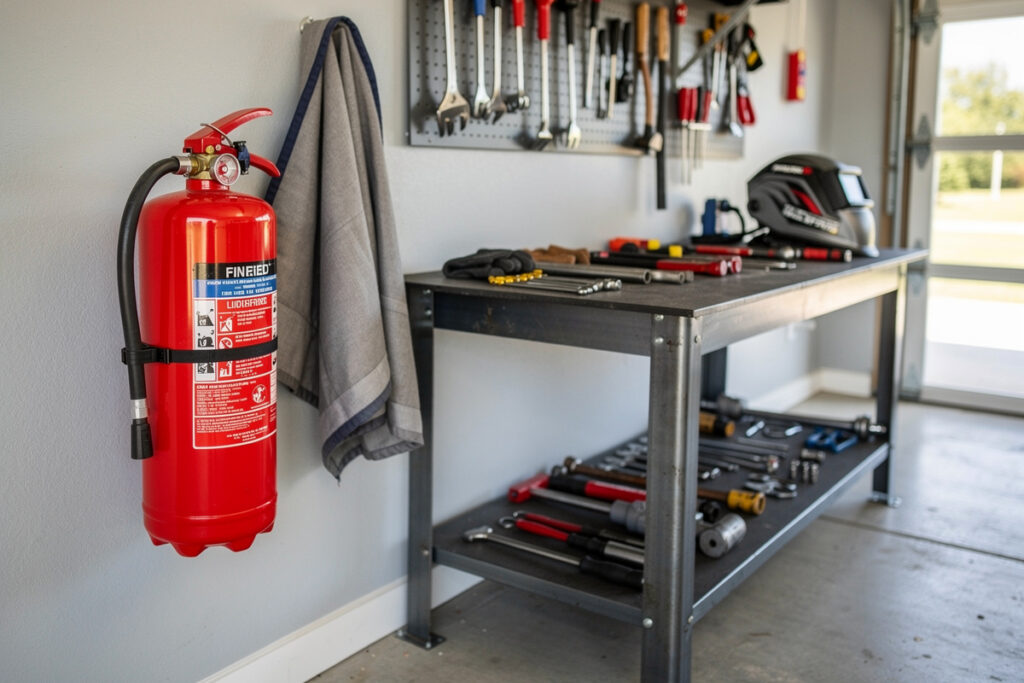
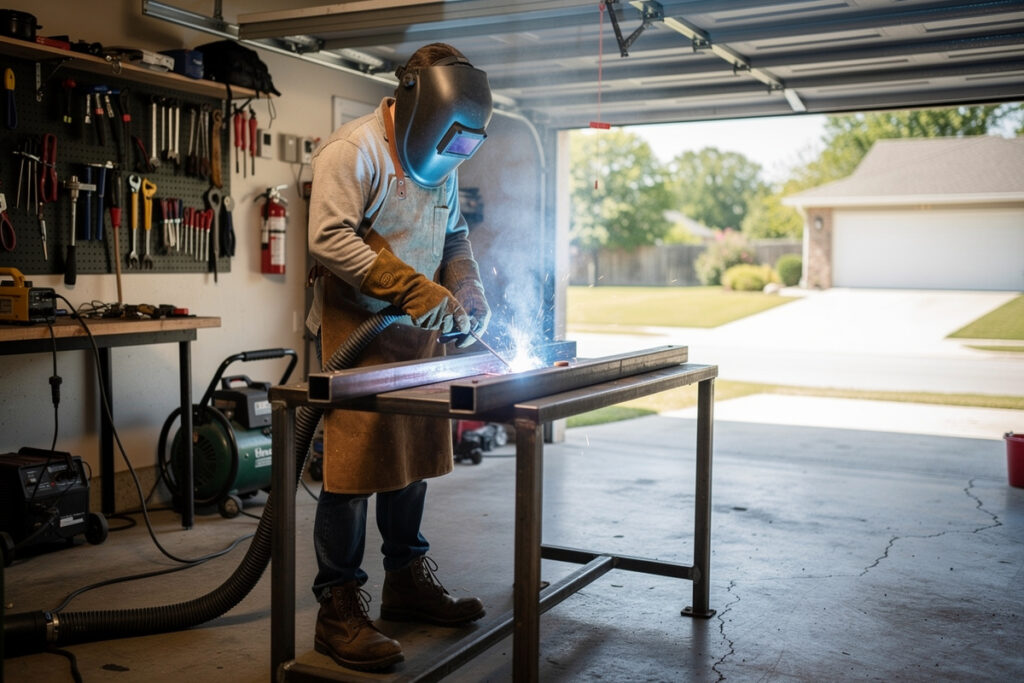
This matters enough to say plainly: the respirator is the bottom of the protection hierarchy, not the top. The order that actually keeps your air clean is grind the coatings off first, capture the fume at the source, ventilate the room, and then wear the respirator for what is left. A mask is what you wear because the engineering controls never catch everything — not a substitute for them.
I have watched plenty of beginners buy a respirator and treat it as permission to weld with their head in the plume in a sealed garage. That is backwards. The mask is sized to handle the residual fume after good ventilation, not the full cloud of a closed room. Lean on it as your only control and you overwhelm the cartridge faster, breathe harder through a loading filter, and still pull in whatever sneaks past the seal. Get the room and the source capture right, and the respirator becomes the comfortable, effective backstop it is meant to be rather than a one-item rescue.
One more habit worth building early: match the protection to the metal in front of you. Plain mild steel with the fume pulled away and the door open may not demand the mask every minute. The moment the job turns to stainless, galvanized, or gasless flux-core, the mask goes on without debate. Knowing which jobs are which — and treating the bad ones with automatic respect — is the difference between a welder who protects his lungs and one who hopes for the best.
For what is actually in the cloud you are filtering, see what is in welding fume. For the airflow side, the home-garage numbers are in welding ventilation requirements for a home garage, pulling the plume off the arc before it ever reaches the mask is covered in the welding fume extractor buyer’s guide, and the full PPE picture is in the welding safety guide.
Is an N95 mask good enough for welding?
An N95 is fine for light grinding dust but it is not what I would choose for welding fume. It filters 95 percent of non-oil particulate, while a reusable half-mask with a P100 cartridge filters 99.97 percent and lasts for years on replaceable filters. For stainless, galvanized, or flux-core fume, go P100.
What does P100 mean on a respirator filter?
The number is filtration efficiency and the letter is oil resistance. P100 means 99.97 percent efficient and oil-proof, and it is the pink-coded cartridge you see on welding masks. Welding fume is metal oxide rather than oil, so the high efficiency number is the part that matters for a welder.
Will a welding respirator fit under my helmet?
A low-profile half-mask designed for welding will fit under most auto-darkening helmets, but you have to test the combination, not the mask alone. The helmet headgear can lever a mask off its seal. Put the helmet down and do a seal check before you trust it on a real weld.
Do I need a respirator if I have a fume extractor?
A fume extractor and good ventilation come first and do most of the work, but they never capture everything. The respirator is the last line that catches what the engineering controls miss, especially on stainless, galvanized, and flux-core. Use both rather than picking one.
Can I weld with a beard and a respirator?
A half-mask cannot seal over a beard or heavy stubble along the seal line, so the filtration is compromised no matter how good the cartridge is. If you keep the beard, the honest answer is a PAPR, which uses positive airflow inside the helmet instead of a face seal.

Discussion (0)