
Arc eye — welder’s flash — feels like your eyes are full of sand, and it shows up hours after the welding is done, usually in the middle of the night. That delay is the cruel part: you flash your eyes at the bench, feel nothing, go to bed, and wake at 2 a.m. with both eyes streaming, gritty, and unwilling to face any light. I have had a mild dose, and once was enough to make me obsessive about dropping the hood.
This is a real injury, not toughness folklore. It is a UV burn to the surface of the eye — the same sunburn mechanism, on tissue with no sunburn defenses. The good news is it is almost entirely preventable with gear you already need, and that prevention is the whole point of this article. What follows is what it actually feels like, why it is delayed, and how I make sure it does not happen to me or anyone standing nearby.
One thing up front: this is hazard education, not medical advice. If you have arc eye, especially if it is severe, in both eyes, or not clearly improving, that is a call to a doctor or eye clinic — not a forum and not a home remedy. My job here is to keep the UV off your eyes in the first place.
What Arc Eye Actually Is
A welding arc throws intense ultraviolet light. UV burns living tissue, and the cornea — the clear front surface of your eye — has none of the protection your skin has. When unprotected eyes take enough UV from an arc, the surface cells get burned, exactly like a sunburn. The medical name is photokeratitis; welders call it arc eye or flash burn. It is the eye’s version of the sunburn you would get staring at a welding-bright sun with no eyelids.
Because it is a surface burn to fast-healing tissue, a single mild flash usually heals on its own over a day or two. That is genuinely reassuring — but it is not a reason to be casual. Repeated flashing is not something to gamble with, severe exposure is a different matter entirely, and “it usually heals” is the kind of phrase that makes people careless. The smart move is to never find out where your personal threshold is.
What It Feels Like — and the Delay That Fools People
The signature of arc eye is the lag. You do not feel the burn while it happens, because UV damage is not heat you can sense. The symptoms arrive several hours later, classically in the night:
- The gritty, sand-in-the-eyes feeling — the hallmark, usually in both eyes.
- Pain that ranges from nagging to severe, often worse with eye movement.
- Watering and redness, eyes streaming on their own.
- Painful sensitivity to light, where even a dim room feels too bright.
- A feeling of something stuck in the eye, even though there is nothing physical there.
The reason the delay matters for safety is that it disconnects cause from effect. A beginner flashes their eyes briefly, feels fine, decides “that was nothing,” and does it again — and only learns the lesson at 2 a.m. By then the dose is done. The takeaway: you cannot use how your eyes feel during welding to judge whether you protected them. Protect them by default, every arc, because the feedback comes too late to course-correct.
Prevention: It Is Almost Entirely the Helmet
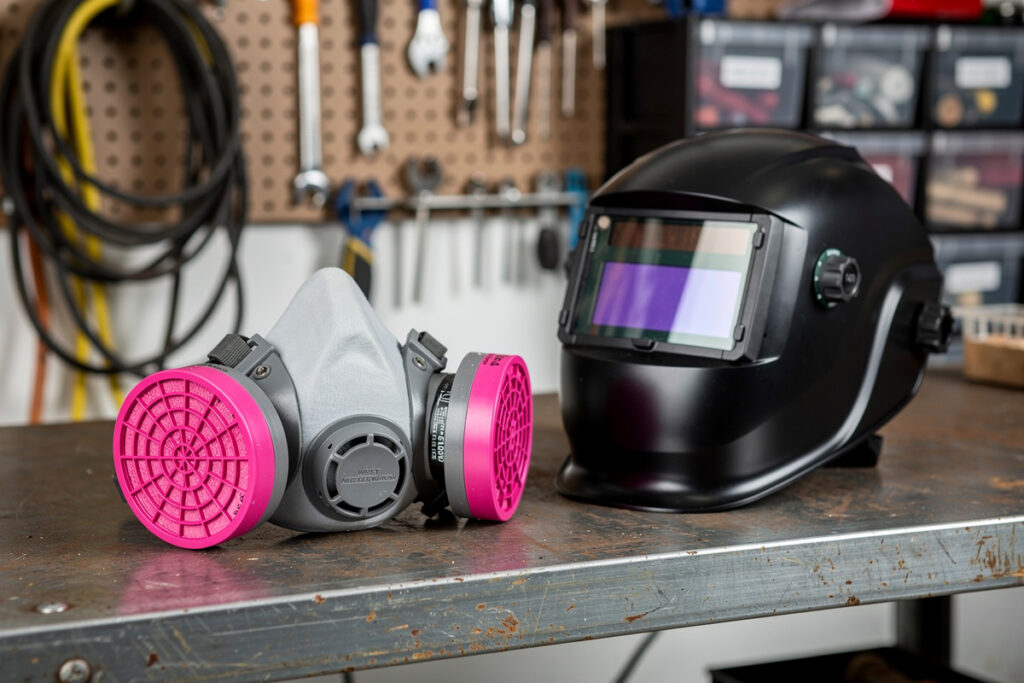
The whole defense against arc eye is keeping UV off your eyes, and for the welder that means one thing above all: the hood comes down before the arc strikes, every single time. The classic flash happens in the half-second a beginner peeks to line up the torch and taps the trigger with the helmet still up. A modern auto-darkening welding helmet exists precisely to remove that temptation — it stays clear so you can see to position, then darkens in a fraction of a second when the arc lights, so there is no reason to ever strike with the hood up.
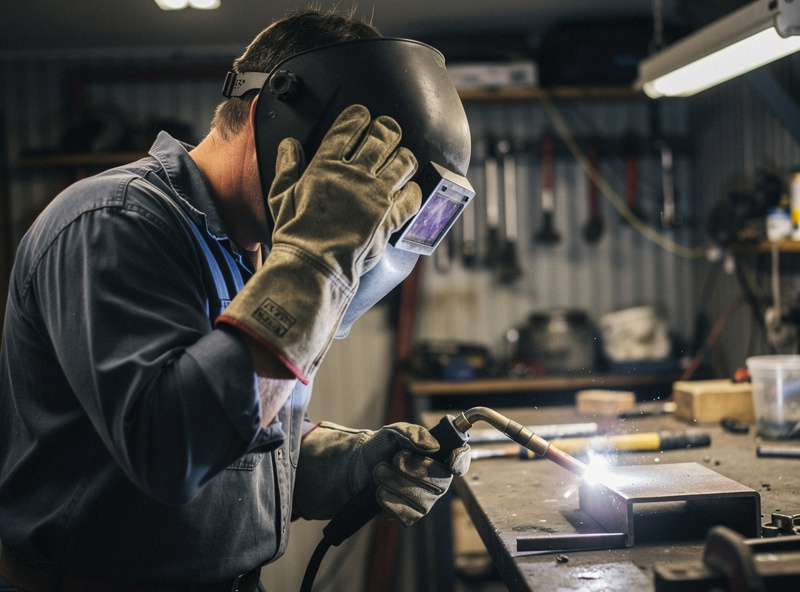
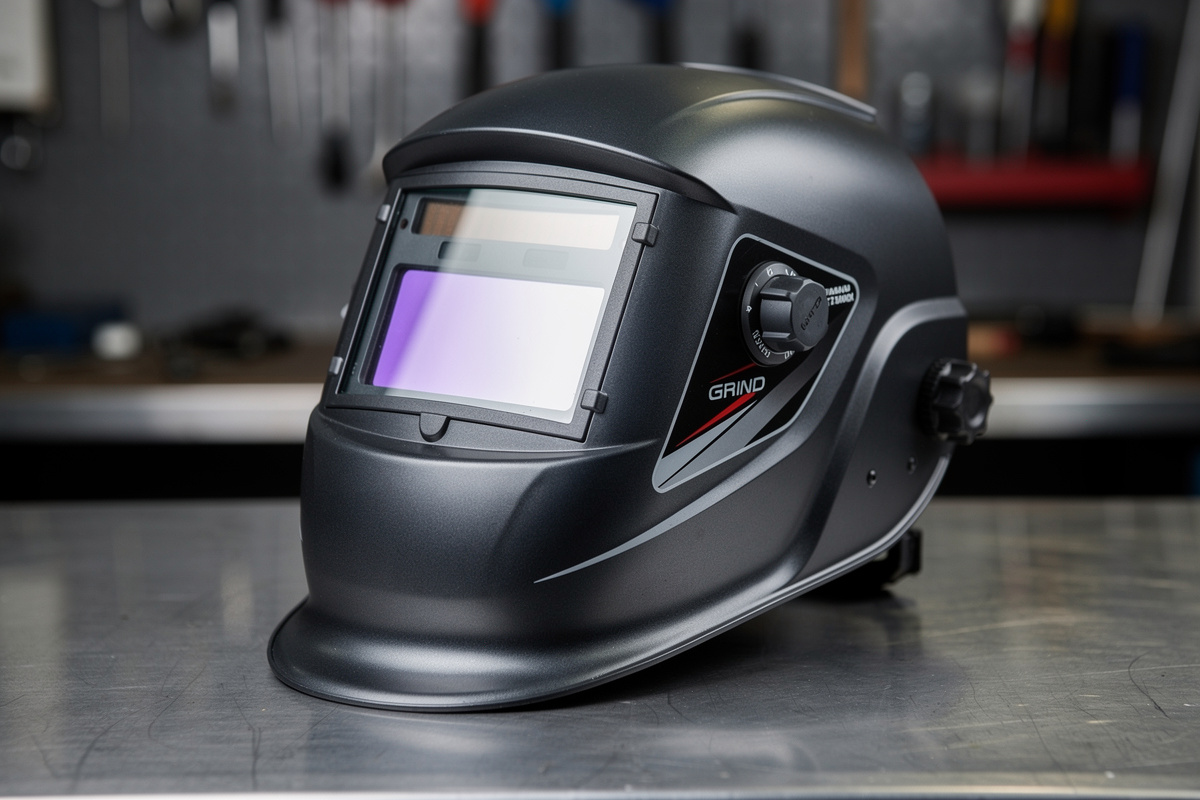
A few things make the helmet defense reliable rather than theoretical. Buy a real-grade auto-darkening helmet, not a bargain-bin shade with a sluggish or flaky sensor — a lens that misses a strike is worse than useless because you trust it. Run the correct shade for your amperage so you are not tempted to lift the hood to see better. And use the grind mode for cleanup so you are not flipping the helmet up and down all session, which is when the careless strikes happen. The helmet I run is true-color with a fast lens and a grind mode, and that combination is what keeps it on my head instead of in my hand.
The Part Welders Forget: Bystanders Get Flashed Too
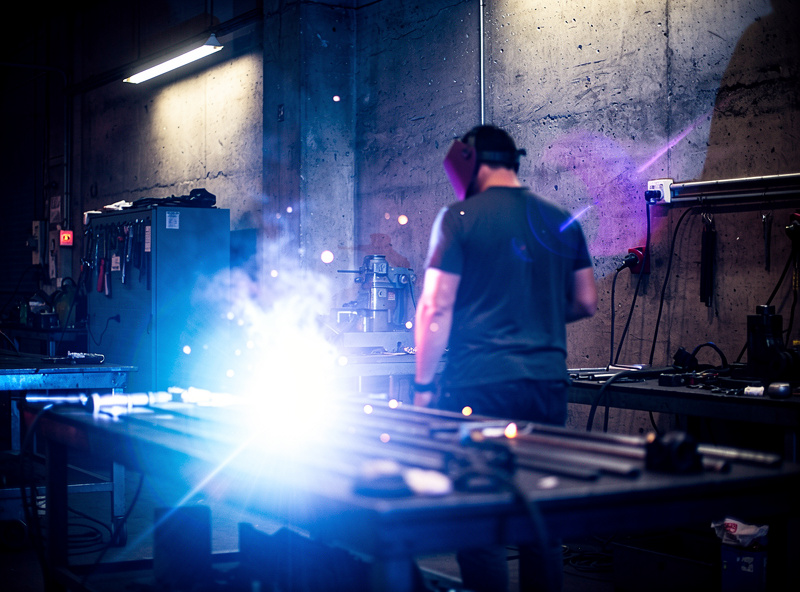
Here is the rule that catches people: arc eye does not require you to be the one welding. Anyone who can see the arc is in the UV. The friend leaning in to watch, the kid who wandered into the garage, the helper holding the other end of the work without a hood — they take the same UV your helmet is blocking, and they are usually the ones who get flashed because they have no protection at all.
I learned this watching a friend rub his eyes the morning after he had stood in my garage doorway “just watching” for ten minutes while I tacked up a frame. He never touched the torch and he still got a mild flash. Ever since, anyone who wants to watch either puts a hood on or stands behind the screen — there is no casual spectating around a live arc in my shop. This is why a welding curtain or screen matters in a shared space, and why I do not let anyone hang around bare-eyed while I am running an arc. If someone needs to be near the work, they need a hood or at minimum proper welding-shade shaded welding safety glasses — ordinary sunglasses do not cut it for direct arc viewing. The UV also reflects off bright walls and shiny metal, so even being off to the side is not automatically safe in a small, reflective shop. Protect the people watching, not just the person welding.
Where Arc Eye Fits in Welding Safety
The arc is the third of welding’s three genuine hazards, alongside the fume and the fire — and like the others, the protection is a boring habit applied without exception rather than a clever trick. Drop the hood, run a real helmet, keep bystanders out of the light. The complete safety picture, including helmet selection and the skin-UV side of arc exposure, is in the welding safety guide, and helmet choice specifically is covered in the best welding helmet for home use. The arc burns skin as well as eyes, which is why covered skin matters too — the fabric side of that is in flame-resistant clothing for welding.
How long does arc eye last?
A single mild flash burn is a surface injury to fast-healing tissue and usually settles over a day or two. That said, severe exposure, both eyes badly affected, or symptoms that are not clearly improving are reasons to see a doctor or eye clinic rather than wait it out. This is hazard information, not medical advice — get a professional opinion if it is bad.
Why do my eyes hurt hours after welding?
That delay is the signature of arc eye. UV damage to the cornea is not heat you can feel while it happens, so the gritty, painful, watering symptoms typically arrive several hours later, classically in the night. Because the feedback comes too late to course-correct, you have to protect your eyes by default on every arc rather than judging by how they feel while welding.
Can you get arc eye from watching someone else weld?
Yes. Arc eye does not require you to be the welder — anyone who can see the arc is in the UV. Bystanders are often the ones who get flashed because they have no eye protection at all. Use a welding screen, keep onlookers back, and give anyone who must be near the work a hood or proper welding-shade eye protection.
Will an auto-darkening helmet prevent arc eye?
A real-grade auto-darkening helmet is the core of the defense, because it stays clear so you can position the torch then darkens the instant the arc lights, removing any reason to strike with the hood up. Buy a quality one with a fast, reliable lens, run the correct shade, and use grind mode so you are not flipping it up and down all session.
Are sunglasses enough protection from a welding arc?
No. Ordinary sunglasses are not made to block the intensity of UV a welding arc throws and are not a substitute for a welding helmet or proper welding-shade eye protection. For anyone who must be near an active arc, that means a hood or shaded welding safety glasses rated for the work, not everyday sunglasses.


Discussion (0)