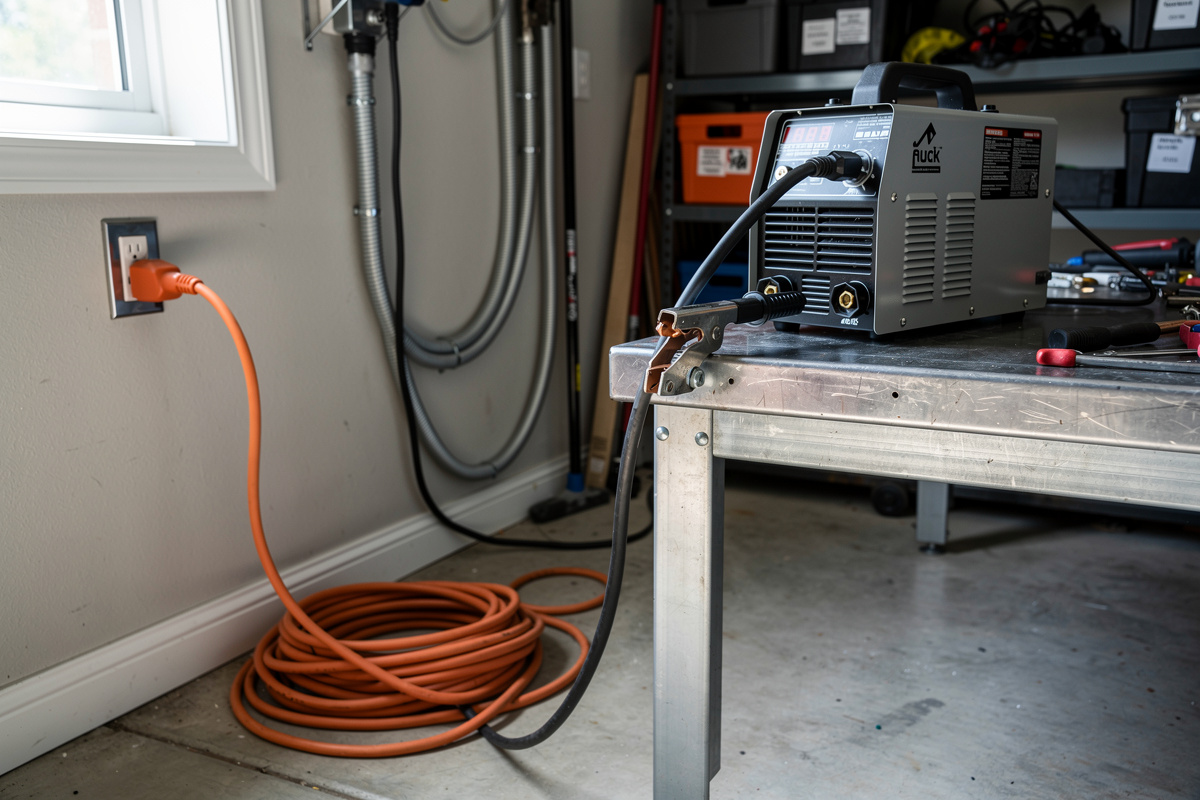

Welding electric shock does not get the attention that fume and fire do, partly because a properly set-up home welder rarely feels more than a tingle — and that is exactly the point. The risk is low when the basics are right and climbs fast when they are not, especially the moment moisture and sweat enter the picture. The most important sentence in this whole article: never weld in wet conditions, on a damp floor, or soaked in sweat, because water turns a manageable voltage into a dangerous one.
I run my YesWelder MIG-PRO205DS off a heavy extension cord sized so the inverter is never starved, with the ground clamp biting clean bare metal — and those two habits cover most of the electrical safety story for a hobby shop. This is a practical guide to the shock risk, the grounding that matters, and the wet-conditions rule that turns “low risk” into “real danger.” Where house wiring and code come in, I will point you to the people who do that for a living.
Why Welding Shock Risk Is Usually Low — and When It Isn’t
A modern welder runs a relatively low open-circuit voltage at the electrode compared to, say, household mains across your body, which is why a dry welder in dry conditions usually feels a buzz rather than a dangerous shock if they brush a live part. That is the “usually low” half. The “but” is that this protection depends entirely on your skin and surroundings being dry — and welders sweat, lean on grounded steel, and sometimes work in damp garages. Wet skin and a wet path to ground drop your body’s resistance dramatically, and the same voltage that was a tingle becomes capable of a real shock.
So the mental model is not “welding can’t shock me.” It is “welding is low-risk while I keep the electrical path dry, and I lose that margin the instant moisture gets involved.” Everything below is built around protecting that margin.
There is a secondary effect worth naming too: even a non-injurious shock or buzz is dangerous because of what it makes you do. A surprise jolt while you are perched over a hot workpiece, holding a live torch, with a helmet down, makes you flinch — and the flinch can put your hand into the arc, knock the work loose, or send you off a stool. In a shop full of hot metal, sharp edges, and falling sparks, the startle is often the real hazard, not the current itself. That is one more reason to keep the conditions dry enough that you never get the surprise in the first place.
The Electrical Safety Rules That Actually Matter
Here is what I keep right on every session, and why each one earns its place:
| Practice | Why it matters |
|---|---|
| Dry gloves, dry clothing, dry footing | Moisture drops body resistance and turns a tingle into a shock |
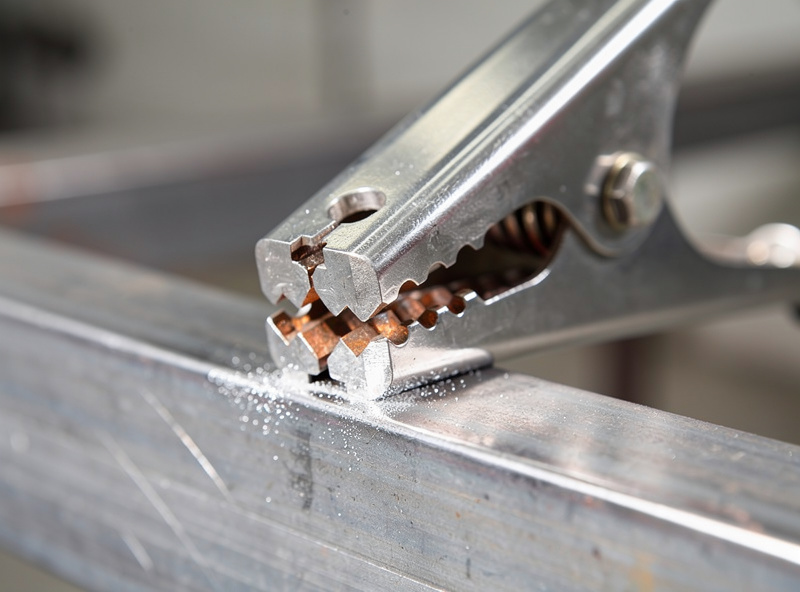
| Clean ground clamp on bare metal | A poor return path causes erratic arc and pushes current to find other routes |
| Inspect cables and connectors | Cracked insulation and frayed leads expose live conductors |
| Correctly sized, undamaged extension cord | An undersized or damaged cord overheats and starves the machine |
| Don’t touch the electrode and work bare-handed at once | Bridging the circuit through your body is the classic shock path |
| Never weld in the rain or on a wet floor | Removes the dry-conditions margin entirely — the highest-risk scenario |
Two of these deserve a closer look because they are the ones beginners get wrong: footing and cables.
Dry Footing and Insulation: Your First Line
Standing on dry, insulating footing is one of the simplest protections you have. Dry rubber-soled boots on a dry floor put resistance between you and ground; bare feet or wet sneakers on damp concrete do the opposite. If your shop floor is prone to damp, a dry wooden platform or rubber mat to stand on is cheap insurance.
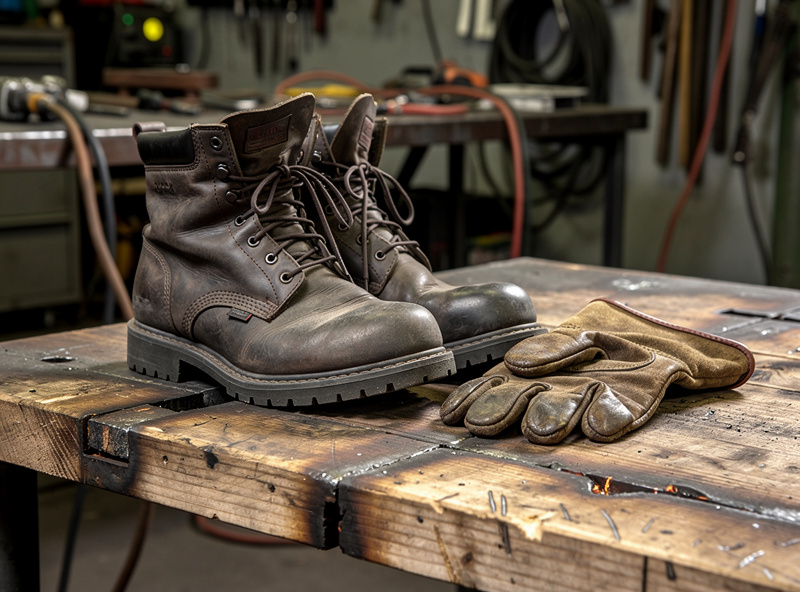
The same dry-equals-safe logic applies to your gloves. Dry leather gloves are part of your insulation; sweat-soaked gloves are not, which is one more reason to swap them out when they are saturated rather than welding in a wet pair. And keep your body off grounded steel where you can — draping a bare forearm across the grounded workbench while the other hand holds a live torch is the kind of two-point contact that bridges the circuit through you.
Cables, Cords, and Connections
Damaged cables are the most common real electrical hazard in a hobby shop, because they accumulate quietly. Inspect the lead and the work cable for cracked or chafed insulation, check the connectors for tightness and corrosion, and retire anything with exposed conductor — a taped-over nick is not a repair on a welding lead. A loose or corroded ground-clamp connection is both a safety and a quality problem: it makes the arc wander and forces current to find its return through whatever path it can — sometimes through a bearing, a hinge, or a cable shield that was never meant to carry welding current, quietly damaging it in the process. Clamp directly to the work or to clean bare metal on the same conductive piece, as close to the weld as you reasonably can.
Powering the machine matters too. An appropriately heavy-gauge extension cord sized for your welder’s draw and run length keeps the cord from overheating and the inverter from being starved — an undersized cord is both a fire risk and a performance killer. I cover the sizing math in welding extension cord gauge. For a damp-prone outlet, a GFCI outlet or adapter adds a layer of shock protection on the supply side, and a basic outlet tester confirms the receptacle is wired and grounded correctly before you trust it.
Where I Defer: House Wiring and Circuits
Here is my honest hedge. The shop-side practices above — dry footing, good grounds, sound cables — are squarely a welder’s job and I run them with full confidence. But the moment the question becomes how to wire a new circuit, what breaker and gauge your welder needs at the panel, or whether your supply can carry the load, that is an electrician’s job, not a welder’s, and not something to learn from a welding article. I run my own machine off properly provisioned power, and anything behind the outlet I leave to someone qualified and to local code. Getting that part wrong is exactly the kind of mistake that does not announce itself until it fails.
Electrical is one corner of welding safety. The full set — fume, fire, arc, and gas — lives in the welding safety guide, and the workshop power setup more broadly is in setting up a home welding workshop.
Can a welder give you a fatal shock?
A modern welder runs a relatively low voltage at the electrode, so a dry welder in dry conditions usually feels a buzz rather than a dangerous shock. The danger climbs sharply when moisture is involved — wet skin, sweat, or a damp floor drop your body’s resistance and turn that low voltage into a real shock risk. Keeping the path dry is what keeps the risk low.
Why is welding in wet conditions so dangerous?
Water and sweat lower your body’s electrical resistance, which removes the safety margin that low welding voltage normally gives you. The same voltage that was a harmless tingle on dry skin can deliver a dangerous shock through a wet path to ground. Never weld in the rain, on a damp floor, or soaked in sweat — it is the single highest-risk electrical scenario.
Does a welder need a good ground clamp for safety?
Yes, and it doubles as a quality issue. A clean ground clamp on bare metal gives the welding current a solid return path. A loose or corroded connection makes the arc wander and forces current to find its return through other routes, which is both a performance problem and an electrical one. Clamp to bright bare metal, not over paint or rust.
Should I use a GFCI when welding?
On a damp-prone or general-purpose outlet, a GFCI adds a layer of shock protection on the supply side, and an outlet tester confirms the receptacle is grounded and wired correctly before you trust it. These are sensible additions, but they do not replace the core habits of dry footing, sound cables, and never welding in wet conditions.
Can I wire my own welder circuit?
Wiring a new circuit, choosing the breaker and wire gauge, and confirming your supply can carry the welder’s load is an electrician’s job and is governed by local code, not something to learn from a welding article. The shop-side electrical safety — dry footing, good grounds, sound cables — is the welder’s job; anything behind the outlet should be done by someone qualified.


Discussion (0)