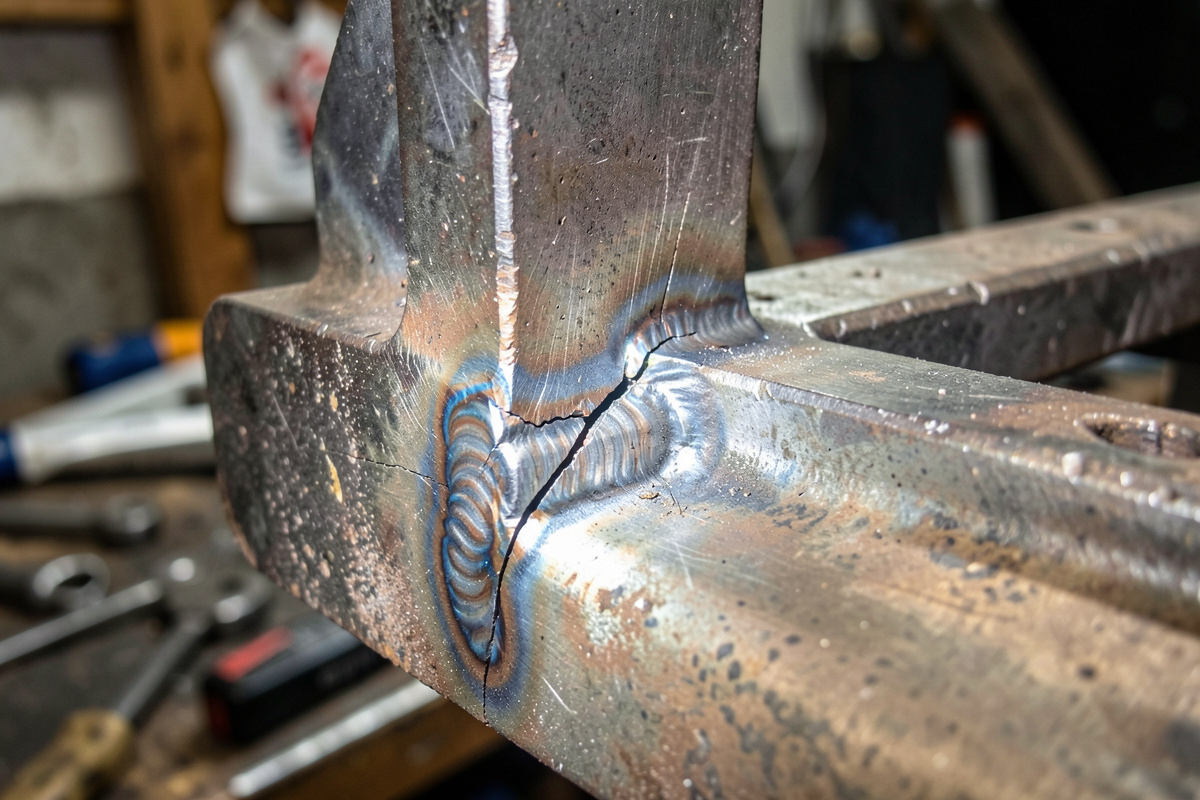

A crack is the one weld defect I never argue with. Undercut you can grade, porosity you can sometimes live with, but a crack is a joint that has already started to fail — it just hasn’t finished yet. Worse, cracks propagate: a hairline you ignore today is a separated joint after a few load cycles. The good news is that most cracking a home welder runs into is preventable once you understand which kind you’ve got, because the three main families have completely different causes and fixes.
I’ve cracked welds on my own bench learning the hard way — crater cracks from lazy stops, the odd cold crack on something I should have preheated. This guide sorts the types out, explains what actually causes each, and gives you the prevention that works. Where it crosses into the genuine metallurgy of hardenable steels, I’ll flag what my friend Mike (decades in the trade) and the metallurgy actually say versus what I can speak to from the home bench.
The Three Families of Weld Cracks
Before you can fix a crack you have to name it. The location, the timing, and the look tell you which family it belongs to.
Crater Cracks (Solidification Cracks)
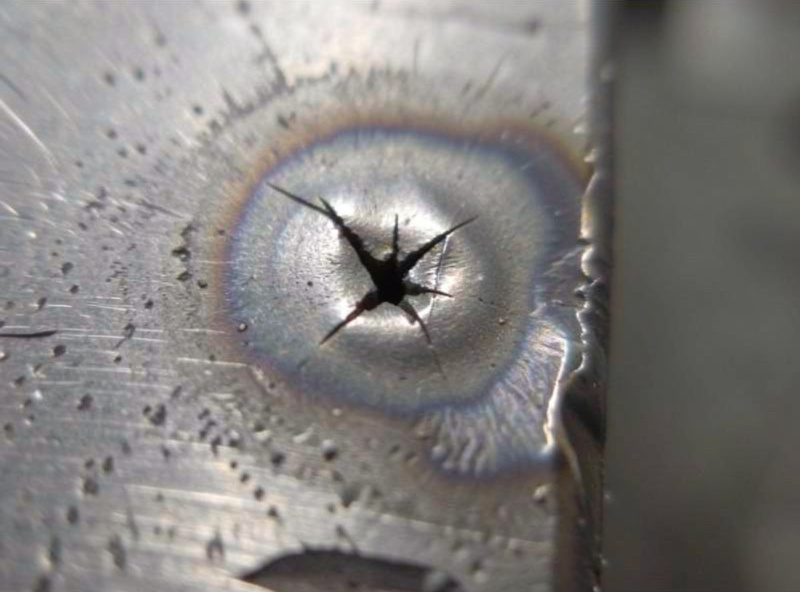
These show up at the end of a weld, in the crater where you broke the arc. When you snap the arc off, the last bit of puddle shrinks as it freezes, and because it’s the thinnest, most stressed spot, it tears — often into a little star or a centerline split. This is far and away the most common crack I see from beginners, and it’s the easiest to fix: it’s pure technique, not metallurgy.
Hot Cracks (Hot Tearing)
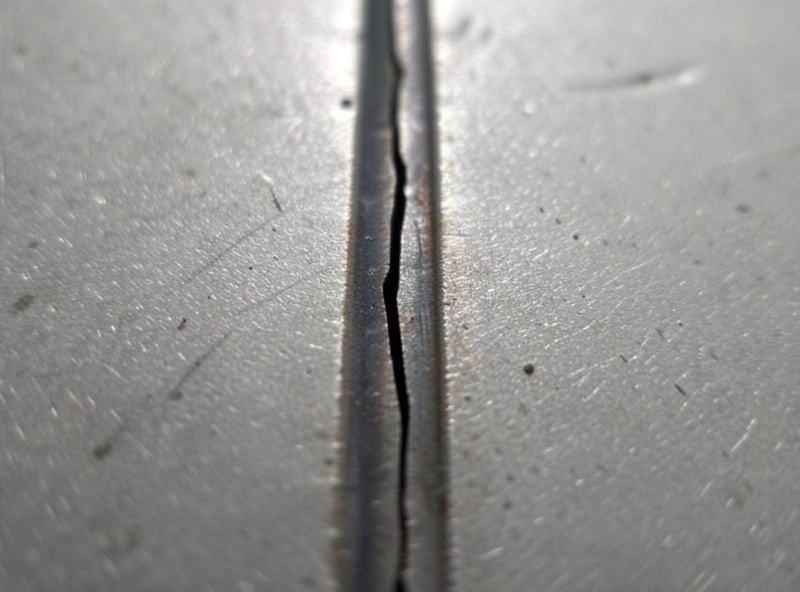
Hot cracks form while the weld is still near-molten, as it solidifies. They run down the centerline of the bead and come from the weld metal shrinking under restraint faster than it can hold together, often made worse by a too-narrow, too-deep bead profile or by impurities (sulfur and phosphorus in dirty steel) that weaken the metal at the grain boundaries while it’s freezing. A bead that’s much deeper than it is wide is the classic hot-crack shape.
Cold Cracks (Hydrogen Cracks)
Cold cracks are the sneaky, dangerous ones. They form hours to days after the weld has cooled — you can finish a job, it looks perfect, and it cracks overnight in the heat-affected zone beside the bead. They need three things together: hydrogen (from damp electrodes, moisture, oil, or rust), a hard/brittle microstructure (from welding hardenable steel and cooling it too fast), and stress (restraint, or just the joint’s own shrinkage). Take away any one and you don’t get the crack. This is the family where real metallurgy lives, and where preheat and dry rod earn their keep.
Crack Type, Cause, and Prevention
| Crack Type | Where / When | Main Cause | Prevention |
|---|---|---|---|
| Crater crack | End of weld, in the crater | Breaking the arc on a shrinking puddle | Backfill the crater; use crater-fill / pause and reverse before lifting |
| Hot crack | Centerline, while solidifying | Restraint + bad bead profile + dirty steel | Wider/flatter bead, clean metal, lower shrinkage stress |
| Cold crack | HAZ, hours/days after cooling | Hydrogen + hard microstructure + stress | Dry low-hydrogen rod, preheat, slower cooling, clean joint |
How I Prevent Each One
Stopping Crater Cracks
This is the easiest win in the whole guide. Don’t just lift the gun or break the arc at the end of a weld — fill the crater first. On MIG I pause at the end to let the puddle build back up, or reverse direction a touch back over the finished bead before I break off, so the last solidifying metal isn’t the thinnest point. Many machines, including the MIG-PRO205DS I run, have a crater-fill or burnback setting that does this for you. On stick and TIG, I reverse back over the bead and feed extra filler into the crater before lifting. Once you build the habit, crater cracks disappear.
Stopping Hot Cracks
Hot cracks are about profile and cleanliness. Aim for a bead that’s at least as wide as it is deep — a deep, narrow bead concentrates shrinkage stress right down the centerline. That usually means not running excessive travel speed and not jamming too much heat into a tight joint. Start with clean steel: grind off mill scale and don’t weld over oil or unknown free-machining steel, because the sulfur in it loves to hot-crack. Reducing restraint helps too — if a joint is clamped so rigidly it can’t move at all as it shrinks, the weld absorbs all of it.
Stopping Cold Cracks
This is where I get specific about the things that actually matter on hardenable or thicker steel. Keep hydrogen out: use dry, low-hydrogen rod (7018 stored dry, not the box that’s been on a damp shelf for a year), and weld clean, dry metal. Preheat hardenable and thick steel: warming the joint before welding slows the cooling rate so the heat-affected zone doesn’t quench itself into a brittle structure, and it gives trapped hydrogen time to escape. Don’t quench a hot weld — let it cool in still air, or under a welding blanket on thick sections; spraying water on a fresh weld to “cool it faster” is asking for a cold crack.
Knowing which steels are hardenable and exactly what preheat temperature they need is genuine metallurgy — high-carbon and many alloy steels (4140, for instance) want real preheat, while plain A36 mild steel rarely does. For anything where the part matters and you’re not sure of the alloy, that’s a question for the metallurgy and for someone like Mike, not a guess. The steel types for welding guide covers which grades behave and which fight you.
What to Do With a Cracked Weld
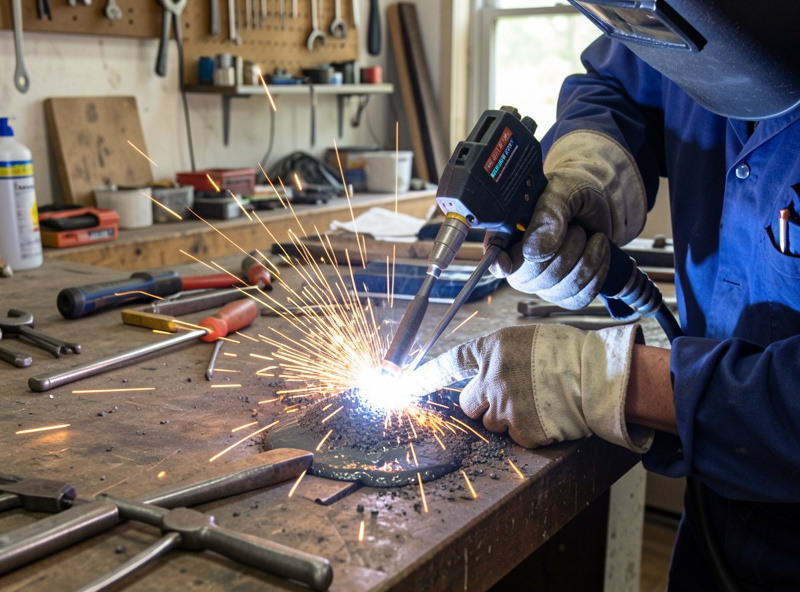
There is no welding over a crack. If you run a new bead on top of a cracked weld, the crack telegraphs straight up through the new metal — it doesn’t heal, it grows. The fix is to remove the crack entirely: grind or gouge it out, and on a real crack you grind past each end, because cracks have invisible tips that extend beyond what you can see. Then re-weld with the right prevention for whatever type it was — clean metal, dry rod, preheat if it’s a cold-crack-prone steel. Skip that and the same crack comes back in the same place.
On a structural or load-bearing part, a crack means stop using it until it’s properly repaired. This isn’t a place to be optimistic; a cracked lifting point or trailer member that lets go can hurt someone.
The Short Version
Most home-shop cracking is crater cracks, and backfilling the crater fixes nearly all of it. Centerline cracks point at bead profile and clean metal. The cracks that show up the next morning are cold cracks, and dry rod plus preheat on hardenable steel is the answer. When the part matters, identify the steel before you weld it. The whole defect family ties together in the welding troubleshooting guide, and if your problem is actually weakness inside the joint rather than a visible crack, read up on lack of fusion next.
What is the most common type of weld crack?
For home welders it is the crater crack, a small star-shaped or centerline crack that forms at the end of a weld where you broke the arc. It happens because the last bit of shrinking puddle tears as it freezes. It is pure technique and the easiest crack to prevent: fill the crater before lifting the arc.
Why did my weld crack a day after I finished it?
That is a cold crack, also called a hydrogen crack. It forms hours to days after the weld cools and needs three things together: hydrogen (from damp rod, moisture, oil, or rust), a hard brittle microstructure from welding hardenable steel and cooling too fast, and stress. Dry low-hydrogen rod, preheat, and slow cooling prevent it.
Can you weld over a crack to fix it?
No. Welding over a crack lets it telegraph straight up through the new bead; it grows rather than heals. You must grind or gouge the crack completely out, extending past each end because crack tips reach beyond what you can see, then re-weld with the correct prevention for that crack type.
How do I stop crater cracks?
Do not just break the arc at the end of a weld. Fill the crater first: pause to build the puddle back up, or reverse a touch back over the finished bead before breaking off. Many machines have a crater-fill or burnback setting that does it automatically. On stick and TIG, feed extra filler into the crater before lifting.
Does preheating prevent cracking?
On hardenable and thicker steel, yes. Preheating slows the cooling rate so the heat-affected zone does not quench into a brittle structure, and it gives trapped hydrogen time to escape, both of which prevent cold cracks. Plain mild steel like A36 rarely needs it; alloy steels such as 4140 do. Identify the steel if the part matters.
Why do narrow, deep weld beads crack down the middle?
That is hot cracking. A bead that is much deeper than it is wide concentrates shrinkage stress along the centerline while the weld is still solidifying, and it tears. Aim for a bead at least as wide as it is deep, weld clean steel, and avoid excessive travel speed that produces a thin, deep profile.

Discussion (0)