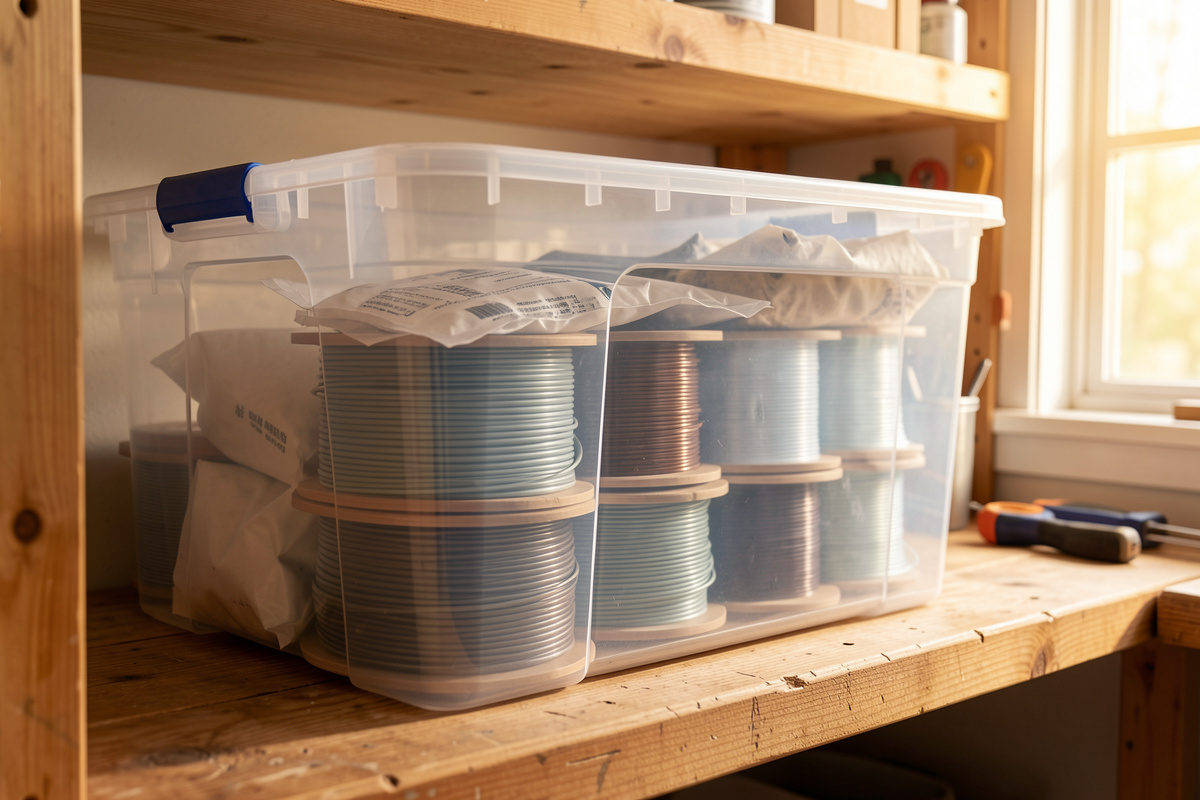

Bare steel MIG wire has no real protection against moisture, so a spool left on the machine in a humid shop grows a film of rust that drags through the liner, wears the contact tip, and welds porosity into every bead. The fix costs almost nothing: pull the spool off between sessions, seal it in a tote with a desiccant pack, and keep the shop below about 60 percent relative humidity. Spatter and porosity start in the moisture, long before you strike an arc.
I’ve thrown out spools I paid good money for because I got lazy and left them out through a damp Swedish autumn, and the rust turned sound wire into scrap. It’s the cheapest mistake to avoid and one of the most common. Here’s exactly how wire rusts, why that rust ruins welds, and the simple storage routine that keeps a spool clean from the day you open it to the day you burn the last foot.
Why Does Rusty Wire Cause Porosity?
Porosity is gas trapped in the solidifying weld, and rust feeds it two ways. Rust is iron oxide, so it drags oxygen straight into the puddle, and rusty wire almost always carries surface moisture too — that moisture breaks down in the arc into hydrogen and oxygen. Both gases come out of solution as the weld freezes and get trapped as pinholes and voids. The wire’s deoxidizers can only clean up so much before they’re overwhelmed. That hydrogen is exactly what the diffusible-hydrogen designators on a spool measure, and the James F. Lincoln Foundation’s low-hydrogen filler-metal guide is blunt about it: moisture the wire has picked up is the single biggest source pushing that diffusible-hydrogen number up.
The insidious part is that the porosity is often invisible on the surface. The bead looks fine, and the pinholes are inside, hiding until the joint is loaded or you cut a coupon and see the Swiss-cheese cross-section. On anything structural that’s a real problem — a weld that looks good but is riddled with voids has a fraction of its rated strength. This is the same family of trouble as coating-driven porosity, which I cover in weld-through primer and porosity, and it’s why I won’t run a rusty spool on anything I care about.
How Does Welding Wire Rust in the First Place?
Solid steel MIG wire carries a thin copper coating that helps it feed and conduct, but that coating is not rustproof armor — it’s microscopically thin and imperfect, and bare steel underneath it will oxidize wherever humidity reaches it. Leave a spool exposed and it rusts fastest at the outer wraps and anywhere a fingerprint or a drop of condensation lands. Shops with big temperature swings are the worst, because warm humid air hitting cold steel condenses water right onto the wire.
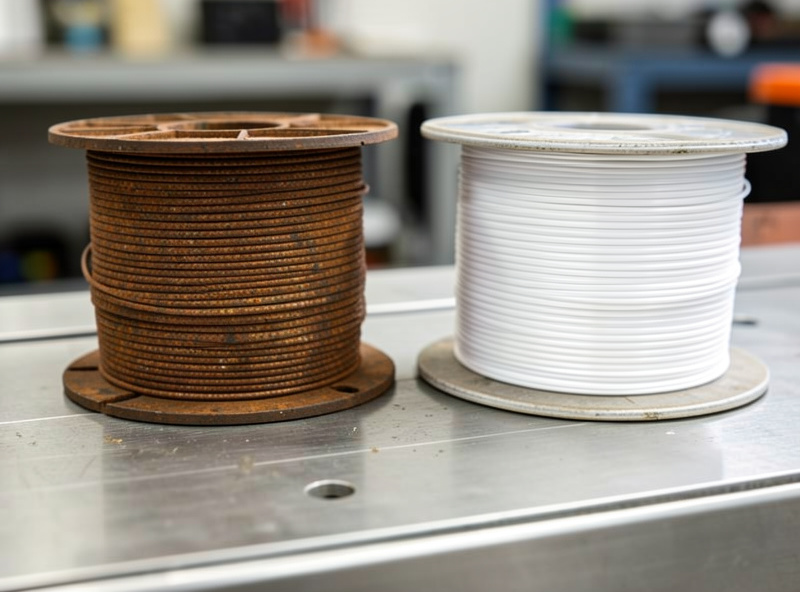
A garage or unheated shop is a condensation machine across seasons — cold nights, warmer days, damp air. My own workshop in Sweden sees real humidity swings, and a spool left uncovered on the feeder picks up a dull haze within weeks and visible rust within a couple of months. The copper coating buys you a little time, not immunity. Once the surface hazes over, it’s already dragging that oxide through your gun. Keeping wire dry is the single easiest porosity prevention there is, and it starts with never leaving it exposed.
How Should You Store Welding Wire?
The routine is simple and cheap. Between welding sessions, take the spool off the machine, slip it into a zip bag or an airtight tote, and drop in a desiccant pack to pull down the humidity inside. Store that container somewhere with a stable temperature, off the concrete floor and away from cold exterior walls where condensation forms. Indicating silica gel that changes color when saturated tells you when to recharge or replace it.
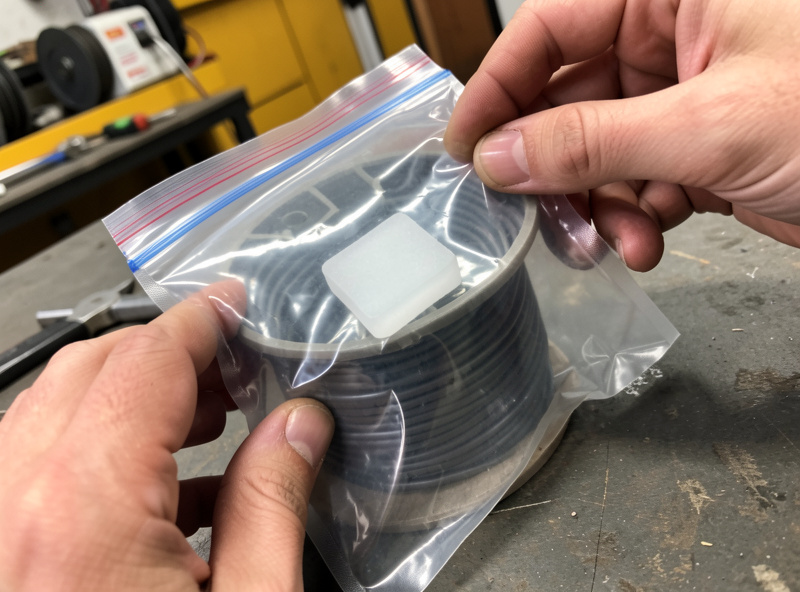
The part people skip is pulling the spool off the machine. A spool sitting on an open feeder is exposed 24/7 to whatever the shop air is doing, and that’s where most rust happens — not in storage, but in the days and weeks a half-used spool lives on the machine between projects. It takes ten seconds to bag it. As an Amazon Associate I earn from qualifying purchases. I keep spools in a cheap airtight tote with a rechargeable silica gel canister inside, and it’s saved far more wire than it ever cost. This matters most with the big spools worth protecting, which is exactly the trade-off I raise in how much wire you’ll actually use — buy big to save money, then store it sealed so you don’t waste the savings.
Do You Need a Dehumidifier or a Dry Cabinet?
For solid MIG wire, a sealed container with desiccant is usually enough — you don’t need a heated rod oven the way stick electrodes like low-hydrogen 7018 do. But if your whole shop runs damp, a dehumidifier keeping ambient humidity below about 60 percent protects not just your wire but your tools, your bench, and every bit of bare steel on the scrap rack. It’s the cheapest rust insurance for the whole space, not just the consumables.
I run humidity control in my shop because the welder shares a bench with a CNC, a laser, and a 3D printer, and every one of those hates moisture as much as the wire does — the same damp that rusts a spool corrodes machine ways and fogs optics. So the dehumidifier earns its keep across the whole polymath bench, not just the welding corner. If you only weld occasionally, skip the dehumidifier and just be disciplined about the sealed tote; if you’re in a humid climate year-round, the ambient control pays off fast.
What About Aluminum and Flux-Core Wire?
Aluminum wire doesn’t rust, but it oxidizes — it grows an aluminum-oxide layer and picks up moisture that turns into porosity just as readily as rust does on steel. Aluminum is arguably fussier: keep it sealed, handle it with clean gloves, and use it up reasonably quickly rather than letting an opened spool sit for a year. Contamination and oxide are the enemies of a clean aluminum weld.
Flux-core is its own case because the flux inside the tubular wire is hygroscopic — it actively absorbs moisture from the air. A flux-core spool that’s soaked up humidity throws porosity and a rougher arc, so sealed storage matters even more for gasless wire than for solid. The self-shielded wire I run outdoors lives in a sealed bag between jobs for exactly this reason. Whatever the wire type, the principle is identical: keep it dry and sealed, and it welds like it did the day you bought it. The full consumable picture ties together in the wire and consumable selection guide.
Can You Still Use a Rusted Spool?
It depends on how bad it is and what you’re building. A faint surface haze on the outer wraps might be salvageable — feed off and discard the first several feet, weld a test coupon, and cut it to check for porosity before you trust it. But visible orange rust, flaking, or rust that runs deep into the spool means the wire is done for anything that matters. The rust you can see is a symptom of moisture damage you can’t.
For practice beads and non-structural tacks, lightly hazed wire might limp along, but I don’t kid myself about it — the moment a joint needs to hold, rusty wire is a liability, not a bargain. I’d rather eat the cost of a fresh spool than find the porosity with a feed problem mid-weld or, worse, a failed joint in service. When in doubt, throw it out; wire is one of the cheapest things in the shop, and a compromised weld is one of the most expensive.
My Storage Routine
Here’s what I actually do, and it’s nothing fancy. Every spool comes off the machine at the end of a session and goes into a bagged tote with indicating desiccant. The tote lives on a shelf, not the floor, in the temperature-stable part of the shop. I glance at the desiccant color when I open it and recharge the silica gel in a low oven when it saturates. Opened aluminum and flux-core get used up rather than stockpiled.
That’s the whole system, and it has all but eliminated rust and the porosity that comes with it from my welds. The sound of a clean spool feeding — that steady, even hiss with no stutter — starts days earlier, in a sealed box, not at the trigger. Good welds are built on boring habits, and keeping wire dry is the most boring, highest-payoff habit there is. It pairs with picking the right wire in the first place, which is where the solid wire selection guide and the rest of this cluster come in — the best spool on the shelf is worthless if you let it rust.
Does rusty MIG wire really cause porosity?
Yes. Rust is iron oxide, which drags oxygen into the weld pool, and rusty wire usually carries surface moisture that breaks down into hydrogen and oxygen in the arc. Both gases get trapped as pinholes as the weld freezes. The porosity is often invisible on the surface but hides inside the weld, cutting its strength.
How do I store welding wire to keep it from rusting?
Take the spool off the machine between sessions, seal it in a zip bag or airtight tote with a desiccant pack, and store it off the floor in a temperature-stable spot away from cold walls. Keep shop humidity below about 60 percent. Most rust happens while a half-used spool sits exposed on the feeder.
Do I need a rod oven for MIG wire?
No. Solid MIG wire does not need a heated rod oven the way low-hydrogen stick electrodes like 7018 do. A sealed container with desiccant is enough for solid wire. A dehumidifier keeping the whole shop below about 60 percent humidity is worthwhile if your space runs damp, since it protects all your bare steel.
Can I use a spool of wire that has surface rust?
Only cautiously. A faint haze on the outer wraps may be salvageable if you feed off and discard the first several feet and weld a test coupon to check for porosity. Visible orange rust, flaking, or deep rust means the wire is done for anything structural. When in doubt, throw it out; wire is cheap.
Does aluminum welding wire need special storage?
Yes. Aluminum wire does not rust but it oxidizes and absorbs moisture, which causes porosity just like rust does on steel. Keep it sealed, handle it with clean gloves, and use an opened spool reasonably quickly rather than letting it sit for a year. Contamination and oxide are the enemies of a clean aluminum weld.
Why does flux-core wire need to be kept dry?
The flux inside tubular flux-core wire is hygroscopic, meaning it actively absorbs moisture from the air. A flux-core spool that has taken on humidity throws porosity and runs a rougher arc, so sealed storage matters even more for gasless wire than for solid wire. Keep it bagged between jobs.
Further Reading
- Welding Wire and Consumable Selection Guide
- ER70S-6 vs ER70S-3 MIG Wire
- How Much Welding Wire You’ll Actually Use
- Weld-Through Primer and Porosity
- MIG Wire Feed Problems: Birdnesting and Surging
External references: the diffusible-hydrogen designators that flag moisture risk (H16, H8, H4, H2 — lower means drier wire) are laid out in the James F. Lincoln Foundation’s low-hydrogen filler-metal guide; Hobart’s low-hydrogen filler-metal article defines the H4 mark as under 4 mL of diffusible hydrogen per 100 g of deposited weld metal; and Lincoln Electric’s storing-and-redrying guide gives the 100-120 F (40-50 C) heated-cabinet range and the roughly 8-hour exposure limit for opened low-hydrogen consumables. The American Welding Society publishes the filler-metal specifications that set those designators.

Discussion (0)