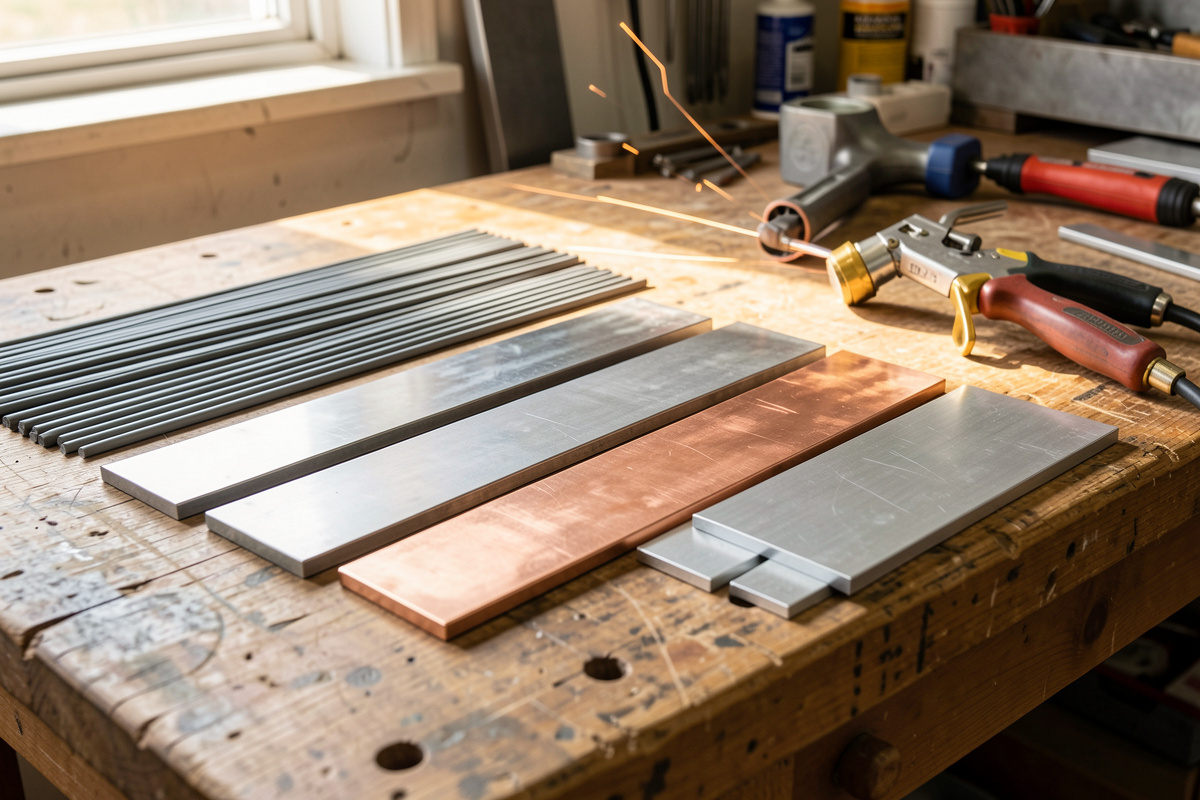

This welding dissimilar metals guide answers the question that trips up every fabricator eventually: can I weld this metal to that one? The honest answer is that some pairs fuse beautifully with the right filler, some can only be brazed or bolted, and a few — like aluminum directly to steel — simply cannot be fusion welded at home and need a mechanical or transition joint instead. Knowing which is which before you strike an arc saves you a cracked joint and a wasted afternoon.
I run a YesWelder MIG-PRO205DS and weld steel, stainless, and aluminum on the same bench, so I have hit most of these combinations building shop fixtures. My welder friend Mike, decades in the trade, is my sounding board on the trickier metallurgical pairings, and the code-critical dissimilar joints are squarely his territory, not a home welder’s. This guide is part of the specialty-metals cluster alongside the cast iron welding guide, because joining iron to steel is one of the most common dissimilar jobs of all.
Why Dissimilar Metals Are Hard to Join
Dissimilar metals are hard to weld because they melt at different temperatures, expand and contract at different rates, and can form brittle intermetallic compounds where they mix. Two metals with very different melting points or chemistries will crack at the joint or never fuse properly, which is why filler choice and method matter so much.
When you fuse two metals, you are blending their chemistry in the puddle. If they are close cousins — different steels, say — that blend behaves well. If they are far apart, like aluminum and steel, the mix forms hard, brittle intermetallic layers that crack under the slightest stress, and their wildly different expansion rates tear the joint as it cools. On top of that, joining two different metals in service can set up galvanic corrosion, where one metal slowly eats away in the presence of moisture. The metallurgy behind all of this is in my welding metallurgy guide and the metallurgy basics piece.
Which Pairs Can Actually Be Joined
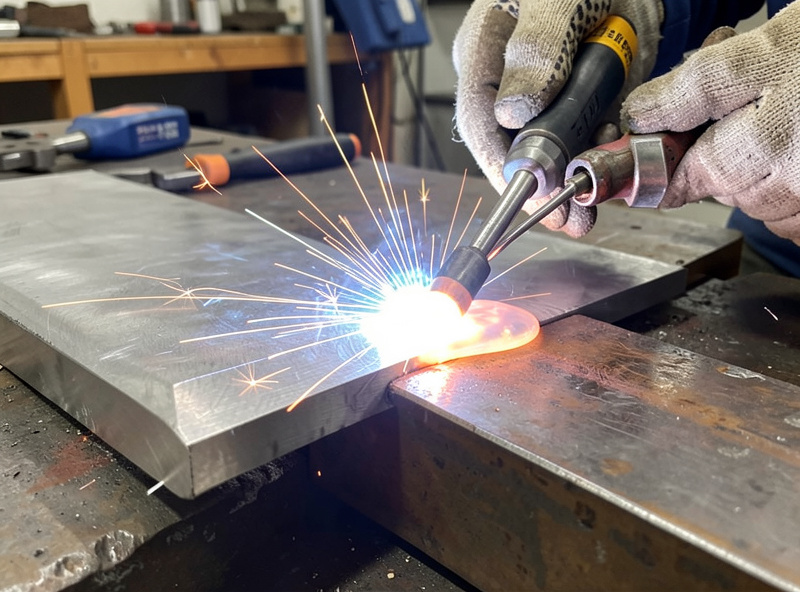
Carbon steel to stainless welds well with 309L filler, steel to cast iron joins with nickel rod, and copper or brass joins by brazing. Aluminum to steel cannot be fusion welded directly and needs brazing with a transition material, a bimetallic insert, or a bolted joint. Match the method to the pair before you start.
Here is the cheat sheet I keep in my head for the combinations a home welder actually runs into:
| Metal pair | Can you fusion weld it? | Method / filler | Notes |
|---|---|---|---|
| Carbon steel + stainless | Yes | 309L filler (MIG or TIG) | 309L handles the mixed chemistry and resists cracking |
| Steel + cast iron | Yes, with care | Nickel electrode (ENi-CI / ENiFe-CI) | Treat it as a cast iron repair: preheat, slow cool |
| Stainless + stainless (different grades) | Yes | 309L or matching higher grade | Choose filler for the more demanding grade |
| Copper / brass + steel | Braze, not fuse | Bronze brazing rod + flux | Brazing avoids the melting-point mismatch |
| Aluminum + steel | No (not directly) | Bimetallic transition insert, braze, or bolt | Direct fusion forms brittle intermetallics |
The standout for home fabrication is 309L stainless filler, which is the go-to for joining carbon steel to stainless and even for some stainless-to-stainless jobs because it tolerates the mixed dilution without cracking. For steel-to-cast-iron, you simply treat the whole joint like a cast iron repair — nickel rod, preheat, and the slow cool-down from the preheat and cool-down guide.
Filler Metal Is the Whole Game
On dissimilar joints, the filler metal does the heavy lifting — it bridges the chemistry of two different base metals. The right filler, like 309L for steel-to-stainless or nickel for steel-to-cast-iron, forms a tough, crack-resistant weld even though the base metals differ. The wrong filler, or matching filler, often cracks.
This is the part beginners get backwards: they reach for a filler that matches one of the two metals, when what they actually need is a filler formulated to handle the blend. 309L is rich enough in chromium and nickel that even when it dilutes with carbon steel on one side, the weld metal stays sound and ductile. Nickel does the same job bridging steel and cast iron. Pick filler for the joint, not for one of the parts. When sourcing filler and base stock for these jobs, the metal suppliers comparison is a useful starting point, and for choosing current and polarity on TIG, see AC vs DC TIG welding.
Settings and Technique for a Steel-to-Stainless Weld
For a carbon-steel-to-stainless joint on the MIG-PRO205DS, I load ER309L wire, run a tri-mix or 98/2 argon-CO2 shielding gas, and set voltage and wire speed for the thinner of the two parts. The goal is to keep heat input down so the carbon steel side dilutes the 309L as little as possible, because less plain steel mixed into the puddle means a sounder, more crack-resistant weld. On thin stainless sheet I switch to double-pulse to hold the heat down even further and keep the thin side from warping.
The practical trick is to favor the stainless side of the joint slightly with the arc, so the carbon steel melts a touch less. I keep stickout consistent, travel a little faster than I would on plain steel to keep the heat off, and let each pass cool before the next on anything thicker than sheet. ER309L carries the AWS A5.9 filler-metal classification, and the low-carbon “L” grade is what keeps chromium carbides from precipitating at the grain boundaries and sensitizing the weld — the same reason 308L is the default for plain stainless. On TIG, that same 309L rod runs with DCEN and straight argon. The first dissimilar joint I ever cracked was a stainless tab I burned onto a mild-steel bracket with plain ER70S-6 because it was already loaded in the machine; it looked clean, then split right along the fusion line under a light tap from Mike’s hammer. Load the correct wire first — it is far cheaper than cutting the joint out and doing it twice.
One more habit worth keeping: clean both base metals back to bright steel before you strike. Mill scale and contamination wreck a dissimilar weld faster than a near-miss on settings, and on the stainless side a dedicated stainless wire brush — never the same one you use on carbon steel — keeps iron contamination off the corrosion-resistant surface.
When You Should Braze or Bolt Instead
When two metals cannot fusion weld cleanly — aluminum to steel, copper to steel — brazing or a mechanical bolted joint is the right answer, not a forced weld. Brazing joins below the base metals’ melting points, sidestepping the intermetallic problem, while bolting with isolation washers avoids both cracking and galvanic corrosion.
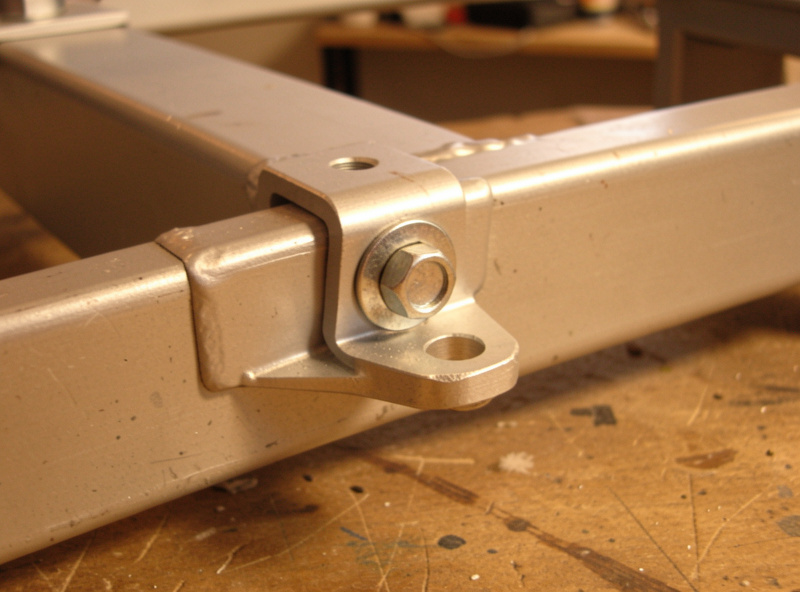
Some pairings are telling you to put the welder down. Aluminum-to-steel is the classic: there is no home filler that fuses them soundly, so you braze with a transition product, use a bimetallic insert (a pre-bonded strip with steel on one face and aluminum on the other), or simply bolt the parts together. If you bolt dissimilar metals that will see moisture, isolate them — a nylon washer or an isolating sleeve keeps the two metals from setting up a galvanic cell that corrodes the more reactive one away. Brazing technique carries over from my stainless brazing guide, and on copper specifically the heat-sink tactics in the thick-metal soldering piece apply.
Galvanic Corrosion: The Long-Term Failure
Even a sound dissimilar-metal joint can fail slowly to galvanic corrosion, where contact between two different metals plus moisture causes the more reactive metal to corrode away. Isolate the metals, keep the joint dry, or choose metals close together on the galvanic scale to avoid surprise failures months later.
This is the failure that does not show up on the bench — it shows up a year later when the joint rusts apart from the inside. Steel and aluminum, or steel and copper, in a wet environment will quietly eat one of the metals. For anything that lives outdoors or sees water, I either isolate the metals mechanically or rethink the design. It is exactly the kind of long-horizon consideration that matters for the aluminum boat I am building toward, where dissimilar fasteners and fittings in saltwater would be a slow disaster if chosen carelessly. Knowing your base metals cold is half the battle, which is why metal identification feeds straight into this work.
Related Guides
- Cast Iron Welding Guide
- Welding Metallurgy: A Home Welder’s Guide
- Brazing Stainless Steel: Flux and Filler
- Welding Thin Sheet Metal Guide
- Hardening and Heat Treating Steel Guide
Frequently Asked Questions
Can you weld two different metals together?
Some pairs, yes. Carbon steel to stainless welds with 309L filler, and steel to cast iron with nickel rod. Others, like aluminum to steel, cannot be fusion welded directly and need brazing, a bimetallic transition insert, or a bolted joint instead.
What filler do you use to weld stainless to mild steel?
Use 309L filler, whether MIG or TIG. Its higher chromium and nickel content keeps the weld sound and crack-resistant even when it dilutes with carbon steel on one side of the joint. Matching mild-steel or standard stainless filler is more likely to crack.
Why can’t you weld aluminum to steel?
Direct fusion forms brittle intermetallic compounds and the two metals expand at very different rates, so the joint cracks. Instead, join them with a bimetallic transition insert, braze with a suitable transition material, or bolt them together with isolation to prevent corrosion.
What is galvanic corrosion in a dissimilar metal joint?
When two different metals touch in the presence of moisture, they form a galvanic cell and the more reactive metal corrodes away over time. Prevent it by isolating the metals with non-conductive washers or sleeves, keeping the joint dry, or choosing metals close on the galvanic scale.

Discussion (0)