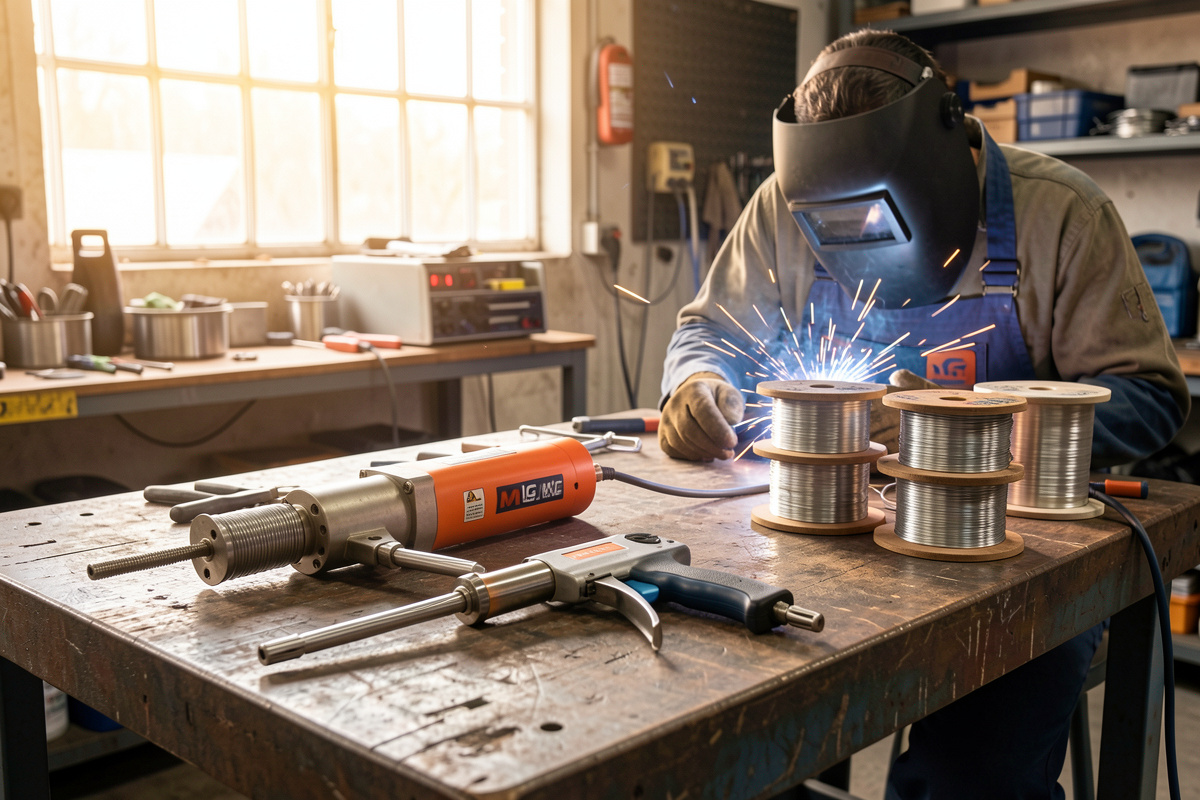

For a home shop, a spool gun is the right call about nine times out of ten: it puts the drive rolls and a tiny 1-pound wire spool inches from the arc, so soft aluminum wire only travels a few inches and never gets a chance to birdnest. A push-pull gun feeds even better over long distances and lets you keep a big spool on the machine, but it costs several times more and is overkill for occasional aluminum. Buy the spool gun first.
I run a spool gun on my YesWelder MIG-PRO205DS and it solved the exact problem that turned my first aluminum spool into a tangled $38 disaster inside ninety seconds. The wire never even reached the arc — it buckled and coiled between the machine’s drive rolls and the contact tip, the classic birdnest, because soft aluminum wire cannot be pushed through four or five feet of liner the way steel can. A spool gun makes that impossible by geometry, not by skill. This is the decision that most changes whether aluminum MIG is frustrating or easy for a home welder, so let me lay out both tools honestly.
Why Can’t You Just Push Aluminum Through a Standard MIG Gun?
Because aluminum wire is soft — roughly a third the stiffness of steel wire — and a standard gun asks it to be pushed through four to five feet of liner from drive rolls back at the machine. Steel is stiff enough to take that; aluminum buckles, coils, and jams between the rolls and the tip. That jam is the birdnest, and it is the single most common aluminum MIG failure.
The mechanics are simple once you picture it. The drive rolls at the machine shove the wire forward. If anything downstream resists — a tight liner, a worn tip, a kink — the wire has to either keep advancing or pile up. Stiff steel keeps advancing. Soft aluminum, with nowhere to go and no backbone, folds back on itself right at the drive rolls and coils into a bird’s nest in seconds. You can push aluminum a short distance through the right liner, which is why very short standard-gun setups sometimes work, but the margin is thin and unforgiving. The full list of feed gremlins — on steel and aluminum both — is in my MIG wire feed problems guide; aluminum just makes every one of them worse.
How Does a Spool Gun Fix the Feeding Problem?
A spool gun moves the drive motor and a small 1-pound wire spool into the gun body itself, so the wire only travels about six inches from spool to arc. There is no long liner to push through and no chance to buckle. You trade a bit of gun weight and the cost of small spools for a feed path so short that birdnesting basically cannot happen.
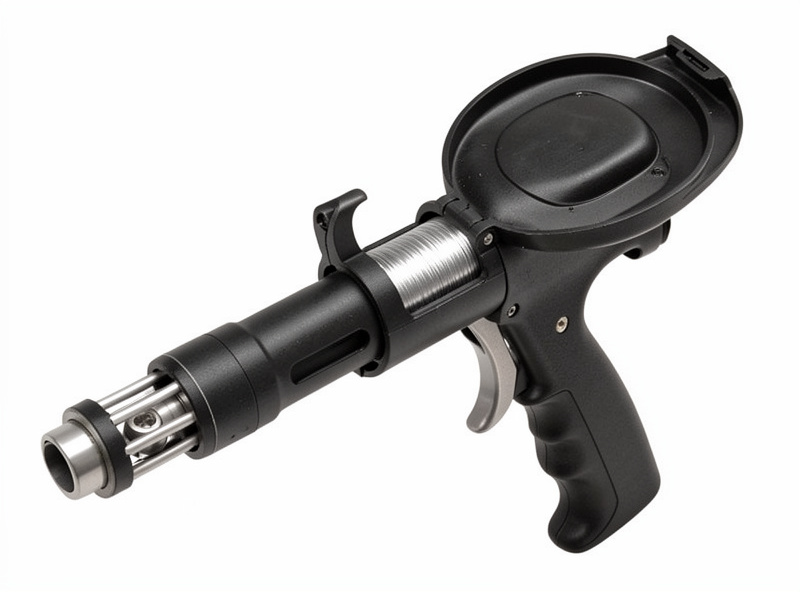
The first time I ran the spool gun after the birdnest fiasco, the difference was almost funny — the wire just fed, smoothly, every time, like aluminum was never hard. That is the whole point: the tool removes the failure mode instead of asking you to out-skill it. The trade-offs are real but minor for home use. The gun is heavier and bulkier in your hand because the spool and motor ride along, which matters on long production runs but not on the brackets and frames I build. You buy wire in small 1-pound spools, which cost a little more per pound than a big 10- or 15-pound roll. And you dedicate the gun to aluminum, since swapping a spool gun over to steel is a chore. For an occasional-aluminum home shop, none of that outweighs “it feeds reliably.” My existing walkthrough of the exact MIG welding aluminum spool gun setup shows the rig in action.
What Does a Push-Pull Gun Do Differently?
A push-pull gun uses two synchronized motors — one at the machine pushing and one in the gun handle pulling — working together so the wire is under gentle tension the whole way instead of being shoved. That lets you feed soft aluminum flawlessly through a long 12- to 25-foot lead while keeping a full-size spool on the welder. It is the professional answer, and it is expensive.
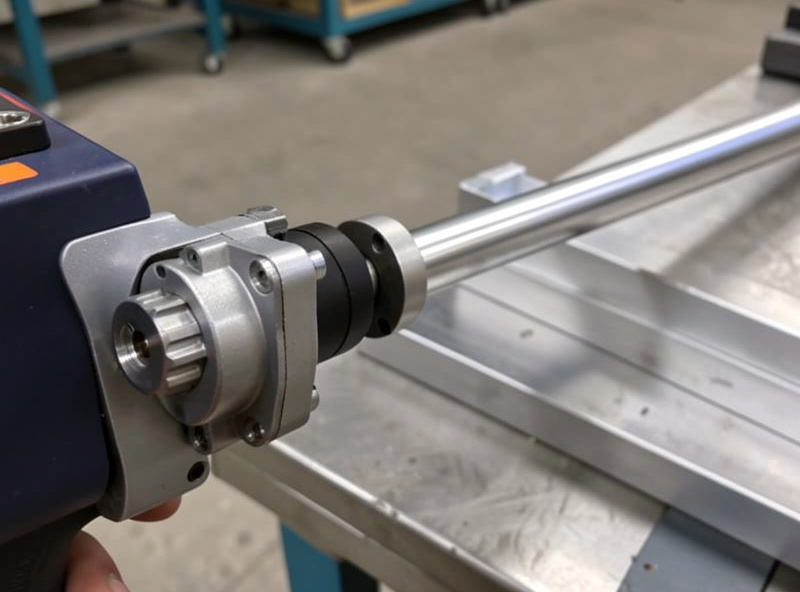
The genius of push-pull is that the front motor pulls the wire taut so it never has to resist a pushing force alone — the two motors hand it off smoothly. That solves the one thing a spool gun cannot: reach. If you are welding aluminum all day and need to move around a big weldment 15 feet from the machine, a push-pull gun keeps a big spool on board so you are not reloading a 1-pound spool every twenty minutes, and it gives you a lighter, more balanced gun in hand than a spool gun. The catch is money. A quality push-pull setup runs several times the cost of a spool gun, often more than some home welders paid for their whole machine. Mike, my welder friend, runs push-pull in his shop because he welds aluminum for a living; on my home bench it would sit idle 95% of the time. If you are still sorting out which machine can even drive these options, my best MIG welder for a home garage buyer guide covers spool-gun-ready features to look for.
Spool Gun vs Push-Pull Gun: The Home-Shop Comparison
Here is the honest side-by-side for someone welding aluminum in a home or hobby shop, not a production floor. The numbers are typical ranges, not any one product’s spec.
| Factor | Spool Gun | Push-Pull Gun |
| Typical cost | Low — often bundled or a modest add-on | High — several times a spool gun |
| Feed reliability | Excellent (short 6-inch path) | Excellent (tensioned over long lead) |
| Reach from machine | Short — tied to the gun lead | Long — 12 to 25 feet |
| Spool size | Small 1-lb spools | Full-size 10–15 lb spools |
| Gun weight in hand | Heavier (spool + motor onboard) | Lighter, better balanced |
| Best for | Occasional/home aluminum | Daily/production aluminum |
| Setup hassle | Plug in, load small spool | More components, more cost to dedicate |
Read that table as a home welder and the answer usually writes itself: unless you weld aluminum for hours most days or need serious reach, the spool gun gives you 95% of the reliability for a fraction of the price. Current aluminum MIG spool guns are inexpensive enough that they are usually the first upgrade I recommend to anyone who wants to add aluminum to their MIG.
As an Amazon Associate I earn from qualifying purchases.
Can You Weld Aluminum With a Standard Gun and No Spool Gun?
Yes, but only over a short lead and only with three upgrades: swap V-groove drive rollers for U-groove, replace the steel liner with a PTFE or nylon one, and go up a size on the contact tip so the softening, expanding aluminum wire does not bind. Even then, expect the occasional birdnest. It is the budget path, not the reliable one.
I have done it, and it works well enough for a few short joints if a spool gun is not in the budget yet. The U-groove roller stops crushing the soft wire flat, the PTFE liner cuts the friction that causes buckling, and the oversized tip gives the wire room as it heats and swells near the arc. Keep the gun lead as straight as you can — every bend adds drag — and back your drive-roll tension way off. The liner swap is a real job on its own; my welding wire liner replacement walkthrough covers it. But be honest with yourself about the trade: you are spending money on a PTFE liner kit and U-groove rollers to get a setup that still birdnests sometimes, when a spool gun would make the problem disappear for not much more. If aluminum is going to be a regular thing, skip the half-measure. The whole feed picture ties back to the complete aluminum MIG guide.
Which Should You Buy First for a Home Shop?
Buy the spool gun first, full stop. It is the cheapest reliable path to clean aluminum MIG, it removes the birdnest failure mode entirely, and for the volume a home welder actually runs it does everything a push-pull gun does. Reserve the push-pull upgrade for the day you find yourself welding aluminum daily and fighting the reach or the small spools.
My own path was exactly this: birdnested a spool with a standard gun, bought the spool gun, never looked back. The push-pull gun is a genuinely better tool in absolute terms, the way a full mechanic’s shop is better than a good toolbox — but you buy the toolbox first because it does 95% of the work for a fraction of the price. If you are choosing filler to run through whichever gun you land on, that decision pairs with this one, and I break it down in ER4043 vs ER5356 filler — note that stiffer 5356 actually feeds a touch better than softer 4043 through any of these systems, which can tip a close call. Whatever you feed it with, the boat I am building toward will get welded with a spool gun on the seams I can reach and, someday, a push-pull for the long hull runs. For now, the spool gun earns its bench space every single time.

Discussion (0)