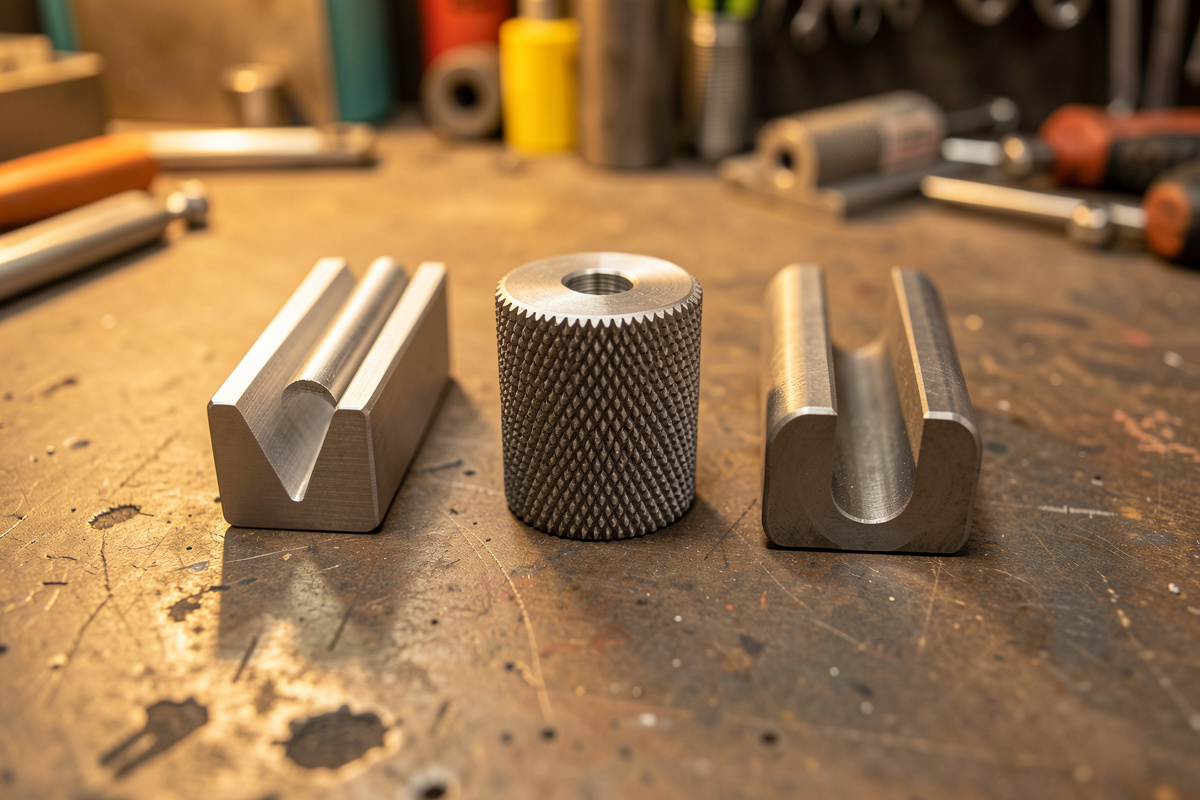

Match the drive roll groove to your wire type: smooth V-groove for solid steel, knurled for flux-core, U-groove for aluminum. The groove is what grips the wire and pushes it, and the wrong shape either shaves the wire, flattens it, or lets it slip — every one of which ends in a surging feed or a birdnest at the drive rolls. It’s a $15 part that decides whether your wire feeds at all.
People blame the machine when the feed surges, and nine times out of ten the fix is between the tension arm and the spool, not in the electronics. I’ve swapped rolls on my YesWelder MIG-PRO205DS enough times — steel to flux-core to aluminum and back — that I keep the spares labeled in a drawer. Here’s what each groove does, how to match it to your wire, and how to set the tension so the drive slips before it ever birdnests.
What Does a Smooth V-Groove Drive Roll Do?
The smooth V-groove is the default for solid wire — steel and stainless. The V shape cradles the round, hard wire on two faces and drives it forward with friction alone, no teeth. Because solid wire is stiff and strong, it doesn’t need to be bitten; it just needs to be held and pushed, and the smooth groove does that without marking or deforming the surface.
That surface finish matters more than it looks. Solid MIG wire has a thin copper coating that helps it slide through the liner and carry current at the tip. A smooth V-groove leaves that coating intact. This is the roll that lives on my machine most of the time, because 0.030 ER70S-6 is what I run for the bulk of home steel work. If you’re not sure which solid wire belongs on your steel in the first place, that’s its own decision — see ER70S-6 vs ER70S-3 — but whatever solid wire you pick, it wants a smooth V.
Why Does Flux-Core Need a Knurled Roll?
Flux-core wire is tubular — a thin steel sheath wrapped around powdered flux — which makes it much softer and more crushable than solid wire. A smooth V-groove can’t grip it well enough; it slips, and slip shows up as a surging, stuttering feed. A knurled roll has sharp teeth machined into the groove that bite into the sheath and drag the soft wire forward positively.
The catch is that those same teeth will chew up solid wire. Put a knurled roll on solid steel and it shaves copper and steel flakes off the surface — you’ll find them packed into your liner and clogging the contact tip within an afternoon. So knurled is for tubular wire only: gasless flux-core like E71T-GS, and gas-shielded flux-core. My first machine, a Forney Easy Weld 140 flux-core unit, came knurled from the factory for exactly this reason. If you’re weighing flux-core against solid, the process comparison sorts out which one your work wants before you pick a roll.
When Do You Need a U-Groove Roll?
U-groove is for aluminum. Aluminum wire is soft and easily deformed, and a sharp V-groove will flatten it into an oval or a fin that jams the liner instantly. The wider, rounded U shape supports the aluminum wire around more of its circumference with less pressure per point, so it drives the wire without crushing it out of round.
You’ll also see U-groove rolls specified for other soft or coated wires where you want to avoid deforming the surface. But in a home shop, U-groove means aluminum, and it goes hand-in-hand with the rest of the aluminum feed changes — a nylon or PTFE liner, a sized-up contact tip, and usually a spool gun to shorten the run. I keep a U-groove roll with my aluminum kit and don’t reach for it otherwise. The aluminum spool-gun setup covers why the whole feed path changes for soft wire.
Which Drive Roll for Which Wire?
Here’s the whole decision on one line per wire. Match the groove shape to the wire type first, then the groove size to the wire diameter (more on that next).
| Wire Type | Drive Roll | Why |
|---|---|---|
| Solid steel (ER70S) | Smooth V-groove | Cradles hard wire, preserves copper coating |
| Solid stainless (ER308L) | Smooth V-groove | Same as steel; hard solid wire |
| Gasless flux-core (E71T) | Knurled | Teeth grip soft tubular sheath without slip |
| Gas-shielded flux-core | Knurled | Same; tubular and crushable |
| Aluminum (ER4043/5356) | U-groove | Rounded groove drives without flattening |
Does the Groove Size Have to Match the Wire Diameter?
Yes — shape and size both. A drive roll is machined for a specific wire diameter, and many rolls are dual-groove: one side sized for 0.030, the flip side for 0.035, so you rotate the roll to match your wire. Run 0.030 wire in a 0.035 groove and the groove is too big to grip properly; run 0.035 in a 0.030 groove and it binds. Check the size stamped on the roll’s face and confirm it matches your spool.
This trips people up when they change wire diameter and forget the roll. I’ve done it — switched from 0.030 to 0.035 for a heavier bracket, left the roll on the 0.030 groove, and spent five minutes wondering why the feed felt off before I caught it. Flip the roll or swap it whenever you change diameter, the same way you’d change the contact tip. Speaking of which, the tip has to move with the wire too, which I cover in contact tip sizing.
How Tight Should Drive Roll Tension Be?
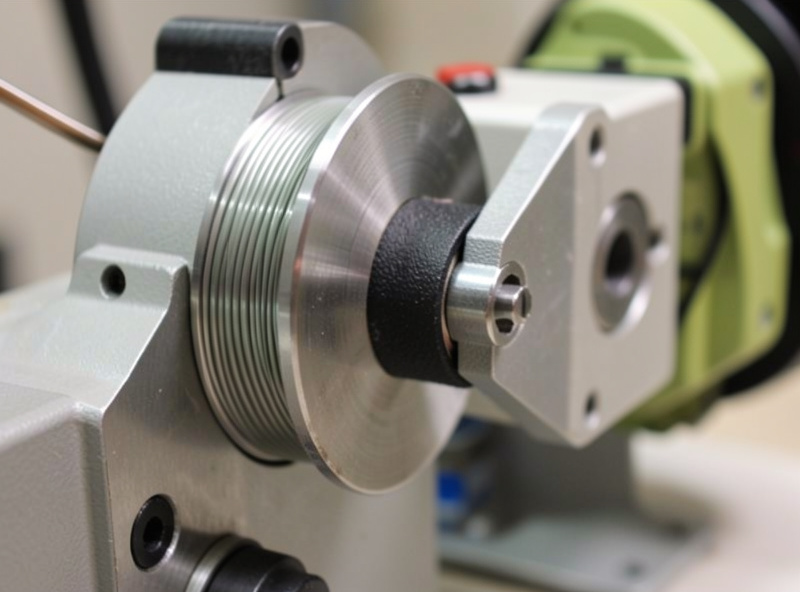
Set tension to the lowest pressure that feeds the wire without slipping. The classic test: run the wire out against a piece of wood or a gloved hand a few inches away and watch the drive rolls — they should slip before the wire stops feeding or piles up. If the wire birdnests instead of the roll slipping, your tension is too high; if it slips with no resistance, it’s too low.
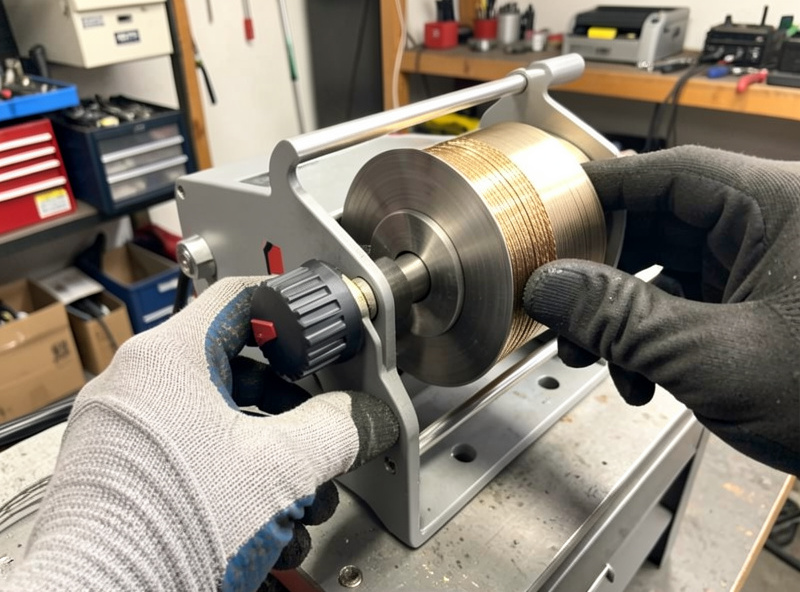
Over-tensioning is the more common mistake and the more damaging one. Crank the tension to muscle past a feeding problem and you’ll flatten the wire, deform soft wire out of round, and turn a small snag into a full birdnest that welds the wire to the drive rolls. The tension arm is there to let the drive give up gracefully instead of packing wire into a knot. If your feed is fighting you no matter the tension, the problem is usually downstream — a shot liner or worn tip — which I run through in MIG wire feed problems.
Do 2-Roll and 4-Roll Drives Make a Difference?
They do for soft wire. A 2-roll drive grips the wire at one point; a 4-roll drive grips at two, spreading the push over more contact so each roll can run lighter tension. For stiff solid steel wire a 2-roll drive is fine and most hobby machines use one. For soft flux-core and especially aluminum, a 4-roll drive feeds noticeably smoother because it moves the wire without needing crushing pressure at any single point.
You don’t get to choose this per job — it’s built into the machine — but it’s worth knowing when you buy. If aluminum is in your future, a 4-roll feeder or a dedicated spool gun will save you grief that no amount of roll-swapping on a 2-roll drive fully fixes. It’s one of the reasons soft-wire welding gets its own kit rather than just a different roll.
What Happens When You Run the Wrong Roll
Each mismatch has a signature. Knurled on solid wire: copper and steel flakes packing your liner, a tip that clogs early, and premature liner wear. Smooth V on flux-core: a surging, stuttering feed that no tension setting cures because the roll simply can’t hold the soft wire. V-groove on aluminum: the wire flattens, jams the liner, and birdnests at the rolls almost immediately.
The first time I ran solid wire on a knurled roll by accident, I couldn’t figure out why my liner clogged twice in a day until I pulled the roll and saw the teeth — and the fine copper dust they’d shaved off. Ten-minute fix, but it cost me a liner. The roll is cheap; the downstream damage from the wrong one isn’t. When you swap wire type, swap the roll in the same motion, and the whole feed path stays happy. It all ties back to the consumable selection guide, where the roll, tip, and liner all have to agree on the same wire. Manufacturers like Miller and Lincoln Electric publish drive-roll selection charts for their feeders if you want to confirm the exact part for your machine.
Can I use a smooth V-groove roll for flux-core wire?
Not well. Flux-core wire is soft and tubular, and a smooth V-groove cannot grip it firmly enough, so it slips and the feed surges no matter how you set the tension. Flux-core needs a knurled roll whose teeth bite into the sheath and drive it positively.
Will a knurled roll damage solid MIG wire?
Yes. The teeth on a knurled roll shave copper and steel flakes off solid wire, and those flakes clog the liner and contact tip, often within a single session. Use a smooth V-groove roll for solid steel and stainless, and reserve knurled rolls for tubular flux-core wire.
Why does aluminum wire need a U-groove roll?
Aluminum wire is soft and deforms easily. A sharp V-groove flattens it into an oval or fin that jams the liner. The rounded U-groove supports the wire around more of its circumference with less pressure per point, driving it forward without crushing it out of round.
How do I set drive roll tension correctly?
Use the lowest tension that feeds the wire without slipping. Run the wire against a block a few inches away; the drive rolls should slip before the wire birdnests. If the wire piles up instead of the roll slipping, tension is too high. Over-tensioning flattens wire and causes the very birdnests it is meant to prevent.
Do I need to change the drive roll when I change wire diameter?
Yes. Drive rolls are machined for a specific diameter, and many are dual-groove so you flip the roll to match, such as 0.030 on one side and 0.035 on the other. Running the wrong groove size means the wire either does not grip or binds. Change the roll whenever you change wire size.

Discussion (0)