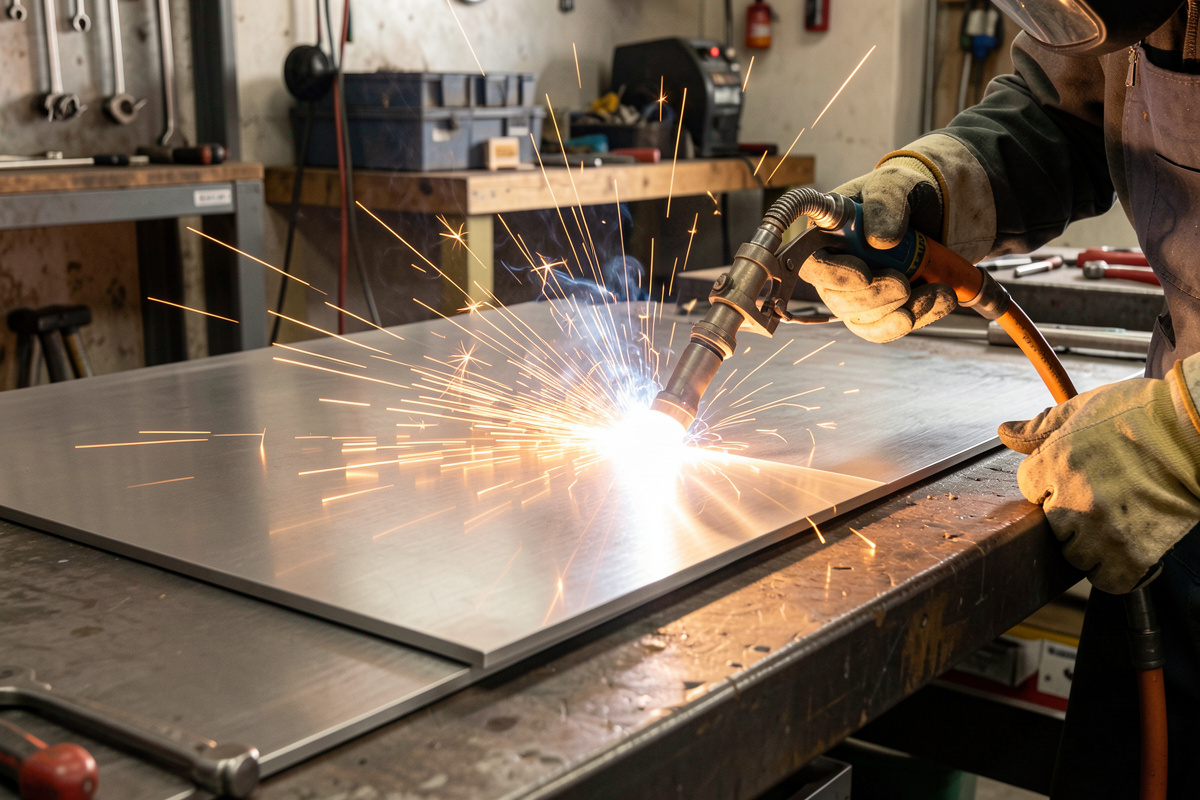

Plasma cuts stainless steel cleanly at the same air and amperage settings you use for mild steel of the same thickness, but it cuts cast iron poorly and messily because cast iron’s high carbon and graphite content resist the clean sever plasma gives steel. For 1/8 inch stainless I run roughly 40 amps at 70 PSI and travel a touch faster than I would on mild steel.
The short version: stainless is an easy plasma job that most people overthink, and cast iron is a hard plasma job that most people attempt anyway and then blame the machine. Knowing which is which, and adjusting your expectations, saves a lot of wasted consumables and ruined parts.
What Settings Do You Use to Plasma Cut Stainless Steel?
Plasma cut stainless at the same amperage and PSI as mild steel of equal thickness, because plasma severs by melting and blowing metal away regardless of alloy. For 1/8 inch stainless, about 40 amps at 70 PSI works; for 1/4 inch, step up toward 50 to 60 amps. Travel slightly faster than on mild steel to limit heat in the cut zone.
Stainless surprises first-timers because it cuts so easily. Plasma does not care that stainless is harder to saw or grind than mild steel; the arc melts both the same way. The one real difference is heat management. Stainless holds heat in the cut zone and the heat-affected edge can lose some corrosion resistance, so I keep travel speed up and avoid lingering. On my YesWelder I use the same drag tip and the same air I would for mild steel and just nudge the speed. If the part is going to be exposed to weather or chemicals, I plan to clean the cut edge afterward, which I cover below. The base alloy still matters for the weld that follows, and I keep that straight in my notes on stainless steel for welding.
Does Plasma Cutting Affect Stainless Steel’s Corrosion Resistance?
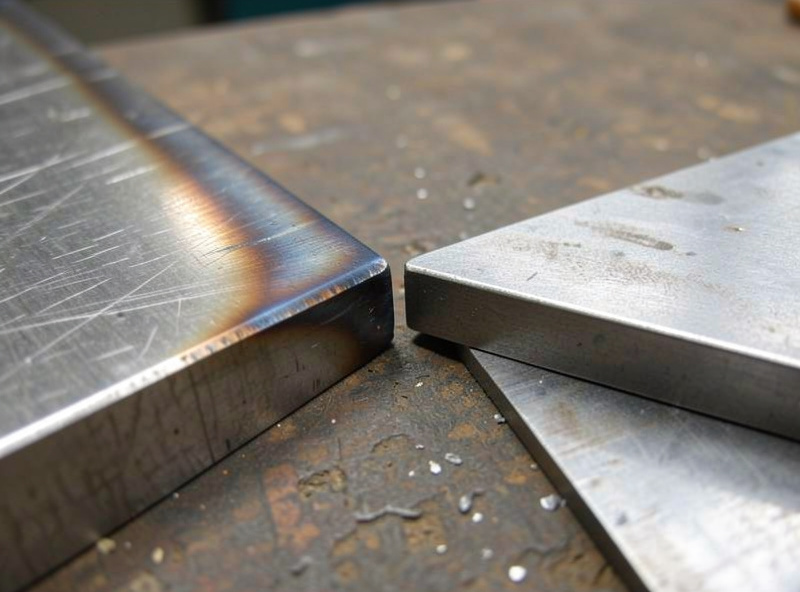
Yes, the heat of plasma cutting alters a thin band along the cut edge, leaving discoloration and a heat-affected zone where corrosion resistance is reduced. On parts that must stay rust-free, you grind or pickle the cut edge back to clean stainless after cutting, removing the oxidized layer.
This is the detail that separates a stainless part that lasts from one that rusts at the edges within a season. The bright straw-to-blue tint along a plasma cut on stainless is oxidation and chromium depletion at the surface. For a structural bracket nobody sees, I leave it. For anything decorative, food-contact, or weather-exposed, I clean the edge: a flap disc on my angle grinder for quick jobs, or a pickling paste for a proper passivated finish where it matters. ASTM A380 and A967, the standards for cleaning and passivating stainless, exist precisely because that heat-affected, iron-contaminated surface has to be removed to restore corrosion resistance, and a plasma-cut edge is exactly the kind of surface they address. The key is using a dedicated stainless flap disc and wire brush; cross-contaminating stainless with tools used on carbon steel embeds iron particles that rust and stain the surface, which looks exactly like the stainless itself failing. Mike, my welder friend, ruined a stainless rail this way once and it taught us both to keep separate abrasives.
Why Is Cast Iron So Hard to Plasma Cut?
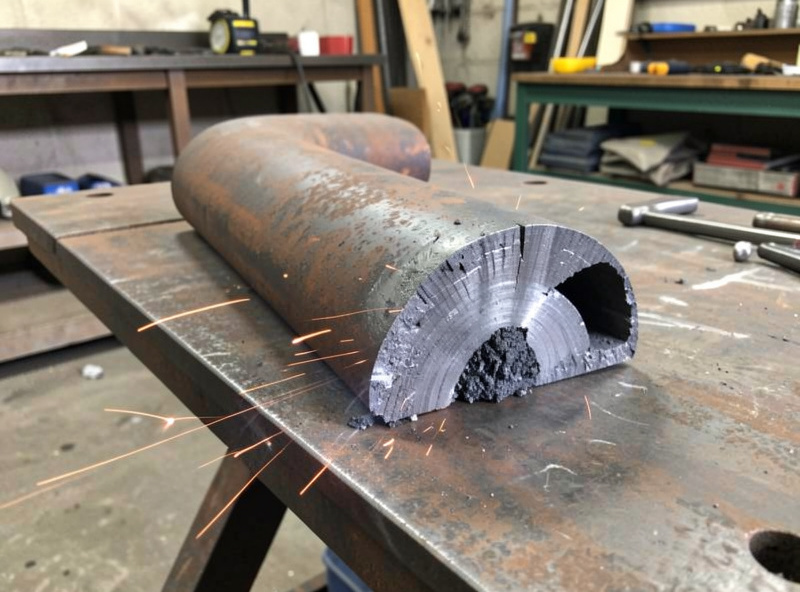
Cast iron cuts badly with plasma because its 2 to 4 percent carbon content and flake graphite structure do not melt and blow clear cleanly the way low-carbon steel does. The cut comes out rough, wide, and full of clinging dross, and the rapid heating and cooling can crack the casting outright.
I will plasma-cut cast iron when I have to, but I go in expecting an ugly, slow cut and a part I will need to grind heavily afterward. The graphite interferes with the clean melt-and-eject action plasma relies on, so the kerf is messy and the bottom edge loads up with dross. Worse, cast iron is brittle and sensitive to thermal shock; the localized heat of the arc against the cold surrounding casting sets up stresses that can crack it, especially on thicker or older castings. If I am scrapping a cast item, plasma is fine for rough chopping. If I am trying to preserve and repair a casting, I reach for an abrasive cutoff wheel or a saw instead, because the controlled, cooler cut is far kinder to the part.
How Do You Plasma Cut Cast Iron Without Cracking It?
To reduce cracking, preheat the casting gently and evenly to take the thermal shock out of the cut, cut at a steady moderate pace without stopping, and let the part cool slowly afterward rather than quenching it. Even so, treat any cast iron plasma cut as rough, expecting to clean the edge heavily.
Preheating is the single most useful habit. A cold casting hit by a hot arc cracks because one small zone expands hard against a rigid cold mass; warming the whole piece first shrinks that gradient. I warm cast iron with a torch until it is uniformly warm to a thick glove, never glowing, then cut in one steady pass. I avoid restarts in the middle of a cut because each restart is a fresh thermal shock. After cutting, I set the part somewhere it can cool on its own, never in front of a fan or under water. The honest truth is that even done right, cast iron plasma cuts are a compromise, and for anything I care about I choose mechanical cutting. Plasma’s strength is steel and stainless; cast iron is where it earns its reputation for messy cuts.
One more practical note on cast iron: the dross it leaves is tenacious. Where mild steel dross often chips off with a tap, cast iron dross fuses hard to the bottom edge and you will spend real time on a grinder cleaning it. Budget for that. I also keep my amperage on the higher side of the range for the thickness, because a hotter, faster cut gives the messy molten material the best chance to blow clear before it freezes onto the edge. A weak, slow cut on cast iron is the worst of both worlds: more heat soaked into the brittle casting and more dross to grind. If the casting is something structural or sealing, like an old machine base or a pipe fitting, I stop and ask whether cutting it at all is the right move, because the crack you cannot see is the one that fails later under load.
How Do You Pierce and Start a Cut in Stainless?
Pierce stainless the same way you pierce mild steel: lift the torch to about twice your normal standoff, trigger the arc, and let the molten blow-back clear before dropping in to cutting height. On thinner stainless under 1/8 inch you can edge-start instead, which spares the nozzle from the worst of the pierce blow-back.
Piercing is hard on consumables in any material, and stainless is no exception. The blow-back of molten metal during a pierce hits the nozzle orifice directly, so I avoid mid-sheet pierces when I can start from an edge. When I must pierce, the high-then-drop motion keeps the orifice out of the spray until the hole opens. On stainless specifically I watch for the thin oxidized smear the pierce leaves around the start point, because that spot will be the first to discolor or rust on an exposed part; I either start in scrap area or plan to clean that spot. Keeping a fresh nozzle in the torch for finish cuts on stainless is worth it, since a worn tip widens the kerf and dumps more heat into an edge you are already trying to keep cool. The wear pattern is the same story I track for every cut in my consumables guide.
When Should You Choose Plasma Over a Saw or Grinder?
Choose plasma for fast, freehand or curved cuts in stainless and mild steel sheet and plate, where speed and the ability to follow a line beat edge perfection. Choose a saw or abrasive wheel for cast iron, for precise square ends, and for any cut where a clean, cold edge matters more than speed.
I keep all three on the bench because each wins a different job. Plasma is unbeatable for cutting shapes, curves, and long lines in steel and stainless quickly; nothing else freehands a profile that fast. A cold saw or bandsaw gives me a square, burr-light end on tube and bar that plasma cannot match. An abrasive chop saw and the angle grinder cover the rest, especially cast iron and any cut I want kept cool and controlled. The mistake is treating plasma as a universal cutter; it is a specialist that is brilliant on the metals it suits and clumsy on the ones it does not. For cast iron in particular, the cooler controlled cut of a saw is worth the extra time every time the part matters. If you are weighing plasma against a grinder for everyday steel work, I broke that exact trade down in plasma cutter vs angle grinder.
Stainless and Cast Iron Plasma Cutting Settings
| Material | Thickness | Approx. Amps | Cut Quality |
|---|---|---|---|
| Stainless steel | 1/8 in (3 mm) | ~40 A | Clean, tinted edge |
| Stainless steel | 1/4 in (6 mm) | 50-60 A | Clean, needs edge cleanup |
| Cast iron | 1/4 in (6 mm) | 50-60 A | Rough, dross, crack risk |
| Cast iron | 1/2 in (12 mm) | 60 A+ | Poor, preheat advised |
Plasma is the wrong tool for a precision cast iron repair and the right tool for almost anything you will do in stainless. Set your stainless speed up to protect the edge, clean it afterward if corrosion matters, and save the cast iron for rough work or a saw. If you want to push the settings side of this further, my guide to cutting a clean straight line covers the mechanical guides that make any material cut better, and the main plasma cutting guide ties the whole process together.

Discussion (0)