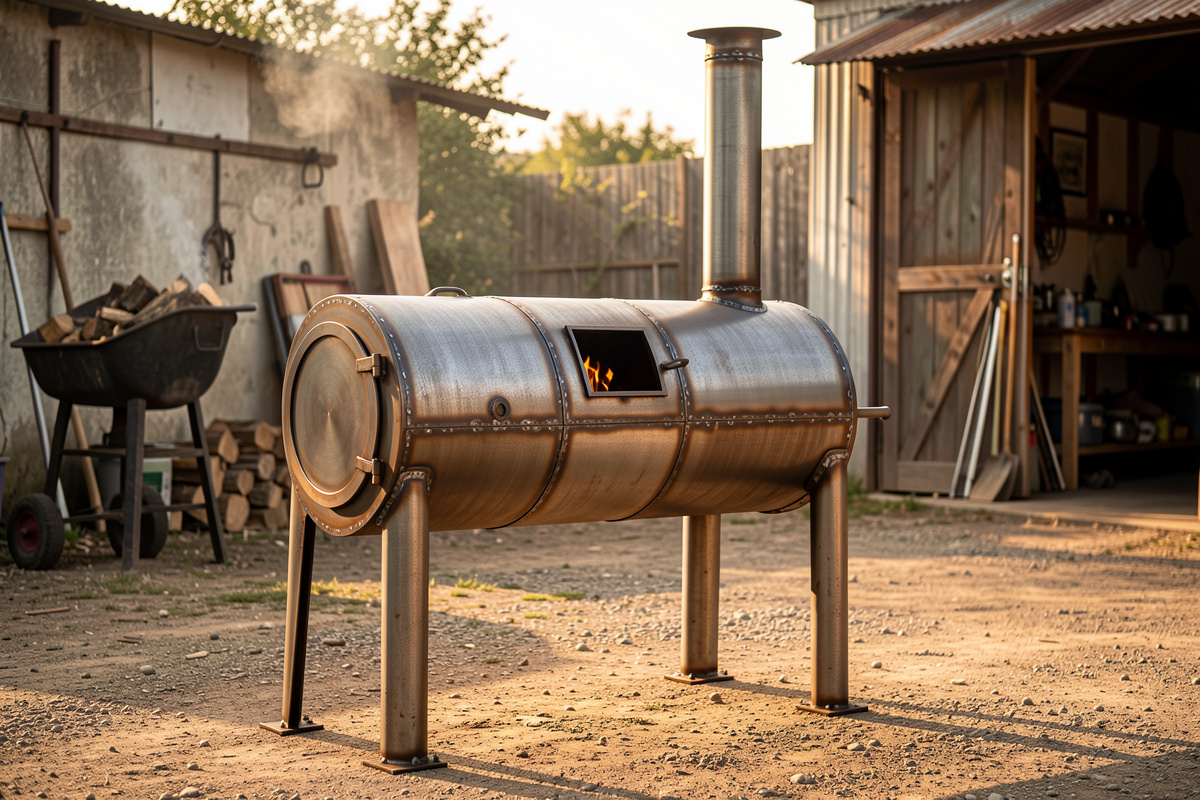

A home-welded offset BBQ smoker starts with a 1/4-inch-wall steel pipe or propane tank for the cook chamber, a smaller firebox welded to one end, and a properly sized throat connecting them. The single number that makes or breaks the build is the firebox-to-chamber opening: size it to roughly one-third of the cook chamber’s cross-section and the smoker drafts cleanly instead of stalling. I built mine from a reclaimed 250-gallon tank and run it most weekends, and the welding is the easy part next to the airflow math.
This is a real fabrication project, not a weekend bracket. It asks for clean, continuous, gas-tight welds on thick steel, patience with cut layout, and respect for the one genuine hazard that catches people out: cutting into a tank or cylinder that once held fuel. I will walk the whole build the way I did it, settings included, and flag the few things you should not improvise on.
Before You Cut: Purge Any Fuel Tank
If your cook chamber is a reclaimed propane tank or any vessel that held a flammable, it must be fully purged before a grinder or torch touches it. Residual fuel vapor in a sealed tank is an explosion risk, and people are seriously hurt every year skipping this. Fill it completely with water, drain it, and let it off-gas, or fill it with inert gas; do not trust a “smell test.” This is the one step in the build where there is no shortcut and no opinion. When in doubt, start from new plate or pipe instead.
I built my first smoker from a fresh length of 18-inch schedule-40 pipe specifically to skip the purge question entirely. It cost more than a scrounged tank but removed the worst hazard from the project. If you do reclaim a tank, do the water-fill purge twice and cut your first opening with a cutting wheel, not a torch, so any missed vapor is not meeting an open flame.
Sizing the Chamber, Firebox, and Throat
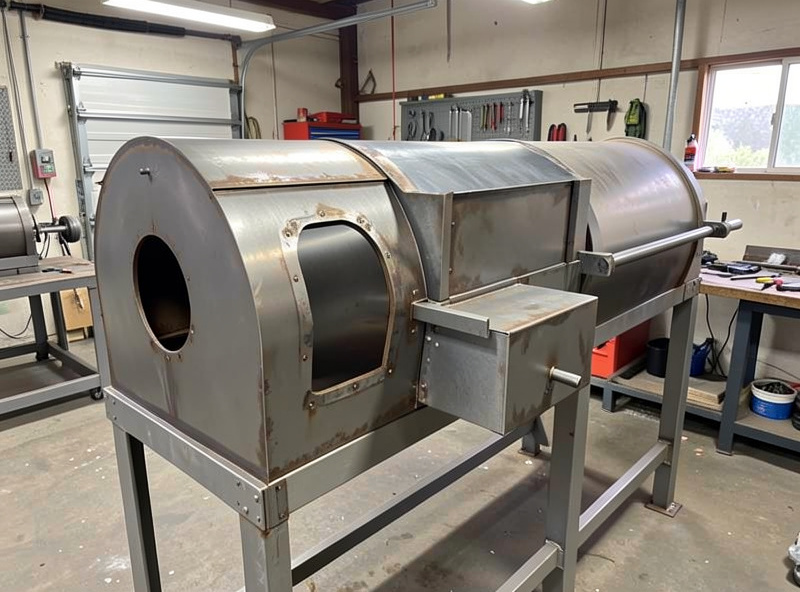
The classic reverse-engineered “smoker calculator” ratios are worth following because they encode decades of pit-building. For a given cook chamber volume, the firebox should be about 1/3 of the chamber volume, the firebox-to-chamber opening around 1/3 of the chamber’s end cross-section, and the exhaust stack sized and placed at chamber-top height for a clean pull. Undersize the throat and the fire smolders; oversize the stack and you waste fuel chasing temperature.
I sketch the whole thing in CAD first, the same bench that runs the CNC and laser, then print a 1:1 paper template for the firebox opening and the stack hole. Marking thick steel by eye is how you end up with an oval hole and a gappy fit. A center punch, soapstone, and a steel rule transfer the template to the metal; the chop saw and grinder do the rest.
Welding Thick Steel Gas-Tight
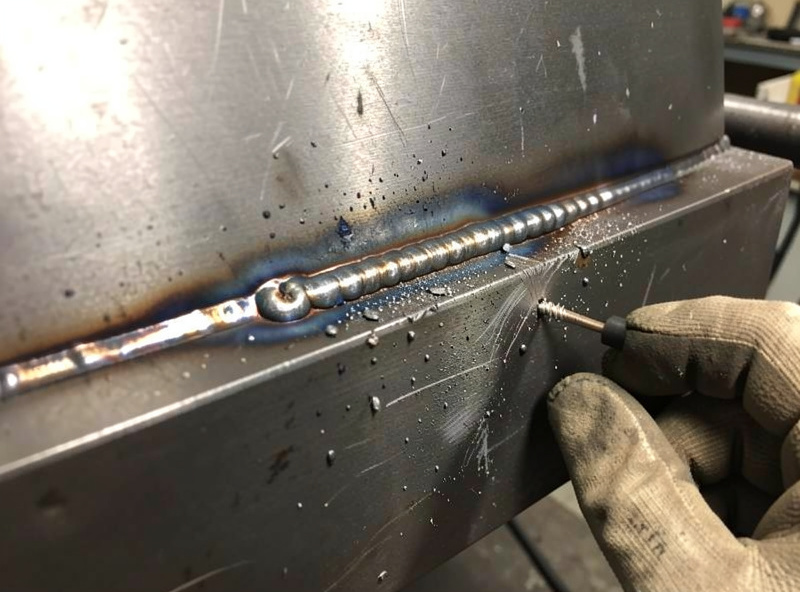
Smoker seams need to be continuous and sealed, not stitched, because every gap is an air leak that ruins temperature control. On 1/4-inch steel I bevel the edges with a flap disc on the DeWalt DWE402 to open a V, then run multi-pass MIG: a root pass to fuse the joint, then a cap to fill. My MIG-PRO205DS runs 0.035 ER70S-6 under 75/25 here, voltage up around 21 to 22 and wire speed to match, because thick plate wants the heat. Thin-metal settings will leave you with cold lap and leaks.
I tack the firebox to the chamber every few inches first, check the fit and the throat alignment, then weld it out in stitches that I come back and tie together into a continuous seam, leapfrogging around the joint to spread the heat. Once it is cool, I do a leak check: close it up, light a small smoke source inside, and watch the seams. Anywhere smoke escapes gets ground and re-welded. A smoker that leaks at the seams will never hold a steady 250 degrees.
Doors, Hinges, and Handles
The cook chamber door is cut from the chamber wall itself so it matches the curve perfectly. I weld the hinges and a counterweight or spring before I make the final cut, then cut the door free last so it cannot sag or bind. A welded angle-iron lip around the opening (a “door dam”) gives the door something to seat against and seals the gap with gravity and a little gasket. Handles get welded on cold-side only and wrapped, because bare steel handles on a 300-degree firebox will brand you.
For tools and a few consumables this build genuinely benefits from, here is what I reach for. As an Amazon Associate I earn from qualifying purchases.
- High-temp fiberglass gasket rope for sealing the door dam against leaks.
- Weld-on steel barrel hinges rated for the door weight.
- A stem-mount pit thermometer set at grate height, not dome height.
Grates, Stack, and First Burn
I run expanded-metal grates on welded angle-iron rails so they lift out for cleaning. The exhaust stack is a length of pipe welded to the top of the chamber at the far end from the firebox, running the smoke across the food before it exits. Before the first cook, I do a burn-off: a hot fire with nothing inside to cook off mill scale, cutting oil, and any paint, with the shop doors open and the fume extractor running. Galvanized has no place anywhere on a smoker; zinc fumes at cooking temperature are a real health hazard.
| Component | Material I used | Sizing rule |
|---|---|---|
| Cook chamber | 1/4-inch steel pipe / tank | Sets the baseline volume |
| Firebox | 1/4-inch plate, box | ~1/3 of chamber volume |
| Throat opening | Cut into chamber end | ~1/3 of chamber cross-section |
| Exhaust stack | 3-4 inch pipe | Chamber-top height, far end |
Frequently Asked Questions
What thickness steel for a welded smoker?
Use 1/4-inch steel for the cook chamber and firebox so the smoker holds heat through temperature swings and resists warping near the fire. Thinner 1/8-inch steel works for small smokers but loses heat fast and burns through at the firebox sooner.
How big should the firebox-to-chamber opening be?
Size the throat opening to roughly one-third of the cook chamber’s end cross-section. Too small and the fire smolders and stalls; too large and you lose temperature control. Reverse-engineered pit calculators encode these ratios and are worth following.
Is it safe to make a smoker from a propane tank?
Only after fully purging it. Fill the tank with water and drain it, or use inert gas, before any grinder or torch touches it. Residual fuel vapor in a sealed tank can explode. If unsure, build from new pipe or plate instead.
What welder do I need to build a smoker?
A 200-amp MIG running 0.035 wire handles 1/4-inch smoker steel with multi-pass welds. Bevel the joints, run a root pass then a cap, and turn voltage up around 21 to 22 volts. Thin-metal settings cause cold lap and leaky seams.
How do I stop my smoker seams from leaking?
Weld continuous, gas-tight seams rather than stitches, then leak-test by lighting a small smoke source inside a closed chamber and watching for escaping smoke. Grind and re-weld any leak. Seal the door with a welded lip and high-temp gasket rope.
Where should the smoker exhaust stack go?
Place the stack at the top of the cook chamber on the opposite end from the firebox so smoke travels across the food before exiting. Sizing it to the chamber and running it at chamber-top height gives a clean draft without wasting fuel.

Discussion (0)