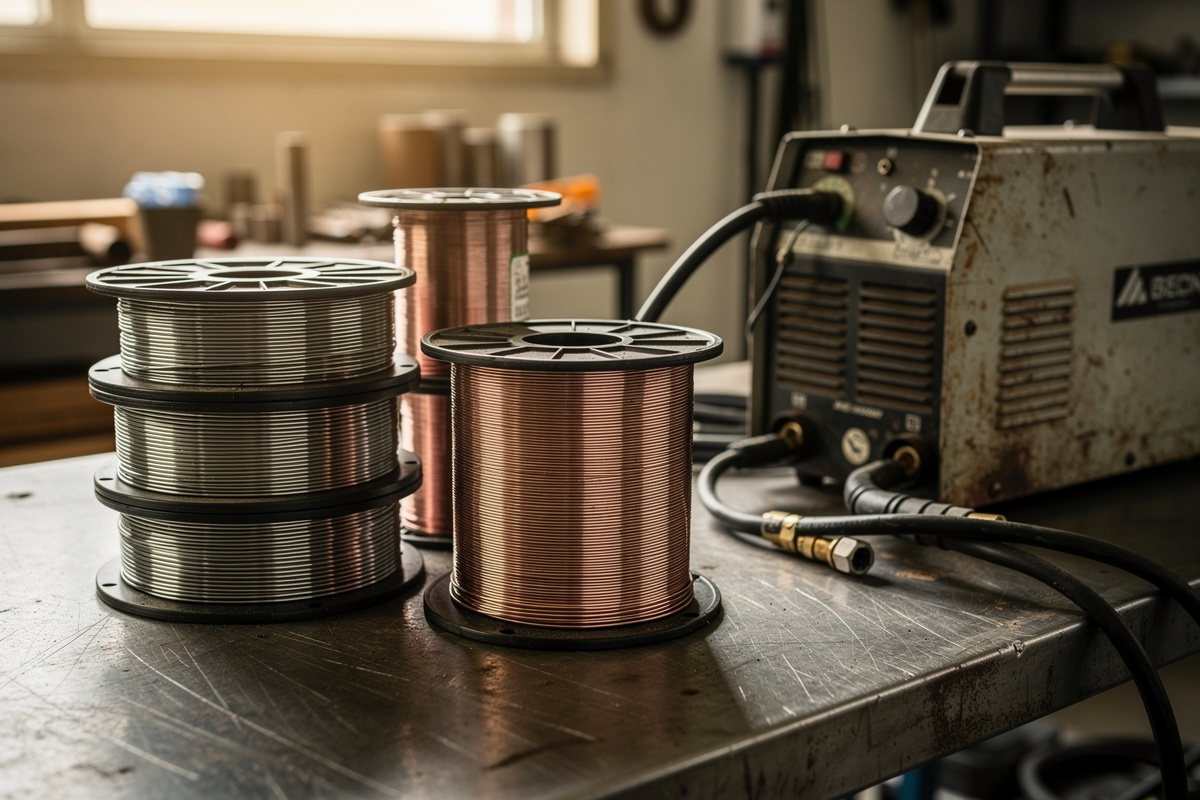

MIG wire diameter sets the amperage range you can run and the metal thickness you can weld. 0.023 inch is the thin-sheet specialist (about 30-90 amps), 0.030 inch is the do-everything home size (40-145 amps, 24 gauge to 3/16 inch), and 0.035 inch is for thicker steel and faster fill (50-200 amps). If you buy one roll, buy 0.030.
Wire size is one of those quietly important choices a beginner makes by accident — whatever came on the spool with the machine — and then fights for months without realizing the diameter is wrong for the work. The wire you load decides the lowest and highest amperage your arc can hold, which decides what thickness you can join cleanly. After running all three diameters across everything from 22-gauge panel to 3/8-inch plate on my bench, here is how to pick on purpose. This sits under the MIG welding complete guide, and pairs with my MIG settings chart for the voltage and wire-speed numbers.
How Wire Diameter Controls Amperage
A thinner wire needs less current to melt, so it runs at a lower minimum amperage and gives you fine control on thin metal. A thicker wire carries more current, deposits more metal per second, and reaches higher amperage for thick steel — but it cannot run cool enough for sheet. Wire diameter is essentially your amperage operating window.
Think of it as the range a single roll can cover. Load 0.023 and your usable window sits low — perfect for sheet, useless for filling a 1/4-inch joint without endless passes. Load 0.035 and the window shifts high — fast and strong on plate, but the minimum heat is too much for 22-gauge and you blow holes. The 0.030 in the middle overlaps both ends enough to be the universal home choice. This is also why amperage is really set by wire speed in MIG: more wire speed feeds more wire, which draws more current to melt it. The diameter caps how low and how high that relationship can go. Get the wire size wrong and no amount of dial-twiddling rescues the job, which is behind a lot of burn-through and feed problems beginners chase.
0.023 Inch: The Thin-Sheet Specialist
0.023-inch wire (also sold as 0.024) runs roughly 30-90 amps and is the right choice for 24-gauge up to about 1/8-inch steel. Its low minimum amperage lets you hold a stable arc at the cool settings thin metal demands, making it the go-to for auto body, enclosures, and any sheet work where 0.030 runs too hot.
This is the roll I switch to whenever I am on a panel. The fine wire melts at low current, so I can run the 30-60 amp window that 18-24 gauge needs without the puddle flooding and dropping through. It is the single biggest reason my thin work improved — I cover the full technique in the thin sheet metal guide, but the wire change is step one. The trade-off is the ceiling: 0.023 simply cannot deposit enough metal to fill thick joints efficiently, so it is a specialist roll, not an everyday one. On a 120V machine it shines because those machines live in the thin-to-medium range anyway.
0.030 Inch: The Home-Shop All-Rounder
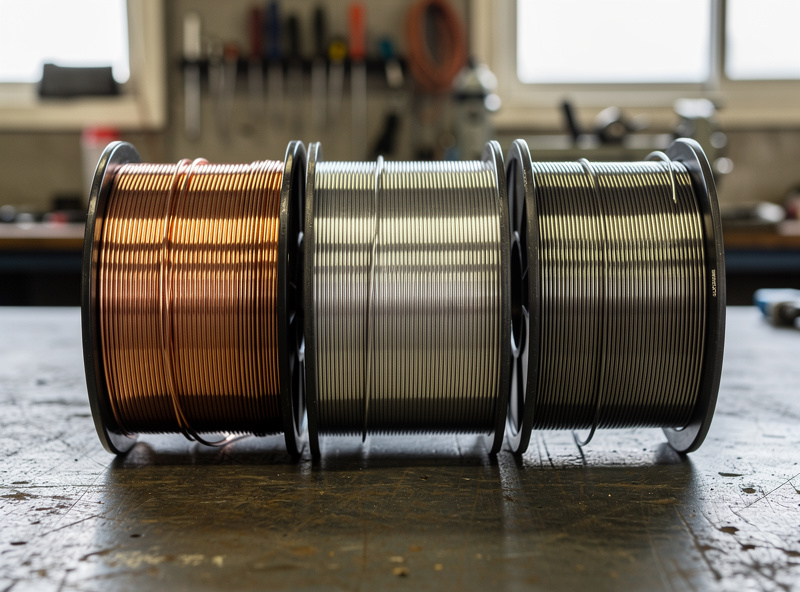
0.030-inch wire runs about 40-145 amps and welds from roughly 24 gauge up to 3/16-inch in a single pass, or thicker with multiple passes. It is the most versatile diameter and the right default for a home shop running a 120/240V machine. If you only stock one wire, this is the one that does the widest range of jobs acceptably.
0.030 ER70S-6 is what lives on my MIG-PRO for general fabrication — brackets, carts, frames, the bread-and-butter 1/8 to 3/16-inch steel that makes up most home projects. It will run thin-ish sheet if you are careful (though 0.023 does it better) and will fill medium plate (though 0.035 does it faster), and that overlap is exactly why it is the universal recommendation. It feeds smoothly, the consumables are everywhere, and it forgives a beginner who has not yet learned to match wire to thickness. The deposition is the consideration covered in my consumables guide: 0.030 lays metal fast enough for real work without overwhelming a small machine.
0.035 Inch: Thicker Steel and Faster Fill
0.035-inch wire runs roughly 50-200 amps and is built for 1/8-inch through 1/4-inch and heavier steel, filling joints fast with high deposition. It is the right choice on a 220V machine doing structural and thick work, but its high minimum heat makes it a poor fit for thin sheet, where it burns through easily.
I load 0.035 when I am on heavy plate and want to move metal — the larger wire deposits noticeably faster, so a big fillet or a multipass joint goes quicker with fewer stops. On the 240V side of the machine it has the amperage headroom to use that capacity. The catch is the floor: 0.035 cannot run cool enough for 20-gauge sheet, so it is the wrong roll for anyone whose work is mostly thin. For a shop that lives on quarter-inch and up, though, it is the efficient choice and reduces the pass count on thick joints. Match the gas and you get a strong, fast bead; mismatch the thickness and you get holes.
| Wire Diameter | Amperage Range | Steel Thickness | Best Machine | Best Use |
|---|---|---|---|---|
| 0.023 in | ~30–90 A | 24 ga – 1/8 in | 120V | Thin sheet, auto body, enclosures |
| 0.030 in | ~40–145 A | 24 ga – 3/16 in | 120V / 240V | All-around home fabrication |
| 0.035 in | ~50–200 A | 1/8 – 1/4 in+ | 240V | Thick steel, fast fill, structural |
| 0.030 flux-core | ~60–160 A | 18 ga – 1/4 in | 120V / 240V | Outdoor, windy, no-gas welding |
| 0.045 in | ~120–350 A | 1/4 in+ | Industrial | Production spray transfer (not home) |
Disclosure: HomeWelder is reader-supported. As an Amazon Associate I earn from qualifying purchases made through links in this article, at no extra cost to you. I only point to gear I actually use or would buy for my own shop.
Flux-Core Wire Sizes Run Hotter
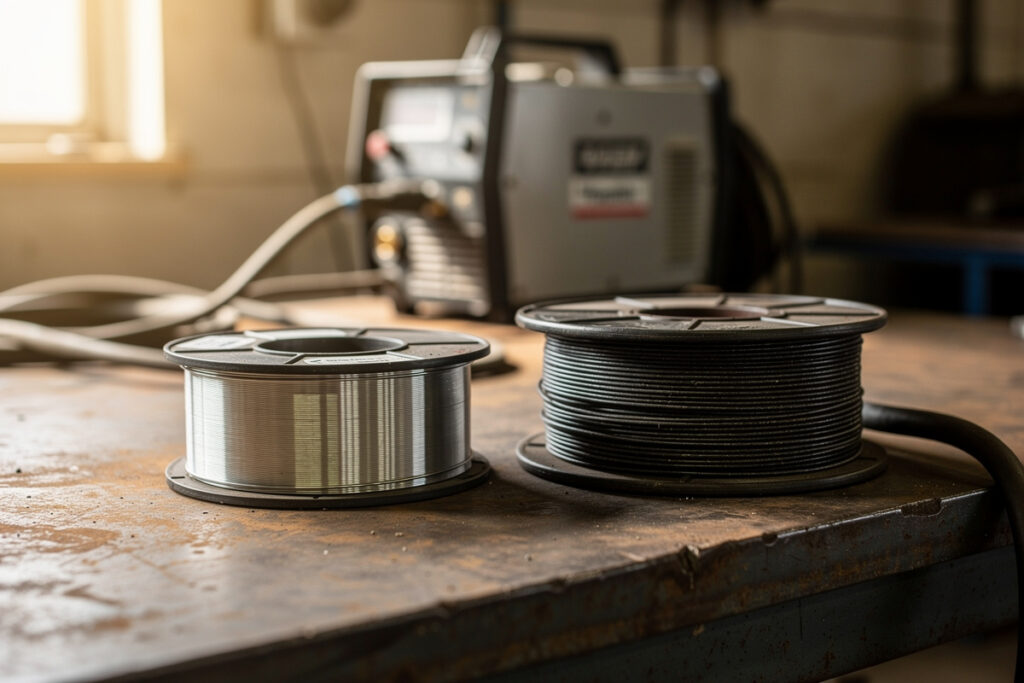
Flux-core wire of a given diameter runs hotter and deposits more than solid wire of the same size, so the numbers do not translate directly. A 0.030 self-shielded flux-core behaves roughly like 0.035 solid in heat and penetration. That extra punch is why flux-core handles thicker steel and dirtier material than the same-size solid wire.
This trips people up when they swap a gasless flux-core spool onto a machine set for solid wire and suddenly blow through. Self-shielded flux-core is a different animal — it carries its own shielding in the flux core, runs deeper and hotter, and is dragged not pushed. Common home sizes are 0.030 and 0.035, and even the 0.030 is really an 18-gauge-and-up wire, not a sheet wire. The full comparison of when to run solid versus flux-core — metallurgy, polarity, and use case — is in my gas vs gasless MIG guide. For sizing, just remember flux-core eats a thickness class hotter than its diameter suggests.
Match the Drive Roll, Liner, and Contact Tip
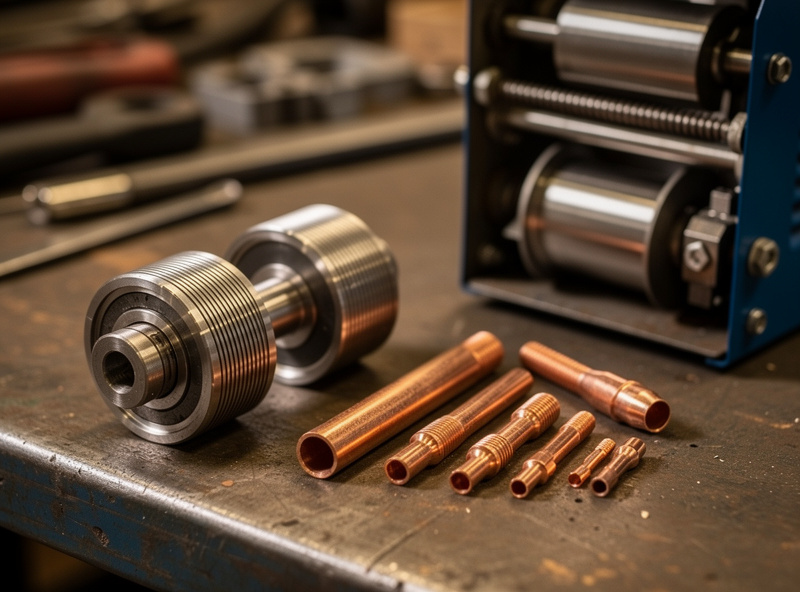
Every wire size needs a matching contact tip, a drive roll groove sized to it, and a liner that fits its range. A 0.030 wire must run through a 0.030 contact tip and a 0.030 drive-roll groove — mismatch any of them and you get feed stutter, arc wander, and burnback that look like technique problems but are pure hardware mismatch.
When you change wire diameter, you change three things, not one. The contact tip is stamped with its size and the bore must match the wire or the arc gets erratic. The drive roll has grooves sized per wire (and a knurled groove for flux-core, a smooth V for solid, a U-groove for soft aluminum); running the wrong groove crushes or slips the wire. The liner has a diameter range, and a fine wire rattling in an oversized liner feeds inconsistently. I keep tips in each size I run and the matching rolls, because forgetting to swap the tip after a wire change is the most common self-inflicted feed problem I see — and it masquerades as spatter and arc instability.
If You Buy One Roll
Buy 0.030 ER70S-6 if you only stock one wire. It covers the widest range of home projects — thin-ish sheet through 3/16-inch plate — acceptably, feeds smoothly, and its consumables are universal. Add a 0.023 roll later for dedicated sheet work and a 0.035 roll if you start welding a lot of quarter-inch and heavier steel.
That is the honest home-shop answer: one 0.030 roll handles the overwhelming majority of brackets, carts, and frames a hobbyist builds, and the matching tips come on almost every machine. The specialist rolls earn their place once your work clusters at the extremes — thin auto-body panels (0.023) or heavy structural plate (0.035). Buying all three at once is reasonable too, since wire is cheap and keeping the right diameter for the job is the easiest quality upgrade there is. Keep every roll dry, because moisture in the wire seeds porosity no matter how perfectly you sized it.
Stock a roll of 0.030-inch ER70S-6 MIG wire as your everyday spool, keep matching 0.030 contact tips on hand so a worn tip never stops a job, and grab a set of MIG drive rolls sized to the wires you run so every diameter feeds clean.
Frequently Asked Questions
What MIG wire size should a beginner use?
0.030 inch is the best all-around size for a beginner. It runs about 40 to 145 amps and welds from roughly 24 gauge to 3/16 inch, covering most home projects. Add 0.023 later for thin sheet and 0.035 if you weld a lot of quarter-inch and thicker steel.
What amperage does each MIG wire size run?
Roughly: 0.023 inch runs 30 to 90 amps, 0.030 inch runs 40 to 145 amps, and 0.035 inch runs 50 to 200 amps. Thinner wire reaches lower minimum amperage for thin metal control; thicker wire reaches higher amperage and deposits faster on thick steel.
What thickness can 0.030 MIG wire weld?
0.030-inch wire welds from about 24 gauge up to 3/16 inch in a single pass, and thicker with multiple passes. It is the most versatile home size, capable of thin-ish sheet and medium plate, which is why it is the standard recommendation if you stock only one roll.
Is 0.030 or 0.035 MIG wire better?
It depends on thickness. 0.030 is more versatile and better for thin-to-medium steel on a 120 or 240V machine. 0.035 deposits faster and suits 1/8 inch to 1/4 inch and heavier on a 240V machine, but runs too hot for thin sheet. Pick by the steel you weld most.
Do I need to change the contact tip when I change wire size?
Yes. Each wire diameter needs a matching contact tip and drive-roll groove. Running 0.030 wire through a 0.035 tip causes arc wander and feed stutter. Always swap the tip, the drive roll groove, and confirm the liner fits when you change wire size.
Does flux-core wire use the same sizes as solid wire?
The diameters overlap, but flux-core runs hotter than solid wire of the same size. A 0.030 self-shielded flux-core behaves like roughly 0.035 solid in heat and penetration, so it handles thicker, dirtier steel. Flux-core also needs a knurled drive roll and must be dragged, not pushed.

Discussion (0)