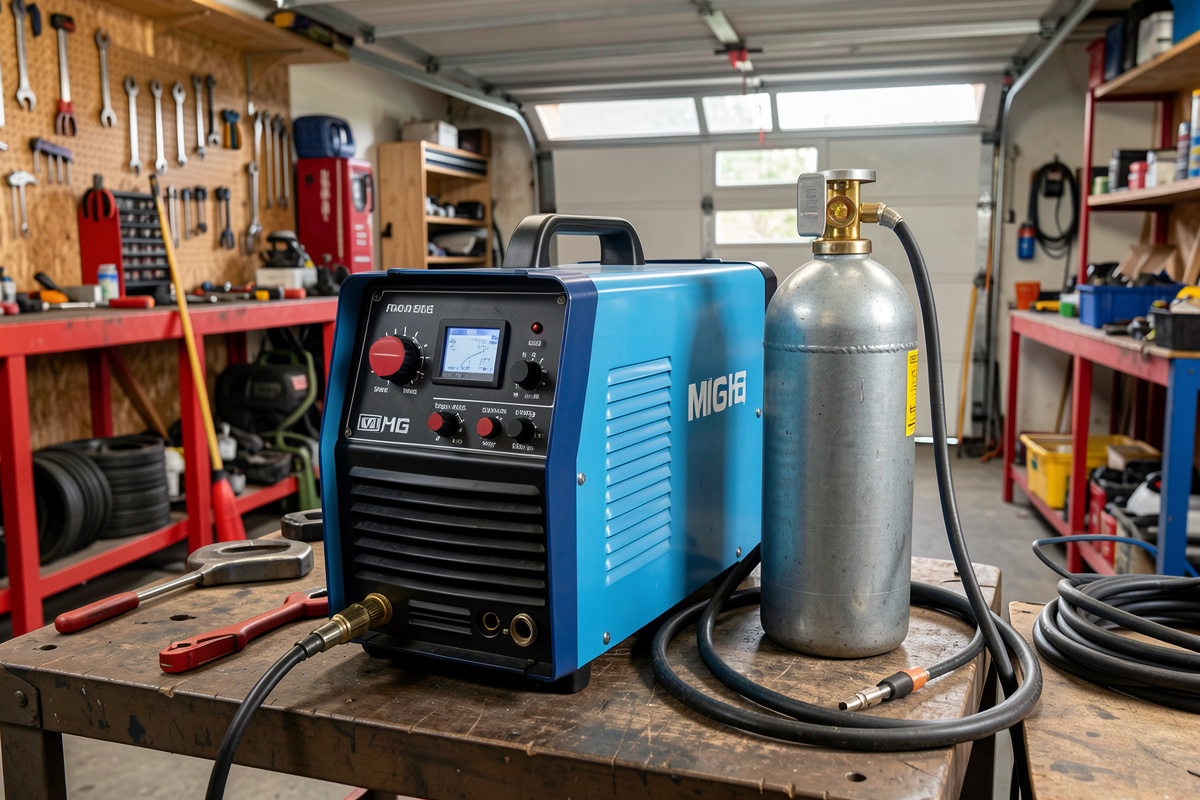

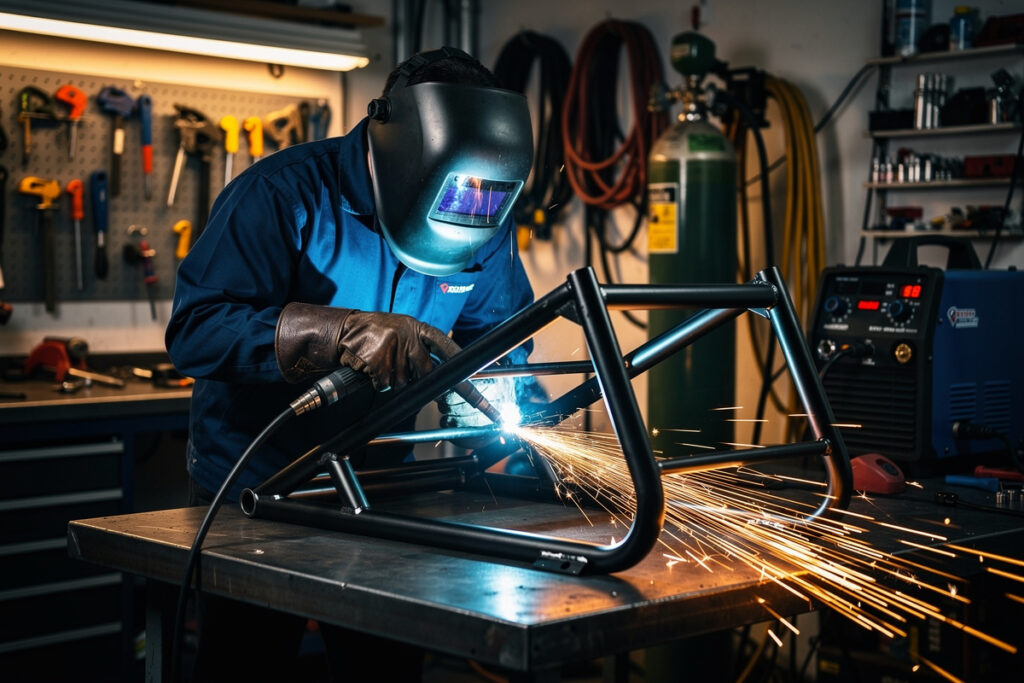
The best welder for auto body and exhaust work is a 110V/120V MIG running thin solid wire under shielding gas. For 0.8–3 mm car steel you want low, finely adjustable heat and clean start-stop control, not raw power, and a small gas MIG delivers exactly that. I run a YesWelder MIG-PRO205DS, and for the kind of thin, rusty, awkward metal cars are made of, that class of machine is the right answer for most people.
This isn’t about the most expensive machine; it’s about the features that actually matter on sheet and tube, and the ones marketing pushes that don’t. Below is what I’d buy for auto repair, why, and the traps that catch beginners spending their first welder budget. As an Amazon Associate I earn from qualifying purchases.
Why MIG Wins for Car Work
MIG wins on car steel because of the trigger. Thin metal needs short, controlled bursts of heat that you can stop instantly, and a MIG gun gives you exactly that—tack, look, move, tack again. Stick and gas are committed once the arc or flame is lit, and they run too hot for 0.8 mm sheet. TIG controls heat beautifully but is slow, costly, and hates the contamination on a 15-year-old panel.
MIG also has the shortest learning curve of any process, which matters when you’re trying to fix a car, not become a welder. Within an afternoon you can lay acceptable tacks on scrap; within a weekend you can patch a panel. That’s why about 90% of home auto repair runs on a small gas MIG, and why I steer every beginner toward one. The wider case is in my car repair welding guide and the complete MIG guide.
110V or 220V for Auto Body?
For pure body and exhaust work, 110V/120V is plenty. Car sheet is thin, and a 110V MIG comfortably handles up to about 3 mm, which covers body panels, exhaust, brackets, and most floor work. The advantage is that it plugs into any household outlet, so you can weld in a driveway or a friend’s garage without special wiring.
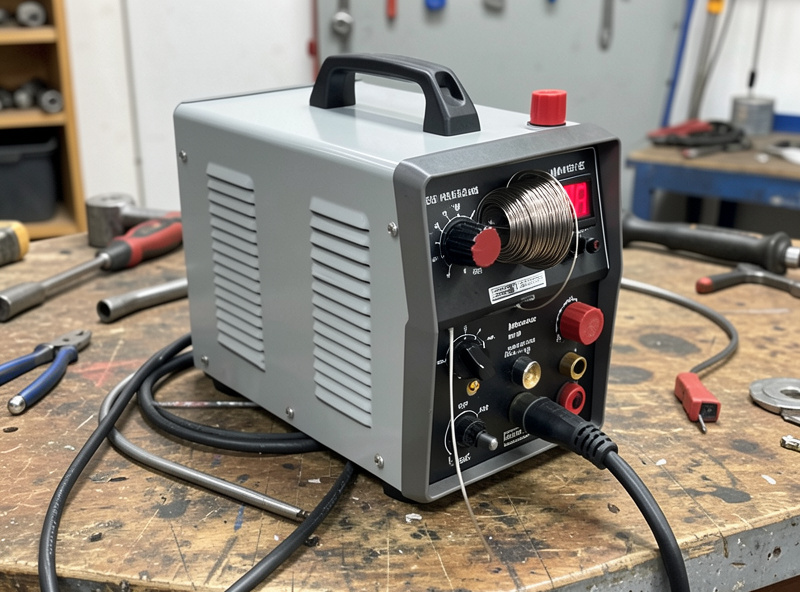
Where 220V earns its place is if you also do heavier fabrication—trailer frames, thick brackets, structural steel past 6 mm. A dual-voltage machine that runs on both is the sweet spot: 110V for car work, 220V on tap for the occasional thick job. My MIG-PRO205DS is that kind of flexible inverter, and the flexibility is genuinely useful, but if your work is strictly car panels and exhaust, don’t pay extra for 220V you won’t use. The 110V buyer guide drills into the budget end.
The Features That Actually Matter
For thin-steel auto work, three features matter more than headline amperage. First, fine low-end heat control—ideally infinite (stepless) voltage rather than four tapped settings, because the difference between “seals” and “blows through” on 0.8 mm steel is often between two clicks. Second, good wire feed—a smooth, consistent feed at low speed, because feed stutter is what ruins thin-metal tacks.
Third, gas capability. A machine that runs solid wire under 75/25 gas gives the soft, low-spatter arc body work needs; gasless-only flux-core machines run hotter and dirtier and are the wrong tool for sheet. Pulse or double-pulse is a nice bonus on long body seams for heat control, but it’s not essential—a steady hand with short-circuit MIG does the job. A spool gun port matters only if you’ll weld aluminum panels. The wire and gas details are in my gas guide and flux-core vs solid wire comparison.
| Machine Type | Best For | Auto Body/Exhaust Fit | Notes |
|---|---|---|---|
| 110V gas MIG | Sheet, exhaust, brackets | Excellent | Plugs into any outlet, ideal first welder |
| Dual-voltage MIG (110/220V) | Body + heavier fab | Excellent | Most flexible; what I run |
| Multi-process (MIG/TIG/Stick) | Doing everything one day | Good | More to learn; verify low-end MIG control |
| Gasless flux-core only | Outdoor/thick, windy | Poor for sheet | Runs hot and dirty, skip for body work |
What I’d Actually Buy
If car repair is your main goal, I’d buy a dual-voltage gas MIG with infinite voltage control and a decent wire feed in the mid-budget range, and spend the rest on consumables and safety gear. The machine matters less than people think once you’re past the bargain-bin tier; what kills thin-metal welds is poor feed and coarse heat steps, so that’s where I’d put the money.
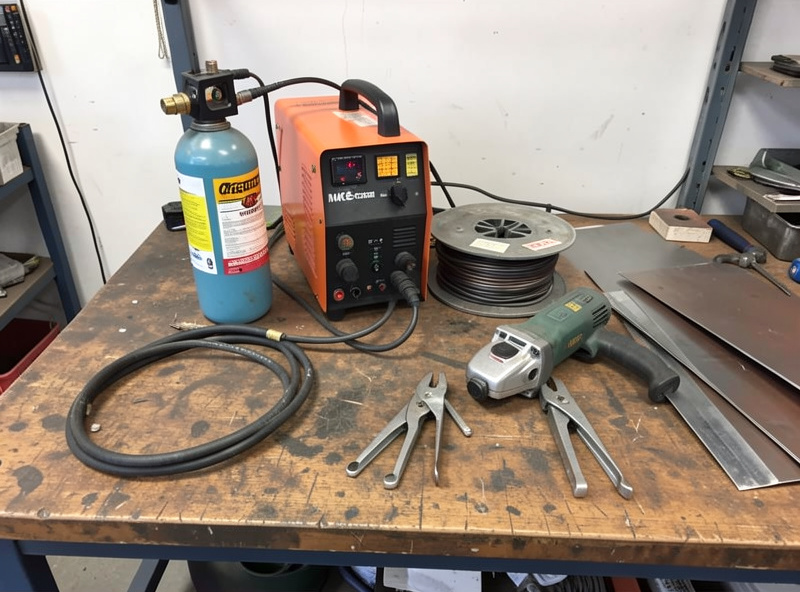
Plan the gas bottle and a 0.6 mm wire spool into the budget from day one—they’re not optional for body work. A starter kit of a dual-voltage gas MIG welder plus a roll of thin solid wire and 75/25 gas is the real entry cost. Browse the broader field at the MIG vs multi-process comparison if you think you’ll want stick and TIG later.
The Gear Around the Welder
The welder is maybe a third of what you need for car work. A good angle grinder does more hours than the welder—cutting, prepping, and dressing welds—so don’t skimp there. Clamping is the other essential: intergrip sheet-metal clamps, sliding clamps, and strong magnets hold panels flush so you can weld at low heat. A copper backing block stops blow-through behind butt joints.
On safety, an auto-darkening helmet with a true-color, grind-mode lens, leather gloves and jacket, and a way to manage fumes are non-negotiable—cars add fuel, undercoat, and galvanizing to the usual hazards. Zinc-coated and galvanized panels in particular give off zinc-oxide fume that causes metal-fume fever, so grind the coating back and ventilate — OSHA’s welding, cutting and brazing page spells out why fume control on a car is not optional. A basic set of intergrip and sheet-metal welding clamps pays for itself on the first panel. Budget the supporting gear alongside the machine; a great welder with no clamps and a bad helmet still produces bad welds.
New, Used, and the Traps to Avoid
A used welder can be a great buy, but check the consumables and feed before the price. Worn drive rolls, a kinked liner, a tired gun, and a leaking gas solenoid are common on a hard-used machine and turn into the exact feed problems that wreck thin-metal welds. None are deal-breakers if you factor in replacing them, but they’re the difference between a bargain and a project. I’d happily run a clean used name-brand MIG over a brand-new no-name one.
The traps on the new side are mostly marketing. Headline amperage is meaningless for body work—you’ll never use the top of the range on car steel, and a machine that boasts 200A but has coarse, tapped low-end settings is worse for sheet than a smaller unit with stepless control. Gasless-only “auto body kits” are another trap; without gas capability they run too hot for clean panel work. And a cheap fixed-shade or slow auto-darkening helmet will cost you in arc-eye and bad starts, so don’t let a tight machine budget push you into bad PPE.
Matching the Machine to Your Real Work
Be honest about what you’ll actually weld. If it’s genuinely just exhaust patches and the odd rust hole, a modest 110V gas MIG is all you need and the money saved goes to gas and clamps. If you see trailer repairs, gates, and thick brackets in your future as well as car panels, the dual-voltage machine is worth it. If you dream of TIG-ing a stainless exhaust someday, a multi-process unit makes sense—just verify its MIG low-end is fine enough for sheet before you buy, because some do everything adequately and nothing brilliantly. The machine should match the work in front of you, not the work you imagine.
Frequently Asked Questions
What is the best welder for auto body work?
A 110V/120V gas MIG welder with infinite voltage control and a good wire feed. It gives the low, finely adjustable heat and clean start-stop control that thin 0.8-3mm car steel needs, with the shortest learning curve of any process.
Is 110V enough to weld car panels and exhaust?
Yes. A 110V MIG comfortably welds up to about 3mm, which covers body panels, exhaust, brackets, and floor work. Step up to a dual-voltage machine only if you also do heavier fabrication past 6mm.
Can you weld auto body with a flux-core welder?
You can in a pinch, but gasless flux-core runs hotter and dirtier than gas MIG, which works against thin sheet. For body and exhaust work a gas MIG with solid wire and 75/25 gas gives far better heat control and a cleaner result.
Do I need a spool gun for auto body work?
Only if you plan to weld aluminum panels. For steel body, exhaust, and bracket work you do not need a spool gun. Prioritize fine low-end heat control and a smooth wire feed instead.
How much should I spend on a welder for car repair?
Past the bargain-bin tier, the machine matters less than the feed quality and heat control. Buy a mid-budget dual-voltage gas MIG and put the rest toward a gas bottle, thin wire, clamps, a grinder, and a proper helmet.

Discussion (0)