
Oxy-acetylene safety comes down to respecting two things you cannot see: a fuel gas that is unstable above 15 psi and a pure-oxygen stream that makes almost anything burn violently. Get the cylinder handling, the flashback protection, the fume control, and the fire watch right, and the torch is a safe tool. Cut a corner on any of them and the failure is fast and serious.
I keep safety guidance strong and specific everywhere on this site, and gas welding is the one place where being vague to avoid sounding preachy would be the wrong move — the hazards are real, named, and well understood, so I will be exact. This is the safety chapter of the oxy-acetylene and gas welding hub. Read it before you light a torch, not after. The wider shop picture — ventilation, PPE, electrical — is in the welding safety guide.
The Oxygen Rule: No Oil, No Grease, Ever
Pure oxygen does not burn, but it makes everything else burn far more violently — and with oil or grease it can ignite on its own. Never let oil, grease, or solvent near the oxygen side of the outfit: not on the regulator threads, not on your gloves, not on a rag near the fittings. Never lubricate an oxygen valve or regulator. And never use oxygen as compressed air to blow off dust, cool yourself, or ventilate — oxygen-enriched clothing can flash into flame from a single spark. This is not a remote risk; oil-contaminated oxygen regulators are a known cause of regulator fires. I keep a dedicated set of clean rags for the oxygen fittings and never let them near the bench oil can — the same clean-hands discipline I keep on my MIG bench carries straight over to the torch. Keep the oxygen side scrupulously clean and treat it as the high-energy half of the rig it is.
Acetylene: Why 15 PSI Is a Hard Ceiling
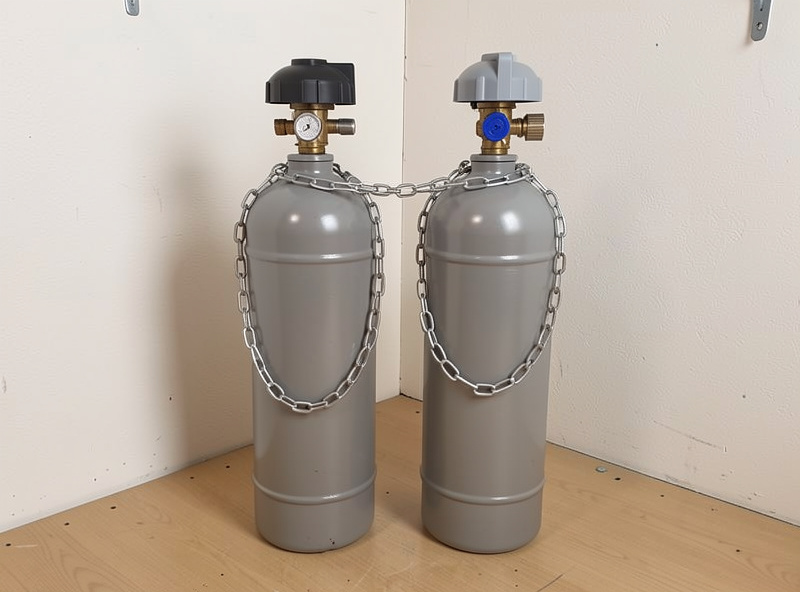
Acetylene is chemically unstable and can decompose — releasing energy without any oxygen present — above roughly 15 psi (about 103 kPa). That is why the acetylene regulator must never be set above 15 psi working pressure for any job, and why the fuel cylinder cannot store the gas as a simple compressed gas. Inside the bottle, acetylene is dissolved in acetone soaked into a porous mass, which keeps it stable. That has handling consequences: keep the cylinder upright in storage and use, because lying it down lets liquid acetone migrate to the valve; if a bottle has been on its side, stand it up for at least 30 minutes before use. And do not draw gas faster than about one-seventh of the cylinder’s capacity per hour, or you pull acetone out with the gas. An acetylene leak smells faintly of garlic — treat any whiff of it as a stop-work, shut-the-bottle, ventilate-now condition.
Cylinder Handling and Storage
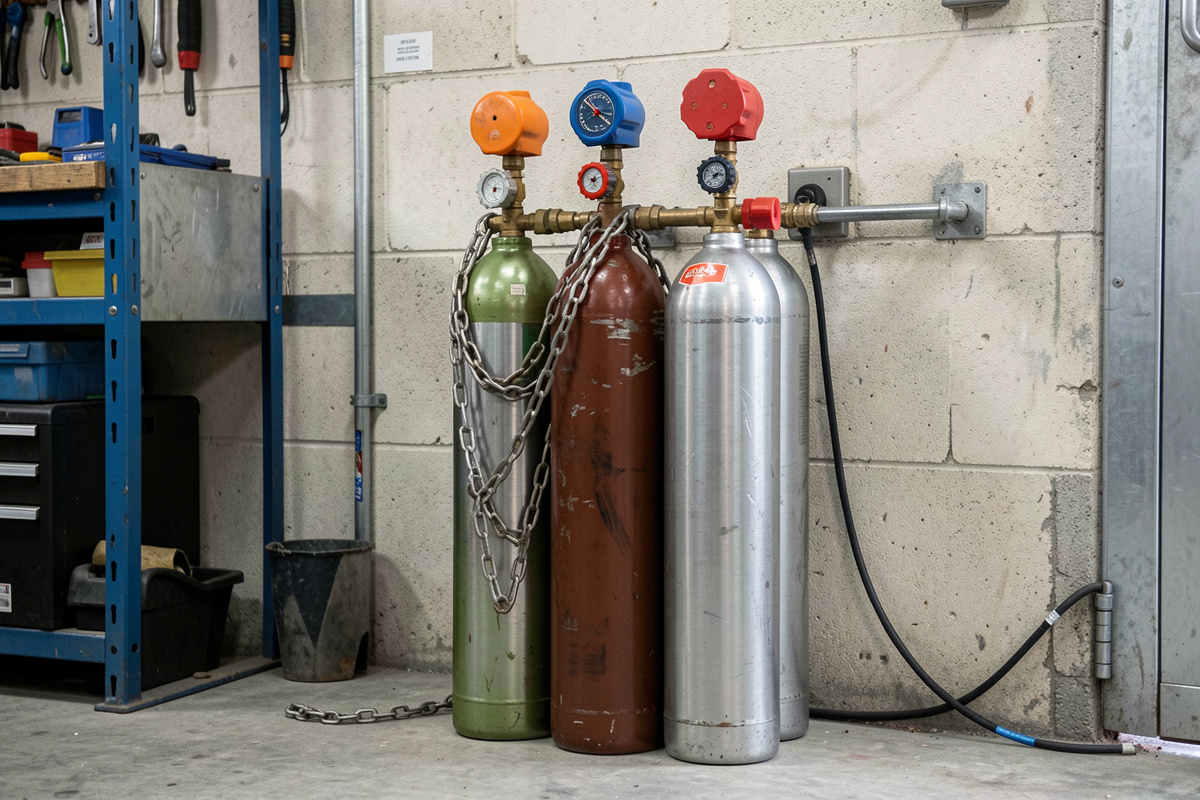
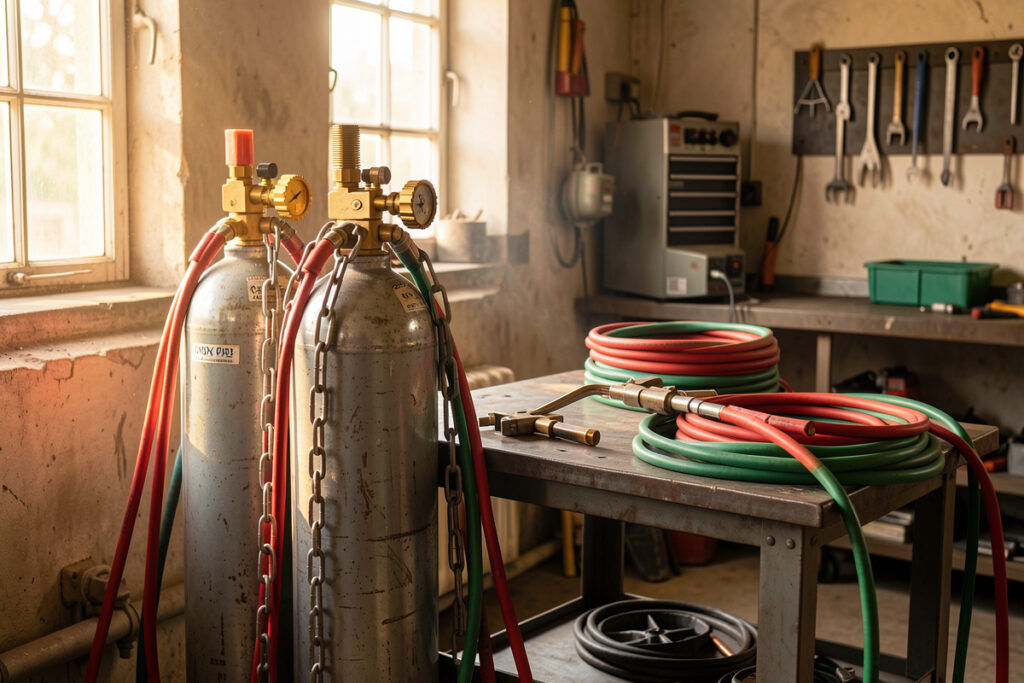
Bottles are heavy, pressurized, and unforgiving, so the handling rules are simple and absolute. Chain or strap every cylinder upright to a wall, cart, or stand — a tipped cylinder with a sheared valve becomes a projectile. Keep the valve protection cap on whenever a bottle is not in use or is being moved, and never lift a cylinder by its valve. Move them on a proper cart, not by dragging. In storage, separate oxygen and fuel cylinders — OSHA 29 CFR 1910.253 calls for keeping them at least 20 feet apart or split by a half-hour fire-rated barrier — and keep them away from heat, sparks, and any electrical circuit that could energize them. Crack each cylinder valve briefly before mounting a regulator to blow out grit, pointed away from people and ignition sources.
Backfire vs Flashback: Know the Difference
These two get confused and they are not the same. A backfire is a momentary pop where the flame goes out or re-lights at the tip — usually caused by touching the tip to the work, an overheated or dirty tip, or pressure set too low. It is startling but minor — the first one that popped on me made me flinch hard enough to nearly drop the torch — so shut down, find the cause (often a clogged tip), and relight. A flashback is the dangerous one: the flame burns backward through the torch and can travel down the hose toward the regulator, where it can rupture a hose or reach a cylinder. You may hear a high-pitched whistle or squeal as it sustains inside the torch.
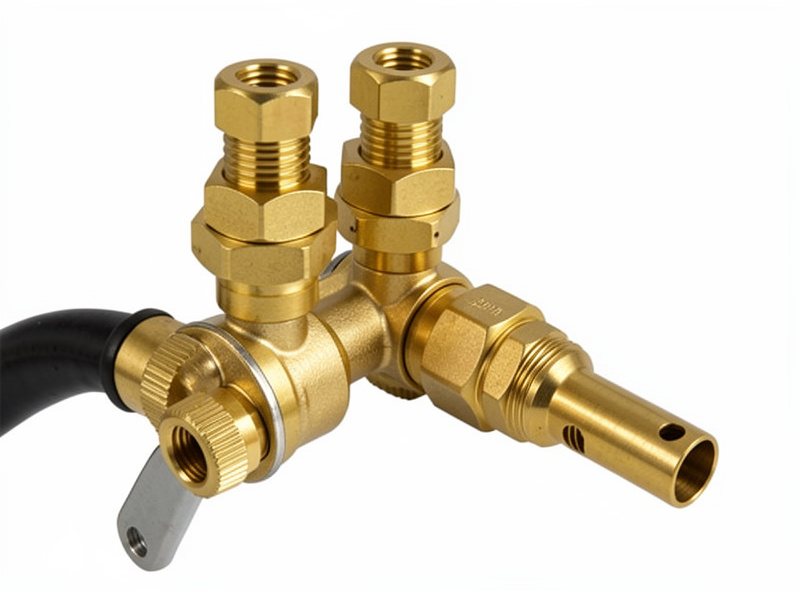
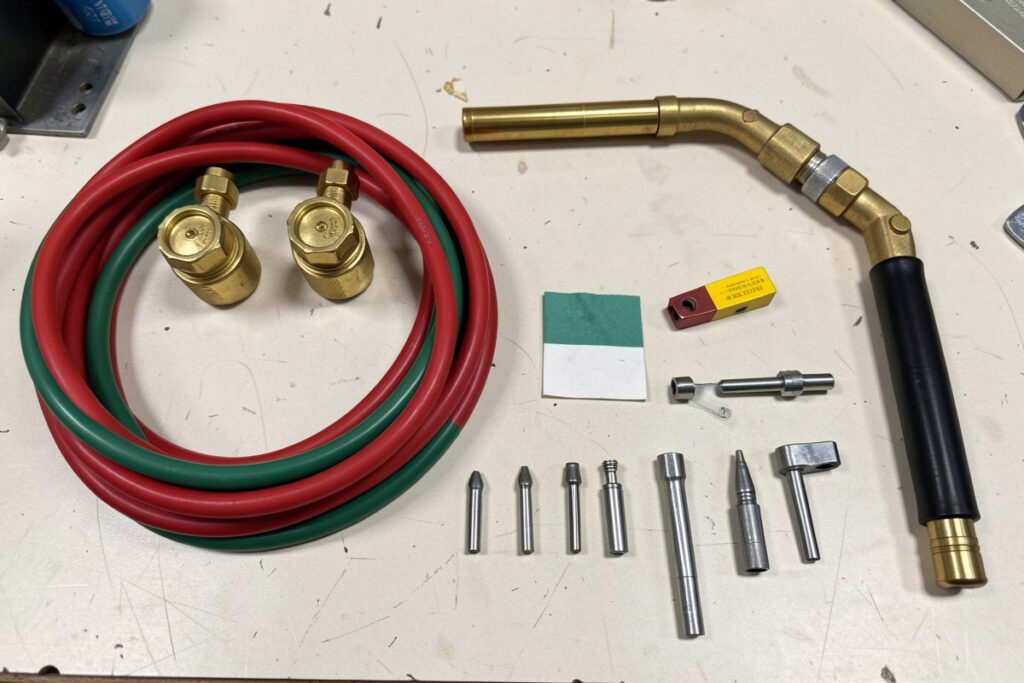
You prevent flashback with hardware and habits. Fit flashback arrestors and reverse-flow check valves at both the regulator and the torch — these are the single most important safety add-on on the whole rig and the one beginners most often skip. I run a set fitted at all four points, regulator and torch on both gases, and I will not light a torch on a rig without them. Set correct pressures, keep tips clean and the correct size, and purge lines individually so you never have mixed gas sitting in a hose. If a flashback does happen, shut off the torch valves immediately to starve the flame — oxygen then fuel — then close both cylinder valves, and let the torch cool fully before inspecting. After any flashback, inspect the hoses and torch for damage before using the outfit again.
Fumes Are Not Harmless
The flame and the metal both put hazards into the air. Brazing brass and bronze throws zinc oxide, which causes metal-fume fever — flu-like chills and fever hours after exposure — exactly the way welding galvanized steel does. Cutting and heating coated, painted, or plated steel releases whatever is in the coating. The defense is the same every time: grind back coatings where you can, ventilate hard, position yourself out of the rising plume, and pull the fume away at the source with a source-capture extractor rather than trusting a fan to dilute it. In a confined or poorly ventilated space the risks compound — a fuel-gas leak can build to an explosive mix, and you have no easy way to know. Do not run a torch in a closed, unventilated space.
Eye, Skin, and Fire Protection
Gas welding has its own PPE quirk that catches people out: an auto-darkening welding helmet does nothing for a gas flame, because there is no arc to trigger the lens. You wear fixed-shade gas goggles instead — shade 5 for welding and brazing, shade 3 to 6 for cutting depending on thickness, per the filter-shade table in ANSI Z49.1. The flame and hot metal throw infrared and bright light your eyes need shielding from. For skin, wear leather gloves or gauntlets, a flame-resistant jacket or sleeves, and closed leather boots; skip synthetic clothing, which melts, and roll nothing into a cuff that can catch a spark.
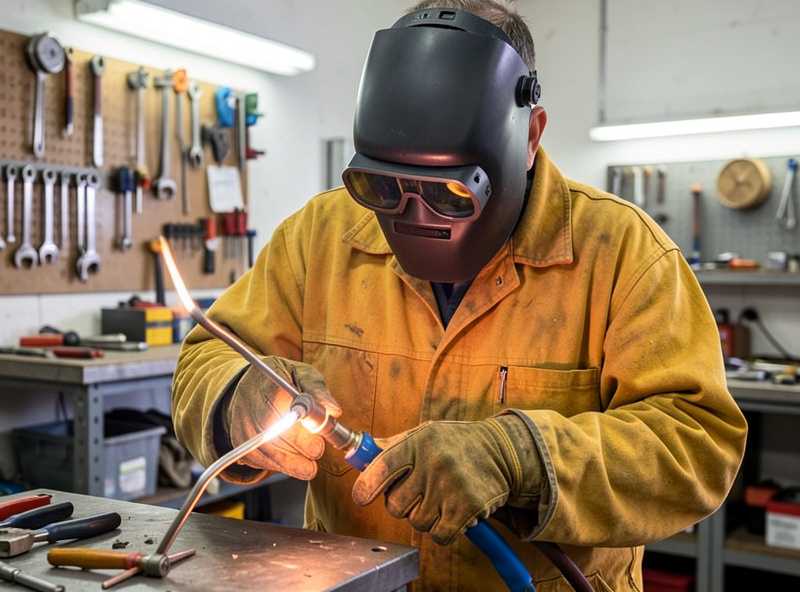
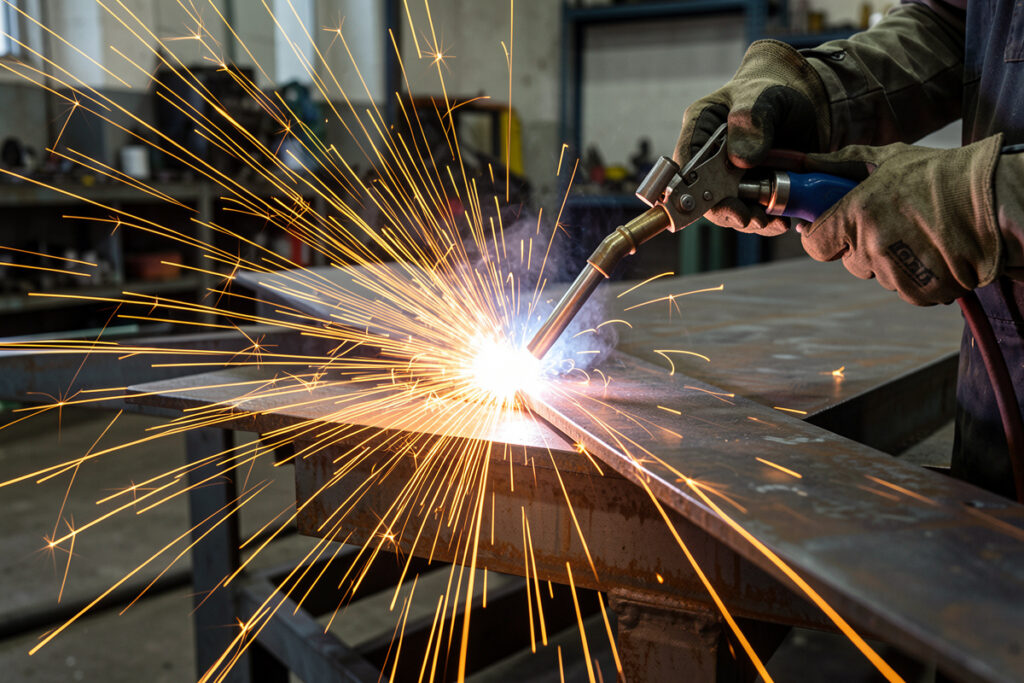
Fire is the hazard the torch shares with all hot work, amplified because cutting sprays burning steel a long way. Clear combustibles from the area — NFPA 51B and OSHA 29 CFR 1910.252 call for a 35-foot clearance around hot work, and where you cannot move something, shield it. Keep a charged fire extinguisher within reach. And post a fire watch that continues after you stop, because slag and sparks can smolder unseen for a long time before flaring up. The full hot-work routine is in the fire safety guide. None of this is excessive; it is the baseline that keeps a torch a tool instead of an incident.
A Safe Shutdown Every Time
How you shut down matters as much as how you light up. With the flame out, close both cylinder valves. Then open each torch valve one at a time to bleed the gas out of the hoses until the gauges read zero, and close them. Finally, back out both regulator adjusting screws so the diaphragms relax. Bled lines mean no pressurized gas sitting in a hose overnight, and backed-off regulators are how you catch a creeping regulator — one whose delivery pressure slowly climbs because the seat is leaking. A creeping regulator is a slow leak you cannot see, and the shutdown routine is what surfaces it. Mike drilled that order into me early — bottles closed, hoses bled, screws backed off — and it is the one sequence I never let myself rush, however tired I am at the end of a session. Setting and testing the regulator properly is covered in the regulator setup guide.
Frequently Asked Questions
Why can’t acetylene be used above 15 psi?
Acetylene becomes chemically unstable above roughly 15 psi (about 103 kPa) and can decompose and release energy even without oxygen present. The acetylene regulator must never be set above 15 psi working pressure for any job, no matter the tip size or the task.
What is the difference between a backfire and a flashback?
A backfire is a momentary pop where the flame goes out or relights at the tip, usually from touching the work or a dirty tip; it is minor. A flashback is when the flame burns back into the torch and can travel down the hose toward the regulator, which is dangerous and why flashback arrestors are essential.
Why must oil and grease be kept away from oxygen?
Pure oxygen reacts violently with hydrocarbons like oil and grease and can ignite them on its own. Never lubricate oxygen fittings, handle them with greasy gloves, or use oxygen as compressed air, because oxygen-enriched material can flash into flame from a single spark.
Do you need flashback arrestors on an oxy-acetylene torch?
Yes. Flashback arrestors and reverse-flow check valves at both the regulator and torch are the single most important safety addition on the outfit. They stop a flame front from traveling back into the hose or regulator, and they are the item beginners most often skip.
Why must acetylene cylinders be kept upright?
Acetylene is dissolved in acetone inside the cylinder, and lying the bottle down lets liquid acetone migrate toward the valve, which then gets drawn into the torch. Always store and use acetylene upright, and if a cylinder has been on its side, stand it up for at least 30 minutes before use.
Can a normal welding helmet be used for gas welding?
No. An auto-darkening welding helmet reacts to the bright electric arc, and a gas flame has no arc to trigger it, so the lens never darkens. Gas welding and brazing require fixed-shade gas goggles, usually shade 5, with shade 3 to 6 for cutting depending on thickness.

Discussion (0)