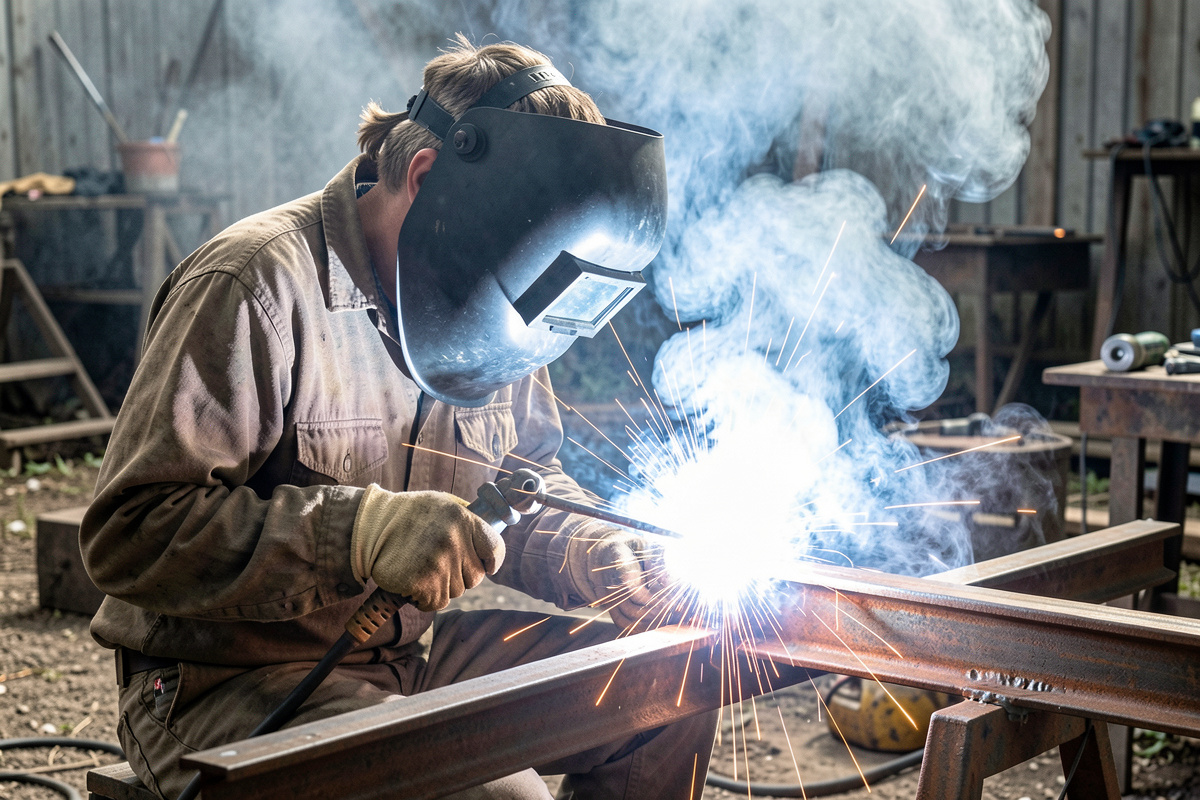

Stick welding is the process I reach for when the job is dirty, outdoors, or windy — the conditions that send MIG and TIG running. It’s forgiving of bad metal and it doesn’t care about a breeze, which is exactly why I keep a stick setup for rusty outdoor repairs. But stick has its own personality, and the problems beginners hit are different from MIG problems: the rod sticks, the arc won’t start, the slag won’t chip, the bead looks like a worm. Almost every one of them traces back to three things — amperage, arc length, and rod condition. Sort those and stick welding suddenly behaves.
This is the troubleshooting list I built from my own restrikes and ruined practice plates, working with 6013 for general work, 7018 once it’s dry, and 6011 for the dirty stuff. I’ll flag where stick gets genuinely deep — pipe roots and coded work — because that’s where my welder friend Mike’s decades in the trade carry more weight than my home bench.

The Rod Keeps Sticking (Freezing to the Work)
This is everyone’s first stick frustration. You touch the rod to the metal and it welds itself solid to the plate. Two causes: amperage too low (not enough heat to establish the arc, so the rod just fuses) and dwelling too long on contact when striking. The fix is to bump the amperage up into the rod’s range and strike like striking a match — a quick scratch or tap and then immediately pull back to a short arc length, don’t press and hold. If it does stick, give it a sharp twist to snap it free; if it won’t break, release it from the holder before it overheats your stinger.
The Arc Won’t Start or Keeps Going Out
Trouble striking and a stuttering arc usually come from a few places. A dirty or rusty work surface means a poor ground connection — clamp the ground to clean bright metal, not over paint or scale. The electrode tip might be coated in slag from the last weld; break it off so you’ve got bare metal to strike with. Amperage too low makes the arc hard to hold. And too long an arc length makes it pop and extinguish. The discipline that fixes most of it is keeping a short, consistent arc — roughly the diameter of the rod — which is the single hardest and most important stick habit to build.
Slag Inclusions and Slag That Won’t Chip
Stick produces slag, and slag is both a feature (it shields the weld) and a hazard (trapped slag is a defect). If you’re getting slag trapped in the bead — inclusions — the usual causes are too long an arc, travelling too slowly so the slag flows ahead of the puddle and gets buried, or welding over slag you didn’t chip from the previous pass. Keep the arc short, keep the slag behind the puddle by maintaining travel speed, and chip and wire-brush every pass on a multi-pass weld.
If the slag is hard to chip off at all, that’s often arc length and heat: too long an arc and too little heat leave the slag stuck tight. A properly run 7018 bead should pop its slag with a light tap, often peeling off on its own as it cools. Slag that’s welded on like concrete is telling you the arc was wrong.
Excessive Spatter
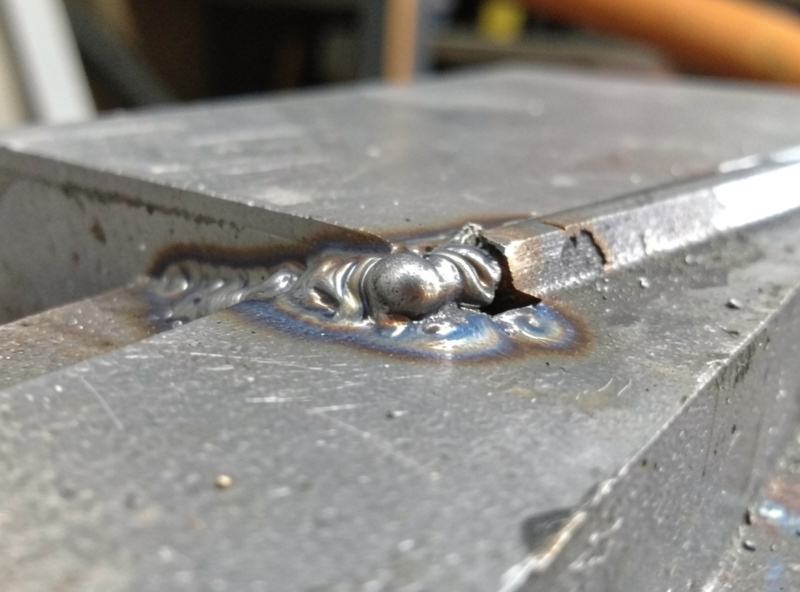
Stick spatters more than MIG by nature, but heavy spatter usually means amperage too high or arc length too long — both throw molten metal everywhere. 6011 and 6010 spatter more than smooth-running 7018, so some of it is rod choice. Drop the amperage into range and tighten the arc and most of the spatter calms down. Damp electrodes also spatter (and porosity-fault) badly, which leads straight to the next problem.
Porosity in Stick Welds
Pinholes in a stick bead come mainly from two sources: damp electrodes and dirty metal. Low-hydrogen rods like 7018 are hygroscopic — they absorb moisture from the air — and a damp 7018 will give you porosity and risk cold cracking. That’s why 7018 belongs in a dry box or rod oven and why I don’t trust a stick that’s been sitting open on a humid shelf. The other source is welding over oil, heavy rust, galvanizing, or paint. 6011 tolerates dirty metal better than most (it’s the dirty-steel rod for a reason), but no rod likes oil or zinc. Grind to clean metal where you can, keep your rods dry, and porosity largely disappears. The full porosity picture across processes is in the welding porosity guide.
Undercut on Stick
Stick undercut — that groove melted into the base metal at the toe — comes from the same things as it does on any process: too much amperage, too long an arc, wrong angle, or too much weave with not enough pause at the edges. On vertical and overhead stick it’s especially easy to undercut because you’re fighting gravity. Drop the heat, shorten the arc, and pause at the toes of a weave. The full breakdown is in the welding undercut guide.
The Bead Looks Wrong (Ropey, Piled Up, or Too Flat)
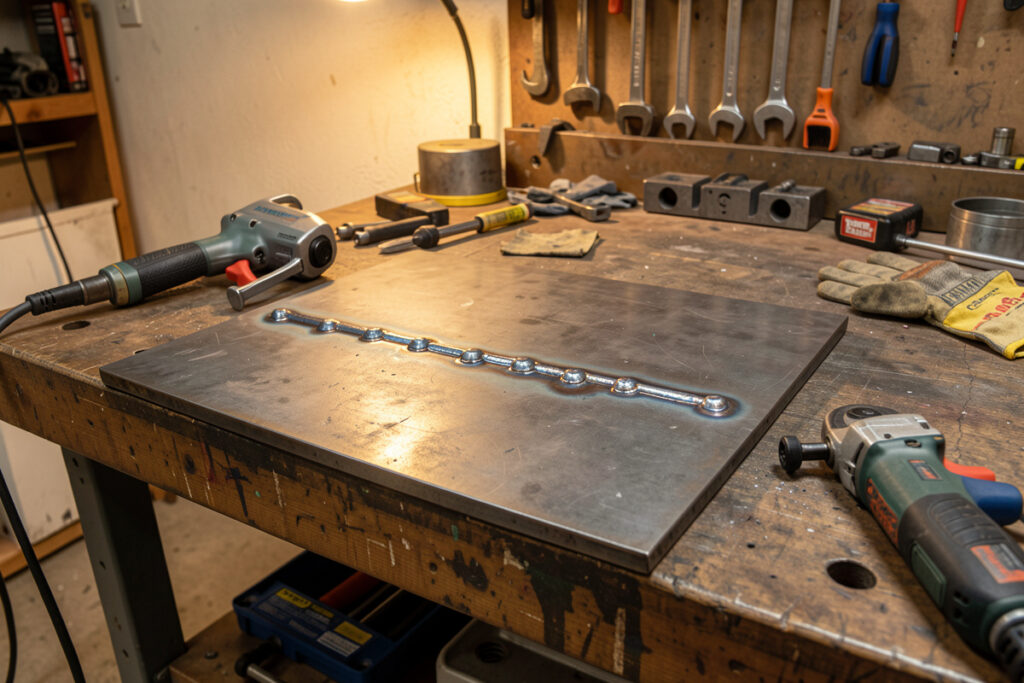
The shape of a stick bead is a readout of your three variables. A tall, ropey, narrow bead that piles up means amperage too low and/or travelling too slowly — the metal isn’t fluid enough to spread. A wide, flat, undercut bead means too hot or too long an arc. A bead that wanders means inconsistent travel speed or arc length. The fix is always to get back to the fundamentals: correct amperage for the rod and thickness, a short consistent arc, steady travel speed, and the right angle (a slight drag angle, around 5–15 degrees, for most flat and horizontal stick work).
When the Problem Is the Wrong Rod
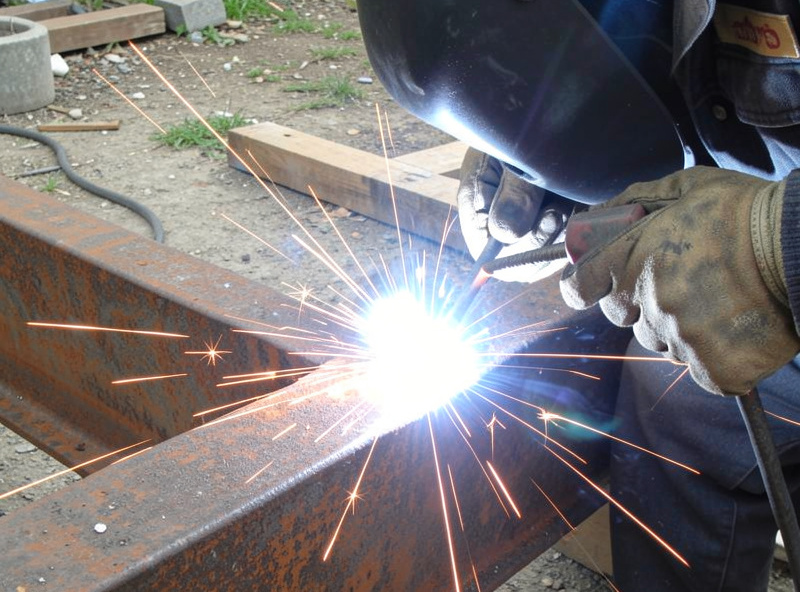
Plenty of “stick won’t work” frustration is really a rod-selection problem — the rod fighting the job rather than bad technique. Each common electrode has a personality, and matching it to the work fixes problems before they start.
6013 is the friendly general-purpose rod: easy to strike, soft arc, light penetration, forgiving for a beginner on clean thin-to-medium steel. If you’re learning, run 6013 first. Its weakness is that the shallow penetration means it’s the wrong choice for thick sections or dirty, gappy joints — force it there and you get lack of fusion. 6011 (and 6010) is the deep-digging, dirty-metal rod: it blasts through rust, paint, and oil with an aggressive arc, runs on cheap AC machines, and is what I grab for outdoor repairs on questionable steel. The trade-off is heavy spatter and a rough bead, so it’s not for pretty work. 7018 is the strong, smooth low-hydrogen rod for structural and important welds — gorgeous beads, easy slag, high strength — but it demands clean metal and bone-dry storage, and it doesn’t tolerate a long arc or a dirty joint.
So when a weld is going badly, ask whether the rod even suits the metal in front of you. Trying to lay a clean 7018 bead on rusty outdoor steel is a losing battle; switching to 6011 solves it instantly. Trying to dig a deep root with 6013 on thick plate won’t fuse; 6011 or 7018 will. Half of stick troubleshooting is knowing which rod the job actually wanted.
Quick Diagnosis Table
| Problem | Most Likely Cause | Fix |
|---|---|---|
| Rod sticks/freezes | Amperage too low; dwelling on strike | Raise amps; strike like a match, pull back fast |
| Arc won’t start / pops out | Bad ground; slag-capped tip; long arc | Ground to clean metal; break tip; keep arc short |
| Trapped slag / hard slag | Long arc; slow travel; un-chipped passes | Short arc; keep slag behind puddle; chip every pass |
| Heavy spatter | Amps too high; long arc; damp rod | Lower amps; tighten arc; use dry rod |
| Porosity | Damp electrode; dirty metal | Dry-store rod; grind to clean steel |
| Undercut | Too hot; long arc; bad weave | Lower heat; short arc; pause at toes |
| Ropey / piled bead | Amps too low; slow travel | Raise amps; steady consistent travel |
The Three Things That Fix Almost Everything
If you take one thing from this, it’s that stick troubleshooting collapses to three variables. Amperage in the rod and thickness range — too low sticks and piles, too high spatters and undercuts. Arc length kept short and consistent at about the rod diameter — long arc causes more stick problems than any other single error. And rod condition — right rod for the job, kept dry, with a clean tip. Get those three right on a piece of scrap before the real joint (the scrap rack again) and the worm-beads turn into welds.
Where stick gets beyond the home bench is open-root pipe, vertical-down on pipe, and coded procedure work — that’s a real craft with a long learning curve, and it’s Mike’s territory more than mine. For everything a home welder actually does — brackets, repairs, gates, dirty outdoor steel — the fundamentals above cover it. This sits inside the broader welding troubleshooting guide, and if you’re still deciding whether stick is even the right process to learn first, the MIG vs TIG vs stick comparison lays out where each one wins.

Discussion (0)