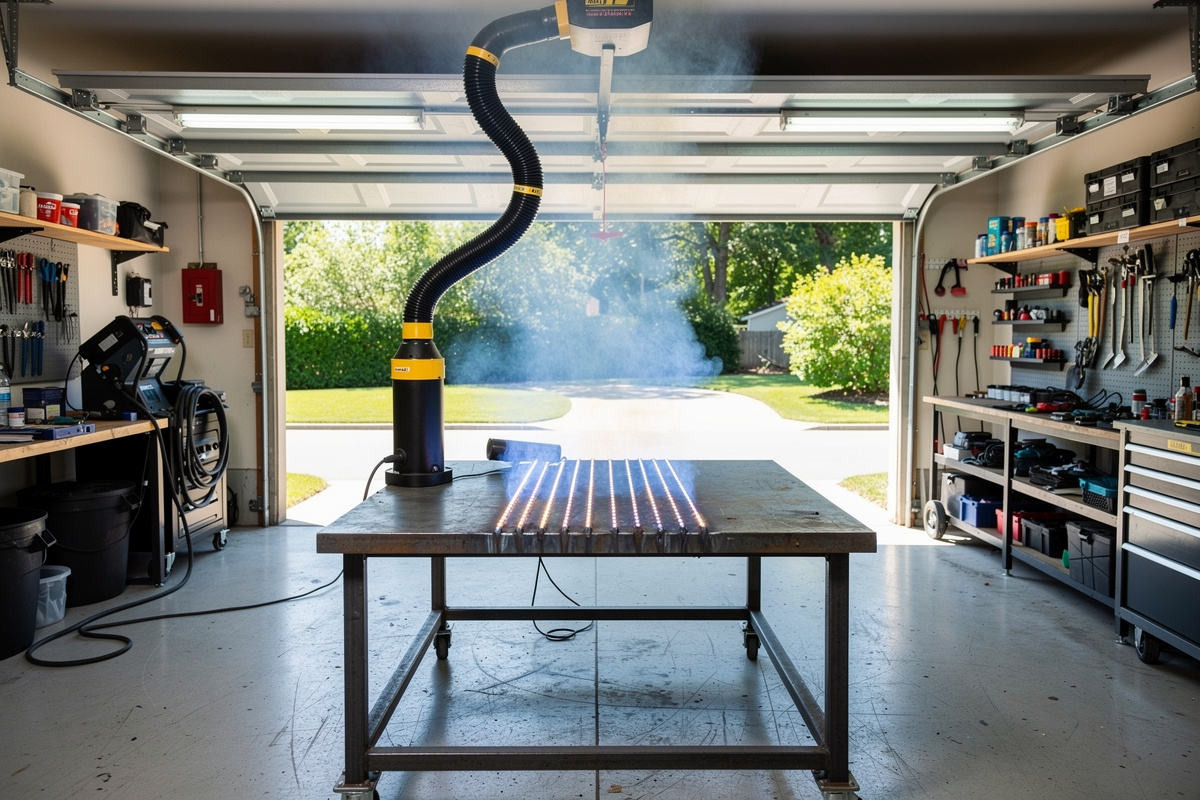

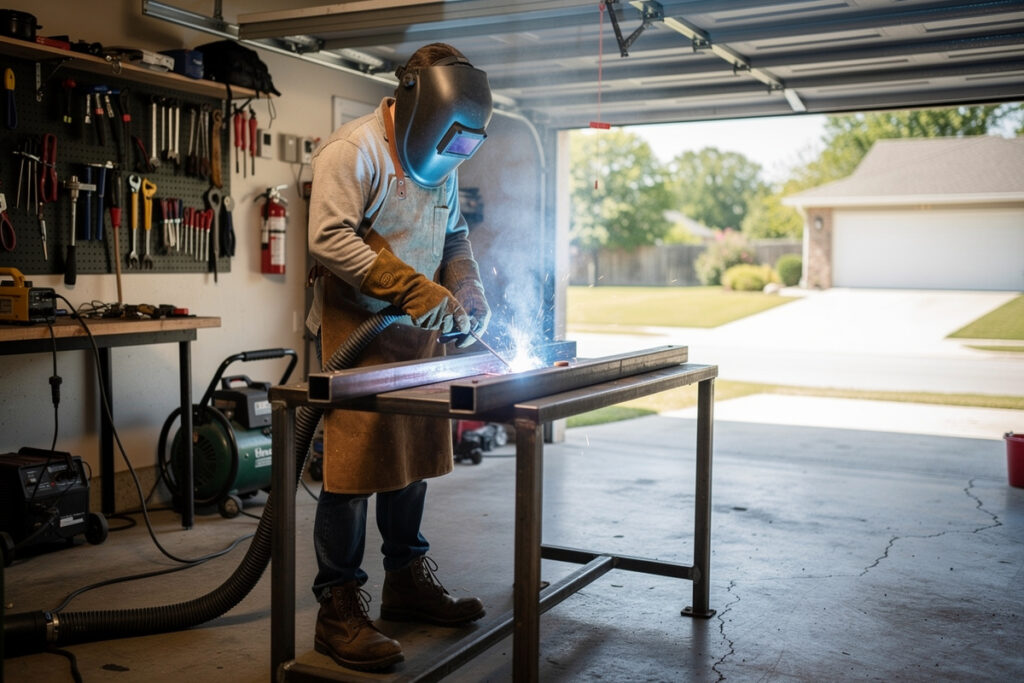
Home garage welding ventilation works best with a local exhaust hood or fume extractor positioned 4-12 inches from the arc — that only takes 150-600 CFM to hit OSHA’s required 100 fpm capture velocity. Skip local capture and rely on a distant wall fan instead, and OSHA’s own general-ventilation standard calls for 2,000 CFM per welder, which is out of reach for most residential setups. That gap is exactly why local extraction near the arc, not a big distant exhaust fan alone, is the realistic home path to OSHA-equivalent protection. Full standard: OSHA 29 CFR 1910.252(c).
I added a 6″ inline fan with a flexible duct positioned 18″ from the work area in year three of welding, after I noticed metal-fume taste and morning sinus inflammation that turned out to be tracking my MIG sessions. The taste went away within a week of running the fume extractor. NIOSH lists manganese (welding rod, MIG wire) and hexavalent chromium (stainless TIG) as confirmed neurotoxins and human carcinogens — the chronic-exposure damage is what 10-year welders with bad ventilation regret. Treat ventilation as the highest-priority shop investment because you cannot recover lung damage. The full safety context is in the welding safety guide.
OSHA rules technically apply to workplaces, not residential garages. But the underlying physics applies everywhere — welding fumes contain manganese, hexavalent chromium, zinc oxide, nitrogen oxides, and ozone, and exposure causes measurable lung and neurological damage over years. Home welders who treat their garage like a regulated shop avoid the chronic-exposure problems that hobbyists 10-20 years in often complain about. What the fumes actually contain — hexavalent chromium from stainless, manganese from MIG wire, zinc oxide from galvanized — and what each one does at hobbyist exposure levels is explained in the welding fume health risks guide.
What OSHA 1910.252 Requires (And What It Means for Home Shops)
OSHA 1910.252 requires sufficient mechanical ventilation that worker exposure to fumes stays below the published Permissible Exposure Limits (PEL) for each metal welded. For carbon steel, that’s OSHA’s dedicated welding-fume PEL of 5 mg/m³ total fume; for stainless, 0.005 mg/m³ for hexavalent chromium; for galvanized, 5 mg/m³ for zinc oxide. The standard gives two compliance paths: a local exhaust hood held 4-12 inches from the arc (150-600 CFM depending on distance, per OSHA’s own table) at a 100 linear-feet-per-minute capture velocity, or general dilution ventilation without local capture at a flat 2,000 CFM per welder — the local-exhaust path is the one that’s actually achievable in a home garage. Translated to home use: a fume extractor or extraction arm at the arc beats a bigger fan farther away, plus cross-ventilation, plus respirator on coated metals.
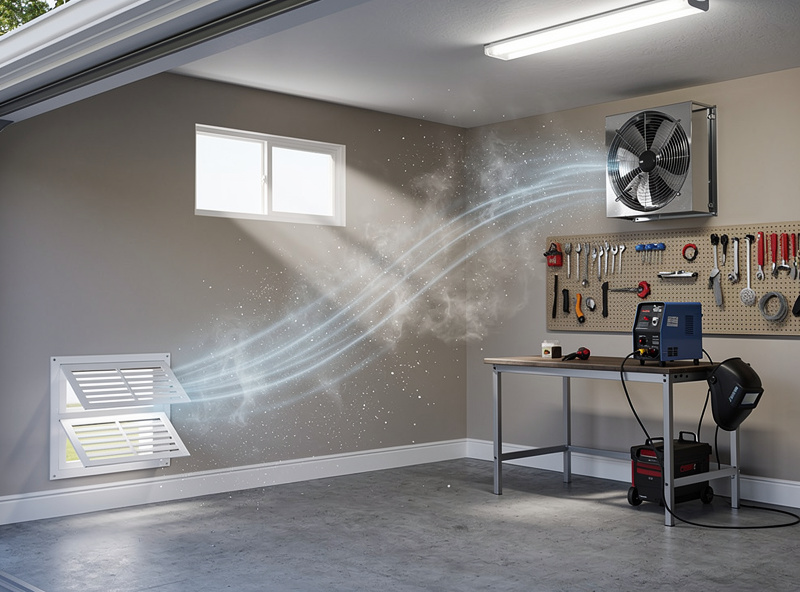
The standard’s home translation:
- Mechanical ventilation: Active air movement, not passive. A garage door open with no fan does not count; even a small box fan makes a measurable difference.
- 200+ CFM as a practical home floor: Roughly one room volume change every 5-10 minutes for a standard 2-car garage — not itself an OSHA-compliant substitute for local exhaust, but a meaningful improvement over no mechanical ventilation at all.
- Local exhaust at arc: OSHA 1910.252(c) requires a hood held close to the arc to hit a 100 fpm capture velocity — the closer the hood, the less CFM it takes (150 CFM at 4-6 inches, up to 600 CFM at 10-12 inches). Extraction that far from the breathing zone genuinely outperforms a distant room fan.
- Cross-ventilation: Fresh air intake on one side, exhaust on the other. A single fan moving air from a closed room is just stirring fumes around.
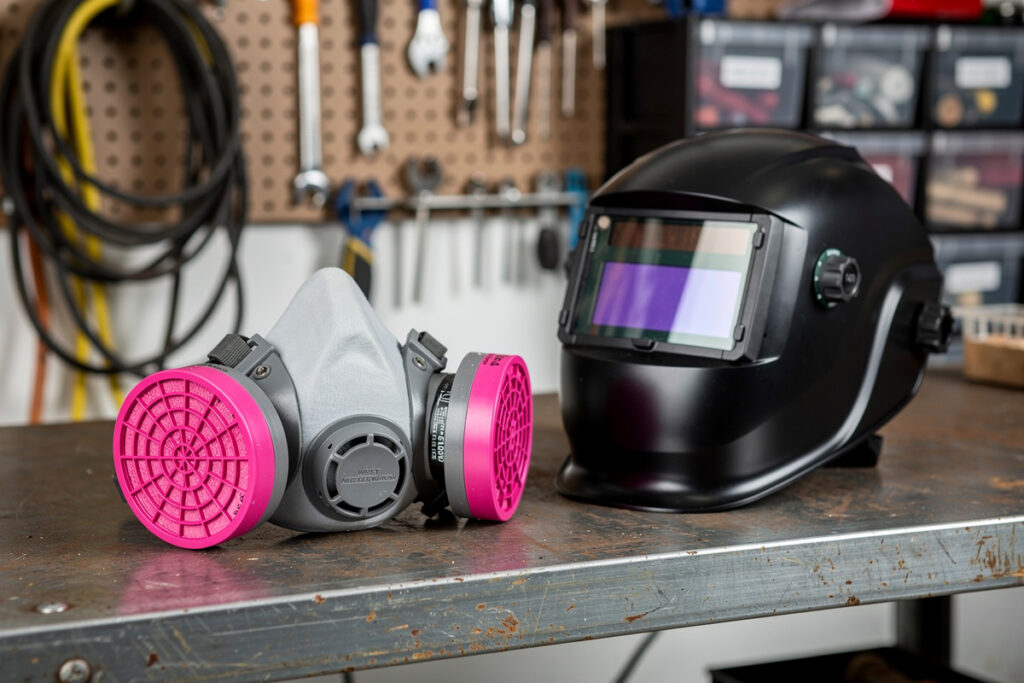
- Respirator for coated metals: P100 minimum for galvanized, painted, or stainless. The respirator is the last line of defense, not the first.
Most home garages fall short on cross-ventilation. The single most common setup is one open garage door and one box fan, which fails because the fan is just stirring the same fume-laden air. A small intake fan on one side plus a stronger exhaust on the other is the minimum effective configuration. Read about specific symptoms of poor ventilation in our guide on welding burns first aid.
Three Tiers of Home Garage Ventilation
Three tiers cover almost every home shop need: passive cross-ventilation (open garage door plus 100-200 CFM fan, $50-150), through-wall exhaust with intake louvers (400-800 CFM fan, $200-500), and dedicated fume extractor with HEPA filtration ($800-2,500). Each tier provides meaningfully more protection than the previous.
Tier-by-tier breakdown:
- Passive cross-vent ($50-150): Open garage door, 20-inch box fan in the open doorway pulling air OUT (not pushing in), and a small intake fan or open window on the opposite side of the garage. Acceptable for clean steel only, under 30 minutes of welding per session, with respirator on.
- Through-wall exhaust ($200-500): Permanent 12-16-inch axial exhaust fan rated 400-800 CFM mounted high on one wall, with intake louvers near the floor on the opposite wall. Acceptable for all common metals; the realistic minimum for serious hobbyists.
- Fume extractor with HEPA ($800-2,500): Local extraction arm positioned within 18 inches of the arc, filtering air through HEPA before recirculation or exhaust. Required for stainless welding indoors; gold standard for any home shop.
- Combined system ($600-1,200): Through-wall exhaust PLUS a portable fume extractor for arc-level capture. Most cost-effective full coverage for a serious hobbyist.
The jump from tier 1 to tier 2 is the most impactful upgrade for the money — moving from a stirred-air box fan to real through-wall exhaust with an intake path meaningfully cuts fume concentration in the breathing zone. Tier 3’s local-arm extraction adds further protection on top, especially on coated metals, but at substantially higher cost. The right answer for most home welders is tier 2 plus a P100 respirator on galvanized or painted work, stepping up to tier 3 for stainless. The comparison of P100, N95, and PAPR across different metals and exposure durations — and which one is worth buying first — is covered in the welding respirator guide.
Ventilation Equipment That Actually Works
Three pieces of ventilation equipment deliver the most value: a 12-24-inch through-wall exhaust fan ($190-440, 900-3,000 CFM), a dedicated portable fume extractor with local capture (from suitcase-style units around $2,500 up to arm-mounted commercial units well past that), or as a budget substitute, a HEPA shop-vac with a flexible hose and a cone nozzle held near the arc ($800-900 for the vac). Each one captures fumes before they enter your breathing zone. For a full comparison of extractor types — arm-mounted, portable, and inline — with CFM benchmarks and brand picks, see the welding fume extractor guide.
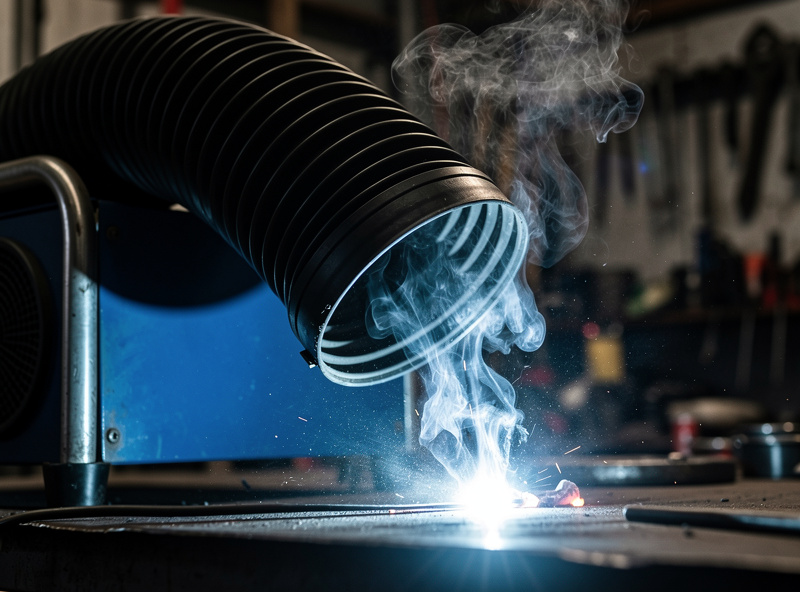
Specific equipment recommendations:
- Cool Attic CX24-series (roughly 280-440 dollars): 24-inch direct-drive whole-house-style axial fan, 2,090-2,985 CFM depending on speed. Mounts in a standard 24-inch wall or ceiling opening. Largest practical residential exhaust capacity on this list, but it’s a general room-volume mover, not local capture — pair it with cross-ventilation, not as a substitute for extraction at the arc.
- Maxx Air HVHF 12-series (roughly 190-250 dollars): 12-inch portable cylinder fan rated around 900-2,000 CFM depending on model, run through a wall opening or window with its hose. Smaller footprint, easier residential setup than the 24-inch unit.
- Lincoln Statiflex 200M (roughly 3,200 dollars and up): Commercial-grade portable fume extractor with articulating arm, 735 CFM. Plug-and-play, no permanent installation required — but priced well past most hobby budgets; this is the gold-standard pick if the budget stretches that far, not the realistic default.
- Suitcase-style portable extractor, e.g. Fume Dog Fume Pup (roughly 2,500 dollars): 350 CFM local-capture unit built for light-duty hobby and soldering-adjacent work, not rated for production welding. A step down in cost and capacity from the arm-mounted commercial units.
- HEPA shop-vac with flexible hose and cone nozzle (roughly 800-900 dollars for a shop-grade HEPA vac like the Festool CT 26, plus a generic flexible hose and nozzle): The realistic budget path to local capture — hold the nozzle within a few inches of the arc. Quieter than dedicated extractors, but it’s a repurposed shop-vac, not a purpose-built welding extractor, so filter life and duty cycle are worse under sustained welding.
- Through-wall louvered intake ($30-80 dollars): Required complement to any exhaust fan. Without intake, the fan creates a vacuum and pulls fumes through the house’s HVAC.
Avoid: residential bathroom or kitchen exhaust fans (CFM ratings too low for welding fume volume), basement window fans without through-wall installation (recirculate fumes back inside), and standalone air purifiers without ducted exhaust (they filter recirculated air but do not remove it from the breathing zone).
Specific Metals and Their Ventilation Demands
Different metals release dramatically different fume hazards. Mild steel is comparatively benign with a P95 respirator. Galvanized steel releases zinc oxide that causes “metal fume fever,” with symptoms typically starting 4-10 hours after exposure and peaking around 18 hours (NCBI StatPearls). Stainless steel produces hexavalent chromium, a known carcinogen. Each metal requires specific protection beyond the baseline tier-2 setup.
Per-metal ventilation requirements:
- Mild steel (uncoated, clean): Tier 2 ventilation plus N95 respirator. Lowest fume hazard category.
- Mild steel with mill scale or rust: Tier 2 ventilation plus P95. Mill scale fumes are denser and require active capture.
- Galvanized steel (zinc coated): Tier 3 ventilation plus P100 respirator. Zinc oxide causes metal fume fever within hours of exposure; chronic exposure causes lung damage.
- Stainless steel (304, 316, etc.): Tier 3 ventilation plus PAPR (powered air respirator). Hexavalent chromium PEL is 0.005 mg/m³ — far below most home shop background levels without active extraction.
- Aluminum: Tier 2 ventilation plus P100. Aluminum fume hazards are lower than chromium but ozone production at the arc is higher.
- Painted or oily steel: Tier 3 ventilation plus PAPR; pre-clean the metal before welding to remove paint or oil that pyrolyzes into toxic compounds.
- Cadmium-plated, lead-soldered, or brazed metals: Do not weld at home. Cadmium and lead fumes require commercial-grade ventilation.
The respirator-cartridge timing matters too. P100 cartridges last 8-40 hours of welding depending on fume concentration; replace at the first sign of breathing resistance or smell breakthrough. PAPR battery life is typically 6-8 hours per charge with HEPA filter changes every 30-60 hours. Read about welding-specific safety equipment in our best welding helmet for home use guide.
Common Ventilation Mistakes That Cause Long-Term Health Issues
Five mistakes cause the chronic exposure problems home welders deal with 10-20 years in: assuming an open garage door is enough, using a recirculating air purifier instead of exhaust, skipping the respirator on “just a few welds” of galvanized, blowing fumes back at the welder with the wrong fan direction, and welding in winter with the garage closed.
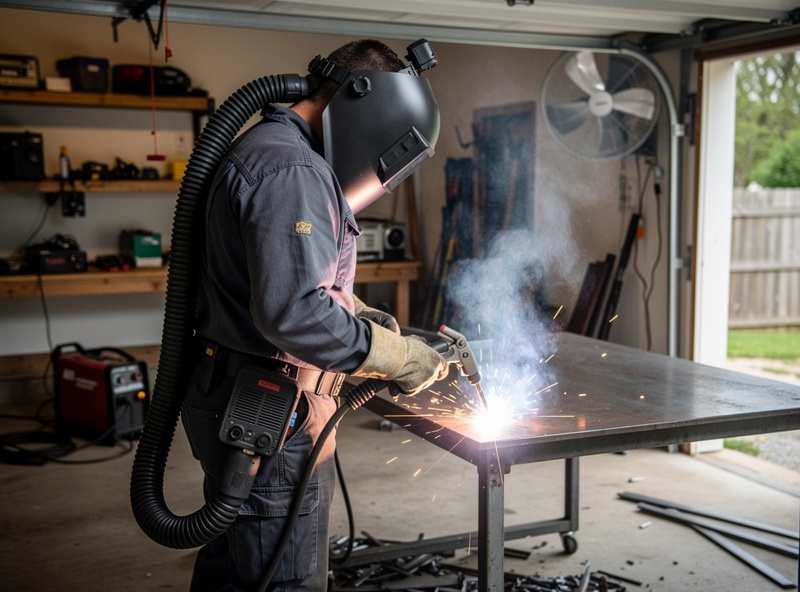
Mistakes to avoid:
- Open garage door alone: Without a powered exhaust, fumes drift around and accumulate. Always combine open door with mechanical air movement.
- Recirculating air purifier: HEPA air purifiers without ducted exhaust filter the air but do not remove fume gas components like ozone or NOx. Required exhaust point.
- Skipping respirator on coated metals: “Just a few welds” of galvanized causes acute fume fever. Even one weld without a P100 is a measurable exposure event.
- Fan blowing toward welder: Some setups use the box fan to “blow fumes away” — actually pushes fumes back across the breathing zone and the arc. Pull fumes AWAY, do not push them toward the welder.
- Closed-garage winter welding: The most common home-welder failure. Cold-weather sessions with closed doors and a small heater accumulate CO and fumes to dangerous levels in 30-60 minutes.
- Skipping intake louvers: Exhaust without intake creates negative pressure in the garage and pulls fumes through any door or wall opening into the house’s HVAC return.
- One-size-fits-all respirator filter: N95 is sufficient for mild steel only. P100 minimum for any coated metal.
The compounding factor is time. A single session of poor ventilation produces no symptoms beyond a mild metallic taste; ten years of poor ventilation produces measurable lung function loss. Treat ventilation as the highest-priority shop investment because you cannot recover lung damage. Read about specific symptom recognition in our welding burns first aid guide.
Frequently Asked Questions
Is my garage ventilation good enough for welding?
Probably not without a fan. The minimum reliable home setup is a 200-400 CFM exhaust fan plus an intake on the opposite wall plus a P95 respirator. An open garage door alone does not provide enough air movement to clear fumes from the breathing zone within safe time frames.
Do I need a fume extractor for home welding?
For mild steel only, no — through-wall exhaust plus respirator covers it. For galvanized, stainless, or painted metals, a fume extractor at the arc is genuinely the difference between safe and unsafe. A HEPA shop-vac with a flexible hose held near the arc covers most home shops on a budget; a suitcase-style unit or an arm-mounted commercial extractor like the Lincoln Statiflex 200M is the step up for heavier use.
Can I weld in a garage with the door closed?
Only with active mechanical exhaust ventilation that exchanges the garage air volume every 5-10 minutes. Closed-garage winter welding is one of the most common causes of acute fume exposure in home shops. If you cannot run exhaust, do not weld with doors closed.
What respirator do I need for home welding?
P95 minimum for clean mild steel, P100 for galvanized or painted steel, PAPR (powered air respirator) for stainless or extended sessions on coated metals. The 3M 7500 series with P100 cartridges is the most-used hobbyist respirator at around 60-90 dollars.
Will an air purifier in my garage protect me from welding fumes?
Partially — HEPA air purifiers capture particulate fumes but do not remove ozone, nitrogen oxides, or carbon monoxide which are also generated by welding. Air purifiers are a supplement to mechanical exhaust ventilation, never a replacement.
How much CFM does my garage exhaust fan need to be?
For a standard 2-car garage (about 4,000-5,000 cubic feet), 400-600 CFM provides one full air change every 5-10 minutes. Larger garages or higher-volume welding push toward 800-1,200 CFM. Below 200 CFM is inadequate for any consistent welding.

Discussion (0)