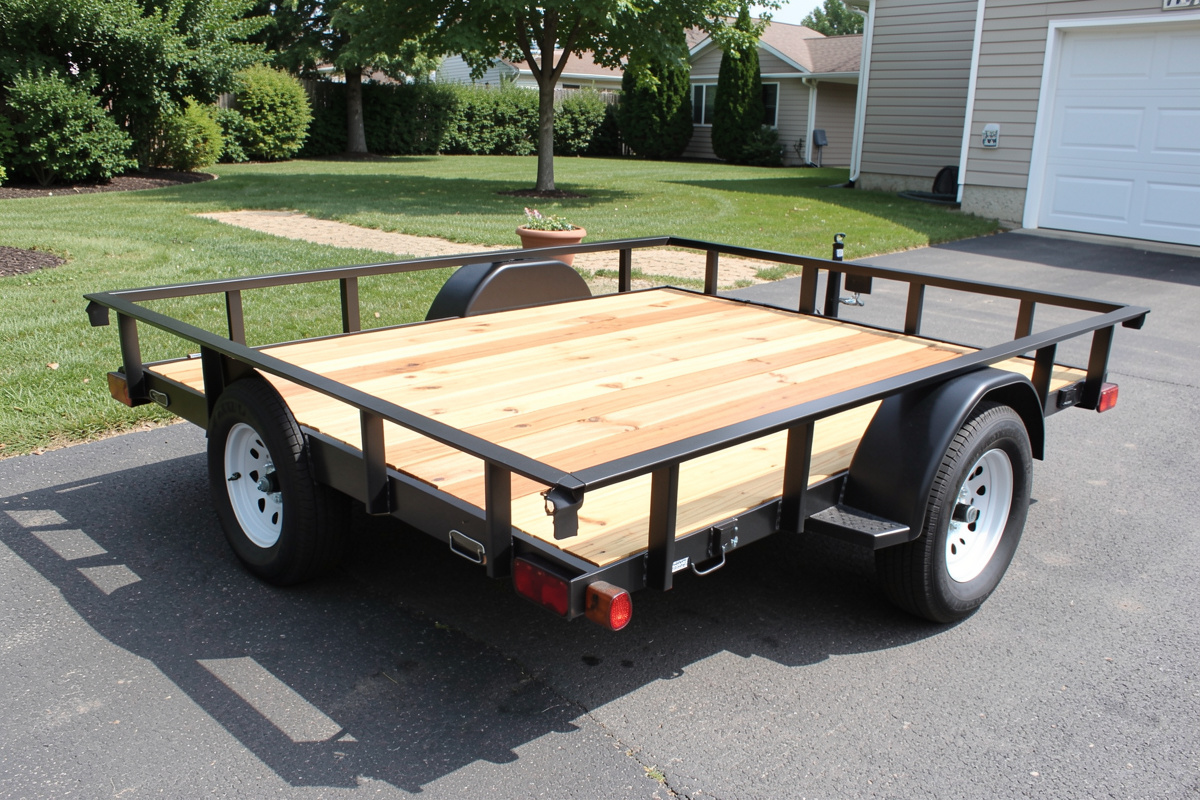

For most home-built utility trailers, bolted pressure-treated wood decking is the practical winner: it is cheaper, lighter (a steel deck can add 200-plus pounds that comes straight out of your payload), easy to replace a damaged board, kinder to what you haul, and it does not warp your frame with welding heat. Welded steel decking earns its place only where you need a hose-off, fireproof, or heavy-abuse surface — a dump trailer, an equipment hauler, or anywhere a wood plank would get chewed up. The deck is the one place on a trailer where “just weld it” is often the wrong answer.
I default to welding almost everything, so it took building a couple of frames to accept that the deck is different. This guide sits under the full trailer build guide and comes after the frame and axle are done — decking goes on last, once the structure is square and proven.
Steel vs Wood Decking, Head to Head
Both work. The right choice depends on what the trailer hauls, how much you care about weight, and whether you would rather replace a board in ten minutes or grind out a rusted-through steel panel in an afternoon. Here is the honest comparison.
| Factor | Bolted wood deck | Welded steel deck |
|---|---|---|
| Cost | Low — treated boards are cheap | Higher — plate or tread steel adds up |
| Weight | Lighter, more payload left | Heavier, eats into GVWR |
| Repair | Unbolt and swap one board | Grind out and reweld a panel |
| Durability | Rots over years, replaceable | Very tough; rusts if bare |
| Frame distortion | None — bolted on cold | Real risk — welding heat warps the frame |
| Best for | General utility, ATVs, lumber, moving | Dump beds, equipment, dirty/hot loads |
Notice the frame-distortion row, because it is the one that surprises people. A wood deck bolts on cold and cannot warp your carefully squared frame. A steel deck is a large area of welding right on top of the frame, and if you weld it solid and continuous, the shrinkage will pull the frame like nothing else on the build.
Doing a Wood Deck Right
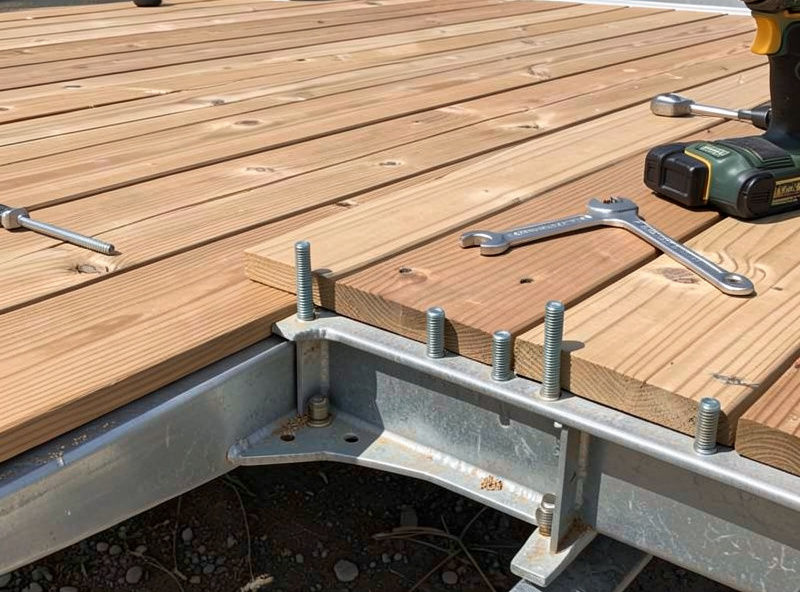
Wood decking is mostly a bolting job, but the trailer side is welding. You weld a lip, an angle-iron perimeter, or cross-angle cleats to the frame that the boards sit on and bolt through. I run treated 2x lumber laid across the crossmembers, drilled and bolted down with carriage bolts through steel, countersunk so nothing snags a load.
Two details matter. First, leave a small gap between boards so water drains and the wood can swell without buckling. Second, use hardware rated for pressure-treated lumber — the treatment chemicals eat cheap zinc fasteners, so hot-dip galvanized (ASTM A153) or stainless bolts last. When you weld the deck framing and cleats to the frame, keep welding away from any wood already in place, and mind that treated lumber near your arc is a fire risk — clear it and keep a fire watch per OSHA 29 CFR 1910.252 and my fire safety guide. This is straightforward fabrication of the type in the metal fabrication guide.
Do all the welding on the deck framing before a single board goes down. Weld the cleats or angle, drill your bolt holes through the steel, then dry-fit the boards and mark them — only then do you cut and bolt. Fresh treated lumber is often wet and heavy from the yard; letting it dry a week before final tightening keeps the bolts from going loose as the wood shrinks. A coat of exterior stain or oil on the boards, especially the end grain, buys you years, and because the deck is bolted you can pull one weathered board and drop in a new one without touching a welder. That serviceability is the quiet reason wood wins on a working trailer: the deck is a wear item, and a wear item you can replace with a wrench beats one you replace with a grinder.
Doing a Steel Deck Right
If you genuinely need steel — a dump trailer, an equipment hauler, a surface that gets abused — the challenge is welding a big sheet down without warping the frame. The answer is stitch welding: short welds spaced out along the crossmembers, not one long continuous bead. Continuous welding a full sheet down is the single fastest way to twist a frame, and stitch welds hold plenty for a deck while putting a fraction of the heat in. Jump around, alternate sides, and let it cool between passes — the same distortion-control thinking as the frame, dialed up because the deck is so much welding.
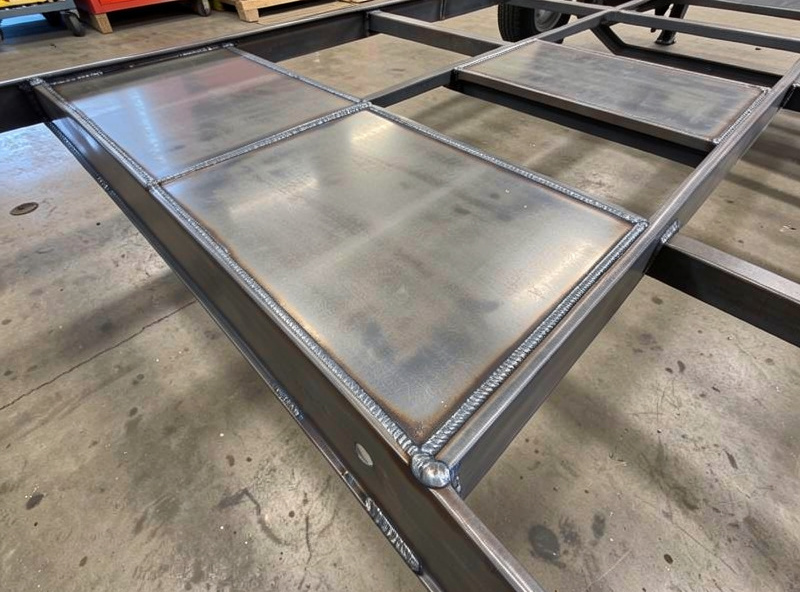
Use tread (diamond) plate for grip, and remember bare steel deck rusts — you will want to paint or coat it, and if there is primer on the steel where you weld, be aware of weld-through primer and porosity. Steel deck is heavier, so budget the weight against your GVWR before you commit — a heavy deck can eat a couple hundred pounds of payload you would rather use for cargo.
A Practical Middle Ground
Plenty of good trailers split the difference: a steel perimeter and steel over the high-wear zones (the ramp area, where a mower or bike rolls on) and treated wood across the main deck. You get the toughness where it takes abuse and the light, cheap, replaceable wood everywhere else. For a general home utility trailer, though, I would start with a bolted wood deck — it is the least weight, the least frame-warping risk, and the easiest thing on the whole build to maintain. Save the steel deck for the trailer that actually needs it. With the deck on, all that is left is fenders, gussets, and stake pockets to finish it.
Frequently Asked Questions
Is a wood or steel trailer deck better?
For most home utility trailers, bolted pressure-treated wood is better: cheaper, lighter, easy to replace a board, and no welding heat to warp the frame. Welded steel decking is better only where you need a fireproof, hose-off, or heavy-abuse surface like a dump or equipment trailer.
Will welding a steel deck warp the trailer frame?
It can, badly, if you weld it solid and continuous. A full steel sheet is a large welding area right on the frame, and the shrinkage pulls it out of square. Use short stitch welds spaced along the crossmembers, jump around, and let it cool between passes to keep the frame flat.
What wood is used for trailer decking?
Pressure-treated 2x lumber is standard because it resists rot and weather. Lay the boards across the crossmembers with a small gap between them for drainage and swelling, and bolt them down with hot-dip galvanized or stainless hardware, since treatment chemicals corrode cheap zinc fasteners.
How do you attach a wood deck to a steel trailer?
Weld a steel angle-iron perimeter or cross cleats to the frame, then bolt the treated boards down through the steel with carriage bolts, countersunk so nothing snags the load. The wood bolts on cold, so it adds no welding heat to the frame you already squared.
Does a steel trailer deck rust?
Yes, bare steel deck rusts, so it needs paint or a coating to last. Use diamond tread plate for grip, and be aware that any weld-through primer on the steel can cause porosity in your welds. Factor the extra weight of a steel deck against your trailer’s GVWR.


Discussion (0)