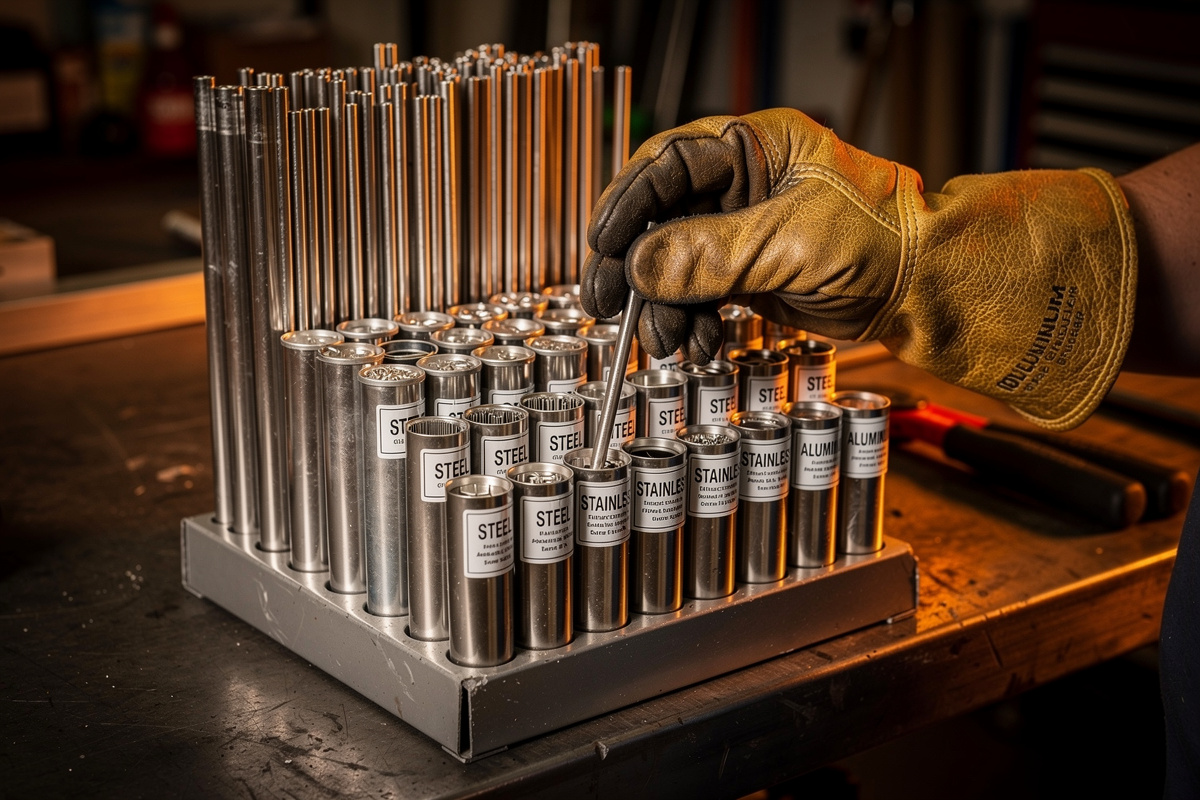

Picking TIG filler is a matching game: the rod has to chemically suit the base metal, not just fit the gap. ER70S-2 for mild steel, 308L for 304 stainless, 4043 or 5356 for aluminum — get the alloy wrong and the joint cracks or rusts no matter how clean your bead looks.
More beginner TIG welds fail from the wrong rod than from bad technique. I learned it the expensive way on a stainless tray welded with mild-steel filler that rusted at every seam in four months. Filler choice is not a detail you eyeball — it follows the base metal by a known set of rules, and once you know them it takes two seconds. This guide is the rod tray I actually keep, what each one is for, and how to size and store them. For the process itself, see the TIG welding guide, and for the full shop-wide picture the welding consumables guide.
How to Match Filler to Base Metal
The core rule: filler must match or complement the base alloy’s composition so the weld has the same strength and corrosion behavior as the parent metal. Mild steel takes a steel rod, stainless takes a matching stainless grade, and aluminum takes an aluminum rod chosen for the alloy family — never mix them.
A weld is a small casting of mixed base metal and filler, so its properties come from that blend. Put mild-steel filler into stainless and you dilute the chromium below the level that resists rust; put the wrong aluminum rod into a high-magnesium alloy and you can seed brittle intermetallic compounds. The matching is not about color or diameter — it is metallurgy. For steel you mostly care about strength and deoxidizers; for stainless about matching the grade and keeping carbon low; for aluminum about whether the part is structural, will be anodized, or runs hot in service. Get those three questions answered before you open a tube of rod.
Steel Filler: ER70S-2 vs ER70S-6
For mild steel TIG, ER70S-2 is the default. It is triple-deoxidized with aluminum, titanium, and zirconium, so it tolerates light mill scale and rust and lays clean, ductile welds. ER70S-6 — the same wire used in MIG — also works but leaves more silica islands under the TIG arc.
ER70S-2 is what lives on my steel side of the tray. Those extra deoxidizers mop up oxygen from any surface contamination you missed, which is exactly what you want on shop steel that is never laboratory-clean. ER70S-6 has higher silicon and manganese and is perfectly strong, but under TIG it tends to float more glassy silica spots onto the bead that you may have to wire-brush off before paint. If you already stock 70S-6 for your MIG, it will get you through steel TIG fine — just expect to clean up after it. Both are 70,000 psi tensile rods suited to the mild and low-carbon steels covered in my steel types guide. Buy 36-inch rods in 1-pound tubes; a tube of 3/32-inch ER70S-2 lasts a hobbyist most of a year.
Stainless Filler: 308L, 316L, and 309L
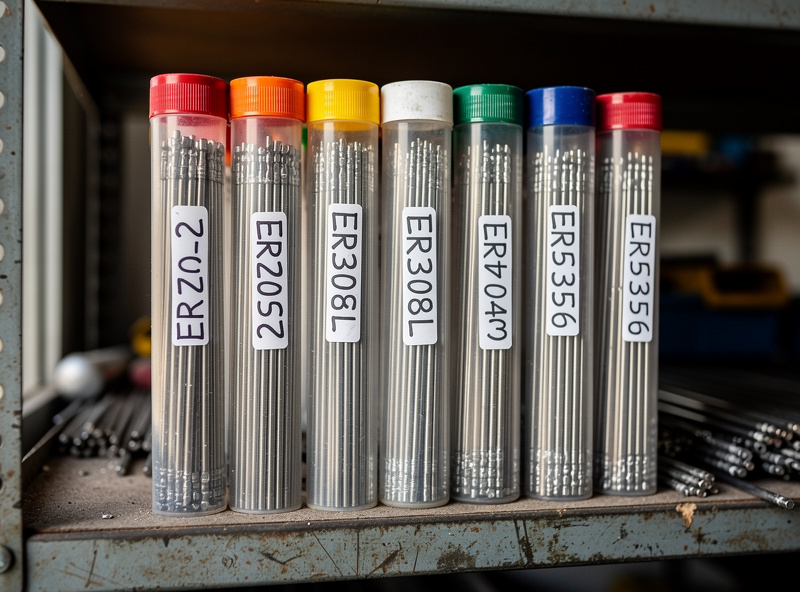
Stainless filler matches the base grade and keeps carbon low. Use ER308L for 304 stainless, ER316L for 316 (the molybdenum grade for marine and chloride exposure), and ER309L when you join stainless to carbon steel. The “L” low-carbon designation protects corrosion resistance near the weld.
The pattern is simple once you see it: 308L is the workhorse for the most common 304, 316L adds molybdenum to fight pitting in salt and chemical environments, and 309L is the bridge rod for dissimilar joints because its higher alloy content survives the dilution from carbon steel. The low carbon matters because, as I cover in the TIG stainless guide, carbon near the weld bonds with chromium and ruins the rust resistance you bought stainless for. I never reach for a non-L rod on anything that will get wet. If you are unsure which base alloy you have, my stainless for welding guide covers identifying 304 versus 316 versus 409.
Aluminum Filler: 4043 vs 5356
The two aluminum rods that cover almost all home work are 4043 and 5356. 4043 is a 5%-silicon rod that flows smoothly and resists cracking — the best general choice for 6061. 5356 is a 5%-magnesium rod that is stronger, matches anodizing color, and is the right pick for 5052 and 5083.
Reach for 4043 on 6061 brackets, enclosures, and anything thin: the silicon lowers the melting point, makes the puddle fluid and forgiving, and reduces the crack sensitivity that 6061’s magnesium-silicide chemistry brings. Reach for 5356 when the part is structural, will be anodized (4043 anodizes to a dull gray, 5356 matches better), or when the base metal is a high-magnesium 5xxx alloy — feeding 4043 into high-Mg aluminum can form brittle compounds over time. 5356 is stiffer to feed and a touch more crack-prone on thin restrained joints, so I default to 4043 unless one of those reasons pushes me to 5356. My aluminum grades guide covers which base alloy you are likely holding, and the TIG aluminum guide covers running it.
| Filler Rod | Base Metal | AWS Spec | Key Trait | Common Dia. |
|---|---|---|---|---|
| ER70S-2 | Mild / low-carbon steel | A5.18 | Triple-deoxidized, scale-tolerant | 1/16, 3/32 in |
| ER70S-6 | Mild steel (clean) | A5.18 | High deox, leaves silica islands | 1/16, 3/32 in |
| ER309L | Stainless to carbon steel | A5.9 | High-alloy bridge for dissimilar | 3/32 in |
| ER308L | 304 stainless | A5.9 | Low carbon, corrosion-stable | 1/16, 3/32 in |
| ER316L | 316 stainless | A5.9 | Molybdenum, marine/chloride | 1/16, 3/32 in |
| ER4043 | 6061 aluminum (general) | A5.10 | 5% silicon, fluid, crack-resistant | 1/16, 3/32 in |
| ER5356 | 5052/5083 aluminum, structural | A5.10 | 5% magnesium, strong, anodizes | 3/32 in |
Disclosure: HomeWelder is reader-supported. As an Amazon Associate I earn from qualifying purchases made through links in this article, at no extra cost to you. I only point to gear I actually use or would buy for my own shop.
Sizing and Storing Filler Rod
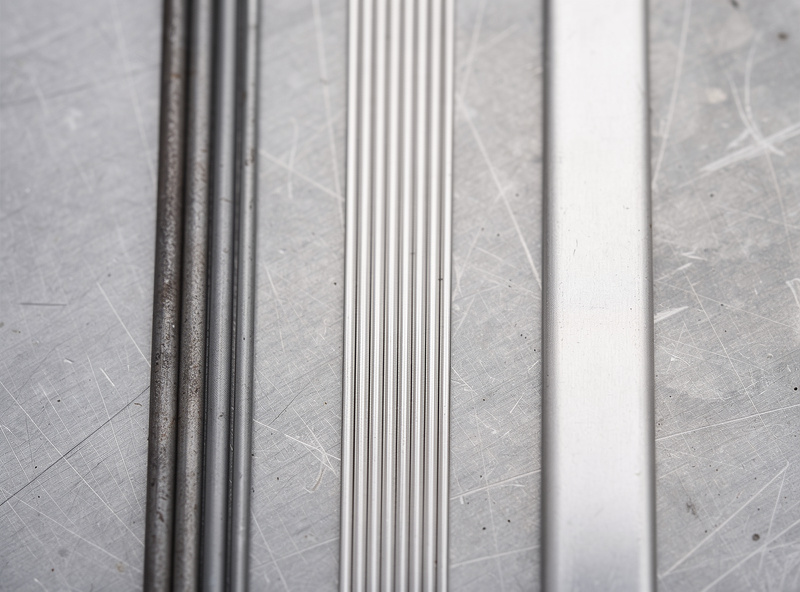
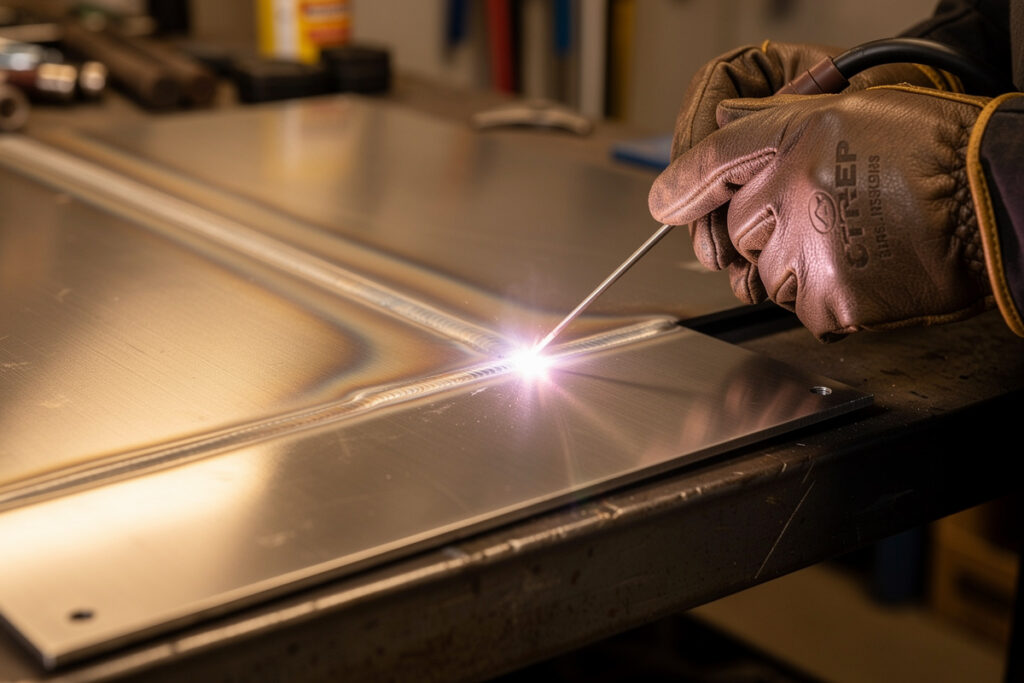
Match filler diameter to material thickness, roughly one rod size per the metal’s gauge. Use 1/16-inch on thin sheet under 1/8-inch and 3/32-inch from 1/8-inch up. Store rod dry and clean — moisture and skin oils on the rod are a leading cause of porosity, especially on aluminum.
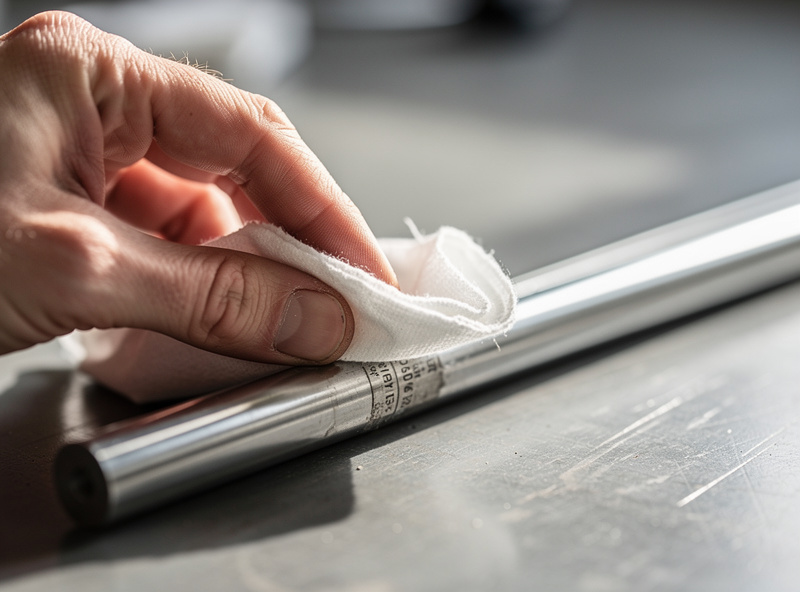
Too-thick filler chills the puddle and forces you to overheat the joint to melt the rod; too-thin filler melts before it reaches the puddle and makes you dab constantly. As a starting point, 1/16-inch covers sheet and thin wall, 3/32-inch covers the 1/8 to 1/4-inch range that most home projects live in. Storage is the part people skip: I keep each rod type in its labeled tube, capped, on a dry shelf, and I wipe aluminum rod with acetone before use because aluminum’s oxide and any fingerprint oil go straight into the weld as porosity. Never leave bare rod loose in a damp garage drawer. If porosity shows up despite clean base metal, contaminated or damp filler is the usual suspect — the troubleshooting guide walks the rest of the causes.
The Three Rods That Cover Most Home TIG
If you build a starter rod tray, three tubes handle the vast majority of home projects: ER70S-2 for steel, ER308L for stainless, and ER4043 for aluminum. Add 5356 and 316L only when a specific job calls for them. Buy quality rod from a known maker — cheap mystery filler is false economy.
I keep ER70S-2 steel TIG rod as my everyday steel filler, ER308L stainless rod for 304 work, and ER4043 aluminum rod for general 6061. That trio in 3/32-inch, plus a tube of 1/16-inch of each for sheet, covers nearly everything a home shop throws at the torch. I label every tube the day it comes in, because an unlabeled aluminum rod and an unlabeled magnesium rod look identical and will cost you a part. Spend the few extra dollars on name-brand filler; the consistency in feed and chemistry is worth it when you are already fighting the learning curve.
Frequently Asked Questions
What is the best all-around TIG filler rod for steel?
ER70S-2 is the best all-around TIG filler for mild steel. It is triple-deoxidized with aluminum, titanium, and zirconium, so it tolerates light mill scale and rust and produces clean, ductile 70,000 psi welds. ER70S-6 also works but leaves more silica islands on the bead under the TIG arc.
Can I use ER70S-6 MIG wire as TIG filler?
Yes, ER70S-6 works as TIG filler on clean mild steel and is convenient if you already stock it for MIG. It has higher silicon and manganese, so it floats more glassy silica islands onto the bead that you may need to wire-brush off. ER70S-2 runs cleaner for dedicated TIG work.
What is the difference between 4043 and 5356 aluminum filler?
4043 is a 5%-silicon rod that flows smoothly and resists cracking, making it the best general choice for 6061. 5356 is a 5%-magnesium rod that is stronger, color-matches when anodized, and is correct for 5052 and 5083 alloys, but is stiffer to feed and more crack-sensitive on thin restrained joints.
What filler rod do I use to weld stainless to mild steel?
Use ER309L filler to join stainless steel to carbon steel. Its higher alloy content survives the dilution from the carbon steel side and keeps the weld crack-resistant. ER308L or 316L would be diluted below their corrosion-resistant composition when mixed with mild steel.
How do I size TIG filler rod to material thickness?
Match filler diameter roughly to material gauge: use 1/16-inch rod on sheet under 1/8-inch and 3/32-inch from 1/8-inch up to 1/4-inch. Too-thick rod chills the puddle and forces overheating; too-thin rod melts before reaching the puddle and makes you dab constantly.
Why does my filler rod cause porosity?
Damp or oily filler rod is a leading cause of porosity, especially on aluminum. Aluminum oxide and fingerprint oils go straight into the weld as gas pores. Store rod dry and capped in labeled tubes, and wipe aluminum rod with acetone right before welding.

Discussion (0)