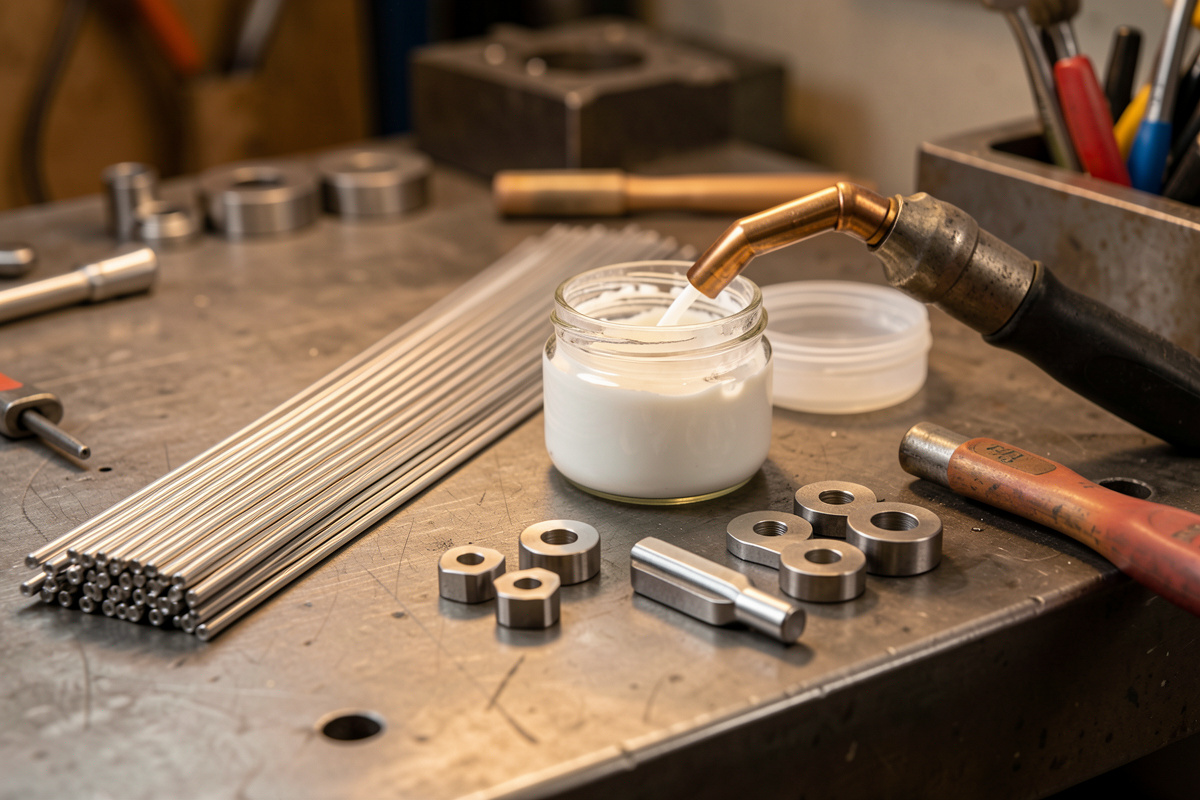

Silver brazing joins metal with a silver-bearing filler that flows around 1145–1400°F — lower than any other braze filler — giving clean, strong, ductile joints on steel, stainless, copper, and brass. For a beginner the formula is simple: cadmium-free silver rod, white flux, a clean tight joint, and enough heat to make the filler flow on contact. Get those four right and silver brazing is the most forgiving way to join dissimilar metals.
Silver brazing is the process I tell beginners to learn first on the torch side of the bench. It flows at a lower temperature than brass brazing, so you are less likely to overheat and wreck the part, and that low heat means almost no distortion on thin work. It is what I reach for on stainless, on dissimilar-metal joints, and on anything precise. This is the start-to-finish beginner method, plus the one safety rule you do not get to skip.
What "Silver Solder" Really Is
Despite the nickname, silver brazing is not soldering. The filler is a silver-bearing alloy (the BAg family) that flows above 840°F, which by definition makes it brazing, not the sub-840°F soldering most people picture. The silver content drives the behaviour: more silver means a lower flow temperature and a more ductile, free-flowing joint — and a higher price, because you are buying silver by weight. A 56% silver alloy flows lower and easier than a 45%, which flows lower than a 30%.
Because silver alloys flow low and wet almost everything, they are the most versatile filler in the shop — they join carbon steel, stainless, copper, brass, and carbide, and they are the right answer for dissimilar-metal joints. The wider filler picture sits in the brazing and soldering guide, and the copper-specific route is in how to braze copper and brass.
| Silver content | Flow temp (approx) | Cost | Best for |
|---|---|---|---|
| 56% (cadmium-free) | 1145–1205°F | Highest | Beginners, precision, thin parts |
| 45% (cadmium-free) | 1250–1370°F | High | General-purpose, steel and brass |
| 30–40% | 1325–1450°F | Moderate | Budget work, larger joints |
The Cadmium Rule You Do Not Skip
Before anything else: use cadmium-free filler, always. Many older silver brazing alloys contained cadmium to lower the flow point, and cadmium fume is acutely toxic — it can cause severe, even fatal lung injury, and it has killed people brazing in poorly ventilated shops (OSHA regulates it under 29 CFR 1910.1027). Modern cadmium-free rod brazes just as well. Never use an unlabeled old stick of silver rod from a yard-sale box assuming it is safe; if you cannot confirm it is cadmium-free, throw it out. Combine cadmium-free rod with real ventilation — fluoride flux fumes are their own respiratory hazard — and the same lungs-first discipline from my welding fume guide carries straight over. This is the one place in brazing where there is no grey area.
Flux: Your Free Thermometer
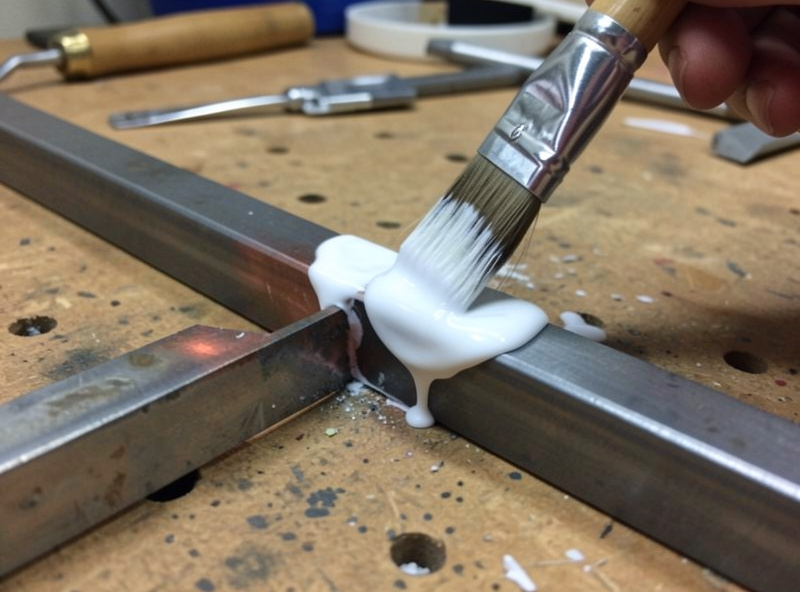
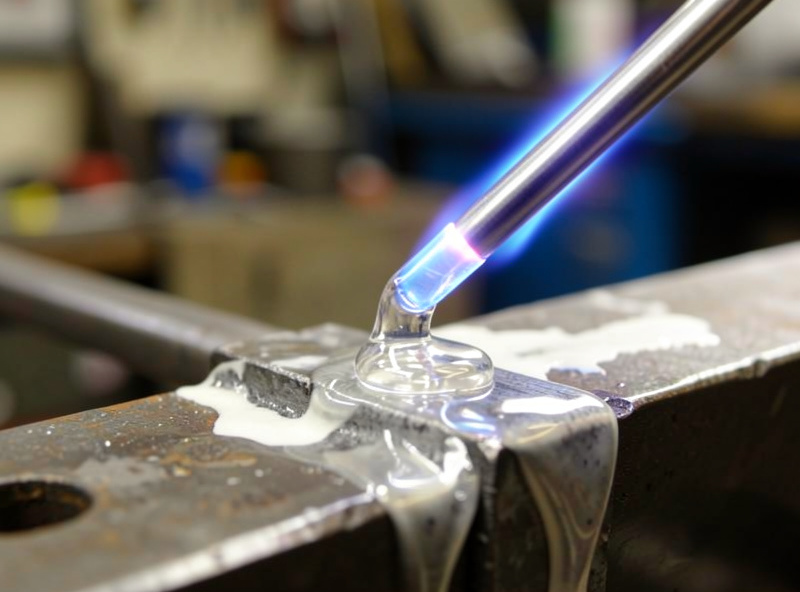
Silver brazing needs white paste flux on almost every joint (the exception being copper-to-copper with phosphorus rod, which is a different filler). The flux dissolves oxide so the filler can wet bare metal, and it doubles as a temperature gauge. Brushed on, it is chalky white. As the joint heats it bubbles and dries, and right at flow temperature it turns clear, glassy, and watery. When the flux goes glassy, the metal is ready for rod — that visual cue is the single most useful thing a beginner can learn.
Coat both mating surfaces thinly and evenly. For longer heating times or higher-temperature alloys, a black high-temp flux holds up better, but white flux covers most beginner work. Wash flux residue off with hot water after the joint cools — silver-braze flux is corrosive and glassy-hard if you leave it on.
Clean, Fit, and Gap the Joint
Silver filler will not wet a dirty surface. Clean both parts to bright metal with a flap disc, abrasive, or a brush — the same prep standard from my angle grinder guide — and keep oily fingers off the cleaned faces. Then mind the gap: capillary brazing wants 0.001 to 0.005 inch, a close slip fit. Design for overlap, not a butt joint, so the filler has area to flow across; the joint types guide applies directly. Fixture the parts so they cannot shift while the filler freezes — I use my Bessey clamps on anything that will not hold itself. A joint that moves mid-freeze cracks the filler and leaks.
The Step-by-Step Braze
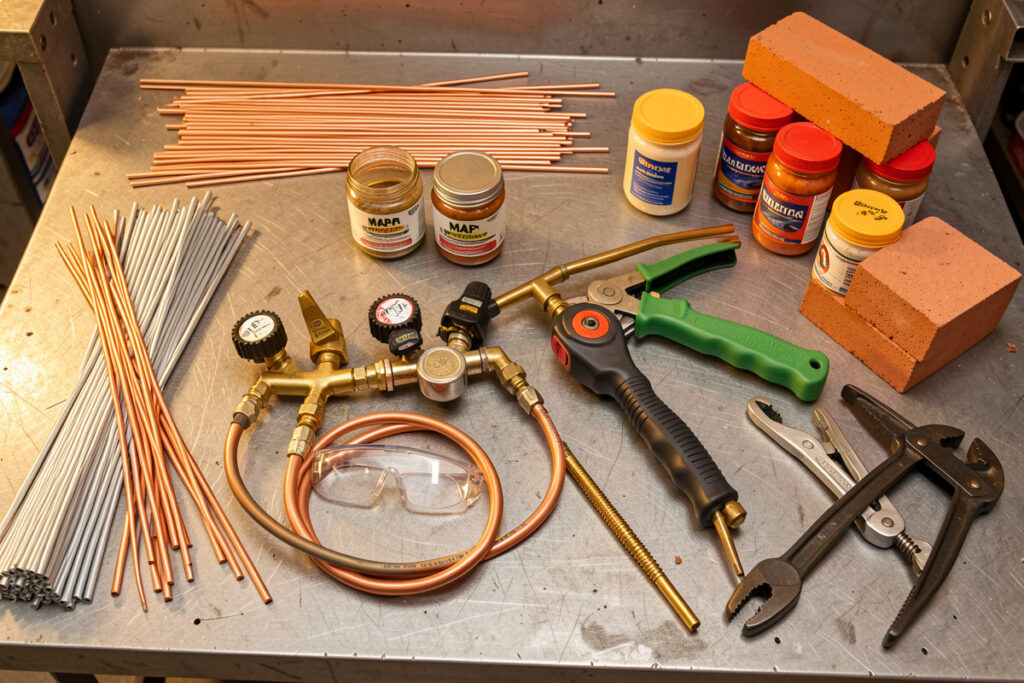
Here is the full sequence I run on a first silver braze. Clean both parts to bright metal. Brush white flux on both mating faces. Assemble with a tight gap and fixture so nothing moves. Light the torch — MAP-Pro is plenty for small joints, oxy-acetylene for anything heavy — and heat the joint evenly, not the rod, playing the flame over both parts so they come up together. Watch the flux: when it turns clear and glassy, the metal is at temperature.
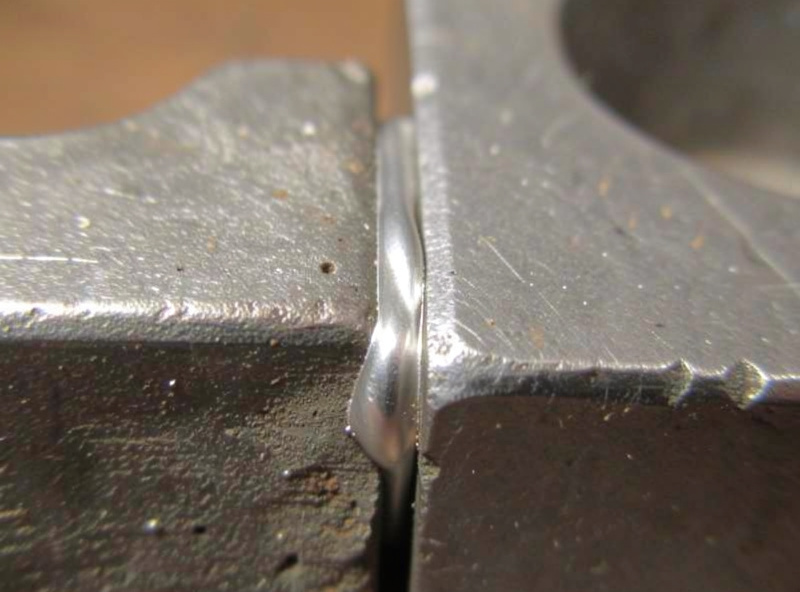
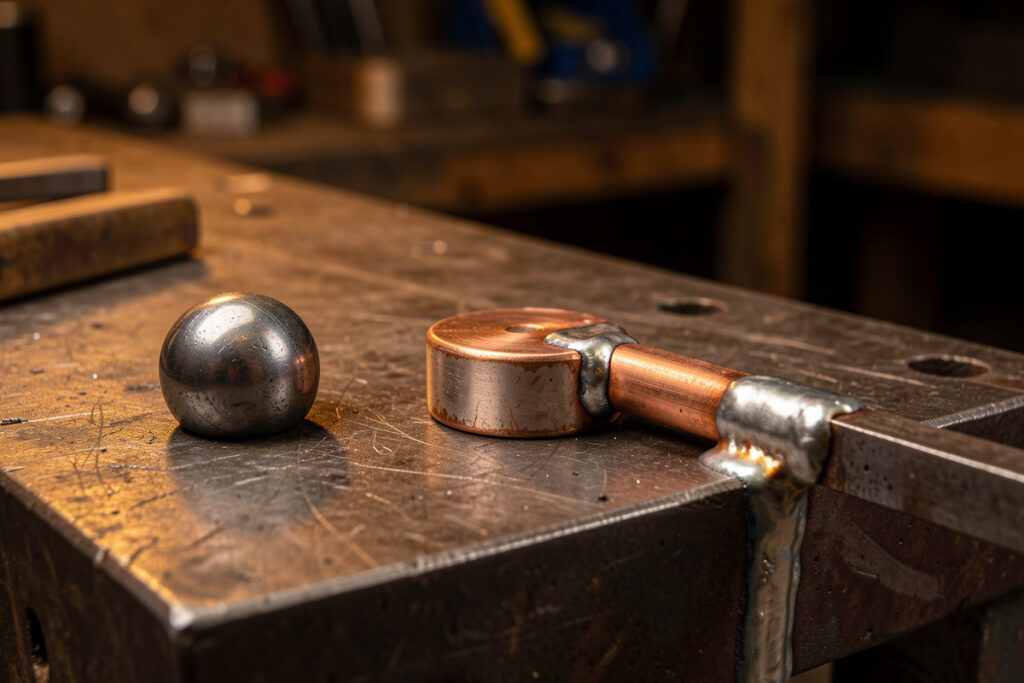
Now touch the silver rod to the joint at a spot away from the flame. If the heat is right, the rod melts on contact with the metal and capillary action draws a thin bright line of filler right through the joint. Feed just enough to fill — a neat fillet, not a blob — then pull the heat the instant it flashes around. Let it cool undisturbed, wash off the flux, and inspect: a good silver braze is a clean, continuous, bright fillet with no gaps or balled-up filler. If the filler balled and rolled off, the surface was dirty or cold; if it is lumpy, you fed too much or melted the rod in the flame.
Why Beginners Should Start Here
Silver brazing is the gentlest entry to the torch. Its low flow temperature gives you a wide working window before you risk overheating the base metal, unlike brass brazing where you are running near zinc-boiling heat. It wets almost any metal, so your first joints succeed instead of frustrating you. And the low heat input means thin parts do not warp, which is exactly why I prefer it over brazing on delicate stainless — far simpler than the backpurge dance of TIG welding stainless. The cost of the silver rod is the only real downside, and on the small joints a beginner practices, a single stick goes a long way. Once silver brazing clicks, the hotter brass and stainless work in the rest of this cluster makes far more sense.
What to Buy
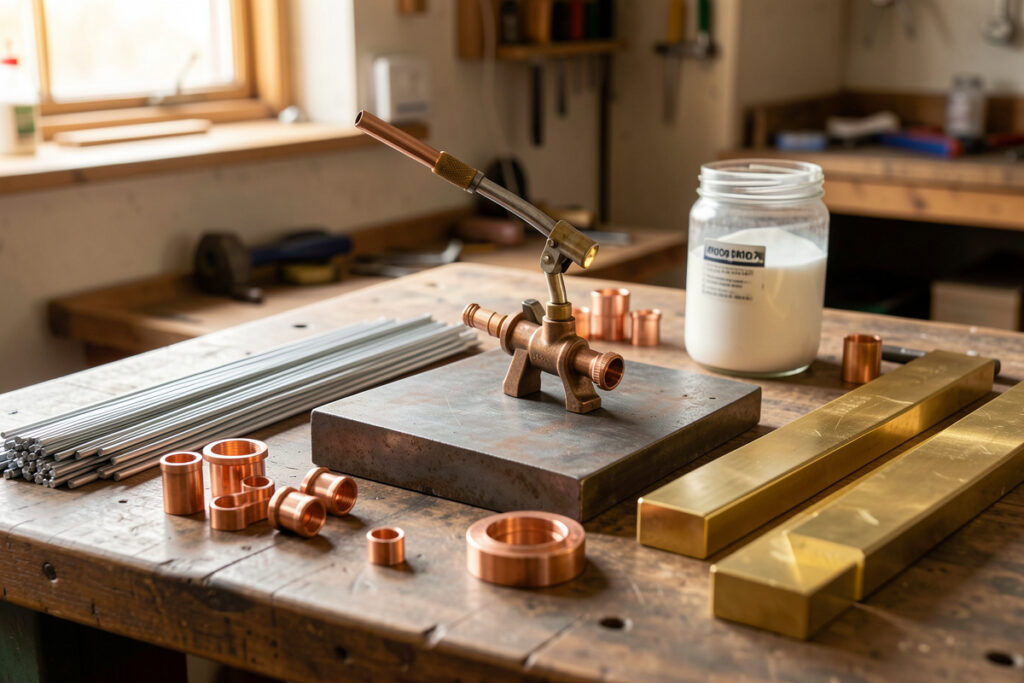
For a beginner kit you need cadmium-free silver rod (a 45% or 56% alloy), white paste flux, and a MAP-Pro torch. As an Amazon Associate I earn from qualifying purchases. A small pack of cadmium-free 45% silver brazing rod and a jar of white brazing flux paste will carry you through dozens of practice joints. Full torch and gear picks are in the brazing tools and equipment guide.
Common Silver Brazing Problems and Fixes
Three faults cover almost every beginner braze that goes wrong. Filler balls up and rolls off — the surface was dirty or not hot enough; stop, clean to bright, re-flux, and bring the joint fully to temperature before touching rod. Filler sits on top and will not flow into the joint — usually a gap that is too loose for capillary action, or you melted the rod in the flame instead of on the hot metal; tighten the fit and heat the joint, not the rod. Flux chars black before the filler flows — you overheated, the flux is spent, and the surface re-oxidizes; cool, clean, re-flux, and heat faster to flow temperature next time.
Reading these failures is the same diagnostic muscle I use on welds in my troubleshooting guide — cold, dirty, or starved tells you exactly what went wrong. Practice on scrap until the flux-clears-then-flow rhythm is automatic, and your real joints will come out clean the first time.
Frequently Asked Questions
Is silver brazing the same as silver soldering?
The names are used interchangeably, but technically it is brazing. Silver brazing fillers flow above 840 degrees F, which by definition is brazing, not soldering. The old hobby term silver solder stuck around, but the alloys are BAg brazing fillers that make far stronger joints than true soft solder.
What temperature does silver brazing flow at?
Roughly 1145 to 1400 degrees F depending on silver content. A 56% silver alloy flows lowest, around 1145 to 1205 F; a 45% alloy a bit higher; lower-silver alloys higher still. You heat the joint until the white flux turns clear and glassy, which signals flow temperature.
Do I need cadmium-free silver brazing rod?
Yes, always. Older silver alloys contained cadmium, whose fume is acutely toxic and has caused fatal lung injury in poorly ventilated shops. Modern cadmium-free rod brazes just as well. Never use unlabeled old silver rod assuming it is safe, and always braze with good ventilation.
Can beginners silver braze without practice?
Silver brazing is the most forgiving torch process to learn, but a few practice joints help. Its low flow temperature gives a wide window before overheating, and the filler wets most metals easily. Practice cleaning, fluxing, and reading the flux on scrap before doing a real joint.
What flux do I use for silver brazing?
A white paste flux based on fluorides and borates, active from about 1100 degrees F. It dissolves oxide and turns clear at flow temperature, acting as a built-in thermometer. For longer heating or higher-temp alloys, a black high-temperature flux holds up better. Wash residue off with hot water after.
How strong is a silver brazed joint?
Strong and ductile. A properly cleaned, fluxed, and gapped silver braze produces a joint strong in shear that is widely used in HVAC, bandsaw blades, and tool tipping. It will not match a full-penetration weld in raw tensile strength, but for dissimilar metals and thin parts it is excellent.

Discussion (0)