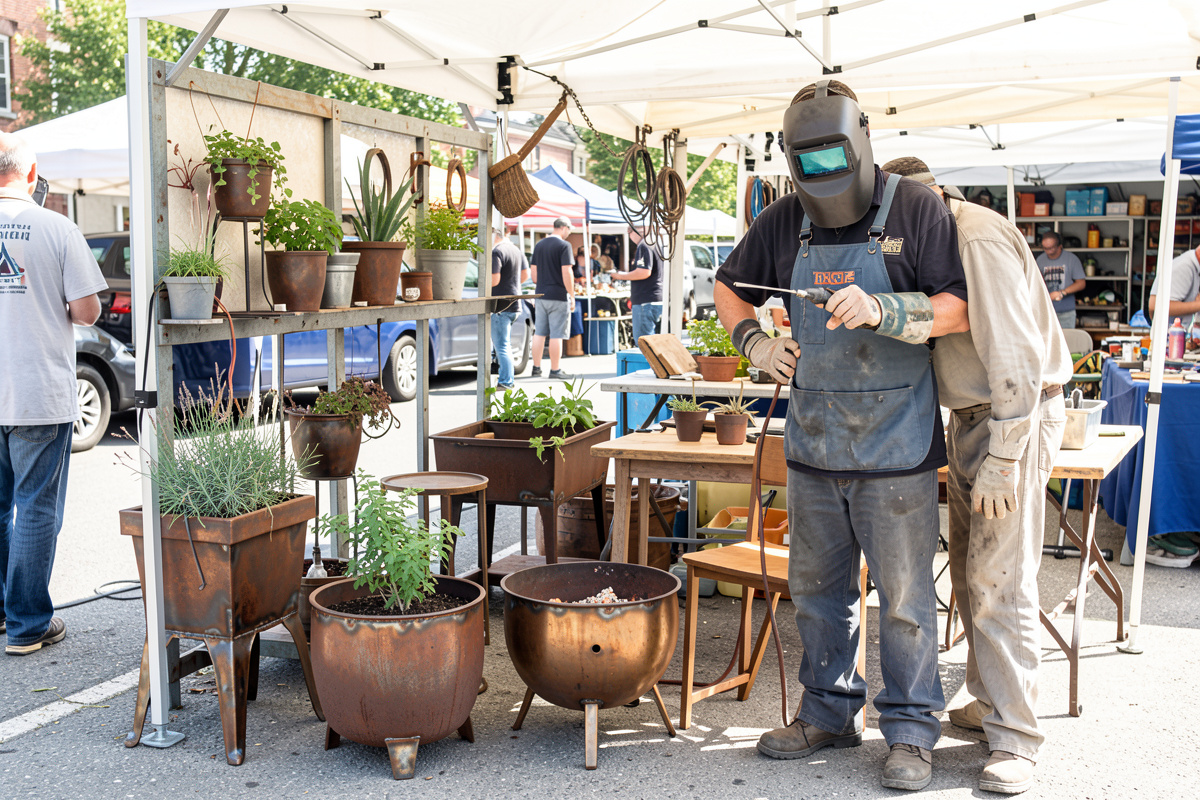

The best welding side hustle ideas split into two camps: service work, where you fix and fabricate to order, and product work, where you build and sell finished pieces. Service work pays immediately and carries no inventory risk, which is why most home welders should start there. Product work can eventually scale beyond your own hours, but it ties up cash in stock and demands marketing you may not have yet. The right first idea is the one that matches your gear, your free time, and your local demand.
I run a MIG-PRO205DS in a workshop that also holds a CNC, a laser, and a 3D printer, and I have built most of the projects below at least once for myself before anyone paid me for one. I am not going to promise you a number — welding income depends entirely on your market, not on a list — but I will tell you honestly which of these ideas start paying fastest, which tie up the most money, and which ones quietly waste your weekends.
Start With Service Work — It Pays This Week
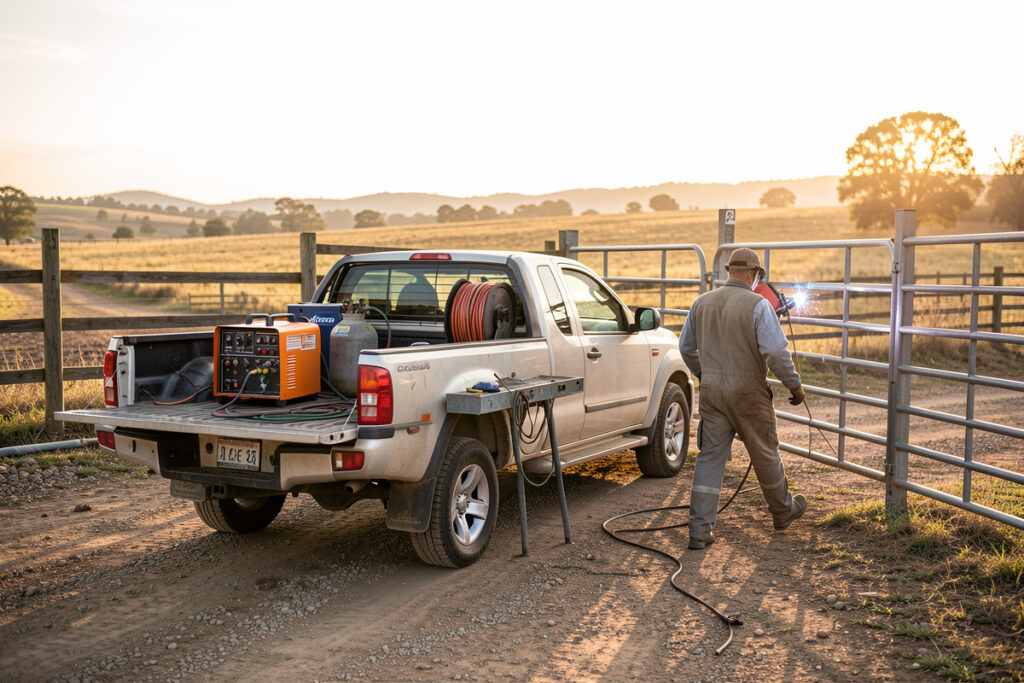
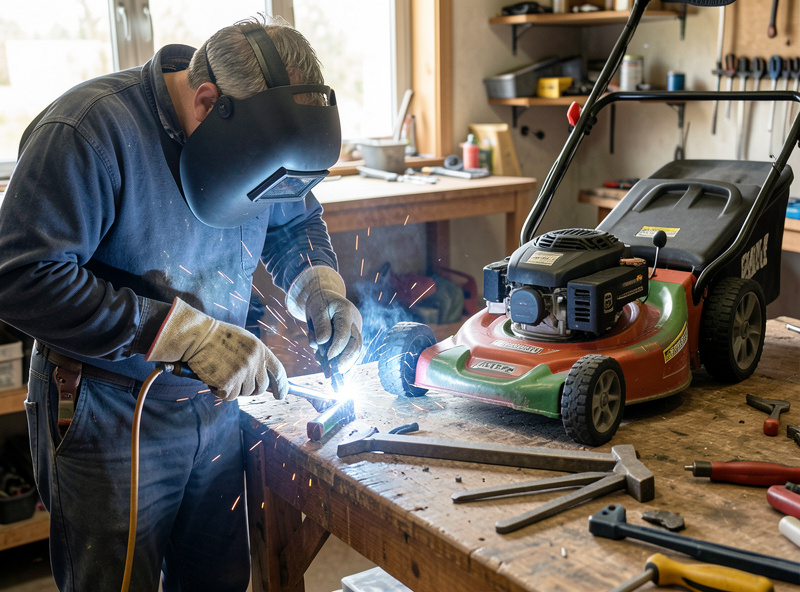
Repair and small fabrication work is the fastest-paying welding side hustle because demand already exists and there is nothing to sell in advance. People search for a welder the day something breaks, and they are not price-shopping art — they want their gate, trailer, or mower back in service. The skills are forgiving of slower speed, and every job teaches you something about quoting, scheduling, and dealing with customers on low stakes.
The most reliable service niches are gate and fence repair, trailer and hitch work, farm and small-equipment repair, and railing or bracket fabrication. None require a fancy machine — a capable MIG plus a stick setup for dirty outdoor steel covers nearly all of it. If you want to take this work to the customer rather than wait for it, the whole path is in starting a mobile welding business, and pricing it properly is in how to price welding jobs.
Product Ideas That Actually Sell
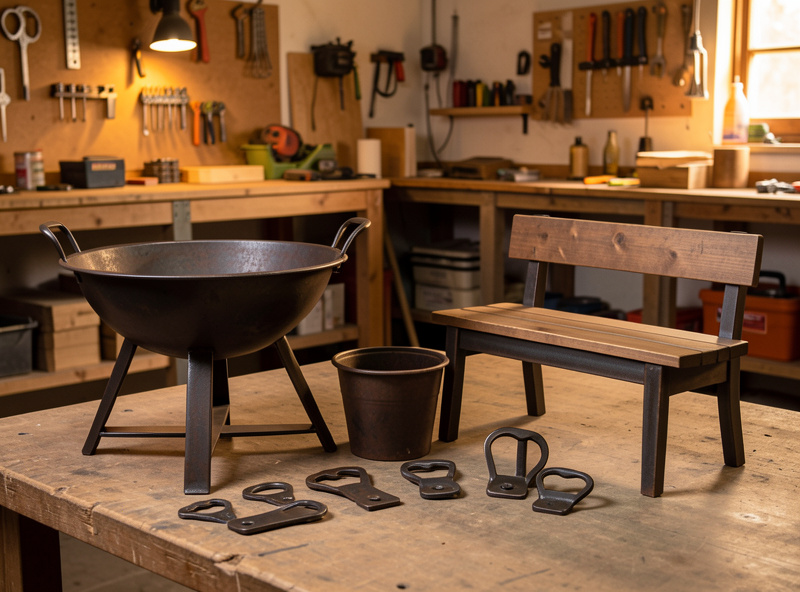
If you want to build and sell finished pieces, the winners are usually simple, useful, and hard to ship cheaply from overseas — which is what protects your local price. Heavy, bulky steel goods like fire pits and furniture have a built-in shipping moat: people prefer to buy them locally rather than pay freight, and that is your edge. Decorative-but-functional items move well at markets and online, while highly artistic one-offs are satisfying to make but slow and unpredictable to sell.
The classics that keep selling: fire pits, garden furniture and benches, raised garden beds and planters, plant stands and trellises, brackets and shelf supports, and small home or barbecue accessories. I have plans for several of these — a welded fire pit, outdoor furniture, raised bed frames, and a garden trellis — and they are perennial sellers precisely because they are useful, heavy, and easy to make consistently. Start with one design, build it well repeatedly, and let it teach you your true cost and time per unit before you add a second.
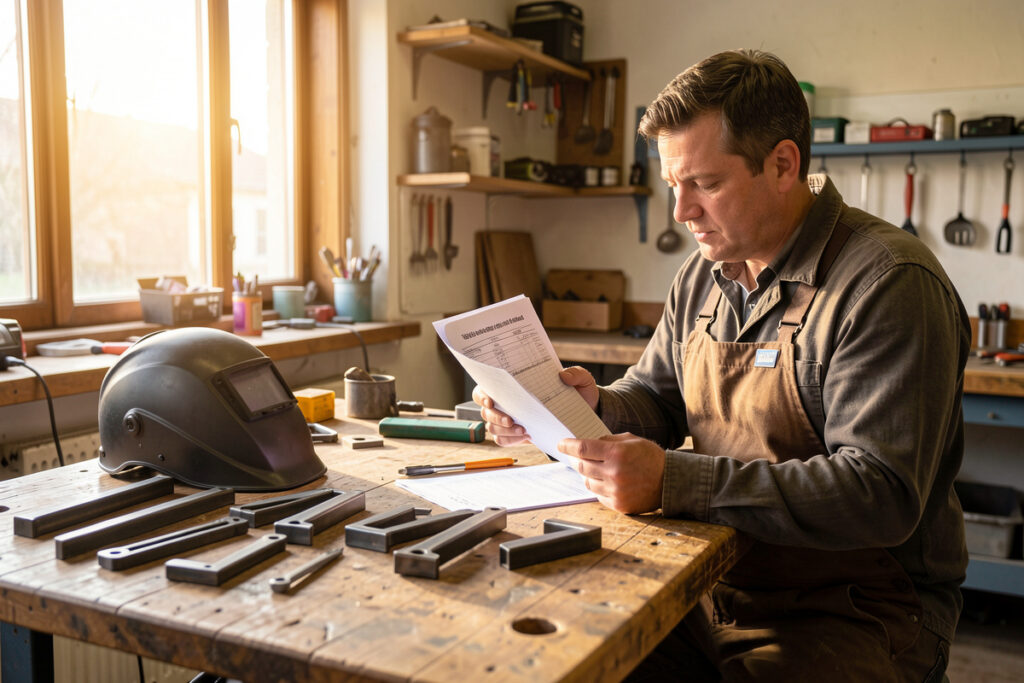
Run the numbers before you fall in love with a design. A simple welded fire pit might start from an offcut of 3 mm plate or a 600 mm steel ring, a couple of hours of cutting, forming, and welding on the MIG-PRO, and a flap disc or two on the DeWalt DWE402 for cleanup — your real cost is that steel plus consumables plus your hours, not the romantic idea of it. Build the first one start to finish, write down what the steel actually cost, how long it truly took, and how much wire and how many discs it burned, and you have a genuine cost per unit instead of a hopeful guess. Nearly every product hustle that folds does so because the maker never did this once, priced on optimism, and quietly subsidised every sale out of pocket.
| Side Hustle Idea | Speed to First Pay | Inventory Risk | Best For |
|---|---|---|---|
| Repair & fabrication service | Immediate | None | Cash now, building reputation |
| Fire pits & furniture | Medium | Medium (materials) | Local sales, shipping moat |
| Planters & garden frames | Medium | Low–medium | Markets, seasonal demand |
| Brackets & custom mounts | Fast | Low (made to order) | Repeat trade customers |
| Artistic one-offs | Slow | High (time) | Skill showcase, not income |
The Polymath Crossover Most Welders Can’t Offer
Here is an angle a single-tool welder cannot match: combining processes. The same project is often better when more than one machine touches it — the welder builds the steel frame, a router or CNC cuts a wooden top or template, and a 3D printer makes the small plastic parts like cleat covers or feet. A welded-steel-and-timber bench, or a planter with printed drainage fittings, stands out at a market precisely because it is not just another bare-steel box.
You do not need a full workshop to use this idea — even pairing welding with basic woodworking widens what you can sell. If you do run other tools, my piece on welding versus CNC routing for workshop projects shows where each one earns its place. The broader project menu, from beginner to intermediate, is in my DIY welding projects guide — good hunting ground for a product you can make repeatably.
Match the Idea to Your Reality
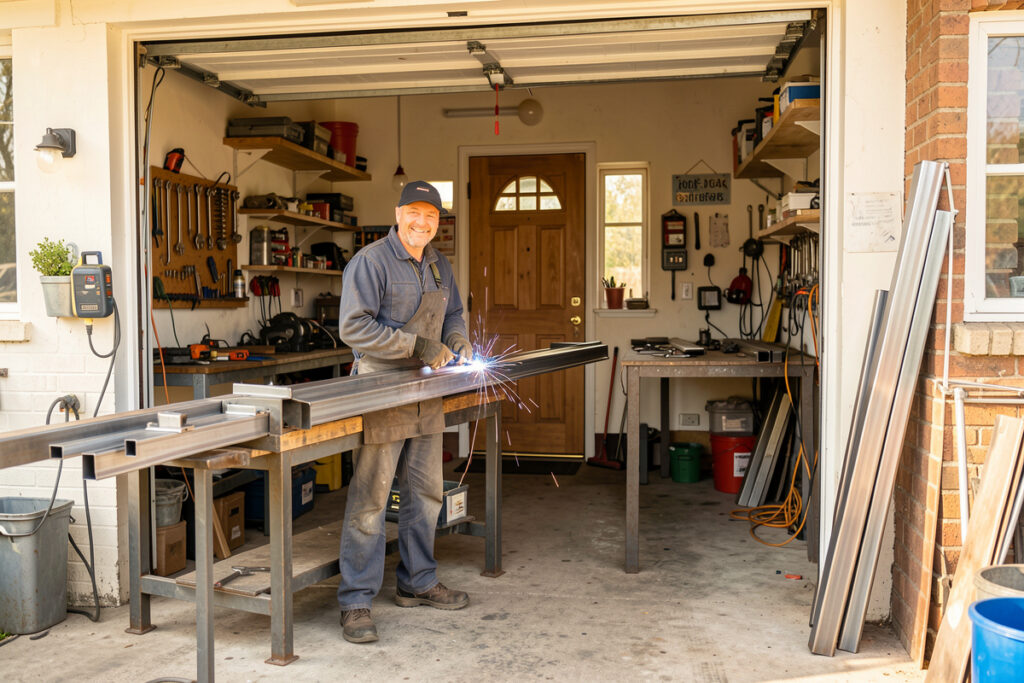
Pick by three filters: your gear, your free time, and your local demand. If you only have evenings, made-to-order brackets and small repairs fit better than batch-building furniture that needs daylight and space. If your area is rural and full of equipment, repair work will out-earn a market stall. If you have a finishing setup and storage, product lines become viable. Do not copy someone else’s successful hustle from a different market — copy their discipline, not their product.
Be just as honest about your hours. A weeknight after a day job buys maybe two hours of usable shop time once you account for setup, tacking, and cleanup — plenty for a bracket or a small repair, but not enough to batch furniture without the work bleeding into the weekend. If your evenings are short, lean toward made-to-order pieces you can finish in a single session, and save the multi-hour builds for the days you genuinely have daylight and floor space. Matching the job to the time you actually have, rather than the time you wish you had, is the difference between a hustle that funds itself and one that quietly eats the hobby it was meant to support.
Whatever you choose, keep your safety standard at job level the moment money is involved, especially on product batches where it is tempting to rush. Galvanized fittings, painted reclaimed steel, and confined finishing areas all carry fume risk — my welding safety guide and galvanized steel safety rules apply just as much to a Saturday batch of planters as to a paid repair.
Don’t Skip the Boring Part
Every idea on this list lives or dies on the same unglamorous habits: quote honestly, photograph your work well, reply quickly, and price your time so the hustle funds itself instead of draining your hobby budget. Mike, my welder friend with decades in the trade, has watched plenty of talented makers fold not because the product was bad but because they never costed it properly or never told anyone it existed. The marketing side — getting found and turning one job into the next — is its own guide: marketing a welding business.
Start with one idea, do it properly until it is boringly repeatable, and let the demand tell you whether to scale it or add another. That is the same lesson the big personal build on my own bench keeps teaching — the aluminum boat I am earning the skill for is just a very large version of “build one thing well, then the next.”
Frequently Asked Questions
What is the fastest-paying welding side hustle?
Repair and small fabrication service work pays fastest because demand already exists and there is nothing to sell in advance. People search for a welder the day something breaks, so gate repairs, trailer fixes, and bracket work generate cash immediately while building the reputation that brings the next job.
What welded products sell best?
Heavy, useful items with a built-in shipping moat sell best locally: fire pits, garden furniture and benches, raised garden beds, planters, and brackets. They are hard to ship cheaply from overseas, which protects your local price, and they are simple enough to build consistently once you settle on one design.
Should I sell products or offer repair services first?
Start with service work. It pays immediately and carries no inventory risk, which builds cash and confidence fast. Once you have steady service income, test one product design using offcuts and spare evenings before committing money to stock, since product lines tie up cash and need consistent marketing.
Do I need expensive equipment for a welding side hustle?
No. A capable MIG welder plus a stick setup for dirty outdoor steel covers nearly all repair and most fabrication work. The spend that pays back is prep gear like a good grinder, clamps and a solid table, not a bigger machine. Buy capability only after demand proves you need it.
How do I price welded products I make to sell?
Use cost-plus: add your material cost, the consumables each unit burns, and your time at a fair rate, then add a margin for overhead. Build one unit first to measure your real time and cost per piece, since the first build always takes longer than you expect and undercosting kills the whole idea.