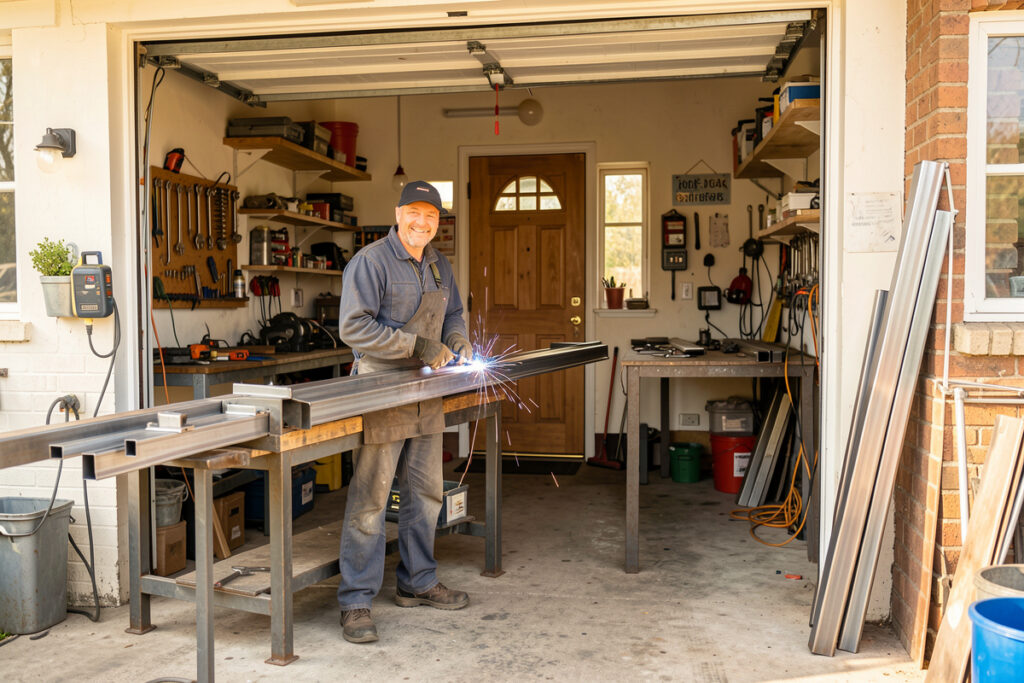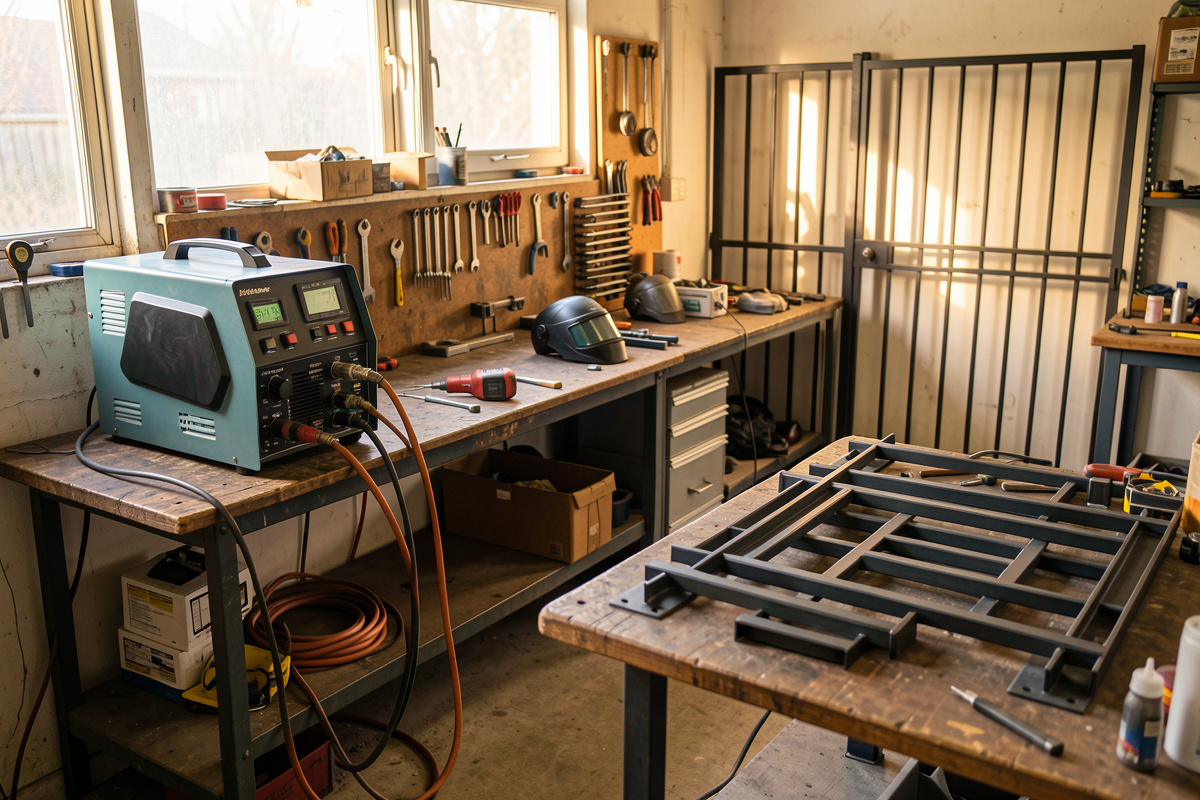

Turning welding into income is less about your bead profile and more about everything around the arc: pricing, finding work, getting paid, and not getting hurt doing it. Most home welders who go this route start as a side hustle — a few repair jobs and small fabrications on evenings and weekends — long before anyone quits a day job. Whether it ever becomes more depends almost entirely on your local market, not your machine.
I run a YesWelder MIG-PRO205DS double-pulse MIG in a Sweden workshop that also holds a CNC, a laser, and a 3D printer, and I have spent years learning to lay metal down that would actually pass a cut test. None of that, by itself, pays. What pays is solving a problem someone has — a broken trailer hitch, a snapped gate hinge, a custom bracket no store stocks — at a price that works for both of you. This guide maps the whole picture, from the first paid repair to a mobile rig, and it links out to deeper guides on each piece. I am going to be straight with you about the parts the hero-weld channels skip.
Can a Home Welder Actually Make Money Welding?
Yes — but the honest version is that welding skill is the price of entry, not the product. The work that pays a home welder is rarely the showpiece TIG art on Instagram; it is unglamorous repair and small-batch fabrication that nobody else in your area wants to drive out for. Your competitive edge is being reachable, reasonable, and reliable, not being the best welder within fifty miles.
I won’t put a number on what you can earn, and you should distrust any guide that does. Income from welding work swings wildly with where you live, what gear you own, how many hours you actually have, and whether your region is full of trades or starved for them. A retiree fixing lawn-mower decks in a rural town and a fabricator building handrails for contractors in a city are running completely different businesses under the same word. What I can tell you is the structure of how the money works, so you can run your own numbers honestly. Start with my breakdown of the real cost to start welding at home — that is your baseline before a single invoice goes out.
The other hard truth: the welding itself is maybe a third of the job. The rest is quoting, scheduling, sourcing steel, cleaning up, invoicing, and chasing the occasional slow payer. If you only love the arc, a side hustle can sour fast. If you also like solving problems and talking to people, it tends to stick.
Hobby, Side Hustle, or Full Business — Pick Your Lane
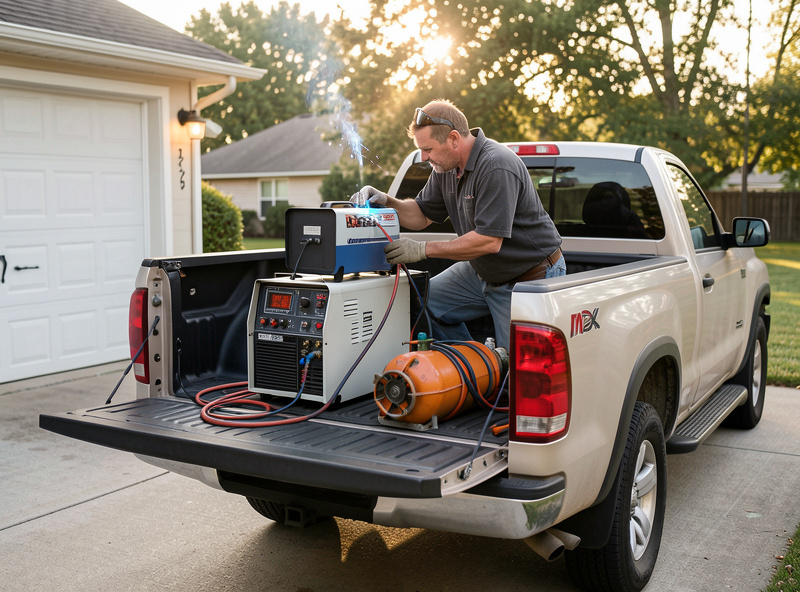
These three are not the same thing scaled up; they are different commitments with different gear, tax, and time demands. Most people should deliberately stay in one lane for a year before deciding whether to move. Jumping straight to “full business” is how people buy an engine-driven welder on credit and then discover the phone doesn’t ring.
A hobby costs you money and pays you in skill and finished projects. A side hustle should at least cover its own consumables and gas and put a little aside. A full business has to cover your time, your overhead, insurance, equipment depreciation, and still leave a wage — which is a much higher bar than beginners expect. Here is how the three compare on the things that actually matter when you are deciding.
| Factor | Hobby | Side Hustle | Full Business |
|---|---|---|---|
| Goal | Skill & finished projects | Cover costs + modest extra | Replace or exceed a wage |
| Time commitment | Whenever you like | Evenings/weekends, scheduled | Full days, on demand |
| Gear pressure | One good MIG is plenty | Add prep tools + portability | Multi-process, redundancy, mobile rig |
| Insurance/legal | Homeowner cover only | Basic liability advisable | Liability + commercial, registered |
| Pricing model | None | Job or hourly, simple | Costed hourly + materials + margin |
| Biggest risk | Spending too much | Underpricing your time | Cash flow & slow seasons |
My advice: build your skill as a hobby until clean structural welds are muscle memory, then take a few paid jobs as a side hustle to learn the business mechanics on low stakes. If you still enjoy it after a year of real customers, you will know far more about whether a full business fits your life than any article can tell you. My welder friend Mike, who has spent decades in the trade, puts it bluntly: the welding was never the hard part of going out on his own — the bookkeeping and the slow winters were.
The Skills and Gear That Actually Get You Paid
Paid work rewards consistency and breadth over flash. A customer with a cracked bracket doesn’t care whether you can stack dimes; they care that the repair holds and looks tidy. The most bankable skills are reliable structural MIG, stick for dirty outdoor steel, and enough grinder and fitup discipline that your finished work looks intentional rather than rescued.
On gear, resist the urge to buy your way to competence. A solid 110V/230V MIG covers the overwhelming majority of home-service repair and light fabrication — see my home garage MIG buyer guide for what is worth the money. A multi-process machine earns its keep only once you are genuinely running MIG, stick, and TIG for paying work, not before. The unsexy spend that actually pays back is prep: a good angle grinder, clamps, a chop saw, and a real welding table. My full welding equipment guide and the first-year equipment checklist lay out the order I would buy in.
If you are still climbing the learning curve, do not rush into paid work. Read my honest take on how long it takes to learn welding and what beginners should expect. Charging for welds you cannot yet trust is how reputations die before they start.
Mobile vs Shop-Based: Where the Work Happens
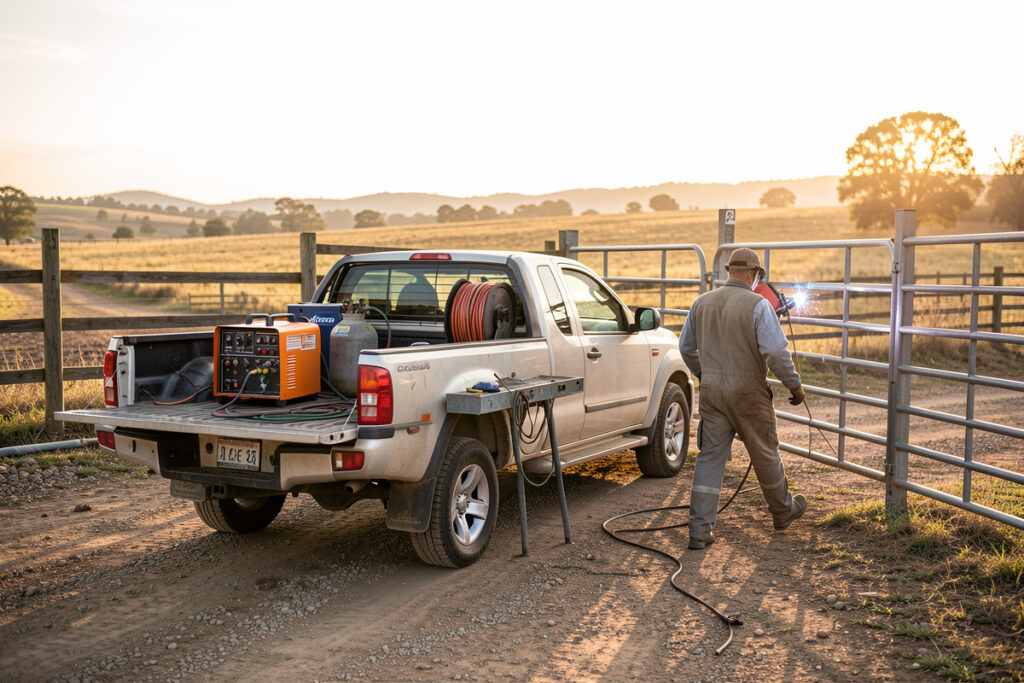
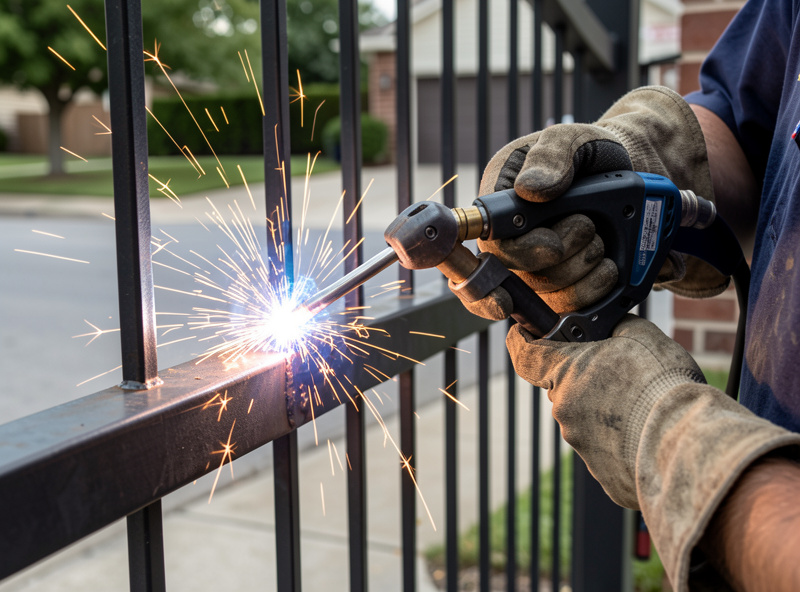
The single biggest structural decision is whether customers come to you or you go to them. Shop-based work is cheaper to run and easier on your back, but it limits you to people willing to haul broken steel across town. Mobile welding multiplies your reachable jobs — farm gates, trailer repairs, equipment that cannot move — but it demands a portable power solution, transport, and a tolerance for working in bad light and worse weather.
Most home welders start shop-based out of a garage and add mobile capability once demand justifies it. The jump to mobile is a real investment in a rig, not just a longer extension cord — I cover the whole build in starting a mobile welding business and the physical setup in the welding trailer and mobile setup guide. If you are running a long lead from a fixed outlet in the meantime, size it properly; an undersized cord starves the inverter and ruins your welds. I run a heavy-gauge Iron Box cord for exactly this reason — see welding extension cord gauge.
Pricing — The Thing That Makes or Breaks It
Underpricing is the most common reason a welding side hustle quietly dies: you stay busy, you stay broke, and you burn out. A workable price covers your time at a rate you would actually get out of bed for, plus materials at cost, plus consumables, gas, grinding discs, and wear, plus a margin for the overhead beginners forget — machine depreciation, electricity, fuel to the job, and the quotes that never become jobs.
I deliberately avoid quoting dollar figures here because rates are wildly regional and anything I print would be wrong for most readers and could read as a fabricated promise. Instead, learn the method: cost-plus pricing, minimum call-out fees for mobile work, and how to quote a fabrication you have never built before without losing your shirt. The full framework, with worked examples you can plug your own local rates into, is in how to price welding jobs. Read it before you quote your first paid job — the habits you set on job one tend to stick.
Finding Work and Marketing Without a Big Budget
For a home welder, the best marketing is being findable the moment someone needs a weld and being the person who actually calls back. Most early work comes from word of mouth, local community groups, and a simple presence that shows real finished jobs rather than stock photos. You do not need a slick brand; you need to look trustworthy and reachable to people in a ten-mile radius.
A few photos of clean repairs, a clear list of what you do and do not take on, and prompt replies will out-compete a fancier operation that is slow to respond. I walk through the no-budget playbook — local listings, photographing your work properly, handling enquiries, and turning one job into the next — in marketing a welding business. The throughline is reputation: in a small market, a few botched jobs travel faster than any advert.
Certification — Do You Actually Need It?
For most home-welder service work — repairs, gates, trailers, brackets, furniture — you do not legally need a formal welding certification, and many successful small operators have none. Certification matters when the work is structural or code-critical, when a client or insurer demands documented qualification, or when you want to bid jobs that legally require a certified procedure. It is a credential for specific work, not a general permission slip to charge money.
That said, a certification can be a genuine marketing and trust asset even when it is not legally required, and the testing process itself will sharpen your weaknesses. I lay out where it actually pays off versus where it is wasted money in welding certification value for business, and the practical route to getting tested is in how to get welding certification. Here I have to hedge openly: the specifics of AWS and EN-ISO procedure qualification are coded-tradesman territory. I weld to a high home-bench standard and I learn from people who hold those tickets — Mike among them — but I am not going to pretend to be a certified inspector. For anything structural or code-critical, that is exactly the line where you bring in someone who is, and my weld testing and inspection guide explains how welds get verified.
Side Hustle Product Ideas vs Service Work
There are two broad ways to earn: fix and fabricate to order (service work) or design and sell finished products (product work). Service work has near-zero inventory risk and starts paying immediately, but every dollar costs your time. Product work — fire pits, garden furniture, brackets, planters — can scale beyond your hours if a design sells, but it ties up cash in stock and demands marketing and consistency you may not have yet.
Most home welders should start with service work to generate cash and confidence, then test one or two product ideas on the side using offcuts and spare evenings. Some of the best sellers are dead simple builds — I have plans for several in my DIY welding projects guide, including outdoor furniture and a fire pit that are perennial favourites. The full menu of realistic options, with the pros and cons of each, is in welding side hustle ideas.
This is also where the rest of my bench earns its keep. The same workshop holds the welder, the CNC, the laser, and the 3D printer, and a product is often better when more than one tool touches it — the welder builds the steel frame, the CNC routes a template, the printer makes the small plastic parts. If you run other tools too, my piece on welding versus CNC routing for workshop projects shows where each one wins.
The Legal, Safety, and Insurance Baseline
The moment money changes hands, your safety standards and your liability both stop being personal. This is the section I will not let you skim. Welding on a customer’s property means their barn, their fence line, their dry grass, and their family are now inside your fire-watch radius — and the consequences of a stray spark are no longer just your problem.
Three hazards do real, sometimes permanent harm, and every one of them is preventable. Fumes: manganese in steel fume is a long-term neurological hazard, and welding galvanized (zinc-coated) steel releases zinc oxide that causes metal-fume fever — grind the coating well back or ventilate hard, and never weld galv in a closed space. Fire: spatter travels further than people think and smoulders for minutes; you need an extinguisher within reach, a clear look at what is behind and below the work, and a fire watch after you stop. Arc-eye and UV: a real auto-darkening helmet and skin cover are non-negotiable, and bystanders need shielding too. And if you ever work in a confined space, remember that argon is an odourless asphyxiant that pools low and silent. My full welding safety guide, the deep dive on welding fume health risks, the galvanized steel safety rules, and the fume extractor guide all belong on your reading list before you take paid work in someone else’s space.
On the business side: look into basic liability insurance before you weld on anyone else’s property, keep simple written records of what you quoted and did, and check your local rules on registering a small trade. None of that is glamorous, and all of it is cheaper than the alternative. I am a welder, not a lawyer or an accountant — for the registration and tax specifics in your country, get a few minutes with someone who does that for a living.
Getting Paid: Deposits, Invoices, and Slow Payers
The job is not finished when the weld cools; it is finished when the money lands. New side hustlers lose more to vague payment terms than to bad welds, so set the terms before you strike an arc. For anything beyond a quick repair, take a deposit that at least covers your material cost up front — that way a cancelled fabrication leaves you holding cash for the steel you already bought, not a bill. State your terms plainly in the quote: what is included, what counts as an extra, and when payment is due.
Invoice the same day you finish, while the work is fresh and the customer is pleased, and keep it simple — your name, the job, the parts and labour, the total, and how to pay. A clear one-page invoice gets paid faster than a mumbled number and a hope. For trade customers who pay on terms, agree those terms in writing first; for one-off homeowners, payment on completion is normal and fair. The occasional slow payer is part of the trade — a polite reminder a week later clears most of them, and the small minority who never pay teach you to take deposits and to be choosier about who you say yes to next time.
Keep every quote, invoice, and receipt in one place from job one. It makes tax time painless, shows you plainly which kind of work actually pays, and turns the dull admin Mike warns about into a record you can genuinely run the business from rather than guess at.
How I Would Start Over From My Own Bench
If I were starting from scratch with the gear most home welders own, I would not buy anything new at first. I would weld until my structural joints were boringly consistent, build a couple of small product pieces to photograph, and take three or four small repair jobs for people I already knew — at a fair price, invoiced properly, with the safety discipline of a job I was being paid for. That is the entire side-hustle experiment, and it costs almost nothing but consumables and time.
Only after those first jobs would I spend money, and I would spend it on the bottlenecks the work exposed — better portability, a proper welding cart, a tidier workshop setup — rather than on a bigger machine I imagined I needed. The mistake I see most often is buying capability before demand. Earn the demand first; let it tell you what to buy. As an Amazon Associate I earn from qualifying purchases. If portability is your first real bottleneck, a compact inverter MIG is the usual answer — compare current options with an Amazon search for portable inverter MIG welders.
The long game on my own bench is an aluminum boat — not built yet, but the project the whole shop is pointed at. A welding business and a big personal build are the same lesson in the end: the skill is necessary, but it is the planning, the patience, and the discipline around it that decide whether you finish. Pick your lane, price your time honestly, weld safe, and let the work compound.
Frequently Asked Questions
Do I need a license or certification to start a welding side hustle?
For most home-welder repair and fabrication work you do not need a formal welding certification. It becomes necessary for structural or code-critical jobs, or when a client or insurer requires documented qualification. Check your local rules on registering a small trade separately from welding certification itself.
How much should I charge for welding jobs?
Price with cost-plus: your time at a fair hourly rate, materials at cost, consumables and gas, plus a margin for overhead like machine wear, electricity and travel. Rates vary too much by region for a fixed number to be useful, so research local rates and never just match the cheapest quote.
Is mobile welding more profitable than shop-based work?
Mobile welding reaches more jobs because you go to equipment that cannot move, but it costs more to run and is harder on the body. Most home welders start shop-based from a garage and add mobile capability once steady demand justifies investing in a proper rig and transport.
What is the most common mistake new welding side hustlers make?
Underpricing their time. Staying busy while barely covering consumables is the fastest route to burnout. The second most common mistake is buying expensive equipment before there is enough demand to justify it. Earn the demand first, then let the work tell you what to buy.
What safety steps change once I weld for money?
On a customer’s property you are now responsible for their fire risk, so keep an extinguisher within reach, run a fire watch, and check what is behind and below the work. Never weld galvanized steel in closed spaces because of zinc-oxide fume, and carry basic liability insurance before working on anyone else’s property.
Should I sell welded products or offer repair services first?
Start with service work. Repairs and fabrication pay immediately and carry no inventory risk, which builds cash and confidence fast. Test one or two product ideas on the side using offcuts once you have steady service work, since product lines tie up money in stock and need consistent marketing.
Related Guides in This Cluster
- Starting a Mobile Welding Business
- How to Price Welding Jobs
- Welding Side Hustle Ideas
- Marketing a Welding Business
- Welding Trailer and Mobile Setup
- Welding Certification Value for Business