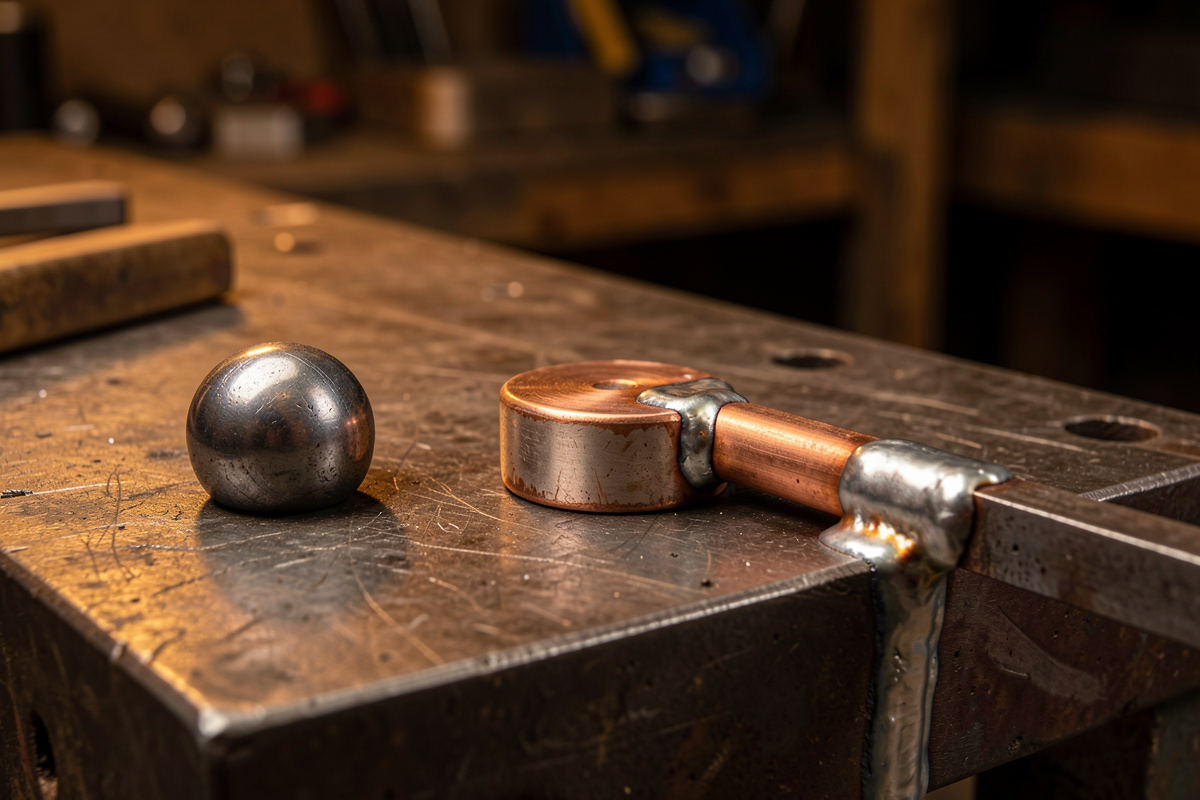

Brazing vs welding vs soldering comes down to one question: do you melt the base metal or not? Welding melts and fuses the parent metal into one piece. Brazing and soldering leave it solid and bond a separate filler into the joint — brazing above 840°F, soldering below it. That temperature line decides strength, distortion, and which metals you can join.
I run all three on my bench. The MIG-PRO205DS handles the welding, a torch and silver rod handle the brazing, and an iron or propane torch handles soldering. Beginners ask me which one is "best," and the honest answer is none of them — they solve different problems. Pick the wrong process and you either warp a thin part with weld heat or trust a soldered joint to carry a load it will shear off under. This guide sorts out exactly when each one wins.
The One-Sentence Difference
Welding fuses base metals by melting them together, usually above 2500°F, and gives the strongest joint. Brazing flows a filler above 840°F (450°C) into a joint by capillary action without melting the base metal. Soldering does the same below 840°F with a soft, low-melting filler. So the spectrum runs cold to hot: soldering, then brazing, then welding, with strength and heat input climbing the whole way.
That single distinction drives everything else. Because welding melts the parent metal, it needs two pieces of the same (or weldable) metal and pours in enough heat to distort thin sections. Because brazing and soldering only melt filler, they join dissimilar metals happily and barely warp the work. The full picture of how these fit together lives in my brazing and soldering guide.
Welding: Maximum Strength, Most Heat
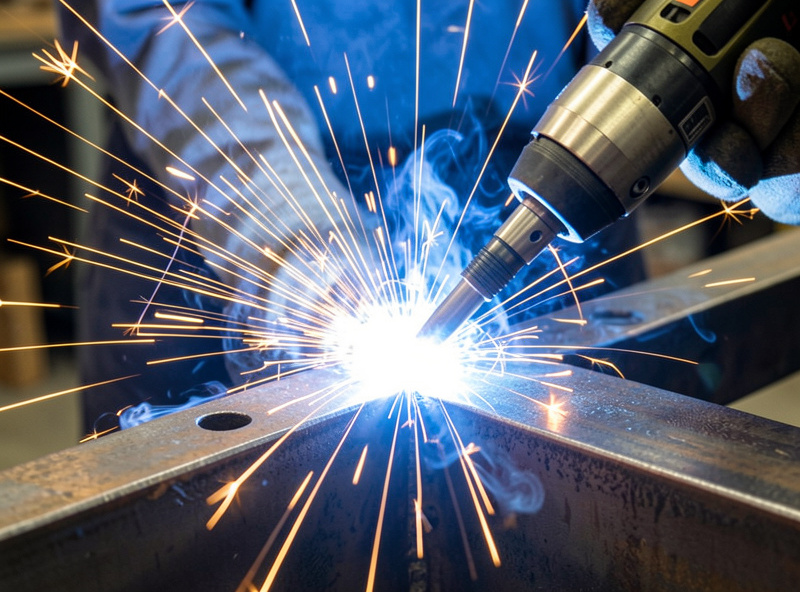
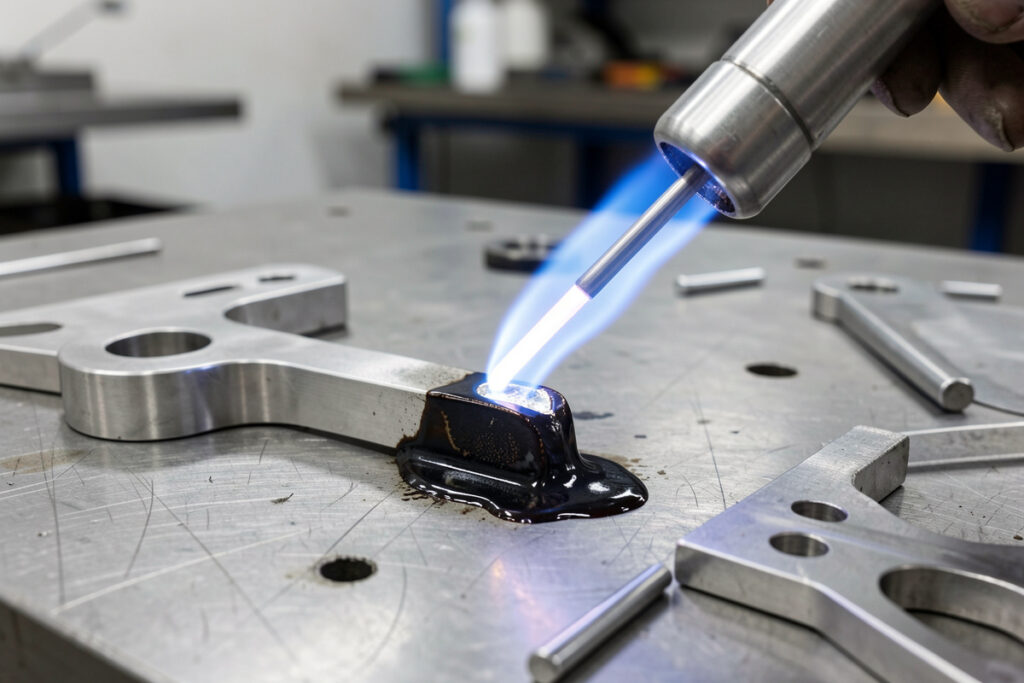
Welding is the process when strength is the priority and the metal can take the heat. A full-penetration weld is the strongest joint you can make — the filler and base metal become a single, fused mass, and a properly run weld is generally stronger than the parent metal beside it. That is why frames, brackets, trailers, and anything load-bearing get welded, not brazed.
The trade-offs are heat and skill. Welding distorts thin sheet, demands matched or compatible metals, and needs more setup — gas, settings, and arc control. On my bench I weld steel from sheet up to plate, and I lean on the right process for the metal: my MIG vs TIG vs stick guide walks through which arc to choose. But the moment a job involves copper, brass, dissimilar metals, or a part too thin to take arc heat without blowing through, I put the welder down.
Brazing: The Middle Ground
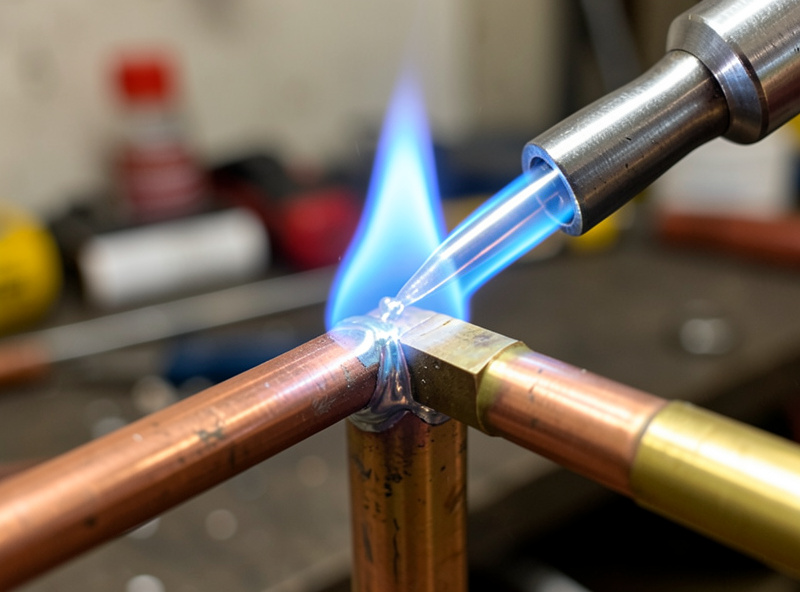
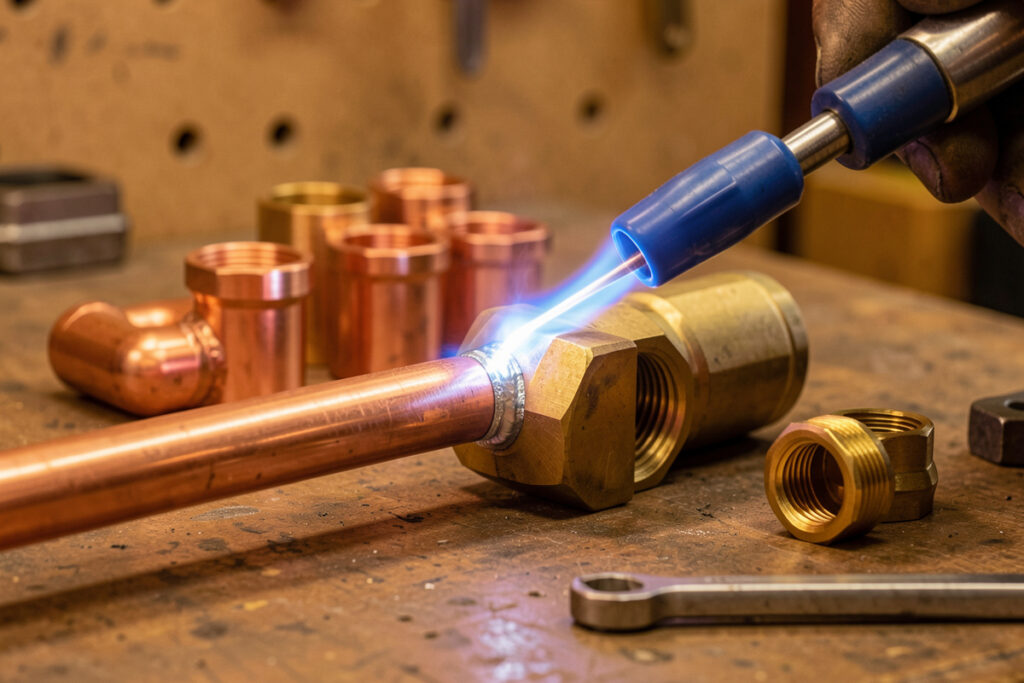
Brazing is the most versatile of the three and the one beginners underrate. It joins above 840°F with silver, copper-phosphorus, or brass filler that flows into a tight joint by capillary action. A well-designed brazed lap joint is genuinely strong — strong enough for bike frames, HVAC lines, tool tips, and countless structural-light jobs — while putting in far less heat than welding, so thin and delicate parts survive without warping.
Brazing’s superpower is joining dissimilar metals. Steel to copper, brass to steel, carbide to a tool shank — combinations no arc can fuse cleanly — braze easily because you are not melting either base metal, only bonding filler across them. The catch is that you must clean and flux properly and hold a tight joint gap, around 0.001 to 0.005 inch, for capillary action to work. I cover the copper and brass route in how to braze copper and brass and the precision side in the silver brazing guide.
Soldering: Sealing and Connecting, Not Holding
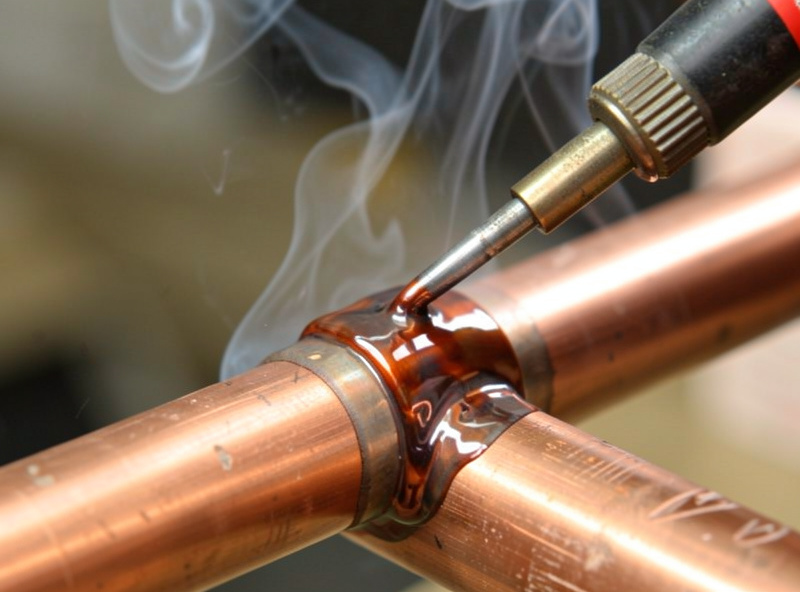
Soldering joins below 840°F with soft tin-based filler. The bond is real but mechanically weak — it seals and conducts rather than carries load. That is exactly what you want for copper water lines, electrical connections, sheet-metal seams, and electronics. Lead-free plumbing solder flows around 450°F; electronics solder lower still.
Never trust a soldered joint with structural load — it will creep and shear. But for a watertight pipe joint or a solid electrical connection, soldering is faster, cheaper, and lower-heat than anything else. The genuinely tricky version is soldering thick or heat-hungry metal like copper bus bar, where the workpiece drinks heat faster than a small iron can supply it; I solve that in the soldering thick metals guide.
Head-to-Head Comparison
| Factor | Soldering | Brazing | Welding |
|---|---|---|---|
| Filler/melt temp | Below 840°F | 840–1650°F | 2500°F+ (base melts) |
| Base metal melted | No | No | Yes |
| Joint strength | Low | Medium-high | Highest |
| Heat distortion | None to minimal | Low | Moderate to high |
| Joins dissimilar metals | Yes | Yes (best) | Rarely |
| Skill to start | Low | Medium | Medium-high |
| Equipment cost to start | Lowest | Low-medium | Highest |
| Use it for | Pipe seals, wiring | Copper, brass, stainless, thin tube | Frames, load-bearing steel |
How to Choose for Your Job
My decision rule is short. If the joint carries structural load and the metal is weldable steel, weld it — accept the distortion and chase maximum strength. If you are joining dissimilar metals, thin sections, copper, brass, or anything that must stay leak-tight without warping, braze it. If the joint only has to seal water or carry current, solder it. When two answers seem to fit, default to the lower-heat process — you can always braze something you could have welded, but you cannot un-warp a thin part you cooked with an arc.
Mike, my welder friend with decades in the trade, sums it up the way I keep coming back to: weld it if it carries the truck, braze it if it carries the water, solder it if it carries the current. Joint design matters as much as process — the welding joint types guide applies across all three, since a brazed lap and a welded lap follow the same load logic.
The Safety Differences That Matter
All three throw their own hazards. Welding adds arc-eye and UV, so a real auto-darkening helmet is non-negotiable — see my helmet guide. Brazing adds two welding does not: cadmium fume from older silver alloys (always use cadmium-free filler; OSHA regulates it under 29 CFR 1910.1027) and fluoride flux fumes, both needing real ventilation. Brazing or welding brass and galvanized parts boils off zinc and causes metal fume fever, covered in welding galvanized steel safely. Every one of them is an open heat source, so the fire safety rules apply across the board. Match the protection to the process and none of the three is dangerous; ignore it and any of them will hurt you.
Real Jobs, Real Choices From My Bench
Theory sticks better with examples, so here is how the three actually split on real work. A steel weld cart frame — structural, mild steel, load-bearing — gets MIG welded; nothing else makes sense. A copper-to-brass fitting on a coolant line gets brazed, because the metals are dissimilar and the joint must seal without warping the thin brass. A run of copper water pipe gets soldered, because all it needs is a watertight seal at low cost. And the same bracket can change answer with the metal: in 3 mm steel I weld it, but the identical bracket in thin brass I would braze every time to avoid blowing through.
The interesting cases are the hybrids. On a project that mixes a welded steel structure with copper plumbing and a few dissimilar-metal fittings, I use all three on one assembly — weld the frame, braze the transitions, solder the seals. That is the polymath-bench reality: the processes are not rivals, they are a toolkit, and knowing which to reach for is most of the skill. The first non-trivial thing I ever built, a steel-tube sim-rig frame, was pure welding — but the long-game aluminum boat I am working toward will need all three for the hull, the fittings, and the wiring.
Cost and Setup to Get Started
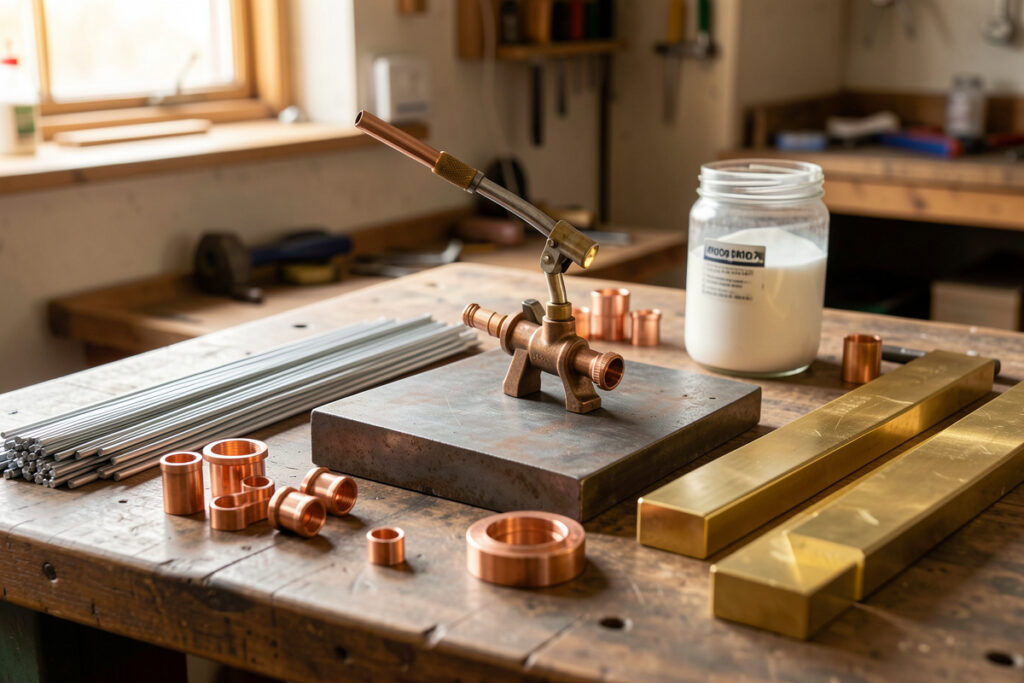
Cost climbs the same direction as heat. Soldering is cheapest to enter — an iron or a small propane torch, solder, and flux. Brazing costs a bit more, mostly in silver-bearing filler, which is priced by its silver content. Welding has the highest entry cost: a machine, gas, consumables, and protective gear; my cost to start welding breakdown lays out the real numbers, and the 110V MIG buyer guide covers picking that first machine. If budget is the deciding factor and the job allows it, brazing often gives you welding-adjacent capability for less outlay — one reason I tell beginners not to skip learning the torch.
Frequently Asked Questions
Is brazing as strong as welding?
No. A full-penetration weld fuses the base metal and is the strongest joint. A well-designed brazed joint is strong in shear and fine for many structural-light uses like bike frames and HVAC lines, but it will not match a weld in raw tensile strength on load-bearing steel.
When should I braze instead of weld?
Braze when you are joining dissimilar metals, thin or delicate sections, copper, brass, or anything that must stay leak-tight without warping. Brazing puts in far less heat than welding, so it avoids distortion and joins metal combinations no arc can fuse cleanly.
Can you solder instead of weld to save money?
Only if the joint does not carry load. Soldering is cheaper and lower-heat but the bond is soft and will creep or shear under structural stress. Use soldering for sealing water lines and electrical connections, never as a substitute for a load-bearing weld.
Which is easiest for a beginner to learn?
Soldering is the easiest and cheapest to start, then brazing, then welding. But ease of learning should not pick your process. Choose by the job: the right process for a load-bearing steel frame is welding even though it takes more skill to do well.
Do brazing and welding use the same equipment?
Not usually. Welding needs an arc machine like a MIG, TIG, or stick welder. Brazing and soldering use a torch or iron plus filler rod and flux. Some welders also own oxy-acetylene, which brazes and welds, but the typical home setup keeps the torch and the arc machine separate.
Can you braze two different metals together?
Yes, that is brazing’s biggest advantage. Because the base metals stay solid and only the filler melts, brazing joins steel to copper, brass to steel, and carbide to tool shanks. Welding generally cannot fuse such dissimilar metals cleanly, while brazing bonds across them with the right filler and flux.

Discussion (0)