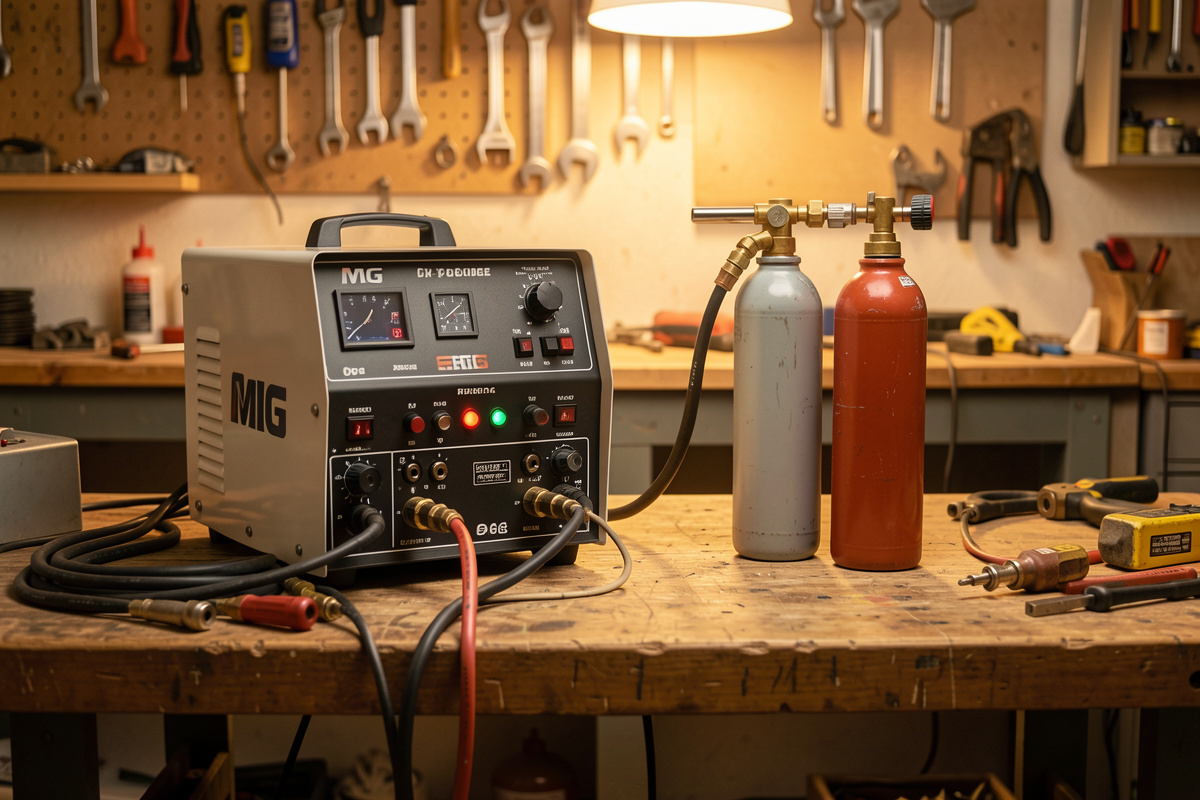

For joining steel, MIG welding beats oxy-acetylene gas welding for almost every home welder: it is faster, far easier to learn, and puts heat in tight so thin steel warps less. Gas welding still wins where MIG cannot go — cutting thick plate, brazing thin or dissimilar metal, heating seized parts, and working with no electricity. If you can own only one, buy the MIG.
I say that as someone whose daily driver is a YesWelder MIG-PRO205DS and who keeps an oxy-acetylene outfit in the corner anyway. They are not really competitors; they are different tools that happen to both make heat. But the question I get most from beginners is which to buy first, so this is the honest side-by-side — from the welder side of the bench, not a catalog. This is part of the oxy-acetylene and gas welding hub.
The Short Answer for a First Welder
If your goal is to join metal and finish projects — brackets, frames, repairs, a weld cart — a MIG welder gets you to usable welds in an afternoon. Gas welding takes weeks of torch time to develop the puddle control for a sound bead, and even then it is slower on every joint. A beginner who buys a gas outfit to learn welding usually ends up frustrated; the same person on a MIG is building things by the weekend. I learned that the slow way — my first month of torch time went to chasing a puddle that kept either freezing up or dropping straight through the sheet, work the MIG would have knocked out in a single evening. That is not an opinion about which is “real” welding — it is about the learning curve being brutally steeper on the torch.
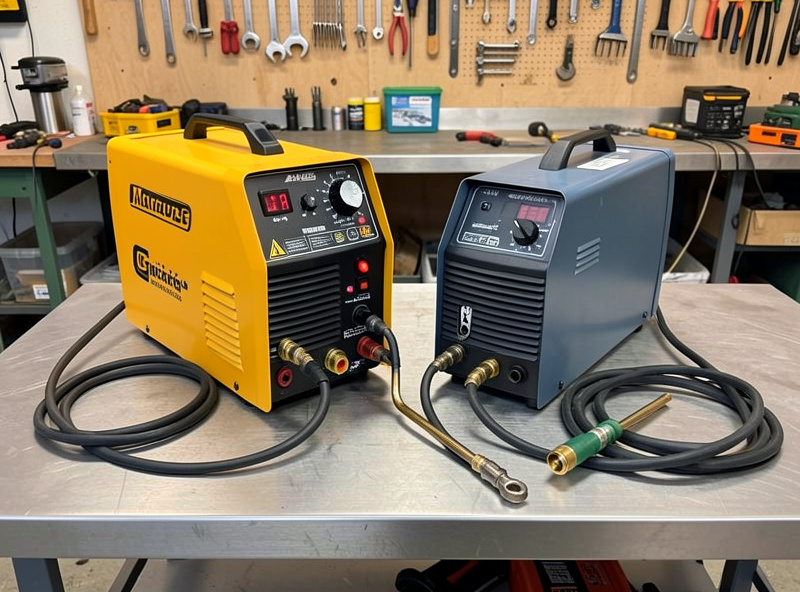
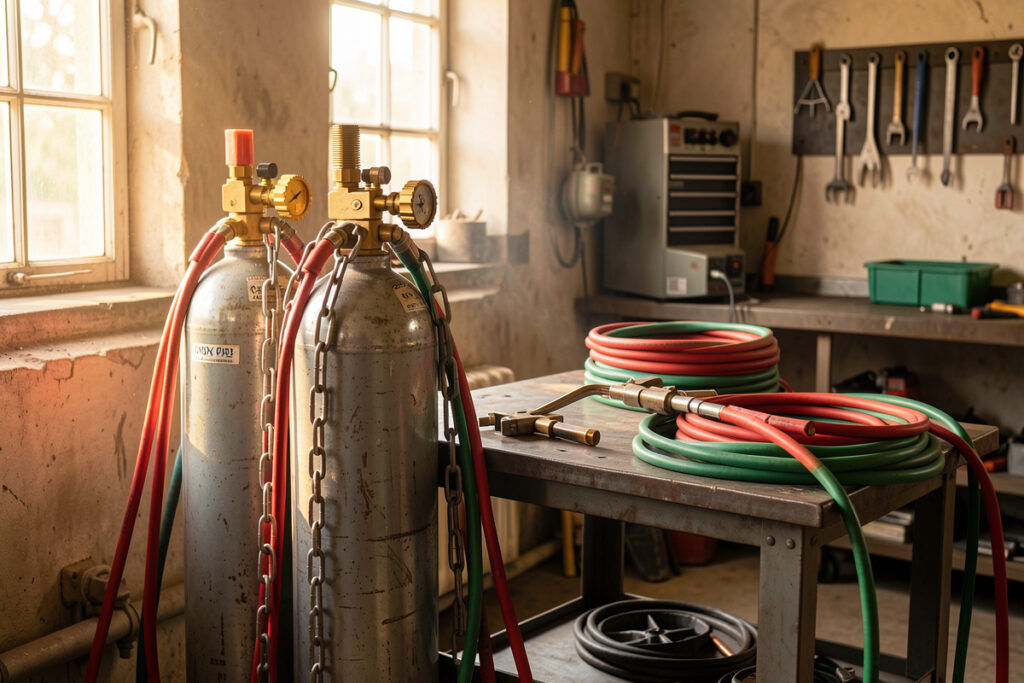
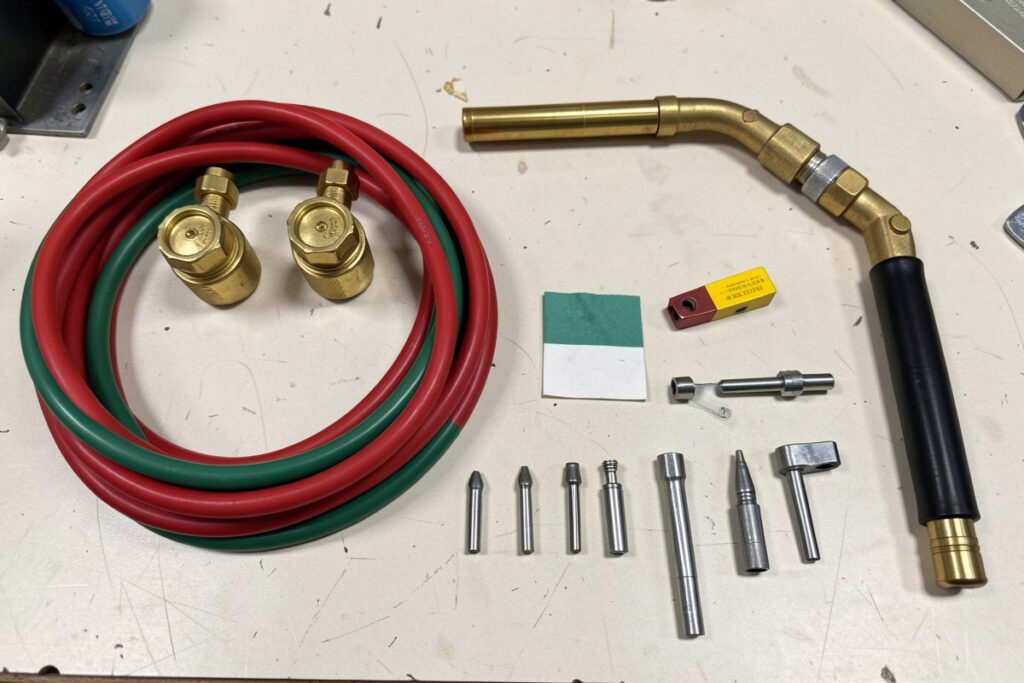
Where that flips is the specific jobs gas does that MIG simply cannot. No MIG cuts 20 mm plate freehand. No MIG brazes a thin-wall tube without blowing through it. No MIG heats a rusted bolt cherry-red to break it loose. And no MIG runs when the power is out or the job is a mile from an outlet. So the real recommendation is sequencing: MIG first for joining, gas second for the jobs it owns. The full breakdown of the torch’s four jobs is in the hub guide.
Head to Head
Here is how the two stack up across the things that actually decide which tool you reach for. I have run both on the same bench for the same projects, so these are practical differences, not spec-sheet ones. The two do not even sound alike: a dialed-in MIG arc crackles like steady frying bacon, while gas welding is near-silent work under the soft hiss of the flame.
| Factor | Oxy-Acetylene Gas Welding | MIG Welding |
|---|---|---|
| Learning curve | Steep — weeks to a sound bead | Gentle — usable welds in an afternoon |
| Welding speed | Slow, deliberate puddle | Fast travel, high deposition |
| Heat input / distortion | Wide, slow heat — warps thin steel | Tight heat — less distortion |
| Best thickness (welding) | Thin steel and tube | ~0.8 mm up to ~10 mm in passes |
| Power needed | None — fully portable | Mains power (or generator) |
| Also cuts metal | Yes — thick plate | No |
| Also brazes / heats | Yes — a core strength | No |
| Consumables | Two gas bottles, filler rod | Wire, shielding gas, tips |
| Upfront cost | Moderate (outfit + bottle rent) | Moderate to higher (machine) |
Heat Input Is the Whole Story
Almost every practical difference traces back to one thing: how the heat goes in. A gas flame dumps a broad, slow pool of heat into the work, soaking a wide area before the puddle forms. A MIG arc concentrates heat fast and tight. On thin sheet that difference is night and day — gas welding warps and oil-cans 1 mm steel that a series of quick MIG tacks handles flat. On the flip side, that same slow, soaking heat is exactly what you want for brazing and for heating a part evenly, which is why the torch owns those jobs. The AWS Welding Handbook classes oxyfuel as a secondary process today largely because that broad heat input limits it on the thin steel most home projects are built from. The technique for keeping MIG distortion down lives in distortion control; on gas, your main defense is tack-and-step.
What Each One Is Actually For
MIG is my joining process, full stop — brackets, frames, the sim-rig chassis that was my first non-trivial build, and eventually the aluminum boat I am working toward. If you are buying your first machine, the MIG complete guide and the gas vs gasless MIG breakdown will get you pointed right. Gas earns its corner for the rest: cutting stock too thick for a chop saw or band saw, brazing fittings and thin tube, and heating. It is the tool that bridges what the electric machines cannot reach.
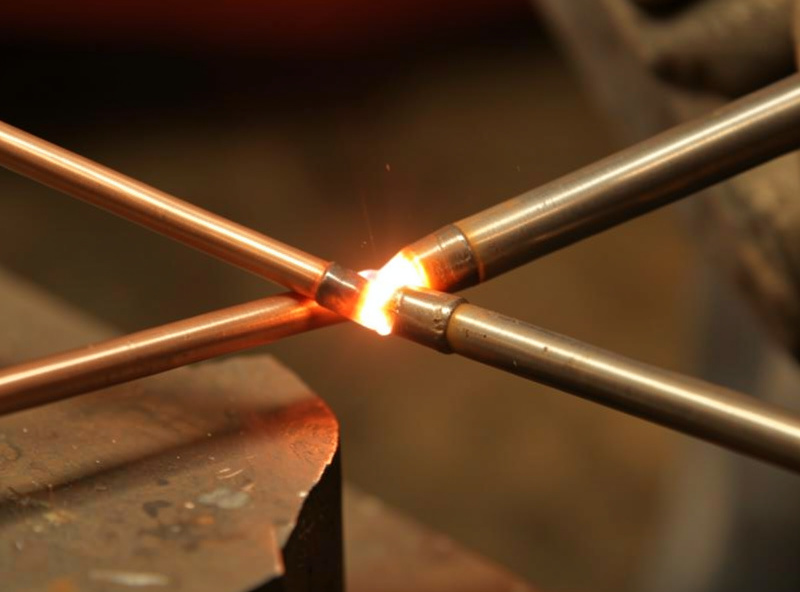
There is also a portability angle that matters more than people expect. A gas outfit needs no outlet, no generator, no extension cord sized to avoid starving an inverter. For field repairs, fence work, and anywhere off-grid, the torch goes where a MIG cannot follow. Mike, my welder friend with decades in the trade, still keeps a small oxy-acetylene kit on his truck for exactly that reason, even though he joins everything with wire or stick now. His line: “MIG builds it, the torch saves the day.”
Cost, Consumables, and the Long Run
Upfront, a decent home MIG and a medium-duty gas outfit land in a similar ballpark, but the running costs differ. MIG eats wire, shielding gas, and contact tips. Gas welding burns two bottles — oxygen and acetylene — plus filler rod, and the bottles are usually rented, so there is a recurring lease even when they sit. Over a year of hobby use, neither is expensive, but the gas bottles cost you whether you weld or not. For someone building a first shop on a budget, that is another nudge toward MIG as purchase number one, with the gas outfit added when a specific job — usually thick cutting — demands it. The wider consumables picture is in the consumables guide.
So Which Should You Buy?
Buy the MIG first if you want to join metal and build things — that covers 90% of what a home welder actually does. Add an oxy-acetylene outfit when you hit the wall MIG cannot climb: cutting thick plate, brazing, heating, or working without power. They are complementary, not rivals, and a complete home shop eventually has both. If I were kitting out a first shop today on a tight budget, I would put every krona into a solid 200-amp MIG and a true-color auto-darkening helmet first, then add the gas outfit six months later when a thick-cutting job finally forced my hand. If you are still deciding on the welder itself, weigh whether a multi-process machine earns the extra spend — that can fold MIG, stick, and TIG into one box, leaving the torch to do the gas-only jobs. Before you light any gas outfit, read the oxy-acetylene safety guide, and note that OSHA 29 CFR 1910.252 sets the hot-work and fire-watch rules for both processes — the fuel and oxygen change the risk picture from anything electric.
Frequently Asked Questions
Is gas welding stronger than MIG welding?
A properly made weld in either process can be sound and strong for its joint. Gas welding produces a ductile bead on thin steel, while MIG deposits faster with less distortion. Strength comes down to fusion and technique, not the process; for most home joints MIG is the more forgiving route to a strong weld.
Should a beginner learn gas welding or MIG first?
MIG, almost always. A beginner reaches usable welds on a MIG in an afternoon, while gas welding takes weeks of torch time to control the puddle. Learn MIG to join metal first, then add a gas outfit later for cutting, brazing, and heating.
Can MIG welding do everything oxy-acetylene can?
No. MIG joins metal well but cannot cut thick plate, braze thin or dissimilar metals, or heat seized parts, and it needs electricity. Oxy-acetylene does all of those. The two tools cover different jobs, which is why a complete home shop often has both.
Why does gas welding warp metal more than MIG?
A gas flame puts heat in over a wide, slow area, soaking the surrounding metal before the puddle forms, which causes more thermal distortion. A MIG arc concentrates heat fast and tight, so less surrounding metal heats up and thin steel stays flatter.
Is oxy-acetylene welding obsolete?
For production joining it has largely been replaced by MIG and TIG. But it is far from obsolete for cutting, brazing, and heating, and for off-grid work where no power is available. It remains a valuable second process rather than a primary joining method.
Do you need power to gas weld?
No. An oxy-acetylene outfit runs entirely on bottled oxygen and acetylene with no electricity, which makes it fully portable for field repairs and off-grid work. MIG welding, by contrast, needs mains power or a generator to run.

Discussion (0)