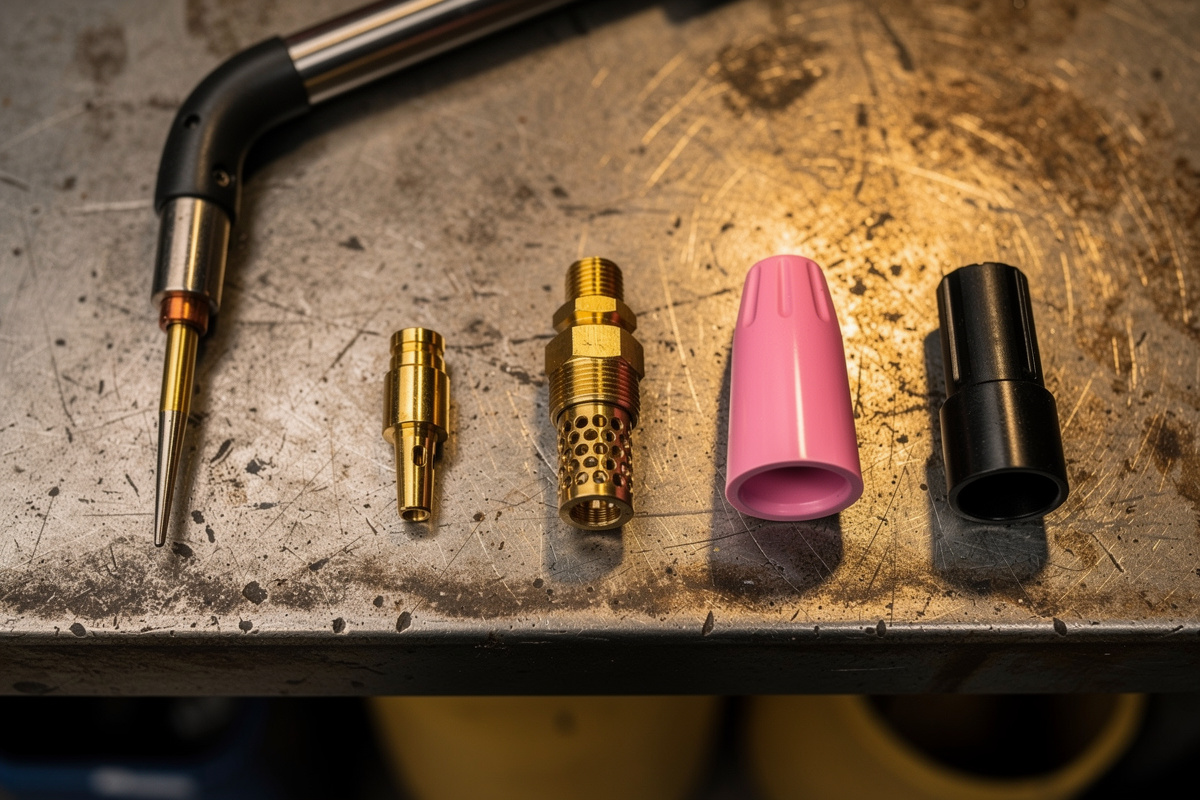

A TIG torch is a stack of five consumables around the tungsten: the collet grips it, the collet body or gas lens feeds gas around it, the cup directs that gas, and the back cap seals the rear and sets tungsten length. Knowing what each does — and when to swap a standard collet body for a gas lens — fixes most coverage and contamination headaches.
When I started TIG, I treated the torch as one object and could not understand why my welds oxidized in corners. The fix was understanding the parts and switching to a gas lens. Every piece in that stack has a job, and matching them to the tungsten and the joint is half of clean TIG. This guide walks the torch from the inside out, with the swaps that actually matter for home work. For the full process, see the TIG welding guide; for the electrode itself, the tungsten color chart.
The TIG Torch Stack, Inside Out
From the tungsten outward, the parts are: the collet (a slotted sleeve that grips the tungsten and carries current), the collet body or gas lens (routes shielding gas around the electrode), the cup or nozzle (directs the gas onto the weld), and the back cap (seals the rear and holds the tungsten length). All thread into the torch head.
Each part has to match the others. The collet and collet body are sized to the tungsten diameter — a 3/32-inch tungsten needs a 3/32-inch collet and matching body, or it will not grip and will not pass current cleanly. The cup threads onto the collet body or gas lens and comes in numbered sizes. The back cap threads into the back of the torch and clamps the tungsten via the collet when you snug it down. Get one of these mismatched — a worn collet, a cracked cup, a loose back cap — and you get an unstable arc, gas leaks, or a tungsten that slips mid-weld. I keep a small parts box organized by tungsten size so I am never hunting mid-job.
Collet vs Collet Body vs Gas Lens
The collet grips the tungsten; the collet body (or gas lens) feeds gas past it. A standard collet body has simple gas ports, while a gas lens packs a layered mesh screen that smooths the gas into a steady laminar column. That laminar flow is the single biggest coverage upgrade in TIG.
A standard collet body works fine for flat, open welds where the cup sits close to the joint. But the gas comes out turbulent, so the moment you need extra tungsten stickout — reaching into a corner, around tube, or into a recessed joint — the shielding swirls and pulls in air, and your weld oxidizes. A gas lens replaces the open ports with a stack of fine mesh screens that straighten the flow into a smooth column. That lets you run longer stickout with better coverage, often at the same or slightly lower flow rate. Swapping my standard collet body for a stubby gas lens did more for my stainless and aluminum corner welds than any technique change. The trade-off is that gas-lens setups use their own (usually larger) cups, so you buy into a small kit. For nearly all home work, I run a gas lens by default and keep a standard body only as a backup.
Cup Sizing: How the Numbers Work
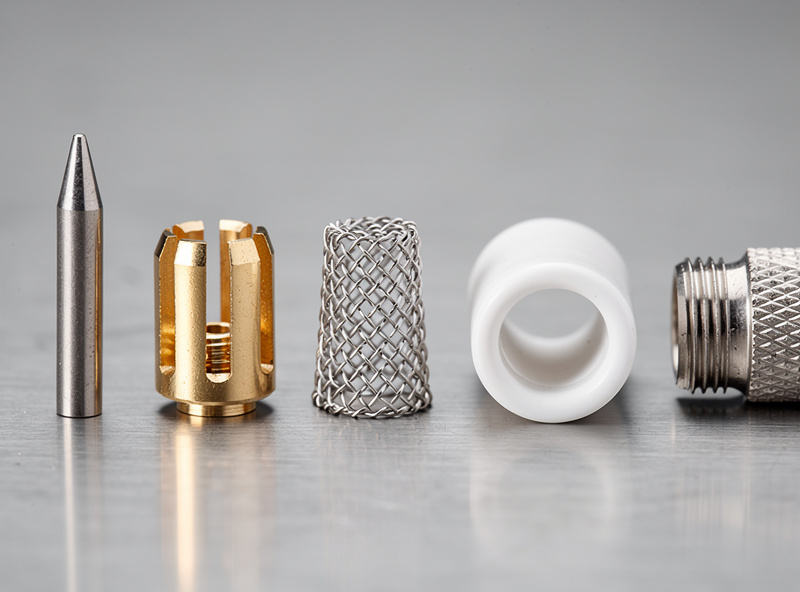
TIG cups are numbered by orifice diameter in sixteenths of an inch: a #6 cup is 6/16 (3/8) inch, a #8 is 8/16 (1/2) inch. Bigger cups deliver wider gas coverage and suit higher amperage and reactive metals; smaller cups concentrate gas for tight, low-amp work.
For most home steel TIG, a #6 or #7 cup on a standard body covers it. When I moved to a gas lens, I sized up — gas-lens cups in the #8 to #12 range give a wide, stable shield that aluminum and stainless love because those metals punish any air intrusion. A bigger cup is not automatically better: oversized cups on a tight inside corner physically block your torch angle and waste gas. Match the cup to the joint access and the metal’s sensitivity. Clear Pyrex cups are worth it on fussy work because you can watch the puddle and your stickout through the cup. Always pair cup size with an appropriate argon flow — the welding gas guide covers flow rates, and bigger cups generally want a few more CFH.
| Cup Number | Orifice Diameter | Typical Argon Flow | Best For |
|---|---|---|---|
| #4 | 1/4 in | 10-15 CFH | Low-amp sheet, tight corners |
| #5 | 5/16 in | 12-17 CFH | Thin steel, small fillets |
| #6 | 3/8 in | 15-20 CFH | General steel TIG (most common) |
| #7 | 7/16 in | 17-22 CFH | Heavier steel, open joints |
| #8 | 1/2 in | 18-25 CFH | Stainless, aluminum coverage |
| #8-12 gas lens | 1/2-3/4 in | 18-25 CFH | Aluminum, stainless, long stickout |
Disclosure: HomeWelder is reader-supported. As an Amazon Associate I earn from qualifying purchases made through links in this article, at no extra cost to you. I only point to gear I actually use or would buy for my own shop.
Back Caps and Tungsten Length
The back cap seals the rear of the torch and, when tightened, clamps the tungsten through the collet. Caps come in long, medium, and short (stubby). Long caps hold a full-length tungsten; short caps let you weld in tight spaces but require cutting the tungsten down.
Most torches ship with a long back cap, which is fine on open bench work — it holds a full 7-inch tungsten and you slide it forward as the tip wears. But the moment you are welding under a car, inside a frame, or up against a wall, that long cap hits everything. A medium or short cap solves it, at the cost of cutting your tungsten to length (a notch with a cut-off wheel and a snap). I keep a short cap and a few pre-cut tungstens for tight jobs. Check the O-ring inside the cap periodically — a dried, cracked back-cap O-ring lets air leak in from the rear and causes porosity that looks exactly like a gas problem, which can send you chasing the wrong fix for an hour.
Air-Cooled vs Water-Cooled Torches
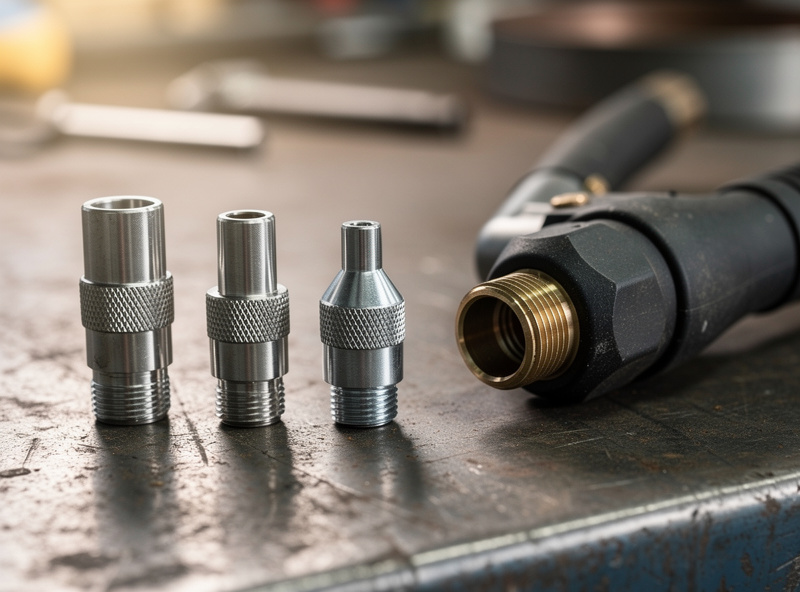
Most home TIG runs an air-cooled torch like the 17-series (150 amps) or the smaller 9-series (125 amps). Water-cooled torches (18 or 20-series) handle higher continuous amperage and stay cooler in the hand, but add a cooler, pump, and coolant to your setup.
For the amperage a home shop actually runs — sheet to 1/4-inch on a 200-amp machine — an air-cooled 17-series torch is plenty and is what most AC/DC inverters ship with. It heats up on long high-amp aluminum beads, so you give it rest, but for project-length welds it is fine. The compact 9-series is lovely for thin, fiddly work because the smaller head gets into places the 17 cannot. Water-cooled torches earn their keep if you weld thick aluminum for long stretches at 200-plus amps continuously, but for the average home welder the cooler, reservoir, and maintenance are not worth it. Know which series you have, because consumables are not universal — the 17/18/26 family shares one set, and the 9/20 family shares another. Buy consumables that match your torch series or nothing threads together.
The Consumables Kit I Actually Keep
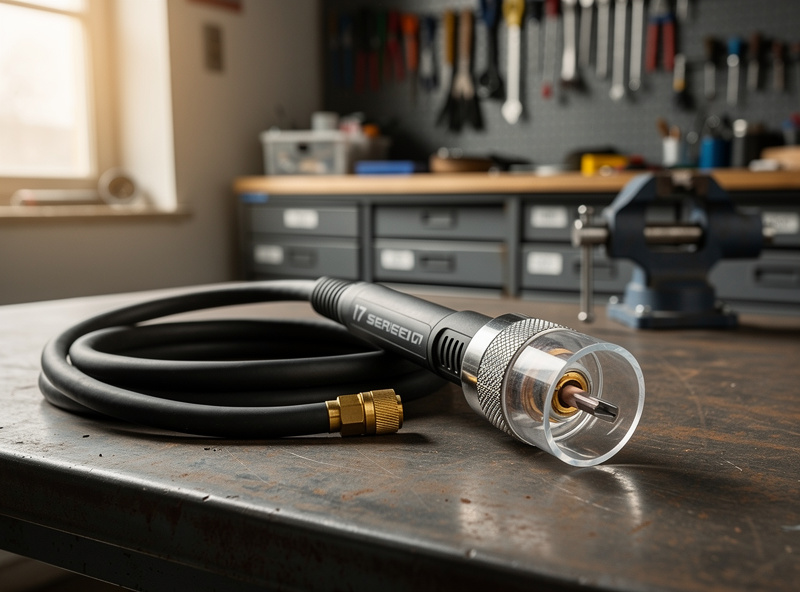
A practical home TIG consumables kit is one gas lens setup, a range of cups, collets in your two main tungsten sizes, and spare back caps with fresh O-rings. Buy a matched kit for your torch series rather than loose mismatched parts — it is cheaper and everything threads together.
I run a 17-series stubby gas lens kit as my default because the laminar flow fixed my corner-oxidation problems, and a set of Pyrex TIG cups for the fussy work where I want to watch the puddle. Keep collets and bodies in your two main tungsten sizes — for me that is 3/32-inch for general work and 1/16-inch for sheet — with a fresh pack of 2% lanthanated tungsten. The single most overlooked spare is back-cap O-rings; a dollar’s worth of rubber prevents the phantom porosity that ruins an afternoon. Match every part to your torch series and store it sorted by size.
Frequently Asked Questions
What is the difference between a collet body and a gas lens?
A standard collet body has open gas ports that produce turbulent flow, while a gas lens packs layered mesh screens that smooth the gas into a steady laminar column. The gas lens gives far better shielding coverage, allows longer tungsten stickout, and reduces oxidation in corners. It is the single biggest coverage upgrade in TIG.
How are TIG cups sized?
TIG cups are numbered by orifice diameter in sixteenths of an inch. A #6 cup is 6/16 or 3/8 inch, and a #8 is 8/16 or 1/2 inch. Bigger cups give wider gas coverage for higher amperage and reactive metals like aluminum and stainless; smaller cups concentrate gas for tight, low-amp work.
What cup size should I use for TIG welding?
A #6 or #7 cup covers most home steel TIG on a standard collet body. Size up to a #8 or a gas-lens cup in the #8 to #12 range for stainless and aluminum, which punish any air intrusion. Match cup size to joint access — oversized cups block torch angle in tight corners.
Why do I need different TIG back caps?
Back caps come in long, medium, and short. A long cap holds a full-length tungsten for open bench work; a short or stubby cap lets you weld in tight spaces like inside frames or under a car, but requires cutting the tungsten to length. Keep a short cap and pre-cut tungstens for confined joints.
Do air-cooled and water-cooled TIG torches use the same parts?
No. Consumables are matched to the torch series, not universal. The 17, 18, and 26-series share one set of collets, bodies, and cups, while the 9 and 20-series share another. Buy consumables that match your torch series or the parts will not thread together.
Can a cracked back-cap O-ring cause porosity?
Yes. A dried or cracked back-cap O-ring lets air leak into the torch from the rear, contaminating the shielding gas and causing porosity that looks exactly like a gas-coverage problem. Check and replace back-cap O-rings periodically — it is a common cause of mystery porosity that sends welders chasing the wrong fix.

Discussion (0)